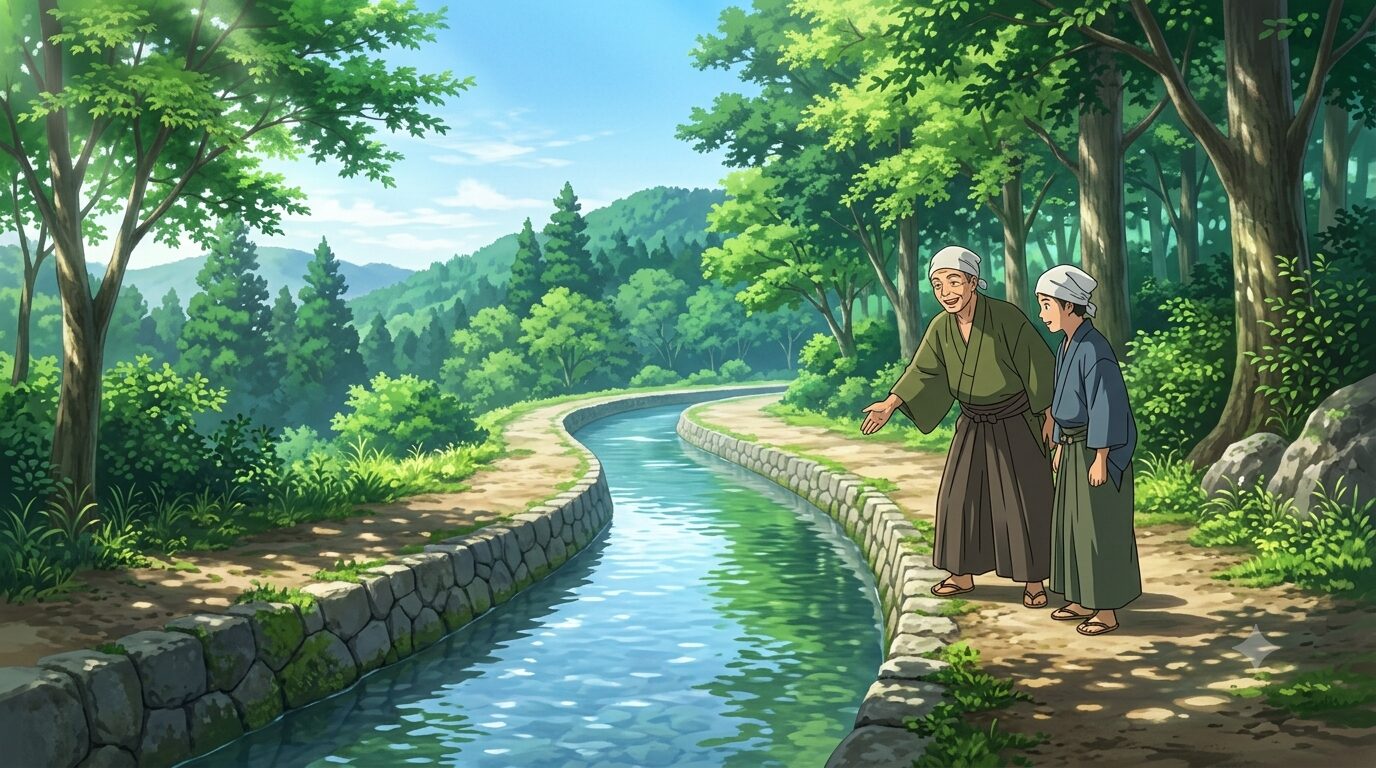
Today, Tokyo stands as a massive metropolis with one of the largest populations in the world. But did you know that the foundation of this immense city lies in a waterway built about 400 years ago during the Edo period? June 20, 1654, marks the day the Tamagawa Aqueduct (Tamagawa Jousui) was completed, becoming the absolute lifeline for Edo (the former name for Tokyo).
In this article, we will delve deep into one of the greatest achievements in the history of Japanese infrastructure and explore how it profoundly influenced Japanese culture.
A 43-Kilometer Miracle Built in Just 8 Months
In the mid-17th century, the city of Edo, governed by the Tokugawa shogunate, was experiencing explosive population growth. As the city swelled toward a population of one million, it faced a severe crisis: a desperate shortage of drinking water. Because Edo was situated close to the sea, well water often contained salt, making it unsuitable for daily consumption.
To overcome this crisis, the shogunate devised a grand project to draw fresh water from the Tama River straight into the heart of Edo. The men appointed to lead this unprecedented engineering feat were two brothers, Shoemon and Seiemon Tamagawa.
The difficulties they faced were unimaginable. The distance from the intake weir in Hamura to the final distribution point at Yotsuya Okido was approximately 43 kilometers (about 26.7 miles). The elevation drop across this entire distance was a mere 92 meters. This meant a remarkably gentle slope where the land dropped only 21 centimeters for every 100 meters of distance. In an era without modern precision surveying equipment or heavy machinery, the brothers measured elevations at night using the glow of incense sticks and paper lanterns, and laborers dug through the earth using only pickaxes and hoes.
Despite devastating setbacks, including water being absorbed by the highly porous volcanic Kanto loam soil and the complete depletion of government funds, the brothers sold their own assets to keep the project alive. Against all odds, taking just eight months from the start of construction, the Tamagawa Aqueduct successfully delivered abundant, crystal-clear water to the city of Edo on June 20, 1654.
How a Waterway Nurtured Japanese Culture and “Edo Iki” (Chic)
The completion of the Tamagawa Aqueduct did more than just quench the citizens’ thirst; it became a driving force that allowed Japanese culture to truly blossom.
First, it spurred the development of Chanoyu (the Japanese tea ceremony) and Sake brewing. With access to delicious, high-quality water, the refined culture of the tea ceremony spread even among the common people of Edo. Furthermore, areas along the aqueduct utilized this superior water to brew excellent sake. Even today, historic sake breweries remain active in the Tama region.
Second, it firmly established the culture of Sento (public bathhouses). With an abundant supply of clean water, public bathhouses popped up all over Edo. The people of Edo (known as Edokko) visited the Sento almost daily. These bathhouses were not just places to wash; they served as the vibrant centers of local communities and hubs for exchanging information. This “naked companionship” (skinship) fostered deep social bonds and remains a cherished cultural aspect of Japan today.
Third, it ignited an agricultural revolution on the Musashino Plateau. A vast network of branching canals (bunsui) was created from the main aqueduct, transforming massive expanses of previously barren land into rich, fertile farms. This significantly enriched Edo’s food culture and established a highly sustainable urban ecosystem.
From the Past to the Future: How Do We Live with Water?
Today, parts of the Tamagawa Aqueduct have been preserved as greenways, serving as a tranquil oasis in Tokyo where you can enjoy cherry blossoms in the spring and vibrant foliage in the autumn. Recognizing its historical immense value, the Japanese government designated it a National Historic Site in 2003. The fact that we can simply turn on a tap and expect safe water today is built entirely upon the literal blood, sweat, and passion of our predecessors 400 years ago.
By cleverly utilizing the natural terrain to transport water 43 kilometers relying solely on gravity, the Tamagawa Aqueduct symbolizes the traditional Japanese mindset: rather than dominating nature by force, humanity should adapt to and live in harmony with the laws of nature.
Do you know where the “water” in the city you live in right now comes from? If you could go see one piece of historical infrastructure that built the foundation of your city, what would it be?
Please take a moment to reflect on the history of the infrastructure in your own country and the culture it has cultivated!
[Reference Links]
- Tokyo Metropolitan Waterworks Bureau: About the Tamagawa Aqueduct (Official Page)
- Kiri53 Special Day Series: Read more about Today’s Anniversaries & Events
江戸のメガシティ化を支えた奇跡のインフラ:1654年6月20日「玉川上水」完成
東京は現在、世界有数の人口を誇る巨大なメトロポリスです。しかし、この巨大都市の礎が、今から約400年前の江戸時代に築かれた「水路」にあることをご存知でしょうか。1654年(承応3年)6月20日は、江戸(現在の東京)の生命線となった「玉川上水(たまがわじょうすい)」が完成した日です。
今回は、日本のインフラストラクチャーの歴史において最も偉大な偉業の一つである玉川上水の完成と、それが日本文化にどのような影響を与えたのかを深く掘り下げていきます。
わずか8ヶ月で作られた43キロメートルの奇跡
17世紀半ば、徳川幕府が治める江戸の町は急速な人口増加を経験していました。100万人規模へと膨れ上がろうとする大都市において、最も深刻な問題となったのが「飲料水」の不足です。海に近い江戸の井戸水は塩分を含んでおり、生活用水としては適していませんでした。
この危機を打破するため、幕府は多摩川から江戸市中へ水を引くという壮大な計画を立てました。この前代未聞のプロジェクトの指揮を執ったのが、玉川庄右衛門(しょうえもん)と清右衛門(せいえもん)という兄弟です。
彼らが直面した困難は想像を絶するものでした。羽村の取水堰(しゅすいぜき)から江戸の四谷大木戸までの距離は約43キロメートル。その間の標高差はわずか92メートルしかありませんでした。これは、100メートル進んでわずか21センチメートルしか下がらないという、極めて緩やかな傾斜です。現代のような精密な測量機器も重機も存在しない時代に、彼らは夜間に線香の光や提灯を用いて高低差を測り、つるはしとクワだけで大地を掘り進めました。
関東ローム層という水を吸い込みやすい地質による工事の失敗(水食い土)や、資金の枯渇という絶望的な状況を乗り越え、兄弟は私財を投げ打って工事を続行しました。そして着工からわずか8ヶ月という驚異的なスピードで、1654年6月20日、玉川上水はついに江戸の町へ豊かな水を送り届けることに成功したのです。
水路が育んだ日本文化と「江戸の粋」
玉川上水の完成は、単に人々の喉を潤しただけではありません。日本の文化そのものを大きく開花させる原動力となりました。
第一に、「茶の湯(茶道)」や「日本酒」の発展です。美味しい水が手に入るようになったことで、江戸の町では質の高い茶の湯文化が庶民にも広がりました。また、上水沿いの地域では良質な水を利用した酒造りが盛んになり、現在でも多摩地域には歴史ある酒蔵が残っています。
第二に、「銭湯(公衆浴場)」文化の定着です。清潔な水が豊富に供給されるようになったことで、江戸中に銭湯が作られました。江戸の人々(江戸っ子)は毎日のように銭湯に通い、そこは単に体を洗う場所ではなく、地域のコミュニティの中心、そして情報交換の場として機能しました。この「裸の付き合い」は、日本人の社会的絆を深める重要な文化として現代にも受け継がれています。
そして第三に、武蔵野台地の農業革命です。玉川上水から枝分かれする分水(ぶんすい)が網の目のように張り巡らされたことで、それまで不毛の地であった広大な土地が豊かな農地に生まれ変わりました。これにより江戸の食文化はさらに豊かになり、持続可能な都市のシステムが構築されたのです。
過去から未来へ:私たちは水とどう生きるか
現在、玉川上水の一部は緑道として整備されており、春には桜、秋には紅葉が楽しめる東京のオアシスとなっています。また、その歴史的価値から2003年には国の史跡に指定されました。現代の私たちが蛇口をひねれば当たり前のように安全な水が出るのは、400年前の先人たちの血のにじむような努力と情熱の上に成り立っているのです。
自然の地形を巧みに利用し、重力だけで43キロ先まで水を運んだ玉川上水。それは、自然を力でねじ伏せるのではなく、自然の理(ことわり)に寄り添いながら生きてきた日本人の精神性を象徴しています。
あなたは今、自分が住んでいる街の「水」がどこから来ているか知っていますか?もし、あなたの街の基盤を作った歴史的な建造物を一つ見に行くことができるとしたら、何を選びますか?
ぜひ、あなたの国のインフラストラクチャーの歴史と、それにまつわる文化について考えてみてください。
【参考リンク】
- 東京都水道局:玉川上水について(公式ページ)
- Kiri53 記念日シリーズ:今日の記念日・出来事をもっと読む

コメント