1. The Story of “Hanashi Juryo”: Three Words Bought for Thirty Ryo
Once upon a time, a young couple and the husband’s mother lived peacefully in a small village. Though they were not in dire poverty, the husband one day resolved to make life easier for his family. He decided to leave his hometown and travel to the bustling city of Edo (modern-day Tokyo) to work as a migrant laborer.
Upon arriving in Edo, he worked tirelessly without looking back. Day after day, he poured his sweat into his labor. Years passed, and before he knew it, he had saved an astonishing sum of “Thirty Ryo.” In those days, thirty Ryo was a massive fortune, enough to build a new house. “With this much money, my family and I can live comfortably in our village for the rest of our lives,” he thought, making the firm decision to finally return home.
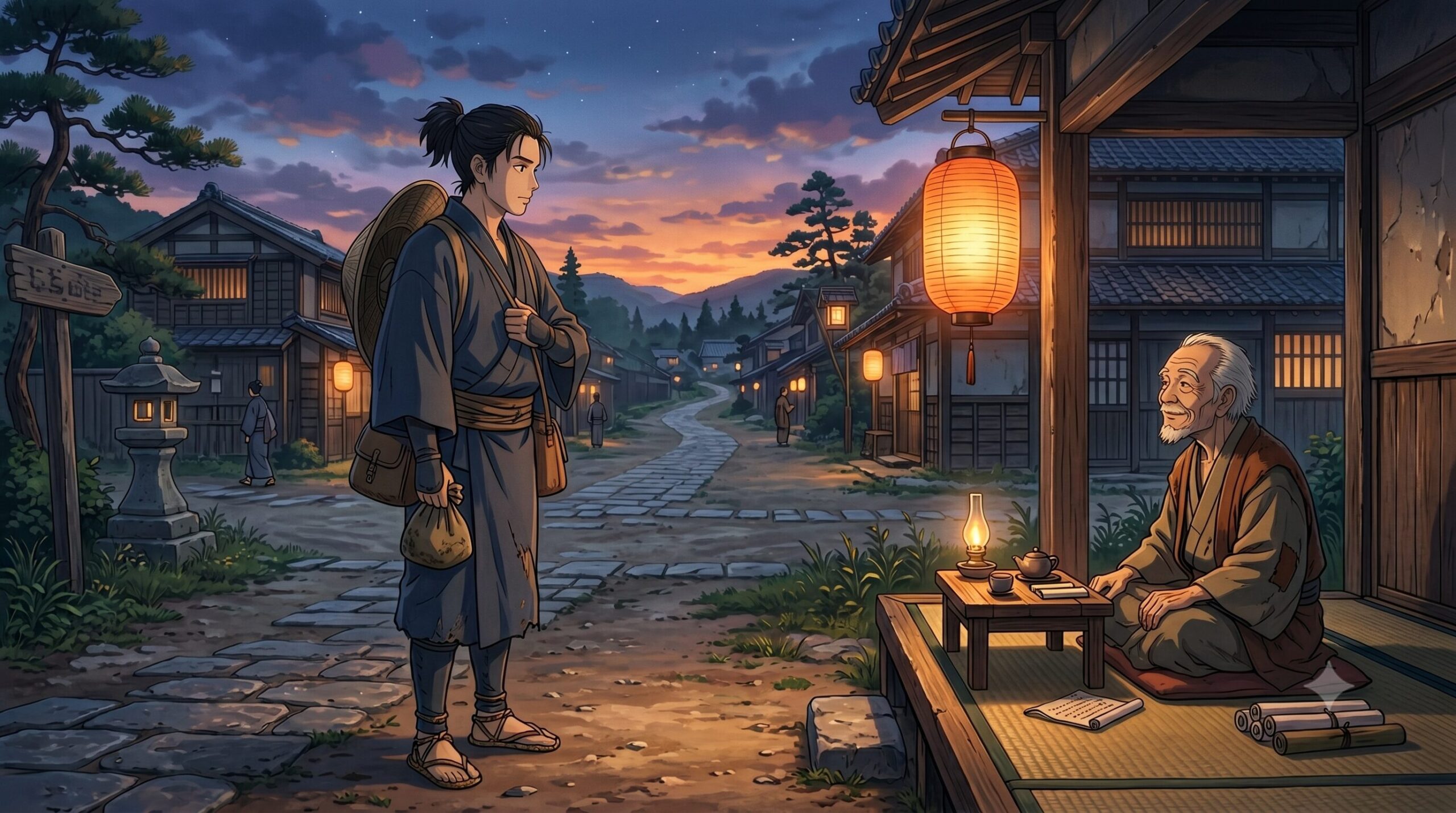
While wandering the streets of Edo looking for souvenirs for his family, a strange signboard caught his eye. Written in large, bold letters was: “Stories for Ten Ryo.” Driven by curiosity, the man entered the shop and found an old proprietor sitting inside. “Pay me ten Ryo, and I’ll tell you a story that will benefit your life,” the owner said.
Taking a deep breath, the man handed over ten Ryo from his hard-earned savings. The owner simply said one sentence: “Do not seek shelter under a large tree.”
Disappointed by the extreme brevity of the advice, the man said, “I’ll pay another ten Ryo. Tell me something else.” The owner took the money and delivered a second sentence: “Never let your guard down around a sweet, purring voice.”
Now acting out of sheer stubbornness, the man declared, “Fine, take my last ten Ryo too!” Thus, he spent his entire life savings of thirty Ryo. The final words the owner offered were the shortest yet: “A short temper is a losing game.” Empty-handed and with his life savings completely gone, the man began the long, weary walk back to his village.
During his long journey home, the sky suddenly turned pitch black, and a violent thunderstorm erupted. Soaked to the bone, the man ran toward a massive tree nearby to take shelter. But at that exact moment, he remembered the first story: “Do not seek shelter under a large tree.” Panicking, he sprinted away from the tree. Seconds later, a deafening roar echoed as lightning struck the tree, splitting it in half. He had narrowly escaped death.
As night fell, he needed a place to sleep and asked for lodging at a lone house. A woman with a very friendly, sweet, and purring voice welcomed him warmly and guided him to a guest room. However, the moment he lay down on the futon, the second story flashed in his mind: “Never let your guard down around a sweet, purring voice.” Feeling suspicious, he looked up at the ceiling. Suspended directly above his bed by a single rope was a massive boulder. It was a den of thieves who crushed travelers in their sleep to steal their belongings. He slipped out of the house in the nick of time, saving his life once again.
Finally, just before dawn, he arrived at his beloved home. He quietly peeked inside, but could not believe his eyes. Lying right next to his beloved wife was a strange man! Blinded by an uncontrollable rage, the husband grabbed a sickle nearby, ready to burst in and kill them both. At that very moment, the third story echoed in his soul: “A short temper is a losing game.”
He took a deep breath, quelled his anger, put the sickle down, and called out normally, “I have returned.” His wife jumped up with a face full of absolute joy and surprise. The person sleeping next to her woke up as well. Looking closely, it was not a strange man at all, but his elderly mother dressed in men’s clothing. To protect the household of two women while the husband was away, the mother had disguised herself as a man every night to deter robbers.
If he had given in to his anger and swung that sickle, he would have murdered his own beloved family. The man exhaled deeply and smiled from the bottom of his heart. “Those three stories for thirty Ryo… what an incredible bargain that was.” From that day on, the three of them lived happily ever after.
2. Deep Dive Analysis: Why Do Humans Find Value in Invisible “Words”?
At first glance, the story of “Hanashi Juryo” might seem like an absurd comedy. The protagonist’s action of spending a massive fortune—earned through years of blood, sweat, and tears—on just three short sentences might appear highly foolish to our modern economic sensibilities. However, the true themes of this story are “the ultimate risk management in life” and “the undeniable value of wisdom.”
Why did the protagonist buy those words? Perhaps through his grueling labor in Edo, he had subconsciously realized that “wisdom on how to live and use money is far more life-saving than the money itself.” Material wealth (thirty Ryo) can vanish in an instant if one is struck by lightning or killed by thieves. However, knowledge and words of caution remain forever in one’s heart, acting as an impenetrable shield during critical life-or-death moments.
This story also masterfully depicts the difficulty of faithfully following advice. Most people, even when given useful advice, panic in times of crisis and forget what they were taught. Yet, the protagonist accurately recalled and acted upon his purchased words during three moments where human rationality is most likely to fail: the panic of a severe thunderstorm, the extreme exhaustion coupled with sweet temptation, and the peak of blinding, jealous rage. Because he paid such a steep price, the words were etched deeply into his soul. Had the advice been free, he likely would have forgotten it and perished. The very act of “paying the thirty Ryo” gave the words a powerful bind and true value.
3. Cultural Connection: The Aesthetics of “Kotodama” and “Gaman”
This tale heavily reflects the ancient culture and spirituality of Japan. The first element is the unique Japanese belief in “Kotodama” (the spirit of words). In Japan, it has long been believed that spoken words possess a soul and directly influence reality. In “Hanashi Juryo,” the old man’s words act not merely as advice but as “Kotodama” that directly carve out the protagonist’s destiny. The philosophy that words hold value equal to or greater than physical wealth (gold) runs deep within Japanese culture, which has always revered literature and poetry.
The second element is the aesthetic of “Gaman” (endurance and patience), a highly respected virtue particularly during the Edo period. As symbolized by the phrase “A short temper is a losing game,” controlling one’s emotions and suppressing impulsive actions was considered the most vital moral principle for social life. In both the Bushido (the way of the samurai) and the morality of townspeople, acting out of anger was strictly warned against as it leads to ruin. The moment the protagonist quells his rage and takes a deep breath perfectly embodies “Kokkishin” (the spirit of conquering oneself), an ideal cherished by the Japanese since ancient times.
Furthermore, the depiction of the mother cross-dressing to protect the house reveals the solidarity of women in village communities and the hardships they endured to protect their homes. It offers a highly historically valuable glimpse into the realistic self-defense measures taken by families left behind while the men went to the cities to work.
4. What Would You Do? The Value of Words and Life
If you possessed your entire life savings, acquired through years of desperate hard work, and you met someone selling “words that will absolutely save your life,” could you hand over all your money to buy them?
In our modern society, we can instantly access countless pieces of information and advice for free via the internet. But how many “truly valuable words” do you hold in your heart that would actually save your life or your future in a real crisis? Isn’t the information we get for free often treated as worthless, going in one ear and out the other?
“Those three stories for thirty Ryo… what an incredible bargain that was.” The protagonist’s final line throws a powerful question at us modern people, who are so easily captivated by the visible value of money. What is the most valuable “word” or piece of advice you have received in your life? And when the time comes, are you prepared to follow that advice and control your emotions? Take a moment to face your own heart and reflect on the true value of life and wisdom.
References & Related Links
- Source: Manga Nihon Mukashibanashi Database “Hanashi Juryo” (Japanese)
- Click here for more soul-stirring stories from our “Japanese Folktale Series”!
- 1. The Story of “Hanashi Juryo”: Three Words Bought for Thirty Ryo
- 2. Deep Dive Analysis: Why Do Humans Find Value in Invisible “Words”?
- 3. Cultural Connection: The Aesthetics of “Kotodama” and “Gaman”
- 4. What Would You Do? The Value of Words and Life
- References & Related Links
- 【日本の昔話】全財産で買った3つの言葉が命を救う?「話十両」の恐るべき真実と教訓
【日本の昔話】全財産で買った3つの言葉が命を救う?「話十両」の恐るべき真実と教訓
① 昔話「話十両」:三十両で買った3つの言葉
むかしむかし、ある村に若夫婦と母親が仲良く暮らしていました。生活に困っているわけではありませんでしたが、亭主はある日「もっと稼いで家族を楽にさせたい」と一念発起し、江戸へと出稼ぎに出発します。
江戸に着いた亭主は、脇目も振らずに一生懸命に働きました。来る日も来る日も汗を流し、気がつけば数年の月日が流れ、彼の手元にはなんと「三十両」という大金が貯まっていました。当時の三十両といえば、家が一軒建つほどの大金です。「これだけあれば、故郷で家族と一緒に一生遊んで暮らせる」。そう考えた亭主は、故郷への帰路につく決意を固めました。
実家への土産を探しながら江戸の街を歩いていると、ふと奇妙な看板が目に留まりました。そこには大きく「話十両」と書かれています。好奇心に駆られた亭主が店に入ると、主人が座っていました。「十両払えば、ためになる話を聞かせてやる」と言うのです。
亭主は血の滲むような思いで貯めたお金の中から、思い切って十両を差し出しました。すると主人は一言、「大木の下に寄ってはいけない」とだけ言いました。
あまりにも短い言葉に拍子抜けした亭主は、「もう十両払うから、もっと別の話を聞かせてくれ」とさらに十両を払いました。主人はまた一言、「猫なで声には油断するな」と告げました。
意地になった亭主は、「ええい、残りの十両も払う!」と、とうとう全財産の三十両を使い果たしてしまいました。最後に主人が放った言葉は、「短気は損気」という、これまた極めて短い一言でした。手ぶらになり、ためたお金をすっからかんにしてしまった亭主は、ただトボトボと故郷へ向かって歩き出しました。
村への長い道のりの途中、突然空が黒い雲に覆われ、激しい雷雨に見舞われました。ずぶ濡れになった亭主は、雨宿りをしようと目の前の大木の下へ駆け込みます。しかしその瞬間、一つ目の話「大木の下に寄ってはいけない」を思い出しました。慌てて大木から離れた直後、凄まじい轟音とともにその大木に雷が落ち、木は真っ二つに裂けました。亭主は九死に一生を得たのです。
夜になり、雨風をしのぐために一軒の民家に一夜の宿を頼むことにしました。中から出てきたのは、とても愛想の良い、甘い「猫なで声」の女でした。快く座敷に案内された亭主ですが、布団に入った瞬間に二つ目の話「猫なで声には油断するな」が頭をよぎります。ふと不審に思い天井を見上げると、なんと寝床の真上には、紐で吊るされた巨大な岩が仕掛けられていたのです。ここは旅人を殺して身ぐるみを剥ぐ盗賊の宿でした。亭主は間一髪で宿を逃げ出し、再び命を救われました。
ようやく夜明け前に懐かしの我が家へたどり着いた亭主。そっと家の中を覗き込むと、信じられない光景が目に飛び込んできました。愛する妻の隣に、見知らぬ男が添い寝をしているではありませんか。激しい怒りに狂った亭主は、そばにあった鎌を握りしめ、二人に切りかかろうと家へ飛び込もうとしました。その時、三つ目の話「短気は損気」が心に響いたのです。
深呼吸をして怒りを静め、鎌を置いて「今帰ったぞ」と声をかけました。すると、驚きと喜びに満ちた顔で妻が飛び出してきました。そして、隣で寝ていた男も起き上がりました。よく見ると、それは見知らぬ男ではなく、男装をした母親でした。亭主が不在の間、女二人だけの不用心な家を守るため、母親が男の格好をして夜を過ごしていたのです。
もしあの時、怒りに任せて鎌を振り下ろしていれば、愛する家族を自らの手で殺めてしまうところでした。亭主は深く息を吐き、「あの話が三十両とは、なんと安い買い物だったことか」と心から感謝し、その後は家族三人で幸せに暮らしました。
② 昔話の深掘り考察:人はなぜ見えない「言葉」に価値を見出すのか
この「話十両」という物語は、一見すると不条理な喜劇のようにも思えます。何年もかけて血の滲むような思いで稼いだ大金を、たった三つの短い「言葉」のためにすべて使い果たしてしまう主人公の行動は、現代の経済感覚からすれば非常に愚かであると映るかもしれません。しかし、この物語が持つ真のテーマは「人生における究極のリスクマネジメント」と「知恵の価値」です。
主人公はなぜ言葉を買ったのでしょうか。それは、彼が江戸での厳しい労働を通じて「お金そのものよりも、それをどう使い、どう生きるかという知恵こそが身を助ける」という無意識の悟りを得ていたからではないでしょうか。物質的な富(三十両)は、雷に打たれたり、盗賊に殺されたりすれば一瞬で無に帰します。しかし、知識や戒めの言葉は、失われることなく常に心の中にあり、決定的な瞬間に自らの命や大切なものを守る盾となります。
また、この物語は「約束や教えを忠実に守ることの難しさ」も描いています。多くの人は有益なアドバイスを受けても、いざ危機的状況に直面するとパニックになり、教えを忘れてしまいます。しかし主人公は、雷雨のパニック時、甘い誘惑と疲労の極地、そして嫉妬による怒りの絶頂という「人間の理性が最も働きにくい3つの瞬間」において、買った言葉を正確に思い出し、行動に移しました。大金を払ったからこそ、その言葉が彼の心に深く刻み込まれていたのです。無料で得たアドバイスであれば、彼はきっと忘れて命を落としていたでしょう。「三十両という対価を払ったこと」自体が、言葉に強力な呪縛と価値を与えたのです。
③ 日本文化との関連性:「言霊(ことだま)」と「堪忍(かんにん)」の美学
この物語からは、日本古来の文化や精神性が色濃く読み取れます。一つ目は日本特有の「言霊(ことだま)」信仰です。日本では古くから、発せられた言葉には魂が宿り、現実に影響を与えると信じられてきました。「話十両」における老人の言葉は、単なるアドバイスを超え、主人公の運命を直接的に切り開く「言霊」として機能しています。言葉が物理的な富(黄金)と同等、あるいはそれ以上の価値を持つという考え方は、文学や詩歌を重んじてきた日本文化の根底に流れる哲学です。
二つ目は、江戸時代に特に重んじられた「堪忍(かんにん)」、すなわち忍耐の美学です。「短気は損気」という言葉に象徴されるように、自己の感情をコントロールし、衝動的な行動を抑えることが、社会生活を営む上で最も重要な徳目とされてきました。武士道においても、町人の道徳においても、「怒りに任せて行動することは身の破滅を招く」と強く戒められてきました。主人公が最後の最後で怒りを鎮め、深呼吸をした瞬間こそが、日本人が古来より理想としてきた「克己心(己に打ち勝つ心)」の体現なのです。
さらに、母親が男装して家を守るという描写からは、当時の村落共同体における女性たちの連帯と、家を守るための知恵と苦労が垣間見えます。男性が出稼ぎに行き不在となる中、残された家族がどのように身を守っていたのかという、当時のリアルな生活防衛の姿を伝えている点でも、非常に歴史的価値のある物語と言えます。
④ あなたならどうしますか?言葉と人生の価値
もしあなたが、何年もかけて必死に貯めた全財産を持っているとき、「絶対にあなたの命を救う言葉」を売る人物に出会ったら、全財産を差し出してその言葉を買うことができますか?
現代社会を生きる私たちは、インターネットを通じて無料で無数の情報やアドバイスを手に入れることができます。しかし、いざという時に本当に自分の命や人生を救ってくれる「価値ある言葉」を、心の中にいくつ持っているでしょうか。無料で手に入れた情報は、無料の価値として右から左へ流れてしまってはいないでしょうか。
「あの話が三十両とは安いもんだ」。主人公のこの最後の台詞は、目に見えるお金の価値にとらわれがちな現代の私たちに、強烈な問いを投げかけています。あなたにとって、これまでの人生で最も価値のあった「言葉」は何ですか? そして、いざという時、その言葉に従って感情をコントロールする準備はできていますか? ぜひ、あなた自身の心と向き合い、人生の真の価値について考えてみてください。

コメント