Japan is home to an array of dark, mystical folklore that goes far beyond simple children’s fairy tales. These stories vividly reflect the absurdities of historical societies and the deep-rooted reverence people held for nature. Today, we delve into the thrilling folktale of “Orin Kitsune” (Orin the Fox) from the Chichibu region of Saitama Prefecture—a story where a giant, magical fox outsmarts corrupt authorities. Through this tale, we will decode the harsh realities of Japan’s feudal society and the profound depths of its animistic beliefs.
1. The Tale of Orin Kitsune: The Giant Ruler of Chichibu
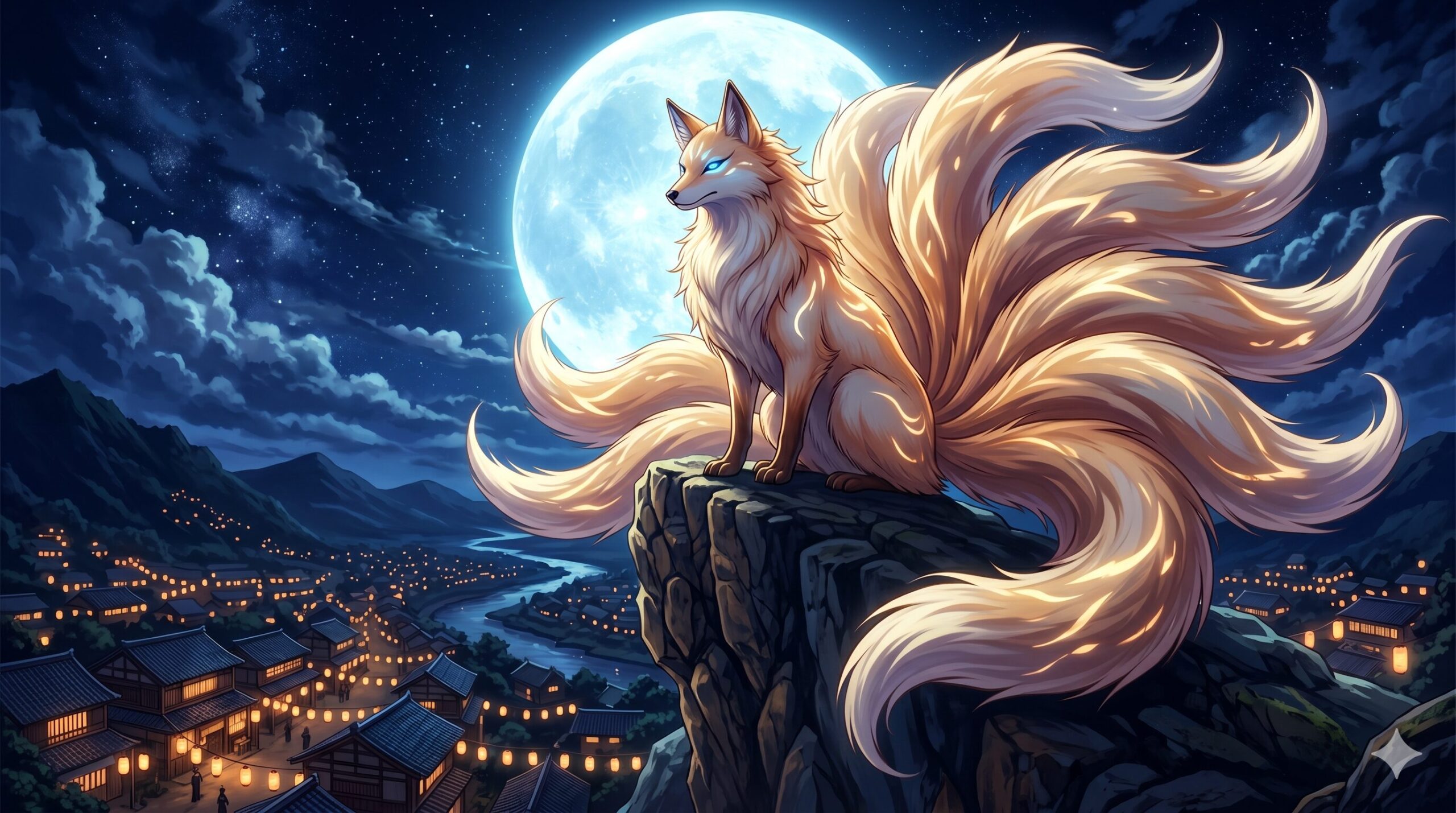
Once upon a time, in the lush natural landscapes of Oonohara in Chichibu, Saitama, lived countless foxes. The grand boss who ruled over all these foxes was known as “Orin Kitsune.” He possessed a massive physique unmatched by any ordinary fox, and most notably, a magnificent tail measuring three shaku (about 90 centimeters or 3 feet) long.
On a serene spring night, illuminated by a brilliant full moon, Orin Kitsune sat atop a high cliff, enjoying the silver moonlight and the gentle night breeze. Feeling in high spirits, he decided to trot down the mountain to observe the highway where the humans dwelled.
At the post town along the highway, despite the late hour, one inn remained noisily illuminated. Samurai officials, tasked with guarding the area for an upcoming inspection by the local Feudal Lord, had taken over the inn. Intoxicated by their own authority, they behaved with sheer arrogance.
Suddenly, a village farmer named Tasaku stumbled by, heavily intoxicated. Feeling invincible in his drunken state, Tasaku swung his sake bottle wildly and accidentally smashed it against the horse belonging to the samurai officials, which was tied up outside the inn. The horse panicked and reared up, drawing out the furious officials.
“You insolent peasant! Do you have any idea what you’ve done to an official’s horse?!”
An enraged samurai drew his katana, preparing to execute Tasaku on the spot—a brutal custom known as Burei-uchi, where samurai could legally strike down commoners for disrespect. Instantly sobered by the cold steel, Tasaku groveled in the dirt, begging desperately for his life. Watching this grim scene from the shadows of the tall grass were two glowing eyes. It was Orin Kitsune. Having assessed the situation, the giant fox silently vanished into the night, his long tail sweeping through the darkness.
Tasaku was arrested, but the village headman quickly rushed to the scene. The headman offered lavish food and copious amounts of sake as a bribe, bowing so low his head touched the ground, begging for Tasaku’s life. The corrupt officials, lured by the feast, instantly changed their tune and let Tasaku go.
After Tasaku fled, the officials began a raucous banquet with the bribed goods. Completely drunk, they began harassing the young women working at the inn. The terrified women ran out into the dark highway, with the laughing samurai in hot pursuit.
Just then, an opulent palanquin (a carriage carried by men) quietly approached from down the road. The drunk samurai yelled, “Those girls must be hiding inside that palanquin!” They violently stopped the procession and forced the doors open.
However, it was not the girls sitting inside. Enshrined within the palanquin was the Feudal Lord himself—the very master they were supposed to be guarding. As the color drained from the officials’ faces and they collapsed in terror, they realized they were surrounded by an army of elite samurai guards. For the grave crimes of abandoning their posts, getting drunk, and assaulting their lord’s palanquin, the corrupt officials were immediately arrested.
The next morning, the villagers watched as the battered and disgraced officials were dragged away screaming. The villagers whispered among themselves, “That was the work of the great boss, Orin Kitsune. He saved Tasaku and used his illusions to punish those wicked samurai.” Thus, the legendary power of Orin Kitsune was passed down for generations.
2. Corruption and Rebellion: A Deep Analysis of the Tale
This story is much more than a simple “fox returning a favor.” It serves as a biting satirical critique of the corrupt authorities under the strict class system of the Edo period.
The samurai officials in the story are depicted as highly corrupt entities: they are ready to take a human life over a minor mistake by a peasant, yet they easily forgive the crime the moment they receive a bribe. Furthermore, they harass innocent women and ultimately ruin themselves by disrespecting their own lord. This reflects the true feelings of the commoners of that era, who silently suffered under the tyranny of the samurai class and viewed authorities as foolish and corrupt.
What is incredibly fascinating is that Orin Kitsune never actually gets his “hands dirty.” There is no depiction of the fox biting the samurai or openly casting a magic spell. Whether the samurai saw an illusion of the girls entering the palanquin due to fox magic, or simply made a drunken mistake, is left deliberately ambiguous. This concept of justice being served by an “invisible, greater power” perfectly encapsulates the desperate wishes of the oppressed masses who could not start a physical rebellion.
3. The Fox in Japanese Culture: Yokai or Divine Messenger?
In Japanese culture, the fox (Kitsune) holds a highly unique and spiritual position. While often viewed merely as cunning animals in the West, in Japan, they are revered and feared as mystical beasts with supernatural powers.
Japanese foxes generally have two faces. The first is the Yokai (monster/spirit) aspect. They are mischievous tricksters known to place a leaf on their heads to shapeshift into beautiful humans, or cast illusions to disorient people. The samurai mistaking the contents of the palanquin is a textbook example of being “bewitched by a fox.”
The second aspect is the divine messenger. Across Japan, foxes are worshipped at Inari Shrines as the sacred familiars of the god of agriculture and prosperity. Because wild foxes hunted the mice that destroyed crops, farmers viewed them as guardian deities. The giant boss “Orin Kitsune” was not just a wild animal; he acted as a guardian spirit of the land, protecting the weak and maintaining order. This highlights the deep roots of Japanese Animism—the belief that divine spirits dwell within nature and animals.
4. How Would You Face Injustice?
The legend of Orin Kitsune depicts the ultimate poetic justice against those who abuse their power. There is something universally satisfying about watching the arrogant bring about their own downfall.
If you were in Tasaku’s shoes, facing a life-threatening situation caused by corrupt authorities over a simple mistake, how would you navigate the crisis? Furthermore, if you possessed the immense magical powers of Orin Kitsune, what kind of punishment would you bestow upon those foolish officials?
Japanese folktales continue to challenge us in the modern world, making us ponder the true meaning of justice and karma. We encourage you to reflect on your own thoughts and compare this tale with the legends of your own culture!
Read more enchanting Japanese folktales here:
Internal Link: Explore the Japanese Folktale Series
External Link: Wikipedia – Kitsune (Learn more about Japanese Fox Spirits)
日本の闇と神秘を暴く:巨大なキツネの大親分「おりん狐」の伝説
日本には、単なる子供向けのおとぎ話という枠をはるかに超えた、ダークで神秘的な民間伝承が数多く存在します。それらは、当時の社会の不条理や、自然に対する人々の畏敬の念を生々しく映し出しています。今回は、埼玉県秩父地方に伝わる、巨大なキツネが権力者を打ち負かす痛快な昔話「おりん狐(おりんぎつね)」をご紹介します。この物語を通して、日本の封建社会のリアルと、精霊信仰(アニミズム)の深淵を読み解いていきましょう。
1. 秩父に君臨する巨大キツネ「おりん狐」の物語
むかしむかし、自然豊かな埼玉県秩父の大野原には、数え切れないほどのキツネたちが生息していました。その無数のキツネたちを束ねる大親分が「おりん狐」です。普通のキツネとは比べ物にならないほど巨大な体躯を持ち、とりわけその尻尾は3尺(約90センチ)にも及ぶ立派なものでした。
ある春の満月の夜、おりん狐は高い崖の上から、銀色に輝く月光と心地よい夜風を楽しんでいました。気分を良くしたおりん狐は、ふと人間たちが暮らす街道の様子を見に行こうと思い立ち、山を駆け下りました。
街道の宿場町では、夜更けだというのに一軒の宿屋だけが騒がしく明かりを灯していました。この地を治める「ご領主様(Feudal Lord)」の視察に備え、警護の役人(侍)たちが陣取っていたのです。彼らは権力を笠に着て、傲慢に振る舞っていました。
そこへ、村の農民である「太作(たさく)」が、泥酔して千鳥足で通りかかりました。すっかり気が大きくなっていた太作は、手に持っていた酒瓶を振り回し、あろうことか宿屋に繋がれていた役人の馬に激しくぶつけてしまったのです。馬は驚いて暴れ、その騒ぎに激怒した役人たちが飛び出してきました。
「この無礼者め!役人の馬に何をしたか分かっているのか!」
激怒した役人は刀を抜き、太作をその場で「無礼討ち(身分が低い者を刀で斬り殺すこと)」にしようとしました。酔いが覚めて地面に這いつくばり、必死に命乞いをする太作。その絶望的な光景を、少し離れた草むらの陰から静かに見つめる二つの光る眼がありました。おりん狐です。おりん狐は状況を見届けると、長い尻尾をなびかせて音もなく闇夜へ消えていきました。
太作は捕らえられましたが、知らせを聞いた村の長(名主)が慌てて駆けつけました。長は大量の酒とご馳走を「袖の下(賄賂)」として役人に差し出し、平身低頭で命乞いをしました。腐敗した役人たちはご馳走を見るとあっさりと態度を変え、太作を解放したのです。
太作が去った後、役人たちはご馳走と酒でどんちゃん騒ぎを始めました。すっかり泥酔した彼らは、宿屋で働く若い娘たちに目をつけ、嫌がる彼女たちを執拗に追い回して街道へと飛び出しました。
ちょうどその時、街道の向こうから豪華な駕籠(かご)が静かに進んできました。酔った役人たちは「あの駕籠の中に娘たちが隠れているに違いない!」と叫び、乱暴に駕籠を止め、強引に扉を開け放ちました。
しかし、そこに座っていたのは娘ではありません。駕籠の中にいたのは、彼らが護衛するはずだった「ご領主様」ご本人だったのです。役人たちが顔面蒼白になって腰を抜かしていると、周囲はすでに無数の侍たちに取り囲まれていました。職務を放棄して酒に溺れ、主君の駕籠を襲うという大罪を犯した役人たちは、即座に捕縛されました。
翌朝、ボロボロになった役人たちが悲鳴を上げながら逃げていくのを見た村人たちは、口々にこう噂しました。「あれはきっと、おりん狐が大親分の力を使って、太作を助け、悪い役人を化かして懲らしめてくれたんだ」と。こうして、おりん狐の伝説は長く語り継がれることになりました。
2. 権力の腐敗と民衆の反骨精神:物語の深い考察
この物語は、単なる「キツネの恩返し」ではありません。江戸時代の厳しい身分制度下における、権力者への痛烈な批判が込められています。
物語に登場する役人は、農民の小さな過ちに対して「命を奪う」という極端な暴力を振るおうとし、一方で賄賂を受け取れば簡単に許すという、極めて腐敗した存在として描かれています。さらに、女性を追い回し、最終的には自らの主君に無礼を働いて自滅します。これは、当時武士の横暴に苦しんでいた庶民たちが抱いていた「権力者は愚かで腐敗している」という本音の投影です。
そして非常に興味深いのは、おりん狐が「直接手を下していない」点です。おりん狐は役人を噛み殺したわけでも、直接魔法をかけた描写があるわけでもありません。「駕籠に娘が逃げ込んだように見えた」のが本当にキツネの幻術だったのか、ただの酔っ払いの勘違いだったのかは、あえて曖昧にされています。この「見えざる大いなる力」によって悪が裁かれるという展開こそ、直接的な反乱を起こせなかった当時の民衆の切実な願いの表れなのです。
3. 日本文化におけるキツネ:妖怪か、神の使いか
日本文化において、キツネ(Kitsune)は極めて特殊な立ち位置にいます。西洋では単なる狡猾な動物とされることが多いですが、日本では「超自然的な力を持つ霊獣」として畏れ敬われてきました。
日本のキツネには大きく分けて二つの側面があります。一つは「人を化かす妖怪」としての側面。葉っぱを頭に乗せて美しい人間に変身したり、人間に幻覚を見せて迷わせたりするイタズラ好きな存在です。役人たちが駕籠の中身を見間違えたのは、まさに「キツネに化かされた」典型的な状態です。
もう一つは「神の使い(眷属)」としての神聖な側面です。日本全国にある「稲荷神社(Inari Shrine)」では、キツネが豊穣の神の使いとして祀られています。農作物を荒らすネズミを退治してくれるキツネは、農民にとって守り神でした。巨大な大親分である「おりん狐」は、単なる野生動物ではなく、村の秩序や弱者を守る「土地の守護神」としての役割を担っていたと言えます。日本人の精神には、自然界の動植物に神性を見出す「アニミズム」が深く根付いているのです。
4. あなたなら、どうやって不条理に立ち向かう?
「おりん狐」の物語は、権力を振りかざす者に対する究極のしっぺ返しを描いています。圧倒的な力を持つ者が、自らの愚かさによって破滅していく姿は、いつの時代も人々の心をスカッとさせます。
もしあなたが太作のように、理不尽な理由で権力者から命を脅かされたら、どのようにその危機を切り抜けますか? また、もしあなたが絶大な魔力を持つ「おりん狐」だったら、愚かな役人たちにどんな罰を与えますか?
日本の昔話は、現代の私たちにも「正義」や「カルマ(因果応報)」について深く考えるきっかけを与えてくれます。あなたの国の似たような伝説や、あなた自身の考えを、ぜひ探求してみてください。
さらに日本の昔話を読みたい方はこちら:
内部リンク:Japanese Folktale Series をもっと読む
外部リンク:Wikipedia – 妖狐(キツネの妖怪に関する詳細)
コメント