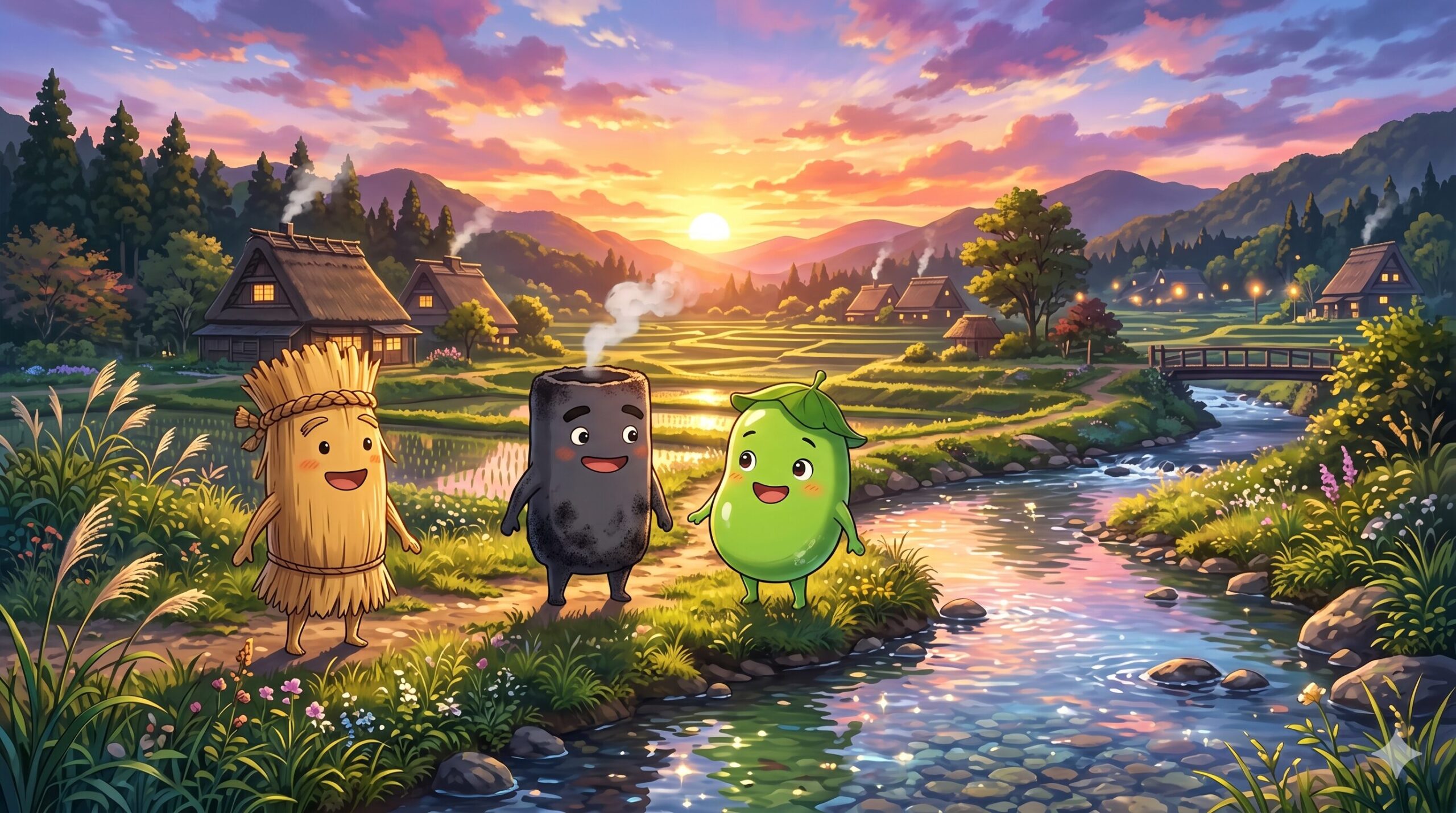
Within Japan’s rich natural environment and deep history lies a vast treasure trove of traditional “folktales” (Mukashibanashi) that add color to daily life. These range from terrifying stories of gods and Yokai (monsters) to heartwarming episodes involving animals. Among them are humorous origin stories that explain, “Why did this plant take its current shape?” Today, we introduce “The Black Line of the Broad Bean,” a slightly comical yet educational tale about the broad bean (Sora-mame), an ingredient that signals the arrival of early summer in Japan. Have you ever noticed the distinct black seam on a broad bean? Discover the surprising story of how that line came to be.
- The Bizarre Adventure of the Bean, Charcoal, and Straw
- The Lesson of “Karma” Hidden in the Tale
- Japanese Culture of “Animism”: Life in All Things
- What Would You Do If You Were the Broad Bean?
- Reference Links & Related Pages
- ソラ豆と炭と藁(わら)の奇妙な冒険
- 物語から読み解く「因果応報」の教訓
- 万物に命が宿る日本文化「アニミズム」
- あなたはソラ豆の立場ならどうしますか?
- 参考リンクと関連ページ
The Bizarre Adventure of the Bean, Charcoal, and Straw
Once upon a time, in the old kitchen of a farmhouse, a “Broad Bean,” a piece of smoldering “Charcoal,” and a single stalk of “Straw” accidentally tumbled from the edge of the hearth onto the floor.
“If we stay here, humans will either eat us or throw us into the fire to turn to ash. Let’s escape to a safe place far away!”
The three quickly agreed and set off on a grand adventure into the outside world. After sneaking out of the house and walking along the rice paddies for a while, they encountered a large, fast-flowing river. There was no bridge in sight. The three were at a loss, but the Straw, with its long and flexible body, came up with a brilliant idea.
“I will stretch my body across the two banks and become a bridge. You two can walk across my back to the other side.”
The Straw stretched itself taut and laid across the river, forming a splendid bridge. The Charcoal began to cross first. However, having just been born from the fire, the Charcoal still retained heat at its core. When it reached the middle of the river and looked down at the terrifying rapids swirling below, it became paralyzed with fear and stopped dead in its tracks.
“It’s hot! I’m scared! What should I do?!”
Because the Charcoal stopped, the Straw beneath its feet began to scorch and sizzle from the heat. Unable to bear the heat and weight any longer, the Straw snapped! Both the Straw and the Charcoal plummeted into the freezing river. With a loud “Hiss!”, the Charcoal’s fire was extinguished, and the two were washed away downstream, never to be seen again.
Watching this entire event from the safety of the riverbank was the Broad Bean. Instead of worrying about its friends, the Bean found the sight so incredibly ridiculous that it burst into loud, uncontrollable laughter.
“Hahaha! How clumsy! That’s hilarious!”
The Broad Bean held its stomach and rolled on the ground, laughing endlessly. However, because it laughed too violently, its body reached its limit. With a loud “Pop!”, the Broad Bean’s stomach split wide open.
Crying in pain from its split stomach, the bean was suddenly approached by an old tailor (a craftsman who makes clothes) who happened to be passing by. Feeling pity for the weeping bean, the old man took a piece of “black thread” from his toolkit and carefully stitched the bean’s torn stomach back together.
Ever since that day, the marks of the black thread sewn by the old tailor have remained on the body of the broad bean as a “black line.”
The Lesson of “Karma” Hidden in the Tale
At first glance, this story is a comical origin tale explaining the physical characteristics of the broad bean. However, delving deeper reveals a very strict moral lesson.
Despite its friends facing a life-threatening crisis, the broad bean did not try to help but instead mocked them. As a result, it suffered a severe injury itself. This clearly illustrates the Buddhist concept of “Karma” (In-ga O-ho in Japanese), a belief deeply rooted in ancient Japan: good deeds bring good outcomes, and bad deeds bring bad outcomes. It carries a moral message for children that those who laugh at the misfortune of others will eventually bring misfortune upon themselves.
However, what makes Japanese folktales truly wonderful is that this story does not end in pure tragedy. The punished bean does not die; it is “healed” (saved) by a passing craftsman. This portrays the spirit of “Jihi” (mercy/compassion), extending a helping hand even to those who have made mistakes.
Japanese Culture of “Animism”: Life in All Things
Through this story, there is a core aspect of Japanese culture we want foreign readers to understand: the spirituality known as “Yaoyorozu no Kami” (eight million gods) or Animism.
In Japan, since ancient times, it has been believed that life and souls reside not only in humans and animals but also in nature like mountains and rivers, and even in “mere objects” like vegetables, charcoal, and straw. The concept of “Tsukumogami”—spirits that inhabit tools used for many years—is part of this belief.
Instead of scientifically dismissing the broad bean’s black line as a genetic trait, the Japanese pass down stories to children saying, “Long ago, it laughed so hard its stomach split, so a tailor stitched it up with black thread.” This rich imagination and deep affection for all existence form the aesthetic foundation of Japanese craftsmanship and entertainment (like anime and manga).
What Would You Do If You Were the Broad Bean?
Now, how did you feel after reading this story?
If you were the Broad Bean, would you have laughed when you saw your friends falling into the river? Or would you have jumped in to save them, regardless of the danger to yourself?
Furthermore, the vegetables and tools around you with “strange shapes” or “mysterious patterns” might just have their own secret stories that no one knows. Does your country have tales that explain unique origins like this one? Please share your thoughts and interesting folktales from your country in the comments below!
Reference Links & Related Pages
- Japanese Folktale Database Reference (Japanese): Sora-mame no Kuroi Suji
- Read more mysterious and beautiful stories from Japan: Back to Japanese Folktale Series
なぜソラ豆には黒い筋があるのか?日本の不思議な昔話「ソラ豆の黒いすじ」
日本の豊かな自然と歴史の中には、日々の生活を彩る数多くの「昔話」が存在します。神様や妖怪の恐ろしい話から、動物たちの心温まるエピソードまでその種類は多岐にわたりますが、中には「なぜその植物は今の形になったのか?」という、自然界のルーツをユーモラスに解き明かす物語もあります。今回は、日本の食卓に初夏を告げる食材「ソラ豆」にまつわる、少し滑稽で教訓に満ちた物語『ソラ豆の黒いすじ』をご紹介します。誰もが一度は目にしたことのあるソラ豆の黒い線。あの線が一体どのようにして生まれたのか、驚きのストーリーをお楽しみください。
ソラ豆と炭と藁(わら)の奇妙な冒険
むかしむかし、ある農家の古びた台所でのことです。囲炉裏(いろり)の端から、ひょんなことで「ソラ豆」と「燃えかけの炭」、そして「一本の藁(わら)」が床に転がり落ちてしまいました。
「このままここにいては、人間に見つかって食べられるか、火の中に投げ込まれて灰にされてしまう。どこか遠くの安全な場所へ逃げ出そう!」
3人はすぐに意気投合し、外の世界へと大冒険に出発しました。家を抜け出し、田んぼのあぜ道を歩き続けていると、やがて目の前に大きな川が現れました。川は勢いよく流れ、橋はどこにも見当たりません。途方に暮れた3人でしたが、ここで細長くしなやかな体を持つ「藁」が名案を思いつきました。
「私が川の両岸に体を渡して、橋の代わりになりましょう。あなたたちは私の背中を歩いて対岸へ渡ってください」
藁は自分の体をピンと張り、川の上に横たわって見事な橋になりました。まずは「炭」が渡り始めました。しかし、炭は火から生まれたばかりで、まだ芯に熱を持っています。川の真ん中まで来たとき、眼下で渦巻く恐ろしい急流を見て足がすくみ、ピタッと立ち止まってしまいました。
「熱い!怖い!どうしよう!」
炭が立ち止まったせいで、足下の藁は炭の熱でじりじりと焦げ始めました。ついに熱さと重さに耐えきれなくなった藁は「プツリ」とちぎれ、炭と一緒に冷たい川の中へ真っ逆さまに落ちてしまいました。「ジュッ!」という音と共に炭の火は消え、2人はそのまま川下に流されて姿を消してしまいました。
その一部始終を岸辺で見ていた「ソラ豆」は、仲間を心配するどころか、そのあまりにも滑稽な様子を見て大爆笑してしまいました。
「アハハハ!なんてドジなんだ!傑作だ!」
ソラ豆はお腹を抱え、地面を転げ回って笑い続けました。しかし、あまりにも激しく笑いすぎたため、ソラ豆の体は限界を迎え、「パチン!」という音と共に、見事にお腹が裂けてしまったのです。
お腹が割れて痛くて泣きじゃくるソラ豆。そこへ偶然、通りかかった仕立て屋(服を作る職人)のおじいさんが現れました。おじいさんは、お腹を割って泣いているソラ豆を不憫に思い、自分の道具箱から「黒い糸」を取り出すと、ソラ豆の裂けたお腹をチクチクと丁寧に縫い合わせてくれました。
それ以来、ソラ豆の体には、仕立て屋のおじいさんが縫ってくれた黒い糸の跡が「黒いすじ」として残るようになったのです。
物語から読み解く「因果応報」の教訓
この物語は一見すると「どうしてソラ豆には黒い筋があるのか」という起源を説明するコミカルな由来話ですが、深く考察すると非常に厳しい教訓が隠されています。
仲間である炭と藁が命の危機に瀕しているのにも関わらず、それを助けようとせずに嘲笑したソラ豆は、結果的に自らのお腹が裂けるという重傷を負いました。これは日本に古くから根付く仏教的な「因果応報(良い行いをすれば良い報いがあり、悪い行いをすれば悪い報いがある)」の考え方を明確に表しています。他人の不幸を笑う者は、やがて自分自身に不幸が返ってくるという、子供たちへの道徳的なメッセージが込められているのです。
しかし、この物語が単なる悲劇で終わらないのが日本昔話の素晴らしいところです。罰を受けたソラ豆はそのまま死んでしまうのではなく、通りすがりの職人によって「治療(救済)」されます。ここには、失敗を犯した者にも救いの手を差し伸べる「慈悲」の精神が描かれています。
万物に命が宿る日本文化「アニミズム」
この物語を通して、海外の読者の皆様にぜひ知っていただきたい日本文化の核心があります。それは「八百万の神(やおよろずのかみ)」や「アニミズム(万物有霊論)」と呼ばれる精神性です。
日本では古来より、人間や動物だけでなく、山や川などの自然、さらには野菜、炭、藁といった「ただの物」にまで命や魂が宿っていると考えられてきました。長く使われた道具に魂が宿る「付喪神(つくもがみ)」という妖怪の概念もその一つです。
ソラ豆の黒い筋を見て、「植物の遺伝的な特性だ」と科学的に片付けるのではなく、「昔、お腹を抱えて笑いすぎたから、仕立て屋さんに黒い糸で縫ってもらったんだよ」と子供たちに語り継ぐ。この豊かな想像力と、すべての存在に対する親しみと愛情こそが、日本のものづくりやエンターテインメント(アニメや漫画など)の根本に流れる美意識なのです。
あなたはソラ豆の立場ならどうしますか?
さて、この物語を読んで、あなたはどう感じましたか?
もしあなたがソラ豆だったなら、川に落ちていく仲間を見たとき、笑ってしまったでしょうか?それとも、自分の身の危険を顧みずに助けようと飛び込んだでしょうか。
そして、あなたの身の回りにある野菜や道具の「ちょっと変わった形」や「不思議な模様」には、もしかすると誰も知らない秘密のストーリーが隠されているかもしれません。あなた自身の国には、このようなユニークな由来を語る物語はありますか?ぜひコメント欄であなたの考えや、あなたの国の面白い昔話を教えてください!
参考リンクと関連ページ
- 参考にした日本の民話データベース:ソラ豆の黒いすじ
- 日本の不思議で美しい物語をもっと読む:Japanese Folktale Series 一覧へ
コメント