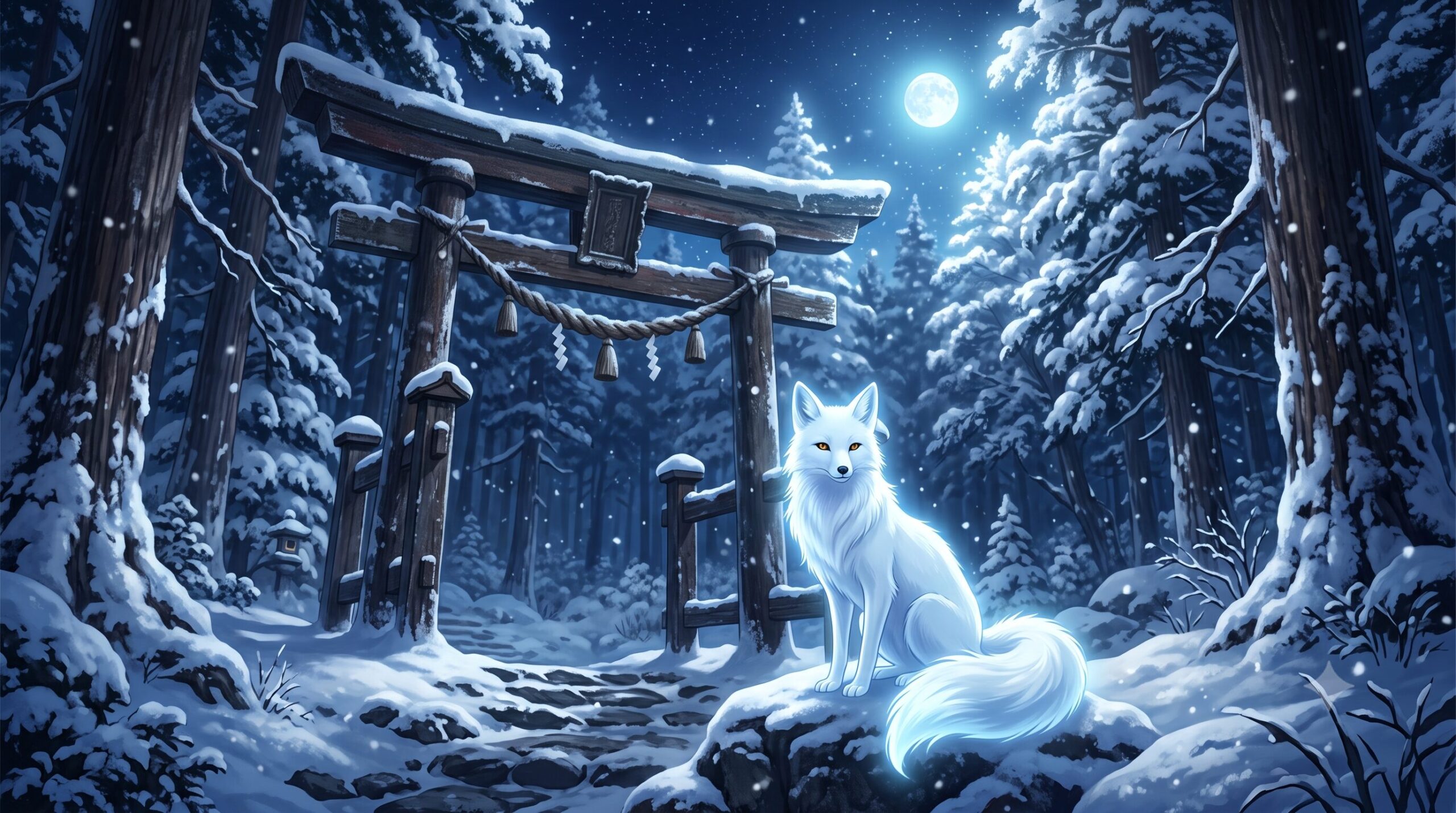
Chapter 1: The Tale of “The Fox’s Pilgrimage of Gratitude” (Kitsune no Orei-mairi)
Once upon a time, in a village at the foot of a snowy mountain, there lived a kind-hearted woodcutter named Gosaku. On a harsh winter day, while Gosaku was gathering firewood in the mountains, he found a young white fox cub crying, its leg caught in a hunter’s trap hidden in the snow.
“Oh no, this must hurt terribly,” Gosaku said compassionately. He carefully released the trap, tore his own hand towel into a bandage, and gently wrapped it around the cub’s injured leg. “Don’t ever go near traps made by humans again,” he warned softly. The fox cub stared intently at Gosaku’s face, bowed its head repeatedly as if expressing profound thanks, and then disappeared into the snowy mountains.
Several years passed. A severe drought struck the village, followed by a terrible epidemic. Gosaku, too, fell gravely ill, unable even to rise from his bed. With no money to summon a doctor, he prepared to quietly accept his fate.
Then, one night, he heard a faint thud at the door of his hut. The next morning, when a neighbor came to check on him, they found rare medicinal herbs and fresh nuts—items not native to the village—left at the doorstep. This continued every single night.
Miraculously, after brewing and drinking the herbs, Gosaku’s illness rapidly faded. Feeling fully recovered, Gosaku decided to thank his benefactor directly. He stayed awake late into the night and peeked through the crack in his door.
Appearing on the moonlit snowy path was not a human, but a beautiful, fully grown white fox. Tied securely around its leg was the faded scrap of the very hand towel Gosaku had used years ago. The fox bowed deeply in front of Gosaku’s house, then turned and headed straight toward the local Inari Shrine, the home of the village’s guardian deity.
Gosaku quietly followed and witnessed the fox praying fervently before the main hall of the shrine. The fox had been performing an “Orei-mairi” (a pilgrimage of gratitude for a fulfilled vow) to the gods every single night to save Gosaku’s life. Tears streamed down Gosaku’s face as he offered his own deep prayers of gratitude to the fox and the mountain gods. From that day on, the bond between Gosaku and the fox was passed down as a legend of guardianship, and the village prospered forever.
Chapter 2: Analyzing the Tale – Why a Fox?
The most remarkable aspect of “The Fox’s Pilgrimage of Gratitude” is the combination of an animal’s “repayment of a favor” (Ongaeshi) with the religious and spiritual act of an “Orei-mairi” (a pilgrimage of thanks to Shinto deities). While Japanese folklore is filled with stories of animals helping humans, such as “The Grateful Crane,” depicting an animal praying directly to the gods is truly exceptional.
In Japan, foxes are not merely wild animals; they have long been revered as the divine messengers (Kenzoku) of “Inari,” the deity of agriculture and fertility. The fox in this story does not just deliver herbs; its pilgrimage to the shrine strongly signifies that the fox exists on the boundary between the natural world, the divine realm, and the human world. The gratitude expressed through the fox is portrayed not just as an individual’s thanks, but as a blessing from the natural world and the gods themselves.
Chapter 3: Unraveling Japanese Culture Through Folktales
From this tale, we can clearly decipher the culture of “coexistence with nature” and “animism” (the belief that spirits dwell in all things) that flows deeply at the roots of Japanese society.
Since ancient times, Japanese people have believed that gods reside in mountains, rivers, trees, and animals. Rather than dominating nature, humans have lived humbly as a part of it. Gosaku’s unconditional love in saving the fox cub symbolizes the respect humans must pay to nature. In return, the fox’s gratitude serves as an ancient, yet highly relevant lesson in sustainability: if humans cherish nature, nature will bless humans in return.
Furthermore, the unique Japanese spiritual concepts of “On” (grace/favor) and “Giri” (duty/obligation) are perfectly embodied here. The attitude of never forgetting a favor received, and seeking to repay it even at great personal cost, is a virtue deeply ingrained in the modern Japanese psyche.
To understand this tale more deeply, it is crucial to know the history of foxes and the Inari faith. You can learn authentic information about Japanese Shinto and shrine culture at the official website of the Association of Shinto Shrines (Jinja Honcho). Additionally, you can explore many more fascinating stories like this in our Japanese Folktale Series on this blog.
Chapter 4: What Would You Do?
What emotions did the heartwarming story of Gosaku and the white fox stir within you? In our busy modern society, we sometimes forget to respect nature or show gratitude for the favors we receive.
If you were to find a small, injured life in the forest, would you reach out to help as Gosaku did? And do you believe in the “repayment of gratitude” from the natural world, or the existence of invisible bonds? Please cherish your own answers and the profound insights you have gained from this Japanese folktale.
日本の心を伝える美しい昔話「キツネのお礼まいり」
第一章:物語「キツネのお礼まいり」
むかしむかし、ある雪深い山のふもとの村に、吾作(ごさく)という心優しい木こりが住んでいました。ある厳しい冬の日のことです。吾作が山へ薪を拾いに行くと、雪の中に仕掛けられた罠に、まだ幼い白い子ギツネが足を挟まれて泣いていました。
吾作は「これはいかん、痛かっただろうに」と罠を外し、自分の手ぬぐいを割いて子ギツネの傷ついた足に丁寧に巻き付けました。「もう人間の作った罠には近づくでないぞ」と声をかけると、子ギツネは吾作の顔をじっと見つめ、何度もお辞儀をするように頭を下げてから、雪山の中へ消えていきました。
それから数年の月日が流れました。村を深刻な干ばつと、それに続く疫病が襲いました。吾作もまた重い病に伏せり、起き上がることすらできなくなってしまいました。医者を呼ぶお金もなく、吾作はただ静かに運命を受け入れようとしていました。
そんなある夜のことです。吾作の家の戸口に、コトリと何かを置く音がしました。翌朝、近所の者が様子を見に来ると、戸口には村では採れないはずの貴重な薬草と、新鮮な木の実が置かれていました。それが毎晩、毎晩続いたのです。
不思議なことに、その薬草を煎じて飲んだ吾作の病は、みるみるうちに回復していきました。すっかり元気になった吾作は、毎晩薬草を届けてくれる恩人に直接礼を言おうと、夜更けに起きて戸口の隙間から外を覗き込みました。
月の光に照らされた雪道に現れたのは、人間ではなく、一匹の美しく成長した白ギツネでした。その足には、かつて吾作が巻いてやった古い手ぬぐいの切れ端がしっかりと結ばれていました。キツネは吾作の家の前で深く頭を下げると、そのまま村の鎮守であるお稲荷様の神社へと向かいました。
吾作が後を追うと、キツネは神社の本殿の前で熱心に祈りを捧げていました。実は、キツネは吾作の命を救うため、神様への「お礼まいり(満願成就の感謝の参拝)」と「願掛け」を毎晩欠かさず行っていたのです。吾作は涙を流し、キツネと山の神様に深く感謝の祈りを捧げました。それ以来、吾作とキツネの絆は山と村の守り神として語り継がれ、村は永遠に豊かに栄えました。
第二章:物語の考察「なぜキツネだったのか」
この「キツネのお礼まいり」という物語において最も注目すべき点は、動物の「恩返し」というテーマに、「お礼まいり(神仏への感謝の参拝)」という宗教的・精神的な行動が組み合わされていることです。日本の昔話には「鶴の恩返し」など動物が人間を助ける物語が数多く存在しますが、動物自身が神に祈るという描写は特筆すべきものです。
キツネは単なる野生動物ではなく、日本では農耕神である「稲荷神(お稲荷様)」の使い(眷属)として古くから信仰の対象とされてきました。この物語において、キツネが吾作に薬草を届けるだけでなく、神社に参拝している姿は、キツネが自然界と神の世界(神域)、そして人間の世界を行き来する特別な境界の存在であることを強く示しています。キツネを通じた恩返しは、単なる個人の感謝を超え、自然界や神々からの祝福そのものとして描かれているのです。
第三章:昔話から読み解く日本文化と私たちのつながり
この物語からは、日本の根底に流れる「自然との共生」と「アニミズム(万物に魂が宿るという思想)」の文化を鮮明に読み解くことができます。
日本では古来より、山や川、木々や動物たちすべてに神様が宿っていると考えられてきました。人間は自然を支配するのではなく、自然の一部として謙虚に生きてきました。吾作が子ギツネを助けた無償の愛は、人間が自然に対して払うべき敬意の象徴です。そしてキツネの恩返しは、人間が自然を大切にすれば、自然もまた人間に恵みをもたらすという、持続可能な関係性(サステナビリティ)の古き良き教えでもあります。
また、「恩(On)」と「義理(Giri)」という日本独自の精神性もここには表れています。受けた恩は決して忘れず、自らを犠牲にしてでも報いようとする姿勢は、現代の日本人の中にも美徳として深く根付いています。
この物語をより深く理解するためには、キツネと稲荷信仰の歴史を知ることが重要です。日本の神道や神社文化に関する正しい知識については、神社本庁の公式ウェブサイトで詳しく学ぶことができます。また、当ブログのJapanese Folktale Series(日本昔話シリーズ)では、このような魅力的な物語を多数紹介しています。
第四章:あなたならどうしますか?
吾作と白ギツネの心温まる物語を通じて、あなたはどのような感情を抱きましたか? 現代の忙しい社会において、私たちは時に自然への敬意や、受けた恩への感謝を忘れてしまいがちです。
もしあなたが、森の中で傷ついた小さな命を見つけたら、吾作のように手を差し伸べることができるでしょうか。そして、あなたは自然界からの「恩返し」や、目に見えない絆の存在を信じますか? ぜひ、あなたの心の中にある答えと、この物語から得た気づきを大切にしてみてください。


コメント