Long, long ago, on the nature-rich island of Kudaka in Okinawa, there lived a beautiful woman named Omitaru. She caught the eye of the King of Shuri and lived happily with him in his castle. Eventually, Omitaru became pregnant with the King’s child, but one day, an unexpected incident occurred. In the middle of a solemn ceremony attended by many retainers, the heavily pregnant Omitaru accidentally passed gas.
The King, who was extremely strict, could not forgive such a breach of etiquette in public. Furious, he banished the pregnant Omitaru from the castle. Overcome with sorrow, Omitaru returned to her hometown on Kudaka Island, where she quietly gave birth to a baby boy. The boy was named Kanematsugane, and surrounded by nature, he grew up to be an energetic and kind-hearted young lad.
One day, as Kanematsugane grew older, he noticed that the other children had fathers, and he asked Omitaru why he did not. Tearfully, Omitaru revealed the events of the past and told him that his father was the King of Shuri. Upon learning the truth, Kanematsugane did not resent his father. Instead, he began to look for a way to heal his mother’s sorrow and bring their family back together.
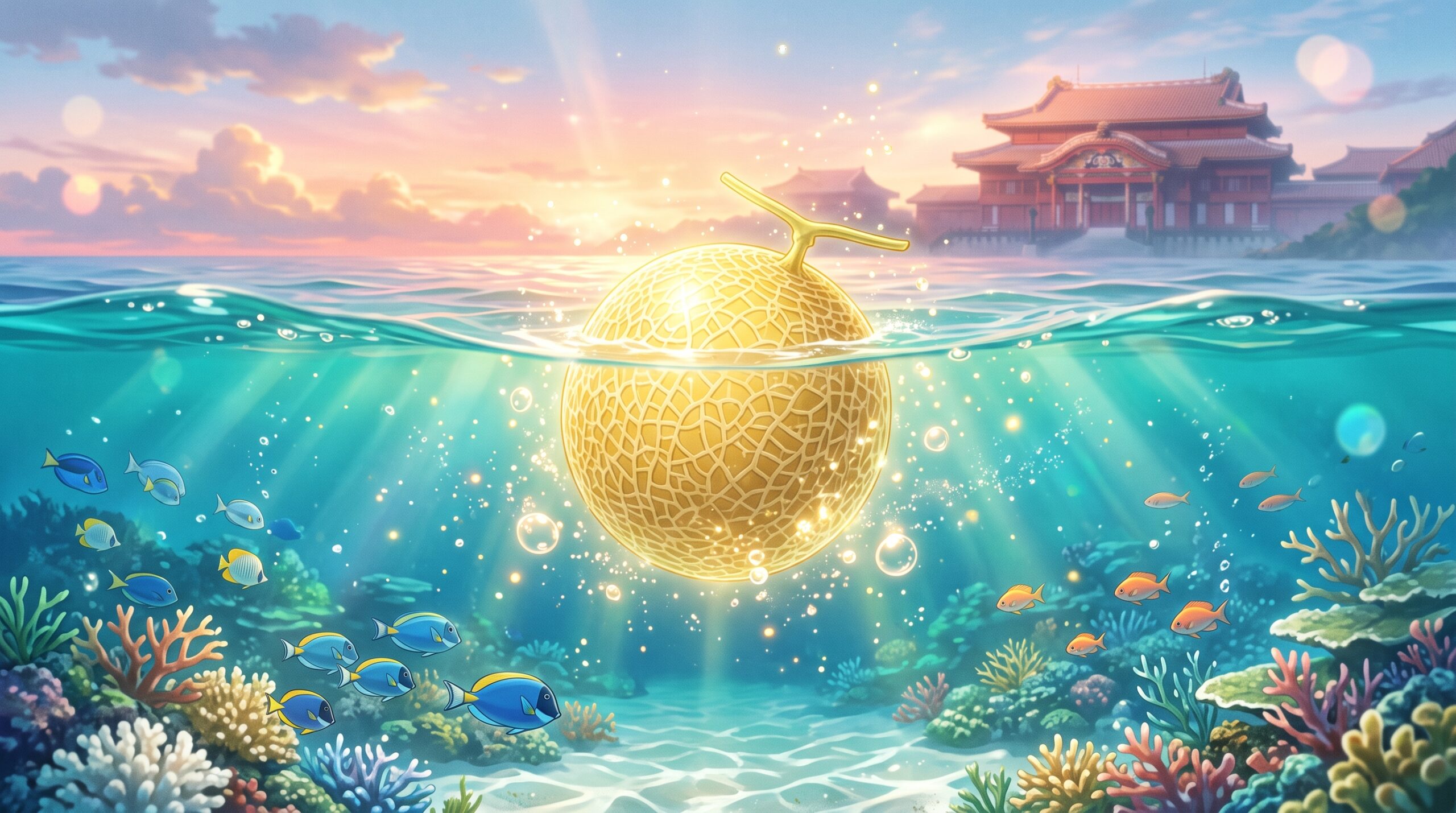
Kanematsugane dove from a high cliff into the deep sea, and at the dark bottom of the ocean, he found a glowing seed of a “Golden Melon.” With this seed in hand, he headed to Shuri Castle, where the King resided. Standing before the castle gates, Kanematsugane shouted at the top of his lungs, “Who wants a magical seed that grows Golden Melons!” At first, he was ignored, but his sheer persistence and the rarity of a “Golden Melon” piqued the King’s interest, and the boy was finally invited inside.
The King glared at the boy and intimidated him, saying, “Will it truly grow a Golden Melon? If this is a lie, I will show no mercy, even to a child.” However, Kanematsugane stood his ground and boldly replied, “It will undoubtedly grow a Golden Melon. But there is one condition for this seed to sprout. It must be planted by a woman who has never once passed gas in her entire life.”
Upon hearing those words, the King gasped. It is impossible for any human being to avoid natural biological functions. There is no such person in the world who has never passed gas. The King realized the foolishness and cruelty of having banished his pregnant wife over such a trivial mistake in the past. He also became absolutely certain that the clever and brave boy standing before him was his own flesh and blood.
Filled with deep remorse, the King immediately sent messengers to bring Omitaru back to Shuri Castle. Thus, Omitaru was welcomed back as Queen, and Kanematsugane as a noble Prince. The family of three lived happily ever after.
Analysis of “The Golden Melon”: Forgiveness and a Child’s Wisdom
The greatest charm of this story lies in how it presents a profound moral lesson while using a fundamental human biological function as its theme. The plot of being banished from a castle for “passing gas”—a reason that makes us chuckle today—illustrates the strict class systems, the rigidity of those in power, and the harsh standards imposed on women at the time.
However, the core of the narrative is not revenge. The action taken by the grown son, Kanematsugane, was not a protest fueled by violence or anger, but a highly sophisticated riddle utilizing “humor and logic.” By presenting the condition that “only someone who has never passed gas can grow it,” he led his father, the King, to realize the truth that “no human is perfect.” The King, in turn, possessed the magnanimity to genuinely admit his mistake, teaching us the importance of a heart that forgives the errors of others.
Connection to Japanese Culture: A Spirit of Tolerance and Humor
Japanese folktales and myths often feature this kind of “tolerance,” where human biological functions and failures are laughed off, ultimately leading to peaceful resolutions. Okinawan (Ryukyuan) folktales, in particular, strongly reflect a culture that values the connection between nature and humans, as well as family bonds. The element of finding a “Golden Melon” seed at the bottom of the sea is a unique expression of a maritime culture that believes in the bounty and mystery of the ocean.
Furthermore, in a society that tends to be bound by strict rules and “tatemae” (superficial principles), the method of wrapping “honne” (the true nature of human beings) in humor to make others realize their faults is the very essence of “wisdom” in traditional Japanese communication. This story is a precious piece that vividly preserves Japan’s unique cultural spirit, where solemnity and comicality coexist.
What Would You Do?
How did you feel after reading this story? If you were in the King’s position, have you ever let go of something precious because you demanded perfection? And if you were Kanematsugane, could you have confronted those who rejected you in such a clever and compassionate manner? I encourage you to apply the message of this story to your own life and relationships, and reflect upon it deeply.
Related Links
昔話「金のうり」のストーリー
昔々、沖縄の自然豊かな島、久高島に、思樽(おみたる)という美しい女性がいました。彼女は首里の王様に見初められ、お城で幸せに暮らしていました。やがて思樽は王様の子を身ごもりますが、ある日、思いもよらない事件が起こります。大勢の家臣が集まる厳粛な儀式の最中に、身重であった思樽は、誤って大きなおならをしてしまったのです。
当時の王様は非常に厳格であり、その場での無作法を許すことができませんでした。激怒した王様は、身ごもっていた思樽をお城から追い出してしまいます。悲しみに暮れた思樽は故郷の久高島へと戻り、そこでひっそりと男の子を産みました。その子は金松兼(かねまつがね)と名付けられ、大自然の中ですくすくと元気で心優しい少年へと成長していきました。
金松兼が大きくなったある日、彼は他の子供たちには父親がいるのに、なぜ自分には父親がいないのかと思樽に尋ねました。思樽は涙ながらに過去の出来事を打ち明け、父親が首里の王様であることを伝えました。真実を知った金松兼は、決して父親を恨むことはありませんでした。むしろ、母の悲しみを晴らし、再び家族が一緒に暮らせる方法を探し始めます。
金松兼は高い崖から深い海へと飛び込み、暗い海の底に光り輝く「黄金の瓜」の種を見つけ出しました。彼はその種を手に、王様が住む首里城へと向かいます。お城の門前に到着した金松兼は、「金の瓜がなる不思議な種はいらんかね!」と大声で叫び続けました。初めは相手にされませんでしたが、そのあまりのしつこさと「金の瓜」という珍しさに興味を持った王様は、ついに少年を城内へと招き入れました。
王様は少年を鋭く見つめ、「本当に金の瓜がなるのか。もし嘘であれば、子供であっても容赦はしないぞ」と威圧しました。しかし、金松兼は一歩も引かず、堂々とこう答えました。「間違いなく金の瓜がなります。しかし、この種を植えて芽を出させるには、たった一つだけ条件があります。それは、『今まで一度も屁をふったことがない女』が植えなければならないということです。」
その言葉を聞いた瞬間、王様はハッとしました。人間であれば、誰しも生理現象を避けることはできません。今まで一度もおならをしたことがない人間など、この世に存在するはずがないのです。王様は、過去に自分が些細な過ちで身重の妻を追い出してしまったことの愚かさと冷酷さに気づきました。そして目の前に立つ賢く勇敢な少年が、自分の血を引く実の息子であると確信したのです。
王様は深く反省し、すぐに使いを出して思樽を首里城へと呼び戻しました。こうして思樽は再び王妃として、金松兼は立派な王子として迎え入れられ、家族三人は末永く幸せに暮らしました。
「金のうり」の考察:過ちを許す心と子供の知恵
この物語の最大の魅力は、人間の本質的な生理現象を題材にしながらも、非常に深い教訓を提示している点にあります。「おならをしてしまった」という、現代から見れば思わず笑ってしまうような理由で城を追放されるという展開は、当時の身分制度や権力者の厳格さ、そして女性に対する厳しい視線を描写しています。
しかし、物語の中心にあるのは復讐ではありません。成長した息子・金松兼がとった行動は、武力や怒りによる抗議ではなく、「ユーモアと論理」を用いた非常に高度な謎かけでした。「おならをしたことがない人間だけが育てられる」という条件を提示することで、彼は父親である王様に「完璧な人間など存在しない」という真理を自ら悟らせました。王様もまた、自らの過ちを素直に認める度量を持っており、この物語は「過ちを許し合う心」の重要性を私たちに教えてくれます。
日本文化との関連:おおらかさとユーモアの精神
日本の民話や昔話には、このように人間の生理現象や失敗を笑い飛ばし、最終的には平和的な解決へと導く「おおらかさ」が数多く見られます。特に沖縄(琉球)の民話においては、自然と人間の結びつきや、家族の絆を重んじる文化が強く反映されています。海の底から「金の瓜」の種を見つけるという要素も、豊かな海の恵みと神秘性を信じる海洋文化ならではの表現です。
また、厳しい規則や建前(表面上のルール)に縛られがちな社会において、本音(人間のありのままの姿)をユーモアで包み込んで相手に気づかせるという手法は、日本古来のコミュニケーションにおける「知恵」そのものです。この物語は、厳粛さと滑稽さが共存する日本独自の文化精神を色濃く残している貴重な作品と言えます。
あなたならどうしますか?
この物語を読んで、あなたはどのように感じましたか?もしあなたが王様の立場であったなら、完璧を求めるあまりに大切なものを手放してしまうことはありませんか?また、もしあなたが金松兼の立場であったなら、自分たちを拒絶した相手に対して、これほどまでに賢く、そして思いやりのある方法で立ち向かうことができたでしょうか。ぜひ、あなた自身の人生や人間関係に置き換えて、この物語のメッセージを深く考えてみてください。
コメント