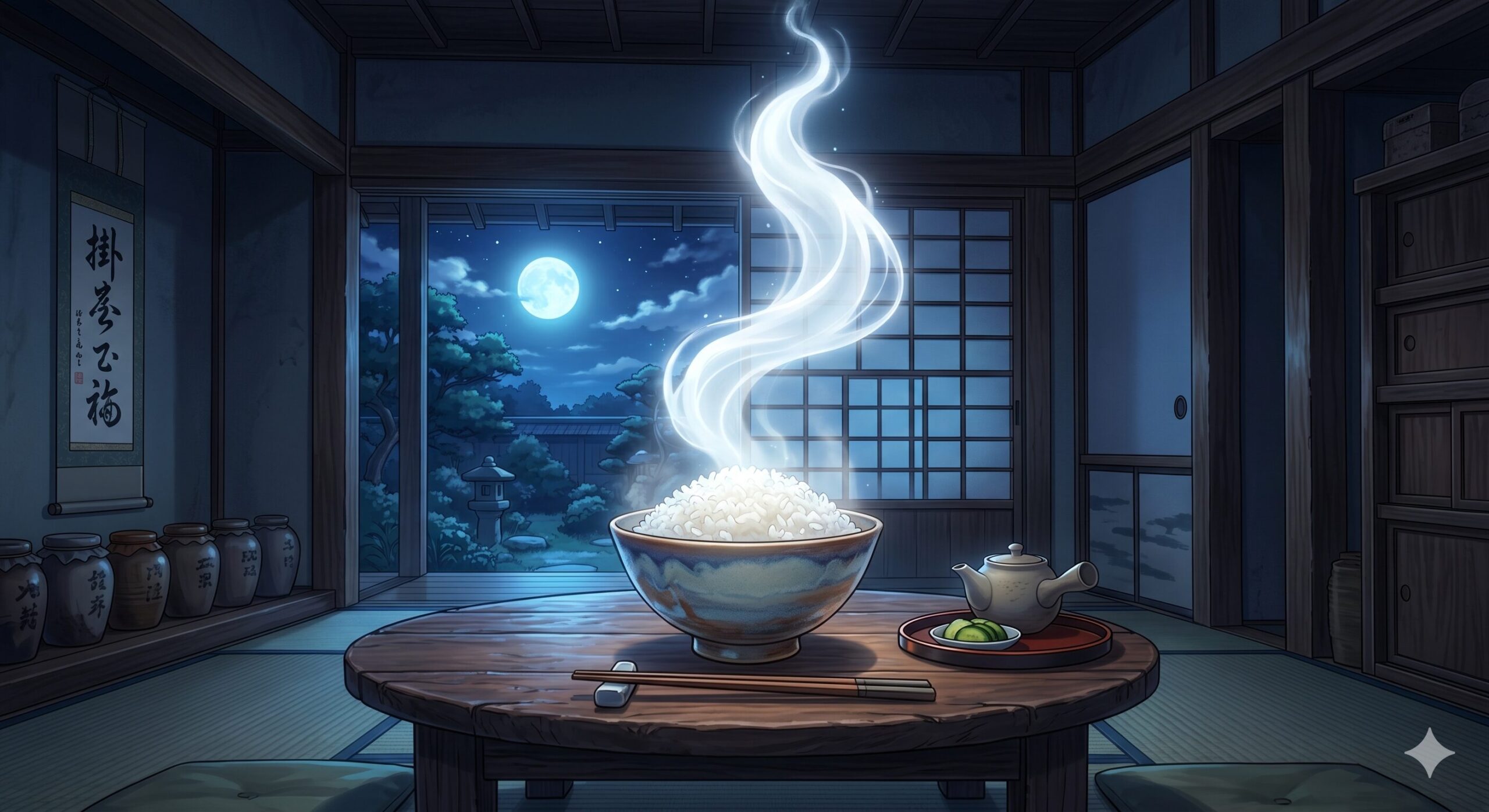
The Sin Hidden in a Rich Village: The Terrifying yet Profound Story of “Spirit of the Grain”
Long, long ago, there was a small village completely surrounded by deep mountains. The land in this village was exceptionally fertile, and blessed with a good climate, it yielded an overwhelming abundance of grain every year—more than the villagers could possibly eat. However, because of this excessive wealth, the feeling of gratitude toward food eventually vanished from the villagers’ hearts. A terrifying custom took root where they treated grains like rice and wheat as if they were garbage, discarding anything that was slightly old or leftover without a second thought.
One day, a traveling monk passed through this village. As he left the village and attempted to cross a steep mountain pass, the sun set completely, plunging the area into darkness. At a loss, the monk found a magnificent mansion deep in the mountains and knocked on the door to ask for a night’s lodging.
“Excuse me, is anyone here?”
The monk called out several times, but there was absolutely no reply. Puzzled, he stepped inside the mansion and found a room with a splendid mosquito net hanging and the highest quality, soft habutae silk futons laid out. Exhausted from his long journey, the monk decided to rest here for a short while, regardless of whose mansion it was.
It happened in the dead of night. The monk, who had fallen into a deep sleep, was awakened by an eerie “creak, creak” sound, like a heavy cart being pulled. The sound gradually approached and stopped dead right in front of the sliding door of the room where the monk was sleeping.
“Okaka, are you there?”
With an eerie voice, the sliding door slowly opened, and a pure white, faceless monster with no eyes, nose, or mouth entered the room. Before the monk could even catch his breath, a pitch-black monster, a bright yellow monster, and monsters of every possible color emerged from the darkness one after another, completely surrounding the mosquito net where the monk was sleeping.
“Okaka, are you there?!” “Okaka, are you there?!”
The monsters shouted loudly and began to violently shake the monk’s mosquito net. Reaching the peak of terror, the monk shouted frantically.
“I am not an Okaka!!”
At the exact moment the monk shouted with all his might, a rosary with an intricately carved wooden rooster slipped from his robes and fell. Then, miraculously, the rooster carved into the rosary seemed to come to life and let out a loud, ringing crow: “Cock-a-doodle-doo!”
Hearing the cry of the first rooster, the monsters mistakenly thought morning had come. Panicking, they scrambled and fled from the mansion in a massive horde.
When the monk woke up the next morning, the magnificent mansion that was supposed to be there had completely vanished without a trace, and he was lying in the middle of an empty field. Looking around, he saw countless deep cart tracks etched into the ground. At the end of those tracks, deep in the woods, lay a massive, rotting pile of grains that had been carelessly thrown away by the villagers.
Realizing everything, the monk hurried back to the village, gathered the villagers, and told them about the terrifying events of the previous night.
“The grains you threw away appeared as monsters out of pure regret. The white monsters are rice, the black monsters are beans and sesame, and the yellow monsters are millet and wheat. Even grains have lives. You must never waste even a single grain of rice!”
Receiving the monk’s strict yet compassionate reprimand, the villagers deeply regretted their arrogant and foolish actions. They then held a respectful memorial service for the discarded grains. From that day on, monsters never appeared in the village again, and the villagers treated every single grain with heartfelt gratitude, never wasting a single one.
Analysis of the Terror and Lessons Hidden in the “Spirit of the Grain”
This story is not merely a ghost story for children. It is a powerful warning against “human arrogance in the face of material wealth.” The reason the monsters were faceless with no eyes, nose, or mouth is believed to represent the sorrow and anger of the discarded grains, which were completely stripped of their “dignity as individual lives” and treated merely as faceless garbage.
Furthermore, the colors symbolize traditional Japanese crops: white for white rice, black for black beans and sesame, and yellow for millet and wheat. The words they uttered, “Okaka, are you there?” can be interpreted as a heartbreaking cry pleading with the monk (“Okaka” is an old dialect word for a monk, or a motherly figure) for salvation and a proper memorial. This story sharply reminds us today how easily abundance can paralyze human morality.
Life Dwelling in All Things: The Connection to Japanese Culture and Animism
At the foundation of this folktale lies the profound Japanese belief in “Yaoyorozu no Kami” (Eight Million Gods). Since ancient times, Japanese people have believed that gods and spirits dwell in all natural objects and phenomena—from mountains, rivers, and trees, down to a single grain of rice.
There is a widely known teaching in Japan that says, “The Chinese character for rice (米) is written with the number eighty-eight (八十八). It takes eighty-eight gods (or the immense labor of farmers) to produce rice.” This story of the “Spirit of the Grain” is the very origin of the Japanese spirit of “Mottainai,” which resonates globally. It beautifully encapsulates the Japanese religious and ethical view that we should not merely consume the blessings of nature, but offer deep gratitude to the precious lives dwelling within them. In Japan, where agriculture has been the foundation of the nation, respect for food is entirely synonymous with respect for life itself.
Reference Link: History and Culture of Rice (Wikipedia)
Internal Link: Read more Japanese Folktale Series
How Will You Live? (A Question to the Reader)
Do you eat all of your daily meals without leaving a single bite? In modern society, where food is easily obtained at supermarkets and convenience stores and massive food loss is a serious issue, aren’t we making the exact same mistake as the foolish villagers in the “Spirit of the Grain”?
When you reflect on the life embedded in a single piece of food and the labor of the people who grew it, how will your attitude toward today’s meal change? Please, take a close look at your own dining table and try incorporating the realizations you gained from this story into your daily life starting today. What will you change, starting with your very next meal?
- The Sin Hidden in a Rich Village: The Terrifying yet Profound Story of “Spirit of the Grain”
- Analysis of the Terror and Lessons Hidden in the “Spirit of the Grain”
- Life Dwelling in All Things: The Connection to Japanese Culture and Animism
- How Will You Live? (A Question to the Reader)
- 日本の昔話「穀の精」:豊かな村に現れた化け物の正体と日本文化の深層
日本の昔話「穀の精」:豊かな村に現れた化け物の正体と日本文化の深層
豊かな村に隠された罪:昔話「穀の精」の恐ろしくも深いストーリー
むかしむかし、四方を深い山々に囲まれた小さな村がありました。この村の土地は非常に肥沃で、気候にも恵まれていたため、毎年食べきれないほどの豊かな穀物が収穫されていました。しかし、豊かすぎるがゆえに、村人たちの心からはいつしか食べ物に対する感謝の念が完全に消え失せていました。彼らは米や麦などの穀物をまるでゴミのように扱い、少しでも古くなったり余ったりしたものは平気で捨てるという、恐ろしい悪習が根付いていたのです。
ある日のこと、一人の旅の僧侶がこの村を通りかかりました。村を抜け、険しい峠を越えようとしたところで日が完全に暮れてしまい、辺りは真っ暗になりました。途方に暮れていた僧侶は、山中に一軒の立派な屋敷を見つけ、一夜の宿を借りようと戸を叩きました。
「ごめんください、どなたかいらっしゃいませんか」
僧侶が何度も声をかけましたが、全く返事がありません。不思議に思いながら屋敷の中に入ると、ある部屋に立派な蚊帳が吊るされ、ふかふかの最高級の羽二重の布団が敷かれているのを見つけました。長い旅で歩き疲れていた僧侶は、誰の屋敷かわからないものの、ここで少しだけ休ませてもらうことにしました。
真夜中のことです。深い眠りに落ちていた僧侶は、重い荷車を引くような「ギシ、ギシ」という不気味な音で目を覚ましました。その音は次第に近づき、僧侶が寝ている部屋の襖の前でピタリと止まりました。
「おかか、おるか?」
不気味な声とともに襖がゆっくりと開き、真っ白で目も鼻も口もない、のっぺらぼうの化け物が部屋に入ってきました。僧侶が息を呑む間もなく、続けて真っ黒な化け物、真っ黄色な化け物など、ありとあらゆる色の化け物たちが次々と暗闇から現れ、僧侶の寝ている蚊帳をぐるりと取り囲んだのです。
「おかか、おるか!」「おかか、おるか!」
化け物たちは大声で叫びながら、僧侶の蚊帳を激しく揺さぶり始めました。恐怖の絶頂に達した僧侶は、無我夢中で叫びました。
「わしはおかかじゃない!!」
僧侶が力いっぱい叫んだその瞬間、僧侶の懐から、木彫りの鶏が精巧に施された数珠がポロリとこぼれ落ちました。すると不思議なことに、その数珠に彫られていた鶏が命を吹き込まれたかのように「コケコッコー!」と高らかに鳴き声を上げたのです。
一番鶏の鳴き声を聞いた化け物たちは、朝が来たと勘違いし、慌てふためきながら屋敷からゾロゾロと逃げていきました。
翌朝、僧侶が目を覚ますと、そこにあったはずの立派な屋敷は跡形もなく消え去り、自分はただの原っぱの真ん中で寝転がっていました。周囲を見渡すと、地面には無数の荷車の轍(わだち)が深く刻まれており、その轍が続く林の奥には、村人たちによって無造作に捨てられ、無惨に腐敗した大量の穀物の山があったのです。
すべてを悟った僧侶は急いで村に戻り、村人たちを集めて昨夜の恐ろしい出来事を語りました。
「お前たちが捨てた穀物が、無念のあまり化け物となって現れたのだ。白い化け物は米、黒い化け物は豆や胡麻、黄色い化け物は粟や麦だ。穀物といえども命はある。一粒の米といえども、決して粗末にしてはならない!」
僧侶の厳しくも慈愛に満ちた叱責を受けた村人たちは、自分たちの傲慢で愚かな行いを深く反省しました。そして、捨てられた穀物たちを手厚く供養しました。それ以来、この村に化け物が現れることは二度となく、村人たちは一粒の穀物も無駄にすることなく、心から感謝して大切に扱うようになりました。
「穀の精」に隠された恐怖と教訓の考察
この物語は、単なる子供向けの怪談ではありません。「物質的な豊かさに対する人間の傲慢さ」への強烈な警鐘です。化け物たちが目も鼻も口も持たないのっぺらぼうであった理由は、捨てられた穀物たちが「個々の命としての尊厳」を完全に奪われ、顔のない単なるゴミとして扱われた悲しみと怒りを表現していると考えられます。
また、白色は白米、黒色は黒豆や胡麻、黄色は粟や麦といった、日本の伝統的な農作物を象徴しています。彼らが発した「おかか、おるか?」という言葉は、僧侶(おかか=お坊さんを指す古い方言、あるいは母なる存在)に対して、自分たちを救済し供養してほしいという悲痛な叫びであったと読み解くことができます。豊かさが人間の道徳心をいかに簡単に麻痺させるかを、この物語は現代に生きる私たちにも鋭く突きつけています。
万物に宿る命:日本文化と精霊信仰(アニミズム)の関連
この昔話の根底には、日本特有の「八百万の神(やおよろずのかみ)」という深い信仰があります。日本では古来より、山や川、木々、そして一粒の米に至るまで、すべての自然物や現象に神や精霊が宿ると信じられてきました。
「米という字は八十八と書く。お米ができるまでに八十八の神様(または農家の手間)がかかっている」という、日本人に広く親しまれている教えがあります。この「穀の精」の物語は、世界中で共感を呼んでいる日本の「もったいない(Mottainai)」精神の原点そのものです。自然からの恵みをただ消費するだけでなく、そこに宿る尊い命に深い感謝を捧げるという、日本人の宗教観と倫理観が見事に凝縮されています。農業を国の基盤としてきた日本において、食への敬意は命への敬意と同義なのです。
参考リンク:米の歴史と文化(Wikipedia)
内部リンク:日本の昔話シリーズをもっと読む
あなたはどう生きますか?(読者への問いかけ)
あなたは毎日の食事を、最後の一口まで残さず食べていますか?スーパーやコンビニで手軽に食べ物が手に入り、大量の食品ロスが問題となっている現代社会において、私たちは「穀の精」に登場する愚かな村人たちと全く同じ過ちを犯してはいないでしょうか。
一粒の食べ物に込められた命と、それを育てた人々の労力に思いを馳せるとき、あなたの今日の食事に向き合う姿勢はどのように変わるでしょうか。ぜひ、あなた自身の食卓を見つめ直し、この物語から得た気づきを今日からの生活に取り入れてみてください。あなたなら、次の食事から何を変えますか?

コメント