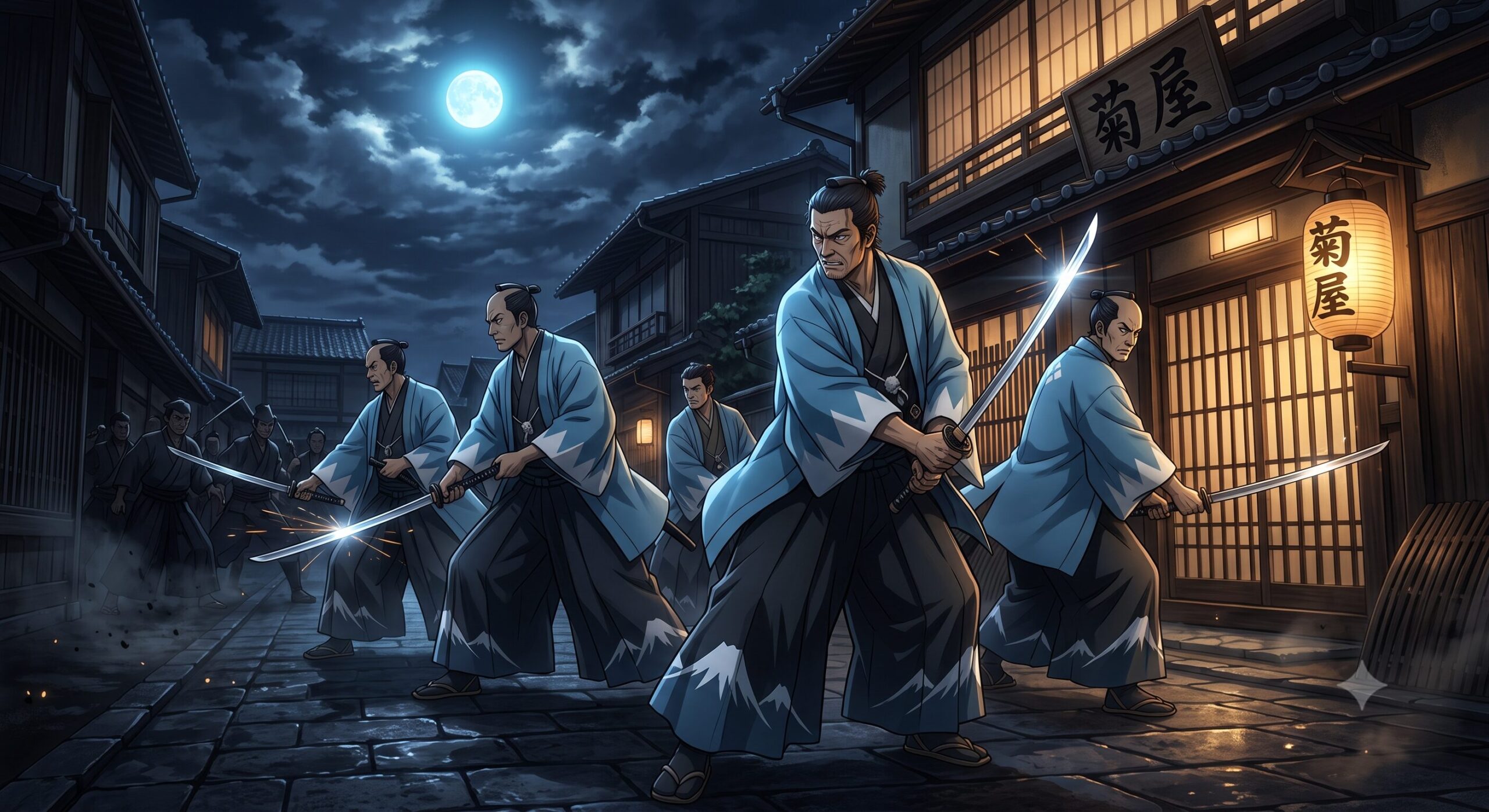
On the sweltering summer night of July 8, 1864 (the 5th day of the 6th month, Genji 1), an event that would dramatically shift the gears of Japanese history erupted at the Ikedaya Inn in Kyoto. During the turbulent Bakumatsu period (the final years of the Edo era), a bloody clash occurred between revolutionary samurai plotting to overthrow the shogunate and the Shinsengumi, a special police force tasked with keeping the peace in Kyoto. This violent night, known as the Ikedaya Incident, was not a mere assassination; it was a physical manifestation of the ideological war over Japan’s modernization.
① The Full Story of the Incident That Shook an Era
At the time, Japan was in a state of chaos following the arrival of Commodore Perry’s Black Ships. The philosophy of “Sonno Joi” (Revere the Emperor, Expel the Barbarians) had spread among young warriors nationwide. Masterless samurai (ronin), particularly from the Choshu (modern-day Yamaguchi) and Tosa (modern-day Kochi) domains, were using Kyoto as a base for radical operations. Their plot was terrifying: they planned to set fire to Kyoto on a windy night and, amidst the chaos, kidnap the Emperor and take him to Choshu—a full-scale coup d’état to topple the government.
This terrorist plot was uncovered by the Shinsengumi, led by Isami Kondo. After capturing a rebel named Shuntaro Furutaka and subjecting him to severe interrogation, they learned of the impending attack. On the night of July 8, the Shinsengumi scoured the inns of Kyoto and finally discovered over twenty armed revolutionaries hiding at the Ikedaya Inn.
With only a handful of men, Commander Kondo stormed the inn. The ensuing death match, fought with katana swords in tight, dimly lit quarters, lasted for nearly two hours. It was a gruesome and legendary battle, during which the Shinsengumi’s prodigy swordsman, Soji Okita, reportedly collapsed from illness. In the end, the Shinsengumi killed nine rebels and arrested four, completely thwarting the coup. This incident catapulted the Shinsengumi to national fame, cementing their legacy as the shogunate’s deadliest and most loyal swordsmen.
② Japanese Culture and the Shinsengumi: The Aesthetics of the Doomed
What can we interpret from the Ikedaya Incident? It reveals the deeply rooted Japanese cultural appreciation for the “aesthetics of destruction” and the “spirit of loyalty.” Ultimately, the Shinsengumi were fighting for the losing side of history. They swore absolute loyalty to the dying Tokugawa Shogunate and lived by the sword, pushing back against the inevitable tide of a new era. If the revolutionaries were the symbol of progressive innovation, the Shinsengumi were the ultimate symbol of conservatism and the dying code of Bushido.
In modern Japan, the Shinsengumi are not viewed merely as historical losers; they are celebrated as immensely popular heroes. In countless anime, manga (such as Gintama and Rurouni Kenshin), and video games (like Hakuoki), they are depicted as men who fought to the bitter end without compromising their beliefs. This reflects a unique Japanese sensibility that values pure dedication, unwavering loyalty, and the tragic beauty of those who fall like cherry blossoms, far more than the actual outcome of victory or defeat.
The Ikedaya Incident stands as the most dramatic symbol of the end of the samurai era, a necessary and bloody rite of passage before Japan could steer toward modernization.
Explore More History
- External Reference: Kyoto City Official Travel Guide
- Read more from this series: What’s Today’s Special Day Series
A Question for You
In a time of massive historical transition, would you ride the wave of the new era to change the world, or would you stay true to your loyalty and fight to protect the old order? If you were a samurai living in Kyoto in 1864, which path would you choose? I would love to hear your thoughts.
1864年7月8日:新選組がその名を轟かせた夜「池田屋事件」
1864年7月8日(元治元年6月5日)、京都の蒸し暑い夏の夜。歴史の歯車を大きく動かす事件が、三条木屋町の旅館「池田屋」で勃発しました。幕末の動乱期において、倒幕を目論む尊王攘夷派の志士たちと、京都の治安維持を担う幕府の警察組織「新選組」が激突した、いわゆる「池田屋事件」です。この夜の刃傷沙汰は、単なる暗殺事件ではなく、日本の近代化をめぐるイデオロギーの衝突そのものでした。
① 時代を揺るがした池田屋事件の全貌
当時の日本は、黒船来航以降の混乱の真っ只中にありました。「天皇を尊び、外国を打ち払う」という尊王攘夷の思想が全国の若き武士たちに広まり、特に長州藩(現在の山口県)や土佐藩(現在の高知県)の脱藩浪士たちは、京都を拠点に過激な活動を展開していました。彼らの計画は恐るべきものでした。「風の強い夜を狙って京都の街に火を放ち、混乱に乗じて天皇を長州へ連れ去る」という、国家転覆クーデターです。
このテロ計画を察知したのが、近藤勇率いる新選組です。彼らは古高俊太郎という志士を捕縛し、激しい拷問の末にこの計画を吐かせました。そして1864年7月8日の夜、京都中の宿を探索し、ついに池田屋に潜伏している二十数名の志士たちを発見します。
新選組の局長・近藤勇は、わずか数名の隊士を引き連れて池田屋に突入しました。「御用改めである!」という声と共に始まった死闘は、およそ2時間にも及びました。狭い屋内での日本刀による斬り合いは凄惨を極め、新選組の天才剣士・沖田総司が血を吐いて倒れた(諸説あり)のもこの時だと言われています。結果として、新選組は9名を討ち取り、4名を捕縛。クーデター計画は完全に阻止されました。この事件により新選組の名は天下に轟き、幕府側の最強の剣客集団としての地位を確立したのです。
② 日本文化と「新選組」:滅びゆくものへの美学
池田屋事件から、私たちは何を読み解くことができるでしょうか。それは、日本文化に深く根付く「滅びの美学」と「忠義の精神」です。新選組は、結果的に歴史の敗者となる江戸幕府に最後まで忠誠を誓い、時代に逆行するように剣に生きた男たちでした。新しい時代(明治)を切り開こうとした志士たちが革新のシンボルであるならば、新選組は古い秩序と武士道を死守しようとした保守のシンボルです。
現代の日本において、新選組は単なる歴史上の敗者ではなく、圧倒的な人気を誇るヒーローとして扱われています。数多くのアニメ、漫画(『銀魂』や『るろうに剣心』など)、ゲーム(『薄桜鬼』など)において、彼らは己の信念を曲げずに戦い抜いた象徴として描かれています。これは、結果の成功・不成功よりも、プロセスにおける純粋な思いや忠義、そして桜のように散りゆく運命に対する「物の哀れ」を尊ぶ日本特有の感性によるものです。
池田屋事件は、この「武士道の終焉」を最もドラマチックに象徴する一夜であり、日本の歴史が大きく近代へと舵を切るための、避けては通れない流血の儀式だったと言えるでしょう。
歴史を知るためのリンク
- 外部参考サイト:京都市公式トラベルガイド(京都の歴史と名所)
- シリーズをもっと読む:今日は何の日シリーズ一覧
最後にあなたに問いかけます
時代の大きな転換期において、新しい波に乗って世界を変えようとするか、それとも自分の信念と忠義を貫き、古い秩序を守るために戦うか。もしあなたが1864年の京都に生きた侍だったなら、どちらの道を選びますか? ぜひあなたの考えを聞かせてください。

コメント