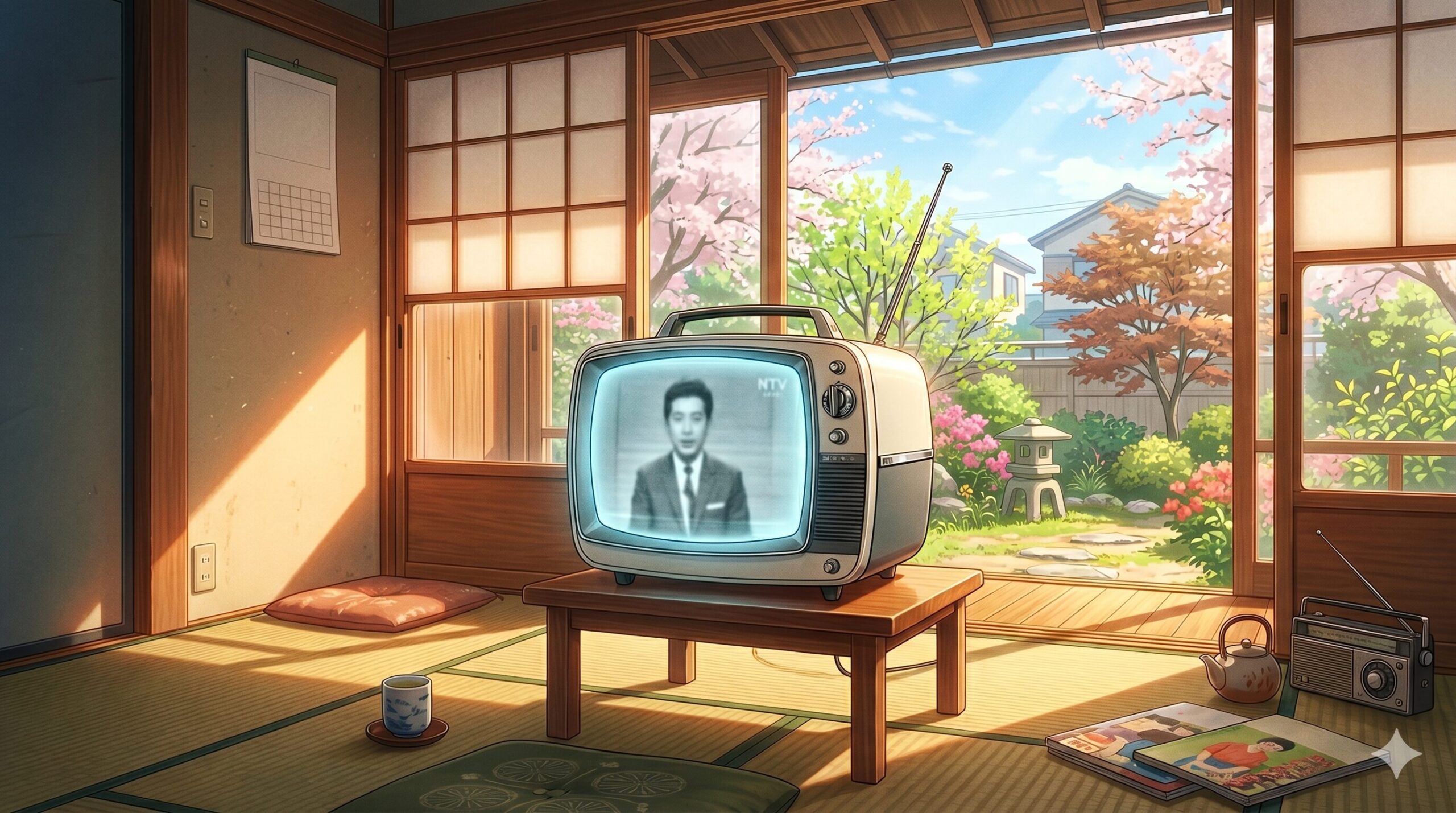
On April 30, 1960, Sony (shortly after changing its name from Tokyo Tsushin Kogyo), a Japanese electronics manufacturer, released the “TV8-301,” the world’s first direct-view portable transistor television. This was not merely the launch of a new product; it was a historic turning point that fundamentally overturned the history of home appliances and people’s lifestyles worldwide.
From Vacuum Tubes to Transistors: Sony’s Tenacity and Technological Innovation
Until the 1950s, televisions used “vacuum tubes,” making them massive, heavy, and extremely heat-generating. A TV was a “giant piece of furniture sitting in the living room,” and it was the norm for the entire family to gather around a single screen. However, Sony’s founders, Masaru Ibuka and Akio Morita, envisioned a completely different future: “We want to make a television for the individual that can be carried anywhere.” This passion drove them to the unprecedented challenge of applying transistor technology to televisions.
Transistors were revolutionary components, dramatically smaller and consuming less power than vacuum tubes. While Sony had already achieved global success with transistor radios, incorporating transistors into a device like a TV, which processes massive amounts of information at high frequencies, was considered nearly impossible with the technology of the time. After countless failures and trials, Sony engineers finally developed their own transistors and completed the “TV8-301,” a portable TV featuring an 8-inch cathode-ray tube and weighing only about 6 kilograms (13 lbs). Its streamlined, metallic design still radiates a retro-futuristic charm that hasn’t faded today.
Japan’s “Shrinking Cult” and the Aesthetics of Miniaturization
The birth of this “world’s first portable TV” was not just a display of technological prowess. It is deeply rooted in ancient Japanese culture and aesthetics. As Korean scholar O-Young Lee pointed out in his book “Smaller is Better: Japan’s Mastery of the Miniature,” Japanese culture has a strong tendency to “shrink large things and find new value and beauty within them.”
Consider “Bonsai,” which recreates vast nature in a small pot; “Karesansui” (dry landscape) gardens that express the universe in a limited space; “Netsuke,” miniature sculptures combining practicality and artistry; and “Bento,” beautifully packed meals in layered boxes. Since ancient times, the Japanese have built rich worlds within constrained, small spaces using meticulous calculation and high-level skills. The underlying force behind Sony’s engineers struggling to shrink a giant TV to the size of the palm of a hand was this extraordinary passion for “Hakoniwa” (miniature garden) style miniaturization and the breathing spirit of craftsmanship (Monozukuri). Refining massive Western technology into something smaller and more personal—this was the greatest weapon with which post-war Japan conquered the world.
The Birth of “Personal Space”
The advent of the transistor TV marked the first step from an era of “the family watching one screen” to an era where “individuals freely enjoy content.” In the bedroom, in the garden, or in the car. The origin of our modern lifestyle, where we naturally enjoy videos on smartphones and tablets, undeniably traces back to this day, April 30, 1960. Sony’s innovation didn’t just make machines smaller; it granted people a new freedom called the “personal media experience.”
What Does “Technology and Freedom” Mean to You?
The astonishment people in 1960 felt when they first saw a portable TV might be similar to the sensation we felt when we first touched a smartphone. Japan’s culture of “making things smaller” changed the world’s lifestyle.
How did you feel reading this article? While modern smartphones and tablets have enriched our lives, they also sometimes tether us to endless information. If you could time-travel back to 1960 and acquire this portable TV, where would you take it, and in what scenery would you turn on the screen? Please let us know your thoughts.
Reference Links
- Sony Corporate History (Official Sony Group Page)
- Read more in the “What’s Today’s Special Day” Series
4月30日:ソニーが世界初のトランジスタテレビを発売し、世界を驚愕させた日
1960年(昭和35年)4月30日、日本のエレクトロニクスメーカーであるソニー(当時の東京通信工業から社名変更直後)は、世界初の直視型ポータブル・トランジスタテレビ「TV8-301」を発売しました。これは単なる新製品の発表ではなく、世界の家電の歴史、そして人々のライフスタイルを根底から覆す歴史的な転換点でした。
真空管からトランジスタへ:ソニーの執念と技術革新
1950年代までのテレビは「真空管」を使用しており、巨大で重く、そして非常に熱を持つものでした。テレビは「居間に鎮座する巨大な家具」であり、家族全員で一つの画面を囲むのが当たり前の時代です。しかし、ソニーの創業者である井深大と盛田昭夫は、全く異なる未来を描いていました。「どこへでも持ち運べる、個人のためのテレビを作りたい」。その熱意が、トランジスタ技術のテレビへの応用という前人未到の挑戦へと彼らを駆り立てたのです。
トランジスタは真空管に比べて劇的に小さく、消費電力も少ない画期的な部品でした。ソニーはすでにトランジスタラジオで世界的な成功を収めていましたが、テレビのように高周波で大量の情報を処理する機器にトランジスタを組み込むことは、当時の技術では不可能に近いと考えられていました。ソニーの技術者たちは幾多の失敗と試行錯誤を重ね、ついに独自のトランジスタを開発し、8インチのブラウン管を搭載した重量わずか約6キログラムのポータブルテレビ「TV8-301」を完成させました。この流線型のメタリックなデザインは、今見ても色褪せないレトロフューチャーな魅力を放っています。
日本の「縮み志向」とミニチュアライズの美学
この「世界初のポータブルテレビ」の誕生は、単なる技術力の誇示ではありません。そこには、日本古来の文化や美意識が深く根付いています。韓国の学者・李御寧が著書『縮み志向の日本人』で指摘したように、日本文化には「大きなものを小さく縮め、そこに新たな価値や美を見出す」という強い傾向があります。
広大な自然を小さな鉢の中に再現する「盆栽」、限られた空間に宇宙を表現する「枯山水」の庭園、実用性と芸術性を兼ね備えた極小の彫刻「根付」、そして重箱に美しく詰められた「弁当」。日本人は古くから、制約のある小さな空間の中に、緻密な計算と高度な技術を用いて豊かな世界を構築してきました。ソニーの技術者たちが巨大なテレビを手のひらサイズに近づけようと奮闘した根底には、この「箱庭的」なミニチュアライズへの並々ならぬ情熱と、精緻を極める職人技(モノづくり精神)が息づいていたのです。巨大な欧米の技術を、より小さく、よりパーソナルなものへと洗練させる。これこそが、戦後日本が世界を席巻した最大の武器でした。
「パーソナルな空間」の誕生
トランジスタテレビの登場は、「家族で一つの画面を見る」時代から、「個人が自由にコンテンツを楽しむ」時代への第一歩でした。寝室で、庭で、あるいは車の中で。現代の私たちがスマートフォンやタブレットで当たり前のように動画を楽しんでいるライフスタイルの原点は、間違いなくこの1960年4月30日にあります。ソニーのイノベーションは、単に機械を小さくしたのではなく、人々に「パーソナルなメディア体験」という新しい自由を与えたのです。
あなたにとっての「テクノロジーと自由」とは?
1960年の人々が初めて持ち運べるテレビを見たときの驚きは、私たちが初めてスマートフォンに触れたときの感覚に似ていたのかもしれません。日本の「小さくする」文化が、世界のライフスタイルを変えました。
この記事を読んで、あなたはどのように感じましたか?現代のスマートフォンやタブレットは、私たちの生活を豊かにした反面、情報に縛られる原因にもなっています。もしあなたが1960年にタイムスリップしてこのポータブルテレビを手に入れたら、どこへ持って行き、どんな風景の中で画面を開きますか?ぜひ、あなたの考えを聞かせてください。


コメント