June 24 is an immensely significant date that symbolizes the spiritual core of Japan. On this day every year, the “Omitasai” (Rice Planting Festival) is held at Izawanomiya, an auxiliary shrine of the Ise Grand Shrine located in Shima City, Mie Prefecture. Ranked as one of Japan’s Top Three Rice Planting Festivals alongside Katori Jingu in Chiba and Sumiyoshi Taisha in Osaka, it is officially designated as a National Important Intangible Folk Cultural Property. It is not merely an agricultural event; it is a sacred ritual with over 800 years of history, filled with profound gratitude toward nature and the deities.
The Spectacle of Rituals: Where Valor Meets Elegance
Omitasai is a grand-scale Shinto ritual that lasts from morning until evening. The greatest highlights are two sharply contrasting ceremonies: the “Taketori Shinji” and the “Omitashinji.”
First is the “Taketori Shinji” (Bamboo Capturing Ritual). Mud-covered, loincloth-clad men clash fiercely to seize a massive 4-meter-tall sacred bamboo pole called “Gomba-uchiwa,” which is believed to bring bountiful catches and rich harvests. The intense heat of the men and the splashing mud release a powerful energy, as if awakening the life force sleeping deep within the earth.
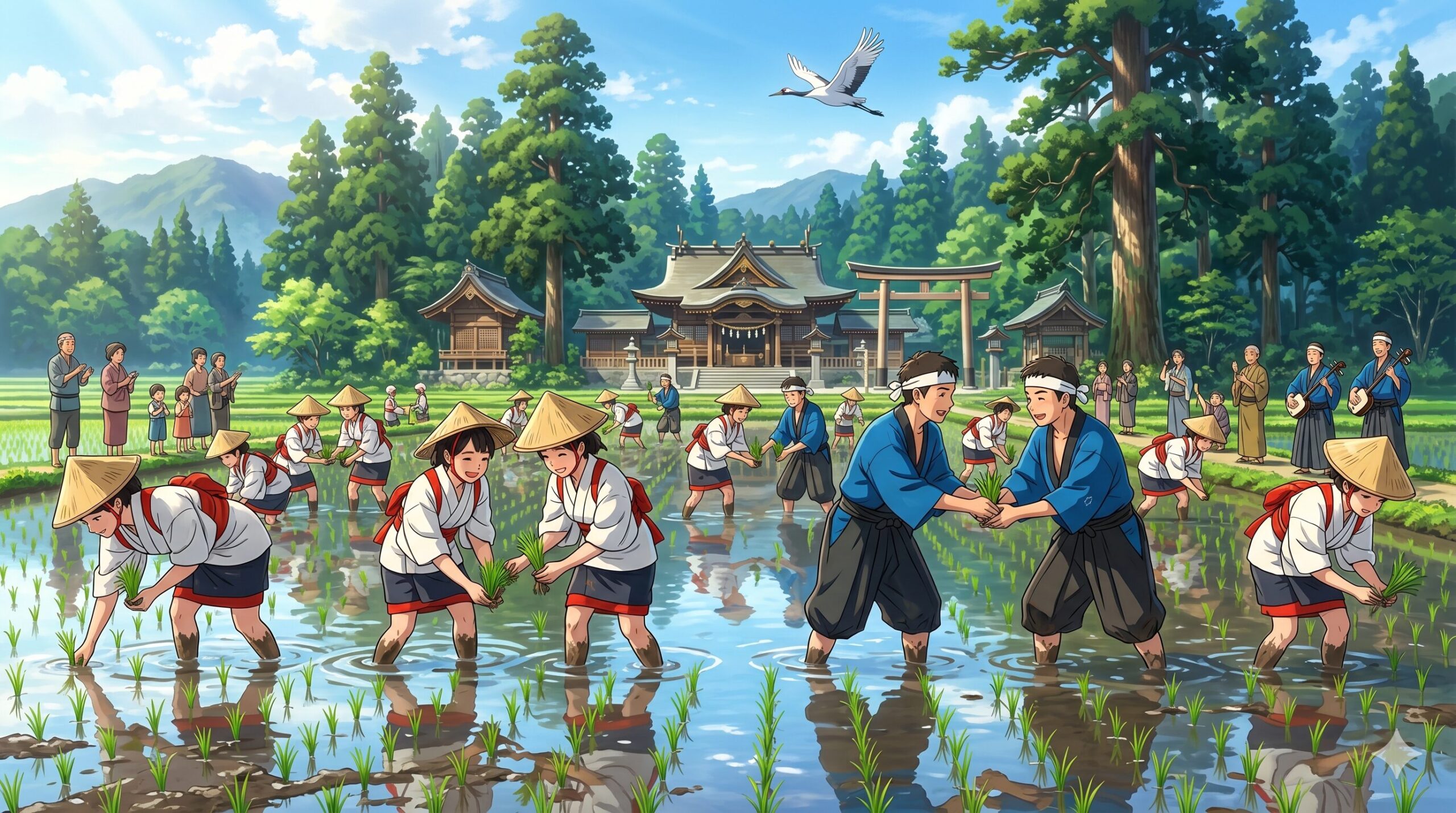
Once the frenzy subsides, the atmosphere completely transforms into the elegant “Omitashinji.” Young women called “Saotome” dressed in traditional white kimonos, red sashes, and conical straw hats, along with young men known as “Tachido,” line up in the sacred paddy field. Moving to the ancient, nostalgic melodies of traditional Dengaku music, they carefully plant rice seedlings into the soil one by one. The scent of the mud, the sound of flutes and drums, and the brilliant green of the seedlings reflecting on the water’s surface instantly transport onlookers to the primordial landscapes of Japan.
Decoding Japanese Culture Through Omitasai: The Deep Bond Between Rice Farming and the Gods
To truly understand Omitasai is to understand the very roots of the Japanese spirit. In Japan, cultivating rice is not simply the production of food; it is an ongoing dialogue with the gods and a pure form of prayer.
The Legend of the Crane and the Earth’s Blessing
There is a beautiful legend deeply woven into the Izawanomiya Omitasai. Long ago, when Yamato-hime-no-mikoto was traveling to find the perfect resting place for the sun goddess Amaterasu, she witnessed a majestic white crane holding a pristine ear of rice in its beak. Deeply moved, she declared, “Even a bird without words seeks to offer its devotion to the gods.” She then established the sacred rice fields there to cultivate rice specifically as divine offerings. This legend perfectly illustrates the Japanese animistic belief that every living creature in the natural world possesses a sacred will, and that humanity is just one part of this grand, divine cycle.
Reverence and Coexistence with Nature
The act of stepping into the mud and planting rice symbolizes a return to Mother Earth and eternal rebirth. Since ancient times, the Japanese people have lived alongside severe natural disasters like typhoons and earthquakes. As a result, rather than attempting to conquer nature, they chose the path of “coexistence”—fearing, respecting, and deeply appreciating nature’s blessings. The mud-soaked participants of Omitasai embody the unwavering resolve and prayer of the Japanese people to accept the formidable power of nature and live in harmony with the gods.
Embark on Your Next Japanese Exploration
How do you feel about this breathtaking tradition of plunging into the mud and offering prayers to the earth and gods, an unbroken legacy for over 800 years? No matter how advanced technology becomes, the fundamental human joy brought by the feel of the earth and the sound of traditional instruments will never fade. If you ever visit Japan, wouldn’t you want to physically experience the powerful, beautiful energy of Omitasai? Which exact moment of this festival would capture your heart the most?
For those who wish to delve deeper into the abyss of Japanese culture, be sure to explore our other articles on historical anniversaries and traditional events through the links below.
- Internal Link: Explore the What’s Today’s Special Day Series
- External Link: Ise-Shima Tourism Guide – Details on Izawanomiya Omitasai (External Site)
6月24日:日本三大田植祭「御田植祭(おみた)」の歴史と真髄
6月24日は、日本の精神性を象徴する極めて重要な日です。三重県志摩市に鎮座する伊勢神宮の別宮「伊雑宮(いざわのみや)」において、毎年この日に「御田植祭(おみた)」が執り行われます。この祭りは、千葉県の香取神宮、大阪府の住吉大社と並び「日本三大田植祭」の一つに数えられ、国の重要無形民俗文化財にも指定されています。単なる農業行事ではなく、自然の恵みと神々への深い感謝が込められた、およそ800年以上の歴史を持つ神聖な儀式です。
勇壮と優雅が交錯する神事の全貌
御田植祭は、朝から夕方まで続く壮大なスケールの神事です。最大のハイライトは「竹取神事」と「御田植神事」という、対照的な二つの儀式にあります。
まず行われる「竹取神事」は、泥にまみれた裸の男たちが、豊漁と豊作をもたらすとされる「ごんばうちわ」(高さ約4メートルの忌竹)を激しく奪い合う勇壮な儀式です。男たちの熱気と飛び散る泥は、大地に眠る生命力を呼び覚ますかのような強烈なエネルギーを放ちます。
その熱狂が収まると、空気は一変して優雅な「御田植神事」へと移行します。伝統的な白い着物に赤い襷、そして菅笠を被った「早乙女(さおとめ)」と呼ばれる女性たちと、「田道人(たちど)」と呼ばれる男性たちが、古式ゆかしい田楽の音色に合わせて横一列に並びます。彼らは神聖な御料田(ごりょうでん)に足を踏み入れ、一つ一つ丁寧に苗を植え付けていきます。泥の匂い、笛や太鼓の音、そして緑の稲が水面に映る光景は、見る者を日本の原風景へと誘います。
おみたから読み解く日本文化:稲作と神々の深い繋がり
この御田植祭を深く理解することは、日本人の精神の根源を理解することに他なりません。日本において、米作りは単なる食糧生産ではなく、神々との対話であり、祈りそのものです。
真名鶴の伝説と大地の祝福
伊雑宮の御田植祭には、美しい伝承が残されています。古く、天照大御神(あまてらすおおみかみ)を祀る場所を探して旅をしていた倭姫命(やまとひめのみこと)がこの地を訪れた際、一羽の真名鶴が立派な稲穂をくわえて鳴いているのを見つけました。倭姫命は「言葉を持たない鳥でさえ、神に稲穂を捧げようとしている」と深く感動し、その稲を神前に供えるための田畑を開いたとされています。この伝説は、自然界のすべての生き物が神聖な意志を持ち、人間もまたその大きな自然のサイクルの一部であるという日本の「アニミズム」の思想を如実に表しています。
自然への畏敬の念と共生
泥の中で稲を植える行為は、母なる大地への回帰と再生の象徴です。古来より日本人は、台風や地震といった厳しい自然災害と隣り合わせで生きてきました。だからこそ、自然を支配するのではなく、自然の恩恵に感謝し、畏れ敬う「共生」の道を選びました。御田植祭の泥まみれの姿には、自然の力強さを受け入れ、神々と共に生きようとする日本人の揺るぎない覚悟と祈りが込められています。
次の日本探求へ向けて
800年もの間、絶えることなく泥まみれになりながら大地と神々に祈りを捧げ続けてきたこの伝統を、あなたはどう感じましたか?テクノロジーがどれほど発展しようとも、泥の感触や田楽の音色がもたらす人間の根源的な喜びは決して失われることはありません。もしあなたが日本を訪れるなら、この力強くも美しい「おみた」の熱気を、実際にその肌で感じてみたいと思いませんか?あなたなら、この祭りのどの瞬間に最も心を奪われるでしょうか。
日本文化のさらなる深淵に触れたい方は、ぜひ以下のリンクから他の記念日や伝統行事の記事もご覧ください。

コメント