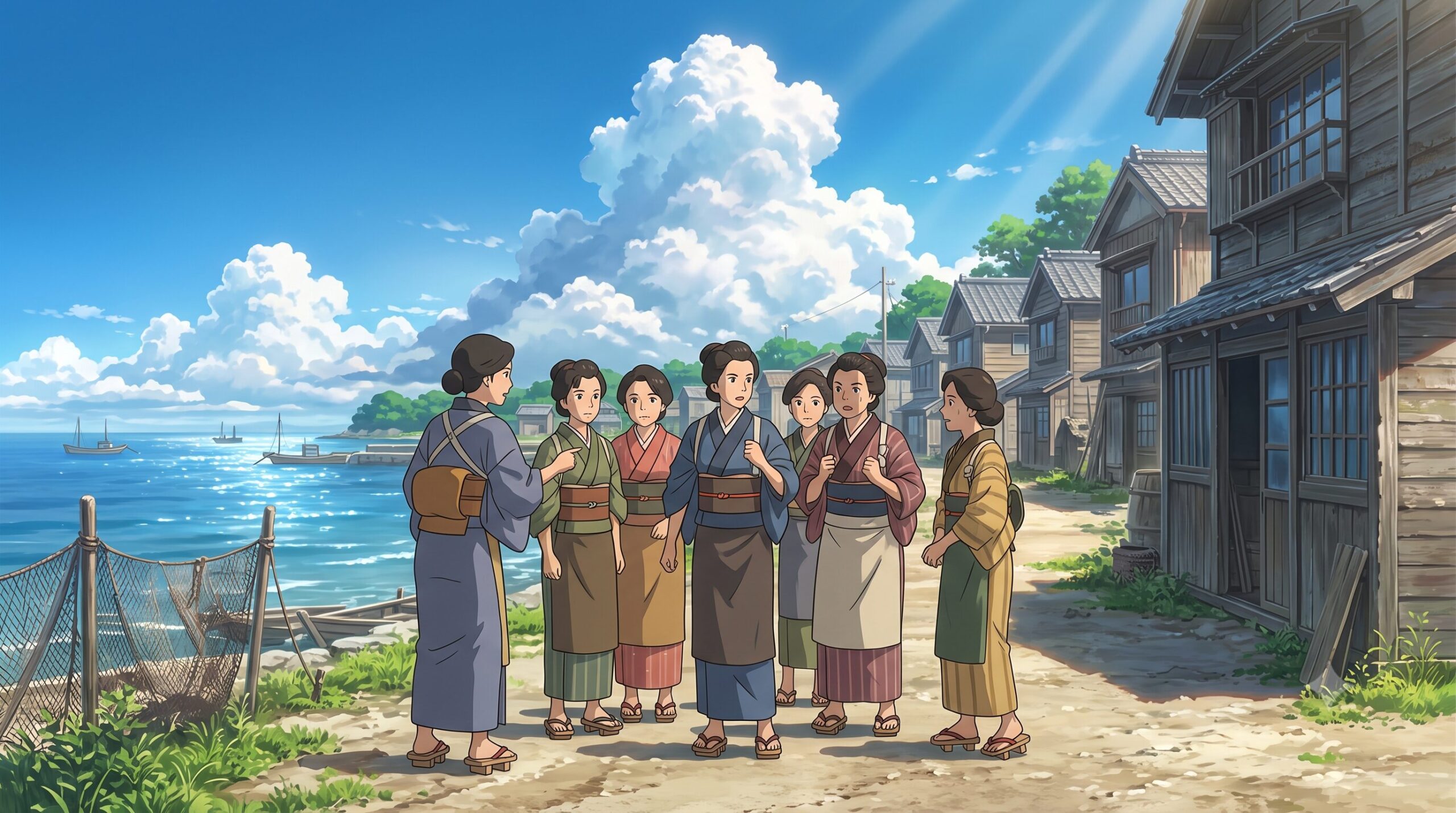
In Japanese history, July 23 is a highly significant anniversary that gave birth to a massive wave that shook the entire nation. On this day in 1918 (Taisho 7), in a small coastal town called Uozu in Toyama Prefecture, a nationwide popular movement known as the “Rice Riots” (Kome Sodo) began.
What Happened in 1918?
At the time, Japan was experiencing an unprecedented economic boom due to World War I. However, only a handful of capitalists were reaping the benefits, while the lives of ordinary citizens were being crushed by rapid inflation. Above all, the skyrocketing price of “rice”—the staple food of the Japanese people—was severe.
On the morning of July 23, dozens of fishermen’s wives in Uozu Town witnessed rice being shipped out of their prefecture. “Why are they taking it elsewhere when we don’t even have rice to eat ourselves?” To protect their families’ lives, they united and physically blocked the shipment of rice, strongly demanding that it be sold to local residents at a fair price. This was the beginning of the Rice Riots.
The Anger of the Masses Spreads Nationwide
The events in this small fishing village were reported by newspapers and instantly spread across Japan. Millions of people suffering from soaring rice prices rose up in various regions, organizing protests and riots. The government took the situation seriously and deployed the military to suppress the uprisings, but ultimately, the cabinet at the time (the Terauchi Cabinet) was forced to take responsibility and resign en masse. The actions of nameless housewives accomplished the historic feat of toppling a national government.
Understanding Japanese Culture and the Deep Connection with “Rice”
This historical incident was not merely an economic riot. From this event, we can decipher the sacred and absolute status of “rice” in Japanese culture.
Not Just a Staple Food, but the Source of Life and Economy
Unlike bread and wheat in the West, rice in Japan has historically been “life itself” and a “symbol of wealth.” During the Edo period (1603-1868), the salaries of samurai and the economic power of feudal lords in each region were all calculated by “rice production (Kokudaka),” and rice essentially functioned as currency. Therefore, being unable to obtain rice meant not just a food shortage, but the collapse of the social system and a direct threat to survival.
A New Perspective on the Japanese People: The Power to Raise Their Voices
Overseas, there is a common stereotype that “Japanese people are obedient and submissive to authority.” However, the history of the Rice Riots clearly overturns this image. The Japanese masses, especially the women in charge of their households, possessed the overwhelming power to stand up without fearing absolute state authority or the military when the source of their lives—rice—was about to be taken away. This powerful, grassroots energy breathes at the foundation of Japanese democracy.
Conclusion: How Would You Raise Your Voice?
Over 100 years ago, in a small Japanese port town, nameless women raised their voices to protect “rice,” the lifeblood of their families, and as a result, drastically changed the history of their nation.
After reading this article, what do you think of their courageous actions? If you were in their shoes, and your life and family were unreasonably threatened, would you be able to raise your voice and take action in the same way? Please reflect on this by comparing it to the history of your own country and what you consider to be “things you must absolutely protect.”
You can explore more detailed stories about Japanese historical events and calendar milestones in the following category:
What’s Today’s Special Day Series
Reference:
Historical Background of the Rice Riots of 1918 (Wikipedia)
7月23日は「米騒動の日」:富山の漁村から始まった歴史的転換点
日本の歴史において、7月23日は国全体を揺るがす大きなうねりが生まれた非常に重要な記念日です。1918年(大正7年)のこの日、富山県魚津町(現在の魚津市)という海沿いの小さな町で、「米騒動(Rice Riots)」と呼ばれる全国規模の民衆運動の火蓋が切られました。
1918年、何が起きたのか?
当時の日本は、第一次世界大戦の特需によりかつてない好景気に沸いていました。しかし、その恩恵を受けていたのは一部の資本家のみであり、一般市民の生活は急激なインフレーションによって圧迫されていました。中でも、日本人の主食である「米」の価格高騰は深刻でした。
7月23日の朝、魚津町の漁師の妻たち数十人が、米が県外へと運び出されるのを目撃しました。「自分たちの食べる米がないのに、なぜ他所へ持っていくのか」。家族の命を守るため、彼女たちは団結して米の積み出しを実力で阻止し、適正な価格で地元住民に販売するよう強く要求しました。これが米騒動の発端です。
全国へ波及した民衆の怒り
この小さな漁村での出来事は新聞によって報じられ、瞬く間に日本全国へと飛び火しました。高騰する米価に苦しんでいた何百万人もの人々が各地で立ち上がり、デモや打ちこわしを行いました。事態を重く見た政府は軍隊を投入して鎮圧を図りましたが、最終的に当時の内閣(寺内正毅内閣)は責任をとって総辞職することになります。名もなき主婦たちの行動が、一国の政府を倒す歴史的快挙を成し遂げたのです。
この事件から読み解く、日本文化と「米」の深い関係
この歴史的事件は、単なる経済的な暴動ではありません。ここからは、日本文化における「お米(Rice)」の神聖かつ絶対的な地位を読み解くことができます。
単なる主食ではなく、命と経済の根源
西洋におけるパンや小麦とは異なり、日本の米は歴史的に「命そのもの」であり「富の象徴」でした。江戸時代(1603-1868年)において、武士の給料や各地域の大名の経済力はすべて「米の生産量(石高)」で計算され、米は実質的な通貨として機能していました。そのため、米が手に入らないということは、単なる食糧難ではなく、社会システムの崩壊と生命への直接的な脅威を意味していたのです。
日本の民衆像への新しい視点:声を上げる力
海外において「日本人は従順で、権力に対して大人しい」というステレオタイプを持たれることがあります。しかし、この米騒動の歴史は、そのイメージを明確に覆します。日本の民衆、特に家庭を預かる女性たちは、生命の根源である米を奪われそうになった時、強大な国家権力や軍隊を恐れずに立ち向かう圧倒的なパワーを持っていました。日本の民主主義の根底には、こうした草の根の力強いエネルギーが息づいています。
まとめ:あなたならどう声を上げますか?
100年以上前、日本の小さな港町で、名もなき女性たちが家族の命である「米」を守るために声を上げ、それが結果として国の歴史を大きく変えました。
この記事を読んで、あなたは彼女たちの勇気ある行動についてどう思いましたか?もしあなたが彼女たちの立場なら、自分と家族の生活を理不尽に脅かされた時、同じように声を上げ、行動を起こすことができるでしょうか?ぜひ、あなた自身の国の歴史や、あなたにとっての「絶対に守るべきもの」と重ね合わせて考えてみてください。
日本の歴史的出来事や、暦に関するさらに詳しいストーリーは、以下のカテゴリーからお楽しみいただけます。
What’s Today’s Special Day Series(今日は何の日シリーズ)


コメント