The Second Sunday of May: A Day Bathed in Gratitude
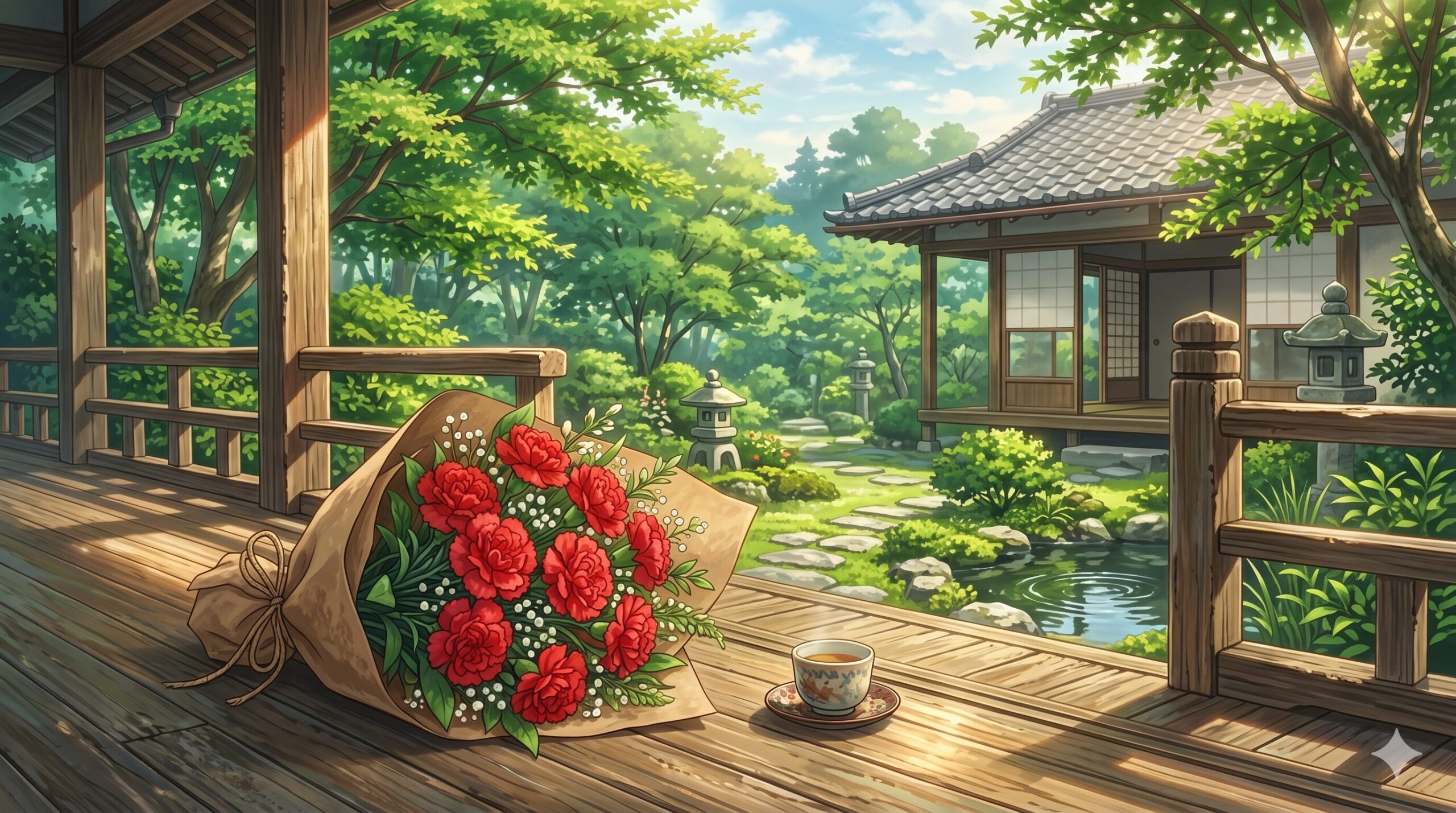
May 10th often coincides with Mother’s Day. In Japan, Mother’s Day is celebrated annually on the second Sunday of May, a day when towns and cities are beautifully adorned with red carnations. Foreign visitors to Japan during this season might be surprised to see department stores and flower shops completely transformed, as if covered by a vibrant red carpet. However, behind this beautiful spectacle lies a unique historical evolution and a deeply rooted spirit of familial love specific to Japan.
The Surprising History of Mother’s Day in Japan
The custom of Mother’s Day originally began in the United States. It is said to have started in 1908 when a woman named Anna Jarvis distributed white carnations at a church in Philadelphia to honor her late mother. This tradition was introduced to Japan between the late Meiji and Taisho eras. It was first celebrated in a few churches through the efforts of Christian missionaries.
However, it took a unique path before becoming a nationwide custom in Japan. In 1931 (Showa 6), with the formation of the Imperial Women’s Association, “March 6th”—the birthday of Empress Kojun (the wife of Emperor Showa)—was designated as Japan’s official Mother’s Day. Therefore, in its early days, the Japanese Mother’s Day was a highly nationalistic anniversary that combined reverence for the Imperial Family with gratitude towards mothers.
Following World War II, Japan began to absorb much of American culture. Around 1949, Japan officially adopted the American style of celebrating Mother’s Day on the “second Sunday of May,” which is how it is still celebrated today. Thus, Mother’s Day in Japan acts as a historical witness, showing how the country has adopted Western traditions while changing its form to suit the times.
Cultural Fusion: Carnations and the Spirit of “Oyakoukou”
The standard flower gifted on Mother’s Day is the red carnation. While this is the same as in the United States, Japanese people have infused this gesture with their own unique cultural value known as “Oyakoukou” (filial piety). Rooted in Confucian teachings, Oyakoukou is a fundamental Japanese moral concept that emphasizes respecting one’s parents and expressing gratitude through tangible actions.
In modern Japan, the ways to practice Oyakoukou have diversified. Beyond simply giving red carnations, it is common for children to take over household chores for the day, treat their mothers to a meal at a fine restaurant, or gift them a relaxing trip to a hot spring (onsen) resort. In a modern society characterized by nuclear families following a period of rapid economic growth, Mother’s Day has become the most important and symbolic day for Japanese people to practice Oyakoukou and show appreciation to parents who may live far away.
Where Tradition Meets Modernity
Japan is a country that has achieved rapid modernization and stands at the forefront of technology, but the “bonds of family” and “respect for ancestors” always flow beneath the surface. The acceptance of Western culture seen in Mother’s Day, fused with the Japanese spirit of Oyakoukou, perfectly represents the current state of modern Japanese culture. Flexibly accepting external cultures and breathing one’s own spirituality into them to create new traditions—this can be said to be the true essence of Japanese culture.
What Do You Think?
Mother’s Day in Japan is not just about giving flowers; it is a vital day to reaffirm family bonds and put the good old spirit of Oyakoukou into action. After reading this article, what are your impressions of the deep history and culture behind Mother’s Day in Japan?
How do you express gratitude to your mother or family in your own culture? If today were your day to express appreciation, who would you thank, and what words or gifts would you use to convey your feelings? Please take a moment to reflect on your own traditions and thoughts.
Reference Links & Category
- What’s Today’s Special Day Series (Explore more special days)
- Wikipedia: Mother’s Day
- Web Japan (Portal for Japanese Culture)
日本の「母の日」:赤いカーネーションに隠された歴史と「親孝行」の文化
5月の第2日曜日、日本中が感謝に包まれる日
5月10日は、多くの場合「母の日(Mother’s Day)」にあたります。日本では毎年5月の第2日曜日が母の日と定められており、街中が美しい赤いカーネーションで彩られます。日本を訪れた外国人観光客は、この時期のデパートや生花店が、まるで赤い絨毯を敷き詰めたかのように華やかになることに驚くかもしれません。しかし、この美しい光景の裏には、日本独自の歴史的な変遷と、深く根付いた家族愛の精神が存在します。
日本における母の日の意外な歴史
母の日という習慣そのものは、アメリカ発祥の文化です。1908年、アンナ・ジャービスという女性が亡き母を偲び、フィラデルフィアの教会で白いカーネーションを配ったことが起源とされています。これが日本に伝わったのは明治時代の末期から大正時代にかけてのことでした。キリスト教の宣教師たちを通じて一部の教会で祝われ始めたのが最初です。
しかし、日本全体にこの習慣が定着するまでには、独自の道を辿ることになります。昭和に入った1931年(昭和6年)、大日本連合婦人会という組織が結成されたのを機に、当時の香淳皇后(昭和天皇の皇后)の誕生日である「3月6日」が日本の「母の日」として制定されました。つまり、当初の日本の母の日は、皇室への敬愛と母親への感謝が結びついた、非常に日本的で国家的な意味合いを持つ記念日だったのです。
その後、第二次世界大戦を経て、日本はアメリカの文化を多く吸収するようになります。1949年(昭和24年)頃から、アメリカに倣って現在と同じ「5月の第2日曜日」に母の日を祝うスタイルが広く一般に定着しました。このように、日本の母の日は、西洋の文化を取り入れつつ、時代に合わせて形を変えてきた歴史の証人でもあるのです。
文化の融合:カーネーションと「親孝行」の精神
母の日に贈られる定番の花といえば、赤いカーネーションです。これは発祥地のアメリカと同じですが、日本人はここに「親孝行(Oyakoukou)」という独自の文化的価値観を見出しています。「親孝行」とは、親を大切にし、感謝の気持ちを行動で示すという、儒教の教えに由来する日本人の根源的な道徳観です。
現代の日本において、親孝行の形は多様化しています。赤いカーネーションを贈るだけでなく、母親の代わりに家事全般を引き受けたり、少し高級なレストランでの食事に招待したり、温泉旅行をプレゼントしたりすることが一般的です。高度経済成長期を経て、核家族化が進んだ現代社会だからこそ、離れて暮らす親に感謝を伝える「母の日」は、日本人にとって「親孝行」を実践するための最も重要で象徴的な1日となっています。
伝統と現代が交差する家族の絆
日本は急速な近代化を遂げ、テクノロジーの最先端を走る国ですが、根底には常に「家族の絆」と「先祖への敬意」が流れています。母の日に見られる西洋文化の受容と、日本的な「親孝行」の精神の融合は、まさに現代日本の文化のあり方そのものを表しています。外からの文化を柔軟に受け入れ、そこに自らの精神性を吹き込んで新しい伝統を作り上げる。これこそが日本文化の真髄と言えるでしょう。
あなたはどう思いますか?
日本における母の日は、ただ花を贈るだけでなく、家族の絆を再確認し、古き良き「親孝行」の精神を行動に移す大切な日です。この記事を読んで、日本の母の日の背景にある深い歴史や文化にどのような印象を持ちましたか?
あなたの国では、母親や家族に対する感謝をどのように表現しますか?もし今日があなたにとって感謝を伝える日だとしたら、あなたは誰に、どのような言葉や贈り物で、その気持ちを伝えますか?ぜひ、あなたの文化や考えを振り返ってみてください。


コメント