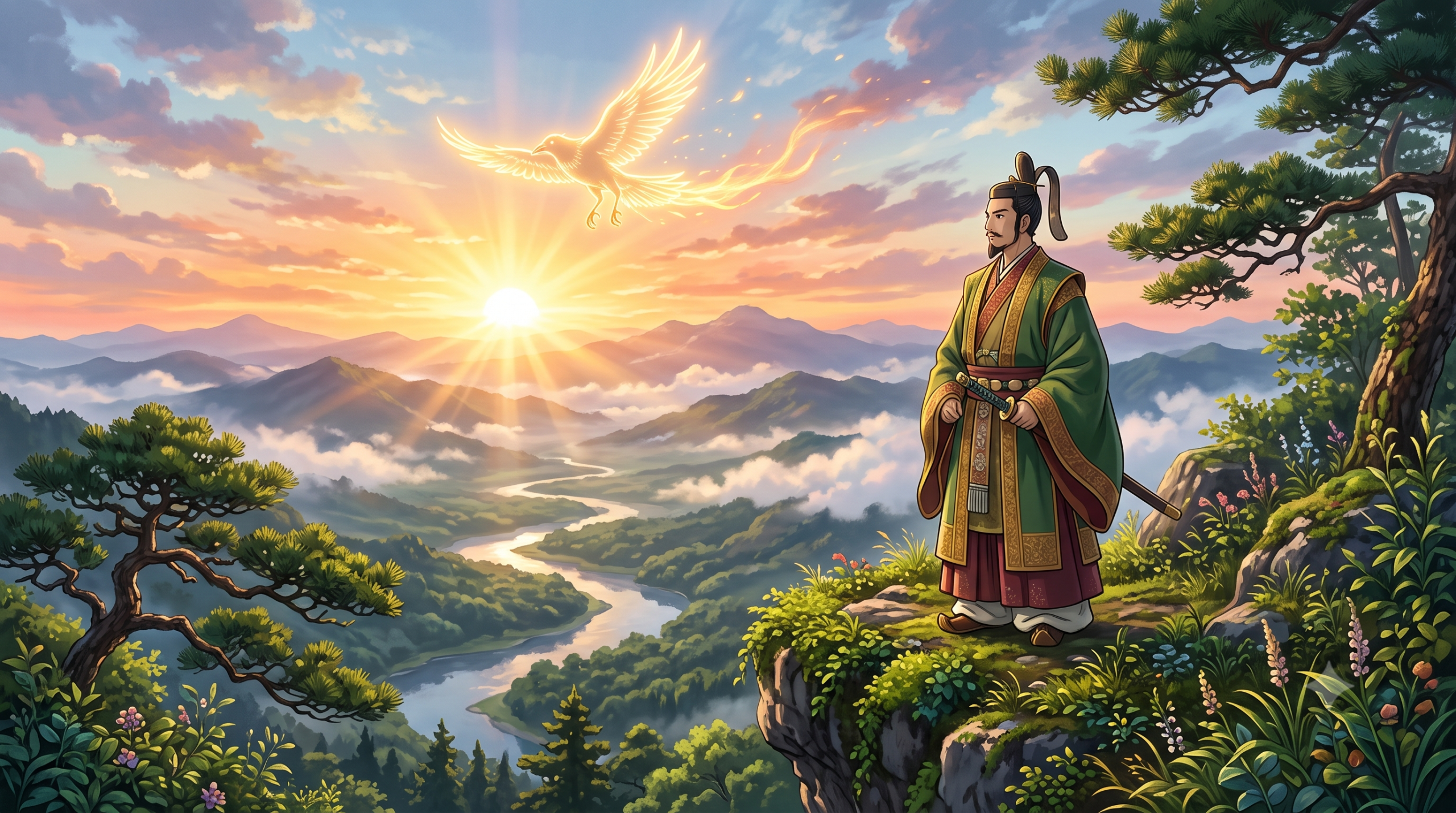
Welcome to kiri53.com, where we explore the fascinating, attractive, and deeply mysterious depths of Japanese history. Today, we journey back to the very beginning to uncover the origins of the world’s oldest continuous nation.
The World’s Oldest Continuous Monarchy and the Concept of Kokutai
When we look at the tapestry of world history, empires rise and fall, and dynasties are overthrown, fractured, or replaced by conquering forces. Yet, isolated in the Far East, an island nation has maintained a single, unbroken imperial lineage for over two and a half millennia. This is the story of Japan, a country that has preserved its unique national polity (Kokutai) for 2,600 years.
At the heart of this enduring civilization is a profound and foundational concept: the Emperor views the people not as subjects to be ruthlessly ruled, controlled, or exploited, but as Ohmitakara (大御宝)—the great treasure of the nation. To understand this benevolent and historically rare relationship, we must trace our steps back to the legendary founder of Japan: Emperor Jimmu (神武天皇 – Jinmu Tenno).
The Mythological Origins: Descendant of the Sun Goddess
Japanese history is uniquely and beautifully interwoven with mythology, recorded meticulously in ancient texts such as the Kojiki (Record of Ancient Matters, compiled in 712 AD) and the Nihon Shoki (Chronicles of Japan, completed in 720 AD). According to these sacred chronicles, Emperor Jimmu was not merely a mortal warlord who conquered by force. He is chronicled as a direct descendant of Amaterasu Omikami, the Sun Goddess and the supreme deity of the Shinto pantheon.
Born as Kamuyamato Iwarebiko no Mikoto, Jimmu grew up in the resource-rich region of Hyuga (modern-day Miyazaki Prefecture on the island of Kyushu). However, realizing that the western edge of the archipelago was not suitable for governing the entire nation and bringing lasting peace to the land, he made a momentous decision. At the age of 45, he gathered his brothers and clan, declaring his intention to march eastward to find the center of the world where a glorious capital could be established. This marked the beginning of one of the greatest epics in Japanese lore.
The Eastern Expedition (Jinmu Tosei): A Journey of Hardship and Strategy
The monumental journey from Kyushu to the Yamato region is known as the Jinmu Tosei (Emperor Jimmu’s Eastern Expedition). It was far from a simple migration. The expedition took years, fraught with treacherous ocean currents, fierce resistance from entrenched local chieftains, and immense natural obstacles.
As Jimmu’s fleet sailed through the Seto Inland Sea, they spent years at various stops to stockpile agricultural resources, construct sturdier ships, and forge alliances. When they finally reached the Naniwa region (modern-day Osaka) and attempted to enter Yamato from the west, they met catastrophic resistance. They were devastatingly defeated by a powerful local chieftain named Nagasunehiko. In this bitter battle, Jimmu’s older brother, Itsuse no Mikoto, was mortally wounded by a stray arrow.
Realizing that fighting against the sun (facing east) was a spiritual affront to his ancestor, the Sun Goddess Amaterasu, Jimmu made a strategic and religious retreat. He decided to sail southward around the rugged Kii Peninsula to attack from the east, moving with the sun at his back. This adaptation highlights a core Japanese philosophy that persists today: true victory comes not from sheer force, but from harmony with nature and divine providence.
The Divine Guidance of Yatagarasu in the Sacred Mountains
Landing in the deep, mountainous region of Kumano, Jimmu’s army faced a new peril. They were struck by a mysterious poisonous mist emanating from local hostile deities, leaving his troops comatose and near death. They were saved only by the miraculous arrival of a divine sword, Futsu-no-Mitama, sent down from the heavenly plains.
Yet, the treacherous, labyrinthine mountains of the Kii Peninsula still blocked their path to Yamato. It was in this desperate hour that Amaterasu intervened once more, sending a divine guide: Yatagarasu (八咫烏), the mythical three-legged crow of the sun. Emitting a radiant glow, Yatagarasu illuminated the dark, winding mountain passes, leading Jimmu’s forces safely into the heart of Yamato.
Today, Yatagarasu remains a powerful symbol of divine guidance, victory, and hope in Japan—most notably recognized globally as the proud emblem of the Japan Football Association.
The Founding at Kashihara and the Spirit of Ohmitakara
After finally defeating Nagasunehiko and pacifying the central region, Jimmu ascended the throne at the Kashihara Palace. His ascension took place on the first day of the first lunar month in 660 BC (traditionally dated as February 11 in the Gregorian calendar, a day now celebrated nationally as National Foundation Day, or Kenkoku Kinen no Hi). Thus, the nation of Japan was officially born.
What makes this founding story so crucial to the modern era is the philosophy it instilled in the imperial line. Emperor Jimmu issued an edict upon his accession, expressing his profound desire to unite the world under one roof in a spirit of peace and familial harmony (a concept later known as Hakko Ichiu).
Unlike conquerors in other global histories who viewed citizens merely as taxable labor, expendable soldiers, or personal property, the Japanese Emperors historically embraced the concept of Ohmitakara (大御宝). The people are literally the “great treasure” entrusted to the Emperor by the heavens. The Emperor’s primary duty is not to wield absolute dictatorial power, but to pray daily to the Shinto deities for the peace, prosperity, physical well-being, and happiness of the people.
This spiritual, paternal, and deeply affectionate bond between the Emperor and the citizens is the primary reason why the Japanese monarchy has never been historically overthrown by its people. The Emperor reigns as the highest Shinto priest and the enduring cultural anchor of the nation, fostering a society based on mutual respect, gratitude, and communal harmony.
Conclusion: A 2,600-Year Legacy Alive Today
The story of Emperor Jimmu may blur the delicate lines between ancient myth and recorded history, but its cultural impact is undeniably real and ever-present. It established a continuous 2,600-year legacy that fundamentally shaped the Japanese ethos.
When you visit Japan today, the meticulous respect for nature, the deep-rooted cultural harmony, the safety of the streets, and the polite society you experience are direct echoes of the national polity founded millennia ago at Kashihara. It is a country built not on the subjugation of the masses, but on the enduring belief that every citizen is a precious treasure.
For more insights into the beautiful, mysterious, and captivating history of Japan, continue exploring kiri53.com. Let us cherish the history that connects the ancient past to our modern world.
References & Further Reading
- Kashihara Jingu Shrine Official – History of Emperor Jimmu
- Association of Shinto Shrines – Understanding Shinto and the Emperor
- The World’s Oldest Continuous Monarchy and the Concept of Kokutai
- The Mythological Origins: Descendant of the Sun Goddess
- The Eastern Expedition (Jinmu Tosei): A Journey of Hardship and Strategy
- The Divine Guidance of Yatagarasu in the Sacred Mountains
- The Founding at Kashihara and the Spirit of Ohmitakara
- Conclusion: A 2,600-Year Legacy Alive Today
- References & Further Reading
- 日本の夜明け:神武天皇と2600年続く「大御宝」の歴史
日本の夜明け:神武天皇と2600年続く「大御宝」の歴史
日本の歴史の面白さ、魅力、そして深く神秘的な世界を探求する kiri53.com へようこそ。今回は、世界最古の連続する国家の起源を解き明かすため、日本の「はじまり」への旅に出かけましょう。
世界最古の連続する君主国と「国体」の概念
世界史のタペストリーを見渡すと、帝国は興亡を繰り返し、王朝は征服者によって打倒され、分裂し、あるいは交代していくのが常です。しかし、極東に位置するこの島国は、2500年以上にわたり単一の皇統を維持してきました。これが2600年の長きにわたり独自の国体(国家のあり方)を護り続けてきた国、日本の物語です。
この永続する文明の中心には、深遠で根本的な概念が存在します。それは、天皇が国民を冷酷に支配したり搾取したりする臣下としてではなく、「大御宝(おおみたから)」——すなわち国家の偉大なる宝——として慈しむという考え方です。この、歴史的にも稀有でありがたい関係性を理解するためには、伝説的な日本の建国者である神武天皇(初代天皇)の足跡を辿る必要があります。
神話における起源:太陽の女神の末裔
日本の歴史は、『古事記』(712年編纂)や『日本書紀』(720年完成)といった古代の史書に綿密に記された神話と、独自かつ美しく織り交ぜられています。これらの神聖な記録によれば、神武天皇は武力で征服を行った単なる人間の武将ではありません。神道における最高神であり太陽の女神である天照大御神(あまてらすおおみかみ)の直系の子孫とされています。
神倭伊波礼琵古命(かむやまといわれびこのみこと)として生まれた神武天皇は、資源豊かな日向の国(現在の九州・宮崎県)で育ちました。しかし、列島の西端では国全体を治め、永続的な平和をもたらすには適していないと悟り、重大な決断を下します。45歳の時、兄弟や一族を集め、壮麗な都を築くための世界の中心を求めて東へ進軍することを宣言しました。これが、日本神話における最大の叙事詩の幕開けとなります。
神武東征:苦難と戦略の旅
九州から大和地方への壮大な旅は、「神武東征」として知られています。それは決して単なる移住ではありませんでした。激しい海流、土着の豪族たちの強硬な抵抗、そして巨大な自然の障壁に直面し、何年もの歳月を要する困難な航海でした。
瀬戸内海を航行する中、農業資源を蓄え、より頑丈な船を造り、同盟を結ぶために各地で数年ずつ滞在しました。ついに浪速(現在の大阪)に辿り着き、西から大和へ入ろうとした際、彼らは壊滅的な抵抗に遭います。長髄彦(ながすねひこ)という強力な地元豪族の反撃により大敗を喫し、この苦い戦いで、神武天皇の兄である五瀬命(いつせのみこと)が流れ矢に当たり致命傷を負ってしまいました。
太陽に向かって(東に向かって)戦うことは、祖先である太陽の女神・天照大御神に対する精神的な冒涜であると悟った神武天皇は、戦略的かつ宗教的な撤退を行います。険しい紀伊半島を南へ迂回し、太陽を背にして東から攻め入る決断をしたのです。この柔軟な適応は、真の勝利は力任せの強硬手段からではなく、自然や神意との調和から生まれるという、今日まで続く日本人の核心的な哲学を浮き彫りにしています。
聖なる山々における八咫烏の導き
深く険しい山々が連なる熊野に上陸した神武天皇の軍は、新たな危機に直面します。敵対する土着の神々が発する謎の毒気に当てられ、全軍が昏睡状態に陥り死の淵を彷徨ったのです。彼らを救ったのは、高天原から遣わされた神剣「布都御魂(ふつのみたま)」の奇跡的な到来でした。
しかし、大和への道は依然として紀伊半島の迷宮のような山々に阻まれていました。この絶望的な状況下で天照大御神は再び介入し、神聖な案内役を遣わしました。それが、太陽の化身である三本足の神鳥「八咫烏(やたがらす)」です。光り輝く八咫烏は、暗く曲がりくねった山道を照らし、神武天皇の軍を大和の中心部へと安全に導きました。
今日でも、八咫烏は日本において神聖な導き、勝利、そして希望の強力な象徴であり、世界的には日本サッカー協会(JFA)の誇り高きエンブレムとして最もよく知られています。
橿原での建国と「大御宝」の精神
ついに長髄彦を打ち破り、中央地域を平定した後、神武天皇は橿原の宮で即位しました。即位は紀元前660年の旧暦1月1日(現在のグレゴリオ暦で2月11日、現在は「建国記念の日」として国民の祝日となっています)に行われました。ここに、正式に日本という国家が誕生しました。
この建国の物語が現代において極めて重要である理由は、それが皇室に植え付けた哲学にあります。神武天皇は即位に際し、世界を一つの屋根の下で家族のように平和にまとめるという深い願い(後に「八紘一宇」と呼ばれる理念)を込めた詔(みことのり)を発しました。
国民を単なる課税対象の労働力、使い捨ての兵士、あるいは私有財産と見なした他国の歴史上の征服者たちとは異なり、日本の天皇は歴史的に「大御宝(おおみたから)」の概念を抱いてきました。国民は文字通り、天から天皇に託された「偉大なる宝」なのです。天皇の主な責務は絶対的な独裁権力を振るうことではなく、毎日、国民の平和、繁栄、健康、そして幸福を神々に祈ることにあります。
天皇と国民の間に存在するこの精神的で、親の愛のように深い絆こそが、日本の王政が歴史上国民によって打倒されることがなかった最大の理由です。天皇は最高の神道祭祀者として、また国家の永続的な文化の拠り所として存在し、相互の尊敬、感謝、そして共同体の和(調和)に基づく社会を育んできたのです。
おわりに:現代に息づく2600年の遺産
神武天皇の物語は、古代の神話と記録された歴史の境界線を曖昧にするかもしれませんが、その文化的な影響は間違いなく本物であり、今もなお存在しています。それは、日本人の精神を根本から形成する2600年の途切れることのない遺産を確立しました。
今日日本を訪れた際に体験する、自然への細やかな敬意、深く根付いた文化的な調和、安全な街並み、そして礼儀正しい社会は、数千年前に橿原で築かれた国体の直接的な名残です。日本は、大衆の隷属の上にではなく、すべての国民が尊い宝であるという永続的な信念の上に築かれた国なのです。
美しく、神秘的で、魅力に溢れた日本の歴史についてさらに深く知りたい方は、引き続き kiri53.com をご覧ください。古代と現代を繋ぐこの尊い歴史を、これからも大切に語り継いでいきましょう。

コメント