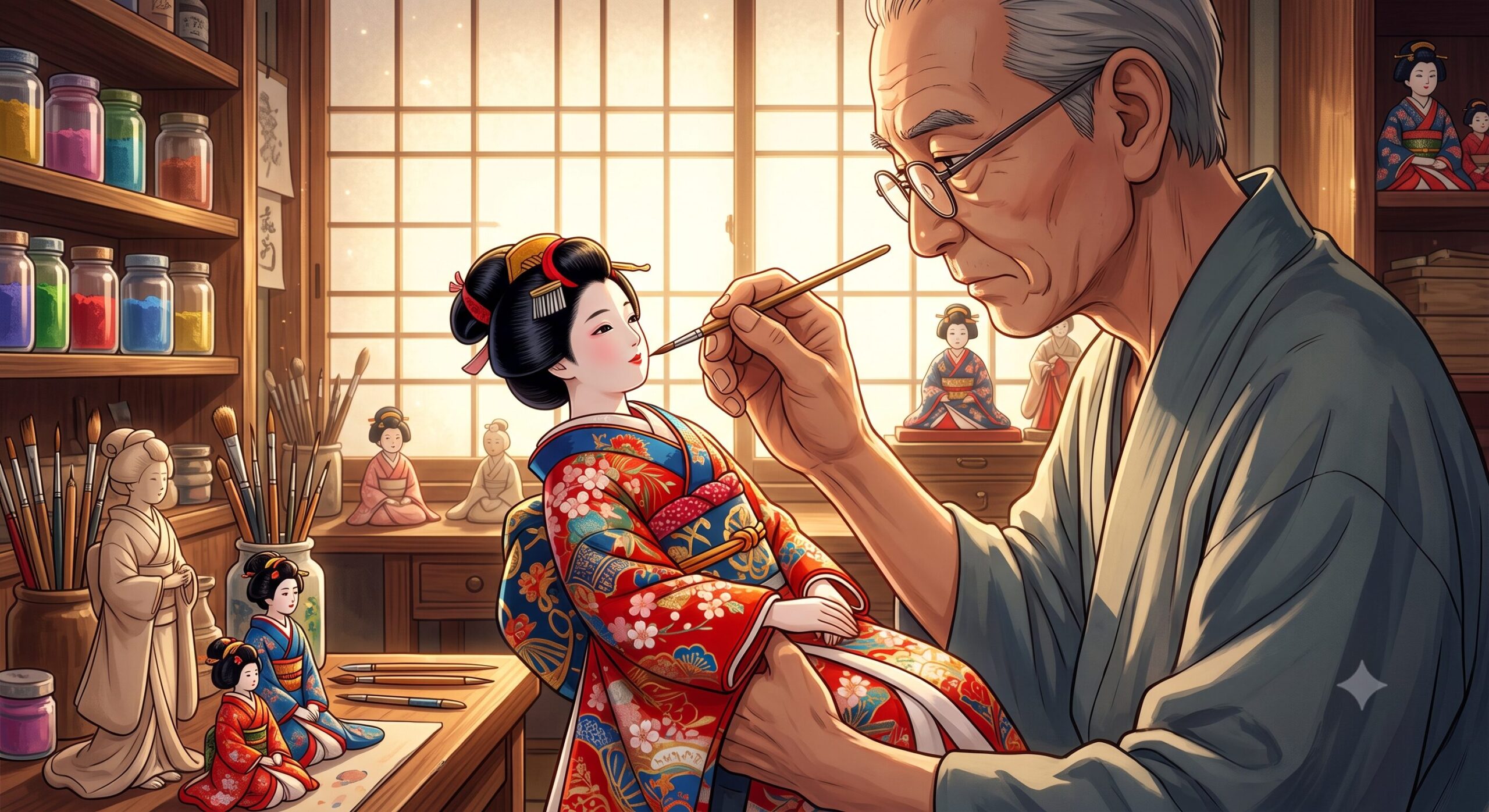
In Japan, every single day of the 365 days in a year holds significance, with anniversaries deeply rooted in unique culture and history. August 2nd is “Hakata Ningyo (Hakata Doll) Day.” This day was established by the Hakata Ningyo Commerce and Industry Cooperative to share the history of Hakata dolls and their breathtaking beauty with the world. Representing Fukuoka Prefecture as a traditional craft, Hakata dolls are far more than mere “decorations.” They are the embodiment of the Japanese spirit, passed down for over 400 years, and artworks infused with the very soul of their craftsmen.
A 400-Year Legacy: The History of Hakata Dolls
The history of Hakata dolls traces back to the early 17th century (around 1600). When Nagamasa Kuroda, a renowned warlord of the Sengoku period, entered Chikuzen (modern-day Fukuoka Prefecture) and began constructing Fukuoka Castle, many artisans were gathered for the project. It is said that the roots of the Hakata doll lie with Soshichi Masaki, a tile maker who created unglazed dolls using high-quality clay.
Later, in the latter half of the Edo period, master craftsmen emerged one after another, establishing the delicate and highly realistic expressions that continue to this day. By the late 19th century, when they were exhibited at the 1890 Paris Exposition, Hakata dolls earned immense international acclaim as “Hakata Dolls,” becoming a symbol of Japan’s exceptional artistry.
The Ultimate Aesthetic of Colors: Unglazed Clay and Gofun
The most defining characteristic of a Hakata doll is that it is “unglazed” (suyaki), meaning no glassy glaze coating is used. After being fired in a kiln at around 900 degrees Celsius, the dolls are painted directly with pigments. A base coat of gofun (a white powder made from crushed seashells) is applied, followed by layers of mineral pigments similar to those used in traditional Japanese paintings.
Through this unique method, the softness of fabric, the intricate patterns of a kimono, and above all, the warmth and translucent texture of human skin are expressed with astonishing realism. The final process of painting the face, known as “Menso,” is a sacred ritual that breathes life into the doll. The artisan holds their breath as they guide the brush. With just a single glance, the doll seems to smile, express sorrow, or speak directly to the viewer.
Deciphering the Depths of Japanese Culture Through Hakata Dolls
Hakata dolls feature a wide array of motifs, including Noh performers, Kabuki actors, samurai warriors, beautiful women (Bijinga), and adorable children. These are not merely subjects; they are the crystallization of aesthetic sensibilities that the Japanese people have cherished since ancient times—such as the changing of the four seasons, deep spirituality, and “Wabi-Sabi” (the beauty of imperfection and transience).
Behind the creation of such refined beauty from a completely natural and rustic material like clay lies the uniquely Japanese spirit of “Yaoyorozu no Kami” (eight million gods)—an animistic belief that life dwells in all things. Through the hands of the artisan, life enters a cold lump of clay, forever capturing human emotion and the beauty of the seasons. Hakata dolls are a microcosm of Japanese culture, demonstrating a masterful harmony between nature and humanity.
Furthermore, because Hakata dolls are not protected by a glaze, they are highly sensitive to direct sunlight and moisture. This reflects the Japanese philosophical concept of “impermanence”—the idea that nothing lasts forever in a pristine state. It is precisely because of this fragility that owners treat the dolls with immense care and pour affection into them.
To Our Readers: Which Story Would You Display?
How did you feel after touching upon the beauty of Hakata dolls and the Japanese spirituality behind them? Were you drawn to the “Bijinga” (beautiful women) that conceal deep emotions within silence? Or did you feel strength from the dynamic and powerful “Musha” (warrior) dolls? If you were to welcome a Hakata doll into your own room, what kind of emotions or wishes would you want that doll to represent?
Reference Links
- External Site: Hakata Ningyo Cooperative Association
- External Site: Hakata Traditional Craft and Design Museum
- Internal Link: What’s Today’s Special Day Series
8月2日は博多人形の日:土に命を吹き込む日本の美と歴史
日本には、一年の365日すべてに意味があり、独自の文化や歴史に根ざした記念日が存在します。8月2日は「博多人形の日(はかたにんぎょうのひ)」です。この日は、博多人形商工業協同組合が、博多人形誕生の歴史と、その息を呑むような美しさを国内外に広めるために制定しました。福岡県を代表する伝統的工芸品である博多人形は、ただの「飾り物」ではありません。それは、400年以上の時を超えて受け継がれてきた日本の心であり、職人の魂が込められた芸術作品です。
400年の時を刻む博多人形の歴史
博多人形の歴史は、17世紀初頭(1600年)にまで遡ります。戦国時代の名将・黒田長政が筑前(現在の福岡県)に入国し、福岡城を築城した際、多くの職人たちが集められました。その中の一人の瓦職人・正木宗七(まさきそうしち)が、良質な粘土を用いて素焼きの人形を作ったことが、博多人形のルーツであるとされています。
その後、江戸時代後半には、名工と呼ばれる職人たちが次々と登場し、現代に通じる繊細で写実的な表現が確立されました。そして19世紀後半、1890年のパリ万国博覧会に出品されたことで、博多人形は「Hakata Doll」として世界中で高く評価され、日本の高い芸術性を象徴する存在となりました。
素焼きと胡粉が織りなす「究極の色彩美」
博多人形の最大の特徴は、釉薬(ガラス質のコーティング)を一切使用しない「素焼き(すやき)」にあります。約900度の窯で焼き上げられた人形に、直接顔料で彩色を施します。下地には胡粉(ごふん:ホタテなどの貝殻をすりつぶした白い粉)を塗り、その上に日本画と同じ岩絵の具や泥絵の具で色を重ねていきます。
この独自の製法により、布の柔らかさ、着物の繊細な柄、そして何より人間の肌の温もりや透き通るような質感が、驚くほどリアルに表現されます。「面相(めんそう)」と呼ばれる顔を描き込む最終工程は、人形に命を吹き込む神聖な儀式であり、職人は息を止めて筆を走らせます。その眼差し一つで、人形は笑い、憂い、語りかけてくるのです。
博多人形から読み解く日本文化の深淵
博多人形には、能楽師、歌舞伎役者、武士、そして美しい女性(美人もの)や愛らしい子どもなど、様々なモチーフが存在します。これらは単なる被写体ではなく、日本人が古来より大切にしてきた「四季の移ろい」「精神性」「わび・さび」といった美意識の結晶です。
土という極めて自然で素朴な素材から、これほどまでに洗練された美を生み出す背景には、日本特有の「八百万の神(やおよろずのかみ)」の精神、すなわち「万物に命が宿る」というアニミズムの思想があります。冷たい粘土の塊に、職人の手を通じて命が宿り、人間の情念や季節の美しさを永遠に閉じ込める。博多人形は、自然と人間の見事な調和を示す日本文化の縮図と言えます。
また、釉薬で守られていない博多人形は、直射日光や湿気に非常に敏感です。これは、永遠に変わらないものなど存在しないという「無常観」を反映しています。だからこそ、所有者は人形を大切に扱い、愛情を注ぐのです。
読者の皆様へ:あなたなら、どの物語を飾りますか?
博多人形の美しさと、その背後にある日本の精神性に触れて、あなたはどう感じましたか?静寂の中に感情を秘めた「美人もの」に心惹かれたでしょうか。それとも、躍動感あふれる「武者もの」から力強さを感じたでしょうか。もしあなたの部屋に博多人形を迎えるとしたら、どんな感情や願いを込めた人形を選びますか?
コメント