- July 1st is “Imuraya Azuki Bar Day”
- The Sacred Meaning of Azuki (Red Beans) in Japanese Culture
- Modern Craftsmanship: Why is the Azuki Bar so “Hard”?
- The Ultimate Coolness to Survive the Japanese Summer
- To You, the Reader
- 7月1日は「井村屋あずきバーの日」
- あずき(小豆)が持つ日本文化における神聖な意味
- 現代の職人技:あずきバーはなぜ「硬い」のか?
- 日本の夏を乗り切るための究極の涼
- 読者のあなたへ
July 1st is “Imuraya Azuki Bar Day”
Japan’s long, intense summer. July 1st, when the sweltering heat truly sets in, is not just the beginning of a new month. This day is “Imuraya Azuki Bar Day,” celebrating a beloved national ice pop that all of Japan cherishes. Established by Imuraya, a leading Japanese traditional confectionery manufacturer, this anniversary comes with a wish for people to stay healthy as full-fledged summer arrives by eating “azuki” (red beans), which have been familiar to Japanese people since ancient times.
The Azuki Bar is a phenomenal frozen treat, selling over 300 million units annually in Japan. However, the greatest charm of this ice pop is not just its unique flavor. The Azuki Bar has established a legendary status in Japanese internet culture and daily conversation as “the hardest ice cream in the world.” Why is an ice pop, hard enough to potentially chip a tooth, so continuously loved by the Japanese? Behind this lies Japan’s deep traditions and an unwavering commitment to its culinary culture.
The Sacred Meaning of Azuki (Red Beans) in Japanese Culture
In Japanese culture, “azuki” holds a sacred meaning that transcends being merely a food ingredient. Since ancient times in Japan, it has been believed that the color “red” has the power to ward off evil spirits and dispel misfortune. The vivid red color of azuki is exactly the symbol of this talisman. Historically, there was a custom of eating “Azuki-meshi” (rice boiled with red beans, known as Sekihan) on the 1st and 15th of every month to pray for good health and protection from illness.
The date of July 1st is an important time that marks the halfway point of the year, a moment to pray for health and a bountiful harvest for the remaining half. To survive the harsh Japanese summer—a season of high heat and humidity that quickly drains stamina—consuming azuki, which is highly nutritious and rich in vitamin B1 (effective for recovering from fatigue), was an incredibly rational wisdom of ancient people. In other words, “Azuki Bar Day” is not merely a corporate promotion; it is a cultural event that brilliantly revives ancient Japanese folk beliefs and the changing of the seasons in the modern era.
Modern Craftsmanship: Why is the Azuki Bar so “Hard”?
The “hardness” of the Azuki Bar is a testament to the Japanese sincerity toward craftsmanship (Monozukuri). Many modern ice creams contain large amounts of additives such as emulsifiers, stabilizers, and artificial sweeteners to maintain a soft texture. However, the ingredients of Imuraya’s Azuki Bar are astonishingly simple: “Sugar, Azuki beans, Starch syrup, Cornstarch, and Salt.” That is all.
Because it uses absolutely no dairy products or additives and is frozen using only the pure broth of boiled azuki and the natural moisture of the ingredients, the freezing of the water creates that jewel-like hardness. This is the ultimate proof that only genuine, uncompromised natural ingredients are used. Japanese craftsmen do not consider it acceptable to compromise quality for the sake of efficiency or ease of eating. It is exactly in this “uncompromising hardness” that the spirit of Washoku (Japanese cuisine), which cherishes the original taste of the ingredients, resides.
The Ultimate Coolness to Survive the Japanese Summer
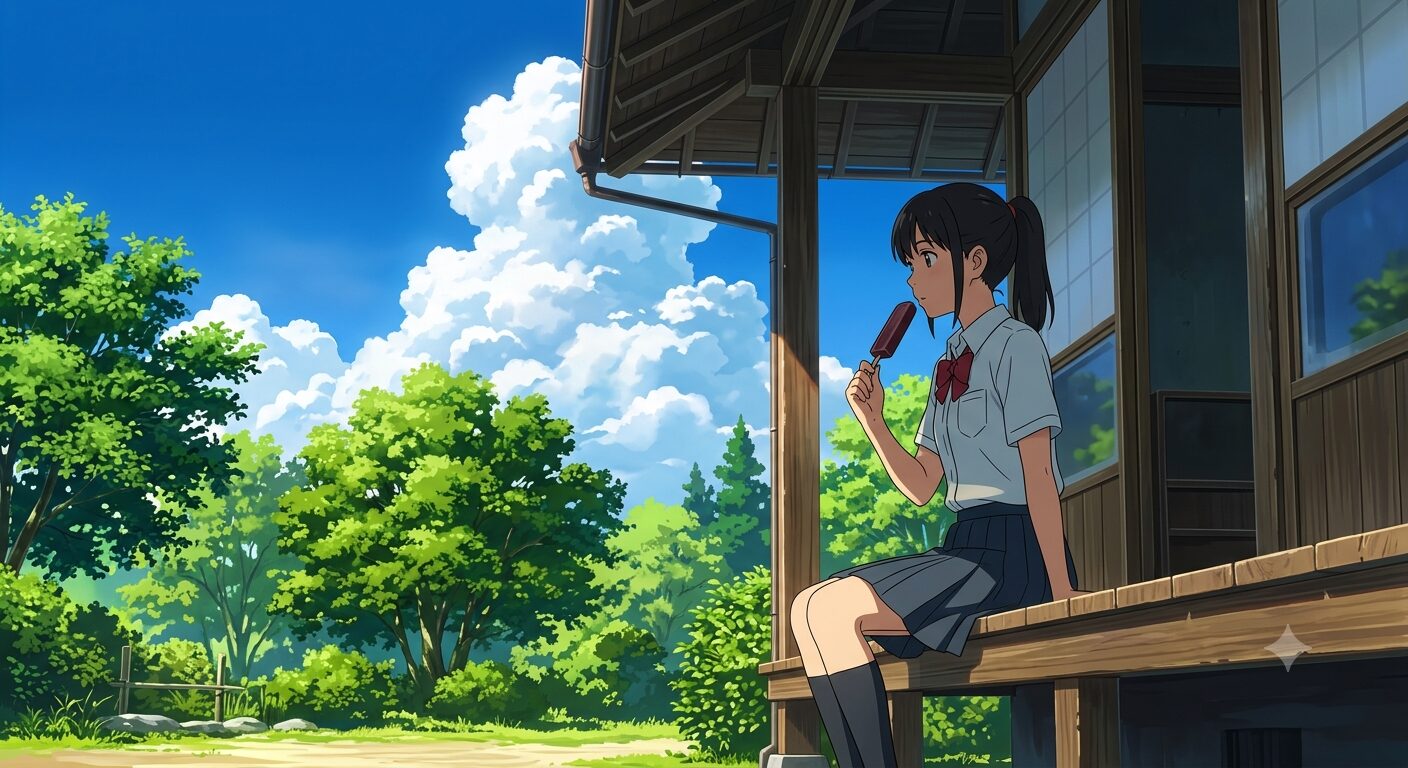
If you have ever experienced a Japanese summer, you know that clinging humidity and fierce heat. Sitting on an engawa (a traditional Japanese veranda) listening to the sound of a wind chime, slowly enjoying a rock-hard Azuki Bar as it slightly melts. That is the quintessential summer landscape shared by Japanese people across generations. The moment the cold, sweet, and faintly salty azuki beans melt in your mouth, the summer heat transforms into a comfortable coolness.
To You, the Reader
Azuki, the sacred red bean that has protected the Japanese summer since ancient times. The “Azuki Bar,” where you can taste that tradition as a modern ice pop, is a single stick packed with Japanese history and spirit. Have you ever eaten an ice pop made so hard and with such sincerity? If you ever have the chance to visit Japan, won’t you challenge this “world’s hardest ice cream” and feel the Japanese summer? Please let me know if there are any traditional sweets you eat in your country to survive the summer heat.
Reference Links
- External Reference: Imuraya Co., Ltd. Official Website
- Internal Link: Read more from the What’s Today’s Special Day Series
7月1日、日本の夏は「あずきバー」とともに始まる:世界一硬いアイスと神聖なる豆の物語
7月1日は「井村屋あずきバーの日」
日本の長く厳しい夏。うだるような暑さが本格化する7月1日は、単なる月の始まりではありません。この日は、日本中が愛してやまない国民的アイスキャンディーを讃える「井村屋あずきバーの日」です。日本の代表的な和菓子メーカーである井村屋が制定したこの記念日は、本格的な夏を迎えるにあたり、古くから日本人に親しまれてきた「あずき(小豆)」を食べて健康に過ごしてほしいという願いが込められています。
あずきバーは、日本国内で年間3億本以上を売り上げる驚異的な氷菓です。しかし、このアイスキャンディーが持つ最大の魅力は、その独特な風味だけではありません。あずきバーは「世界一硬いアイス」として、日本のインターネット文化や日常会話の中で伝説的な地位を確立しています。歯が欠けるほどの硬さを持つこのアイスは、なぜこれほどまでに日本人に愛され続けているのでしょうか。その背景には、日本の深い伝統と食文化へのこだわりが隠されています。
あずき(小豆)が持つ日本文化における神聖な意味
日本文化において、「あずき」は単なる食材を越えた神聖な意味を持っています。古来より、日本では「赤色」には邪気を払い、厄を除ける力があると信じられてきました。あずきの鮮やかな赤色は、まさにその魔除けの象徴です。古くから、毎月1日と15日にはあずきをご飯に炊き込んだ「小豆飯(赤飯)」を食べ、無病息災を祈る風習がありました。
7月1日という日付は、一年を折り返し、後半の健康と豊作を祈願する重要なタイミングです。過酷な日本の夏(高温多湿で体力を奪われやすい季節)を乗り切るために、栄養価が高く、疲労回復に効果のあるビタミンB1を豊富に含むあずきを摂取することは、古代の人々の極めて合理的な知恵でもありました。つまり「あずきバーの日」は、単なる企業のプロモーションではなく、日本古来の民間信仰と季節の移ろいを見事に現代に蘇らせた文化的なイベントなのです。
現代の職人技:あずきバーはなぜ「硬い」のか?
あずきバーの「硬さ」は、日本人のモノづくりに対する誠実さの証です。現代の多くのアイスクリームには、柔らかさを保つための乳化剤や安定剤、人工甘味料などの添加物が大量に含まれています。しかし、井村屋のあずきバーの原材料は驚くほどシンプルです。「砂糖、小豆、水あめ、コーンスターチ、食塩」。これだけです。
乳製品や添加物を一切使用せず、純粋なあずきの煮汁と素材の水分だけで凍らせているため、水分の氷結によってあの宝石のような硬さが生まれます。これは、ごまかしのない本物の自然素材だけを使っているという何よりの証明です。日本の職人たちは、効率や食べやすさのために品質を妥協することを良しとしません。この「妥協なき硬さ」にこそ、素材本来の味を大切にする和食の精神が宿っているのです。
日本の夏を乗り切るための究極の涼
日本の夏を体験したことがあるなら、あの肌にまとわりつくような湿気と猛暑を知っているはずです。風鈴の音を聞きながら、縁側(日本の伝統的な家屋のベランダのような部分)に座り、カチカチに凍ったあずきバーを少しずつ溶かしながら味わう。それは、日本人が世代を超えて共有してきた夏の原風景です。冷たく、甘く、そしてほんのりと塩気を感じるあずきの粒が口の中でほどけていく瞬間、夏の暑さは心地よい涼へと変わります。
読者のあなたへ
古来より日本の夏を守り続けてきた神聖な赤い豆、あずき。その伝統を現代のアイスキャンディーとして味わえる「あずきバー」は、日本の歴史と精神が詰まった一本です。あなたは、これほどまでに硬く、そしてこれほどまでに誠実に作られたアイスを食べたことがありますか?もし日本を訪れる機会があれば、この「世界一硬いアイス」に挑戦し、日本の夏を感じてみませんか?ぜひ、あなたの国で夏を乗り切るために食べている伝統的なスイーツがあれば、教えてください。
参考リンク
- 外部参考リンク:井村屋株式会社 公式サイト
- 内部リンク:今日は何の日シリーズをもっと読む


コメント