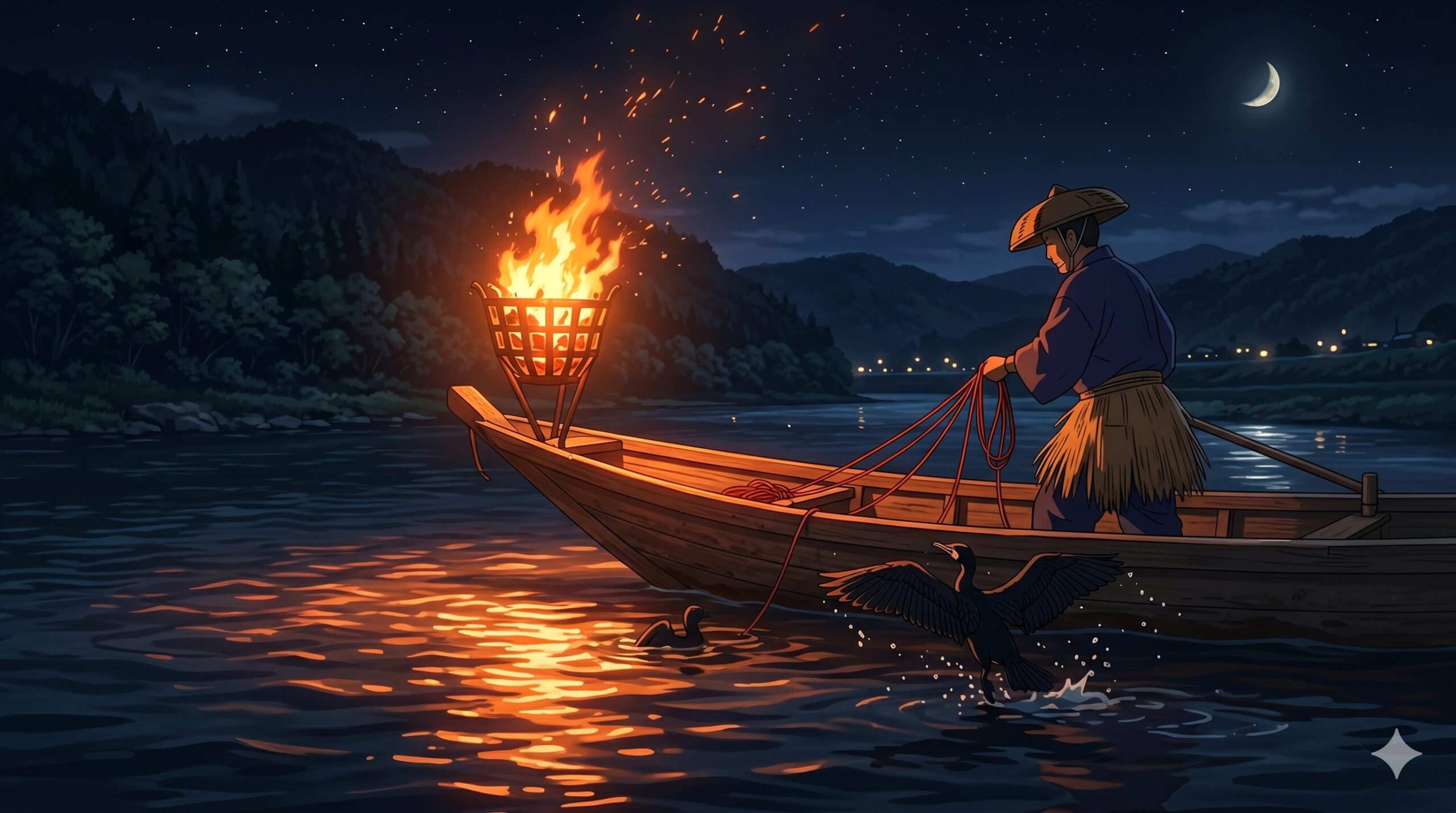
Every year on May 11th, on the pristine waters of the Nagara River in Gifu Prefecture, a magnificent traditional fishing method called “Ukai” (cormorant fishing) begins, heralding the arrival of the Japanese summer. The surface of the river, enveloped in pitch-black darkness, is illuminated by blazing “kagaribi” (fire baskets). The only sounds are the murmuring of the river and the spirited shouts of the “Ushou” (cormorant masters). Witnessing this spectacle instantly transports onlookers back 1,300 years into Japan’s ancient past.
Ukai on the Nagara River is not merely an antiquated fishing technique. It boasts a rich historical background: the great warlord Oda Nobunaga protected it by granting the official title of “Ushou,” and Tokugawa Ieyasu was so deeply impressed by the technique and the delicious taste of the captured Ayu (sweetfish) that he ordered the fish to be presented to Edo Castle. Even today, the cormorant masters of the Nagara River hold the prestigious status of national civil servants under the title “Cormorant Fishermen of the Imperial Household Agency,” performing “Goryo Ukai” to deliver Ayu to the Imperial Family. It is an unparalleled cultural heritage in the world.
Not Domination, but “Symbiosis”: The Deep Bond Between Master and Bird
At first glance, it might appear to be a “dominating” form of fishing where humans exploit birds to catch fish. However, the essence of Japanese Ukai is entirely different. The Ushou and the cormorants are not bound by a master-servant relationship, but by the deep ties of “family.”
The Ushou meticulously observes the cormorants’ health every day, strokes and massages their feathers, and lives alongside them. During fishing, a knot is tied around the cormorant’s neck, but this is calculated solely to prevent them from swallowing the large commercial fish; smaller fish slide easily into the cormorant’s own stomach, ensuring they are well-fed and satisfied. Drawing on years of experience, the Ushou completely understands the personality and condition of each individual bird, guiding them so they can perform comfortably and optimally. They do not treat natural creatures as tools, but respect them as partners to live alongside. Encapsulated here is the Japanese view of nature that has been continuously passed down since ancient times.
Ayu: The Symbol of Pristine Rivers and the Reverence for Receiving Life
The primary fish caught in Ukai is the “Ayu” (sweetfish). Because Ayu feed on river moss, they are also known as “fragrant fish,” characterized by a refreshing scent akin to watermelon. Ayu, which can only thrive in beautiful, unpolluted rivers like the Nagara River, have been revered by the Japanese not simply as food, but as sacred gifts from the river deities.
Ayu caught instantly by the beak of a cormorant do not lose their freshness and are brought out of the water in exceptionally high quality. When we eat this Ayu, we harbor a deep sense of gratitude for the purity of the river, the skill of the cormorants and masters, and for life itself. The profound weight of the phrase “Itadakimasu” (a Japanese expression of gratitude before meals), which lies at the root of Japanese food culture, is deeply reflected in the Ukai of the Nagara River.
A Night to Reclaim What Modern Humanity Has Lost
In a modern society dominated by efficiency and technology, Ukai—conducted in harmony with natural cycles using methods that have remained entirely unchanged for 1,300 years—sends us a powerful message. It is the humbling truth that “humans are, after all, merely a part of nature.”
As sparks from the fire baskets scatter in the air, the cormorants dive into the water, and the Ushou masterfully manipulates the ropes. It is a miraculous moment where humanity and nature are in perfect harmony.
What are your thoughts after learning about this 1,300-year-old bond between human and bird?
Don’t you think that amidst our modern lives, which often seek only efficiency, there lies a beautiful form of “coexistence with nature” that we have forgotten? If you ever have the opportunity to visit Japan, please witness this fantastic world woven by darkness and fire with your own eyes.
Related Links:
Gifu Prefecture Official Tourism Website (Visit Gifu)
Explore more of the “What’s Today’s Special Day?” Series
1300年の時を超える炎の舞。5月11日「長良川鵜飼開き」が語る日本の自然と共生
毎年5月11日、岐阜県を流れる清流・長良川において、日本の夏の訪れを告げる壮大な伝統漁法「鵜飼(うかい)」が幕を開けます。漆黒の闇に包まれた川面を、赤々と燃え盛る篝火(かがりび)が照らし出し、川のせせらぎと鵜匠(うしょう)の威勢の良い掛け声だけが響き渡る光景は、見る者を一瞬にして千三百年前の日本へとタイムスリップさせます。
長良川の鵜飼は、単なる古い漁獲法ではありません。織田信長が「鵜匠」という地位を与えて保護し、徳川家康が岐阜を訪れた際にはその技術と獲れた鮎(あゆ)の美味さに感銘を受け、江戸城へ鮎を献上させたという歴史的背景を持っています。現在でも、長良川の鵜匠は「宮内庁式部職鵜匠(くないちょうしきぶしょくうしょう)」という国家公務員としての格式を持ち、皇室に鮎を納める御料鵜飼(ごりょううかい)を行っている、世界でも類を見ない文化的遺産なのです。
支配ではなく「共生」。鵜匠と鵜の深い絆
一見すると、人間が鳥を使役して魚を獲る「支配的」な漁に見えるかもしれません。しかし、日本の鵜飼の本質は全く異なります。鵜匠と鵜は、主従関係ではなく「家族」としての絆で結ばれています。
鵜匠は毎日鵜の体調を細かく観察し、羽を撫でてマッサージを行い、一緒に生活を共にします。漁の際、鵜の首には結び目が作られますが、これは完全に飲み込むことを防ぐだけで、小さな魚は鵜自身の胃袋に入り、十分な満腹感を得られるように計算されています。鵜匠は長年の経験から一羽一羽の性格やコンディションを完全に把握し、彼らが最も快適に力を発揮できるよう導いているのです。自然の生き物を道具として扱うのではなく、パートナーとして尊重し、共に生きる。ここに、古代から脈々と受け継がれてきた日本人の自然観が凝縮されています。
清流のシンボル「鮎」と、命をいただく畏敬の念
鵜飼で獲れる主な魚は「鮎」です。鮎は苔を食べて育つため「香魚(こうぎょ)」とも呼ばれ、スイカのような清々しい香りが特徴です。長良川のような不純物のない美しい清流でしか育たない鮎は、日本人にとって単なる食材ではなく、川の神様からの授かりものとして神聖視されてきました。
鵜の嘴(くちばし)で瞬時に捕らえられた鮎は、鮮度が落ちず、非常に高品質な状態で水揚げされます。私たちはこの鮎をいただくとき、川の清らかさ、鵜と鵜匠の技術、そして命そのものに対して深い感謝の念を抱きます。日本の食文化の根底にある「いただきます」という言葉の重みが、この長良川の鵜飼には色濃く反映されているのです。
私たち現代人が見失ったものを取り戻す夜
効率とテクノロジーが支配する現代社会において、1300年間全く変わらない手法で、自然のサイクルに寄り添いながら行われる鵜飼は、私たちに強烈なメッセージを投げかけます。それは「人間もまた自然の一部に過ぎない」という謙虚な事実です。
篝火の火の粉が舞い散る中、鵜が水中に潜り、鵜匠が手縄(たなわ)を巧みに操る光景。それは人間と自然が完全に調和した、奇跡のような瞬間です。
あなたは、この1300年続く人と鳥の絆を知り、何を感じましたか?
効率だけを求める現代の生活の中で、私たちが忘れてしまった「自然との美しい共生」の形がここにあると思いませんか。もしあなたが日本を訪れる機会があるなら、この闇と炎が織りなす幻想的な世界を、ぜひその目で確かめてみてください。
関連リンク:
Gifu Prefecture Official Tourism Website (Visit Gifu)
その他の「今日は何の日」シリーズはこちら
コメント