1. The Story of Taro and Tofu
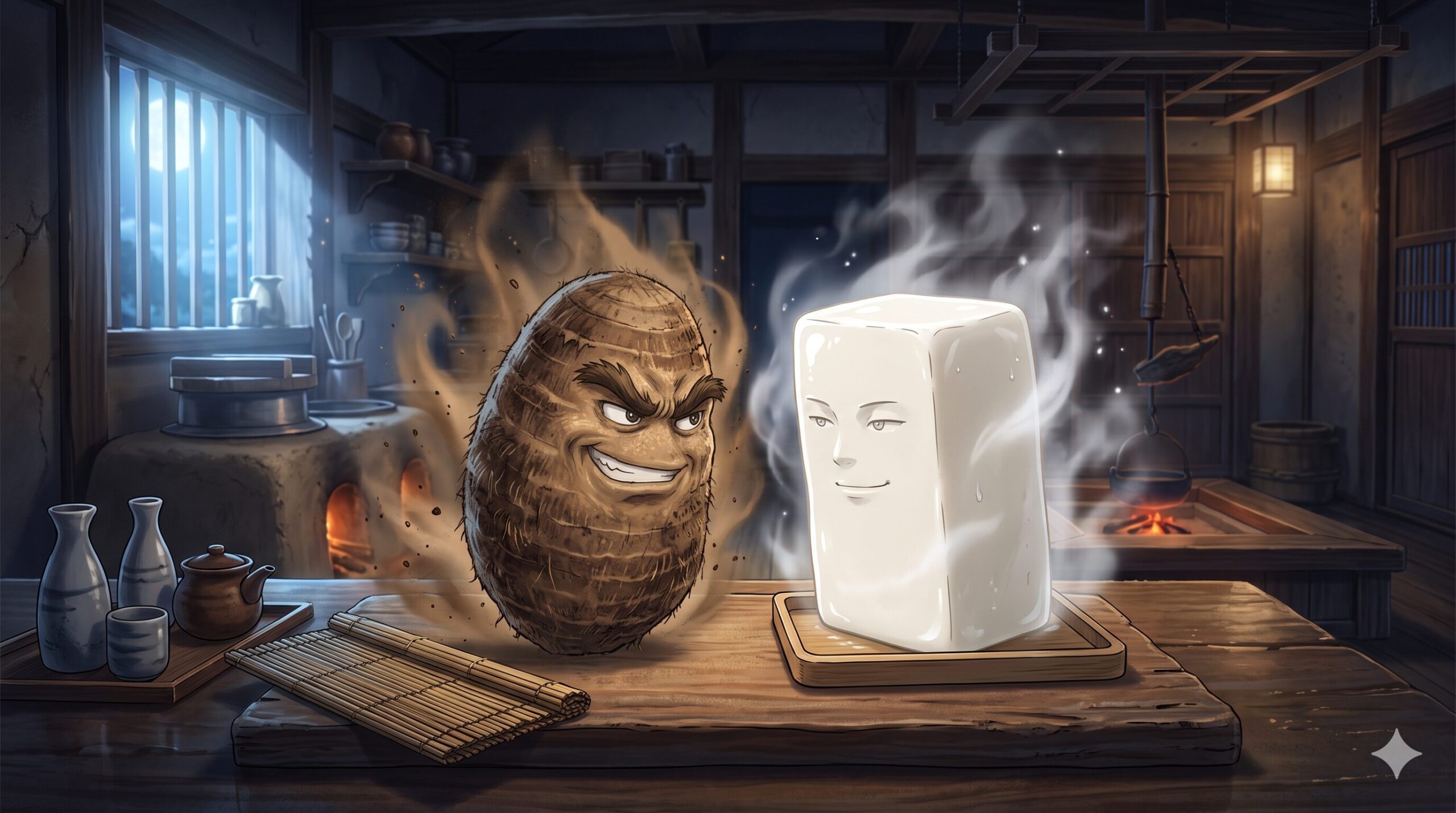
One night, a quiet incident unfolded on a kitchen shelf. Resting side by side were a mud-covered, rugged Taro root and a freshly made, smooth block of Tofu.
Taro boasted, “Hey Tofu! You look clean, but you are so fragile that you crumble instantly. Look at me! I have a tough skin and the strength to survive the harsh earth!”
Tofu replied firmly, “What a foolish thing to say. You are unsightly and covered in mud. You lack the elegance to gently complement dishes and soothe people’s hearts like I do.”
To settle who was superior, they decided to engage in a physical showdown.
Using his hard body, Taro charged directly into the center of Tofu. “Take this, my unbreakable strike!”
A loud impact echoed, but the outcome was unexpected. Tofu’s softness completely absorbed the shock. Taro lost his momentum, slipped, and rolled onto the floor, while Tofu’s corners were crushed by the impact.
The chef entered the kitchen, saw them, and smiled. “I see you were competing to prove who is stronger. But you are both incomplete on your own.”
The chef peeled the Taro, cut it into bite-sized pieces, and placed it in a pot with the Tofu. He added rich dashi broth and miso, simmering them slowly. The result was a warm bowl of Kenchin-jiru soup. The textures complemented each other perfectly. Realizing they needed each other to create a masterpiece, they reconciled forever.
2. The Lesson of Hardness and Softness
The essence of this tale lies in the collision of opposite traits. Taro symbolizes rigidity and self-assertion, while Tofu represents flexibility and acceptance.
Taro overestimated his hardness but could not defeat Tofu’s yielding nature. As the old proverb goes, “Softness overcomes hardness.” Aggressive force alone cannot solve problems; a flexible and receptive attitude is often the ultimate strength.
3. Japanese Culture and the Spirit of Harmony
This story beautifully illustrates the Japanese spirit of “Wa” (harmony). In society, neither aggressive stubbornness nor complete loss of identity is ideal. The process where different personalities clash but ultimately unify inside a single pot to create something magnificent is a microcosm of an ideal society.
This also aligns with Japanese “Dashi culture.” Instead of erasing individual flavors, Japanese cuisine respects and elevates each component to achieve higher deliciousness. It shows a timeless philosophy of coexistence.
4. What Do You Think?
Taro and Tofu transformed into a wonderful, unified dish. In your daily life, are you a “Taro type” who pushes your own opinions stubbornly? Or a “Tofu type” who adapts softly? How do you find a harmonious solution when you clash with others? Let us know your thoughts!
5. References
- Original Source: Japanese Folktale Database: Taro and Tofu
- More Stories: Japanese Folktale Series
日本の伝統的な民話には、深い教訓が隠されています。今回は、食卓でおなじみの「里芋」と「豆腐」がプライドをかけて戦う面白い物語「里芋と豆腐のけんか」をご紹介します。このお話から、日本人が大切にする「調和の精神」を紐解きます。
1. 昔話のあらすじ
ある夜、静かな台所の棚の上で事件が起きました。どっしりとした泥付きの「里芋」と、純白で滑らかなできたての「豆腐」が並んで置かれていたのです。
里芋が口を開きました。「おい豆腐、お前は白くて綺麗だが、少し触るだけで崩れる軟弱者だな。俺を見ろ。この頑丈な皮と力強さを!」と笑い飛ばしました。
豆腐は毅然と反論しました。「何を言うのです、里芋さん。あなたは見栄えが悪く泥だらけです。私のように、どんな料理にも寄り添う上品さがありません」
二人はどちらが優れた食材かを決めるため、体当たりで勝負することになりました。
里芋は自慢の硬い体を武器に、豆腐の真ん中へ勢いよく突進しました。「喰らえ、俺の一撃を!」
激しい音が響きましたが、結末は意外なものでした。豆腐の柔らかさが里芋の衝撃をすべて吸収してしまったのです。里芋は滑って床へ転がり落ち、豆腐もまた、衝撃で角が崩れてしまいました。
そこへ料理人がやってきて、二つの食材を見てにっこりと笑いました。「なるほど、強さを競っていたのだな。だが、お前たちは一人では未完成なのだよ」
料理人は里芋の皮をむいて一口大に切り、崩れた豆腐と一緒に鍋に入れ、味噌と出汁でじっくり煮込みました。出来上がったのは温かい「けんちん汁」です。里芋のねっとり感と豆腐の滑らかさがお互いを引き立て合い、最高の味わいになりました。二人は合わさることで素晴らしい料理になれると知り、深く和解したのです。
2. 「硬さ」と「柔らかさ」の教訓
この物語の面白さは、相反する性質の対立にあります。里芋は「剛(硬さ・自己主張)」を象徴し、豆腐は「柔(柔らかさ・受容)」を象徴しています。
里芋は自分の硬さを過信しましたが、豆腐の柔軟さを破ることはできませんでした。「柔よく剛を制す」という言葉通り、強硬な態度だけでは問題は解決せず、相手を受け入れるしなやかさこそが最大の強みになるという知恵を教えてくれています。
3. 日本文化と「和」の精神
このお話が表しているのは、日本人が重んじる「和(調和)」の精神です。社会では、強い自己主張だけでも、ただ流されるだけでもうまくいきません。異なる個性を持つ者同士が認め合い、一つの鍋(社会)の中で融合して素晴らしいものを生み出すプロセスが描かれています。
これは素材の味を引き立て合う日本の「出汁(ダシ)文化」にも通じます。お互いの個性を消すのではなく、調和させることでより高い価値を生み出すという、日本独自の共生の美学がここにあります。
4. あなたはどう思いますか?
最後は一つの美味しい料理として生まれ変わった里芋と豆腐。あなたは日常生活や仕事の場で、自分の意見を頑固に通す「里芋タイプ」ですか?それとも柔軟に受け止める「豆腐タイプ」ですか?意見がぶつかったとき、お互いを引き立て合う解決策をどう見つけますか?ぜひ考えてみてください。
5. 参考リンク
- 参考ソース:日本昔話データベース 「里芋と豆腐のけんか」
- 他の昔話を読む:Japanese Folktale Series

コメント