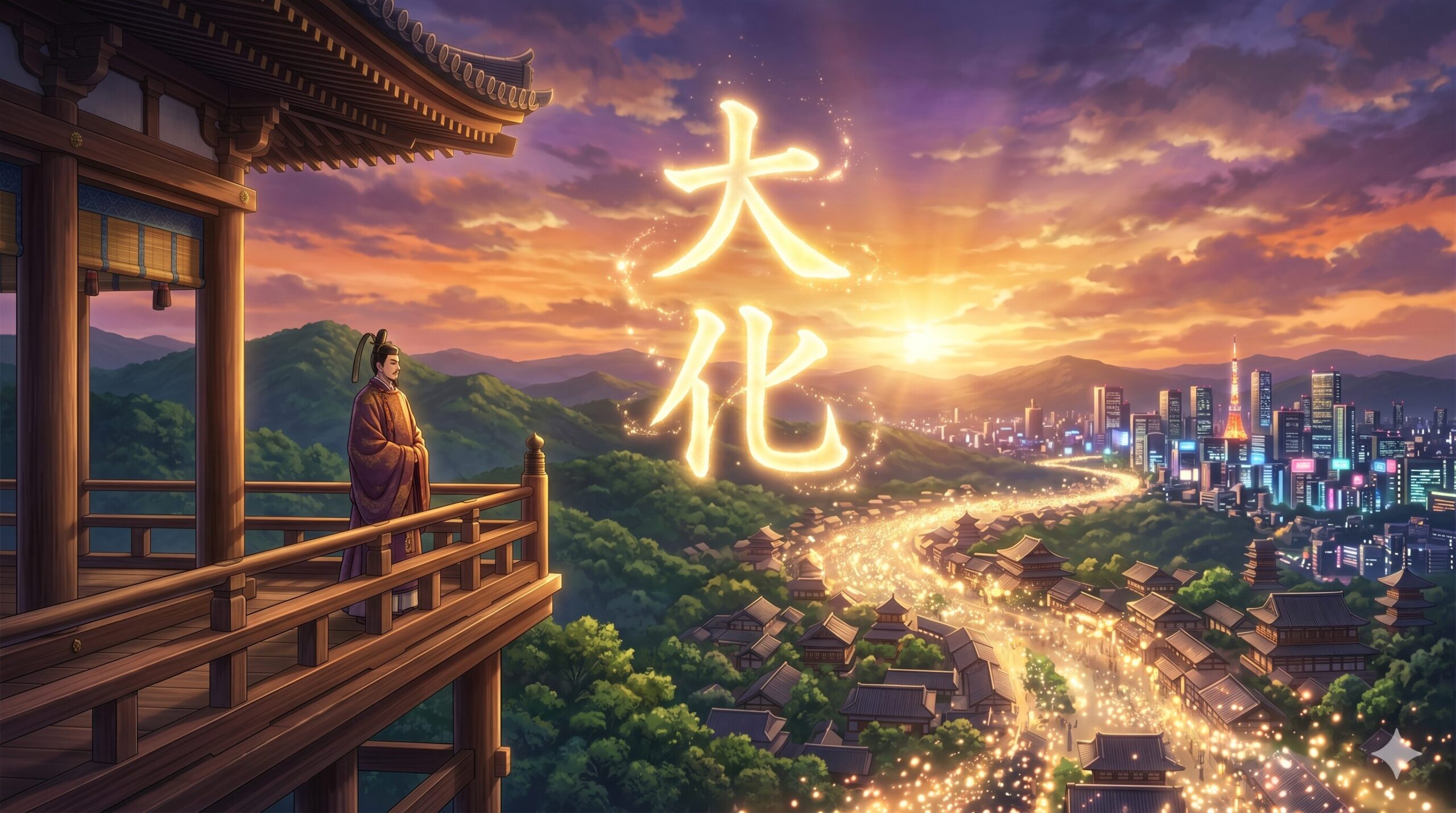
Many people around the world use the Western calendar (Gregorian calendar) to perceive the daily flow of time. However, in Japan, another “timeline” exists parallel to the Western calendar. This is the “Gengo” (Era Name) system. June 19th of each year is officially designated as “Gengo Day.” This originates from the establishment of Japan’s first era name, “Taika,” on this day in the year 645 AD.
Today, let us delve deeply into the origins and modern significance of the “Gengo” system, which has deeply engraved the spirituality and historical progress of the Japanese people.
The Birth of “Taika” in 645 AD: A Turning Point in History
The history of Gengo in Japan began immediately following a political coup in ancient Japan known as the “Isshi Incident.” This was the beginning of the “Taika Reform,” a massive transformation aimed at overthrowing the powerful Soga clan and building a centralized state centered around the Emperor.
The newly enthroned Emperor Kotoku, modeling after the Chinese system, established Japan’s own era name, “Taika” (大化). The word “Taika” embodies a strong desire for “the Emperor’s teachings to spread widely throughout the country and for the world to change magnificently.” It was not a mere counting of years, but an entrustment of a new era’s vision into a word. From here began Japan’s unique culture of “defining an era through words.”
Time Capsules Sealing the Atmosphere and Wishes of an Era
Since Taika, nearly 250 era names have been used in Japan up to the present day. From ancient times through the Middle Ages, era names were changed frequently—not only when a new Emperor took the throne, but also when there were good omens, or conversely, to break the chain of disasters during epidemics or natural calamities. Gengo acted almost like “magic words” to reset the social atmosphere and bring new hope to people’s hearts.
Entering the modern period, starting with the Meiji era, the system of “one era name per Emperor” was established. “Meiji,” “Taisho,” “Showa,” “Heisei,” and the current “Reiwa.” Each era name encapsulates the wishes of the people living in that time and the ideals of the nation.
For example, the current “Reiwa” contains the meaning that “culture is born and nurtured as people beautifully bring their hearts together.” The reason the whole of Japan is enveloped in a unique festive atmosphere celebrating the dawn of a new era the moment the Gengo changes is that the people of this country project their own future onto the new era name.
The “Dual Clocks” of Japanese Culture
Modern Japanese people navigate their daily lives using two clocks: the global standard “Western calendar” and Japan’s unique “Japanese calendar (Gengo).” The Western calendar is used in business and international interactions, while the Japanese calendar is often used in official documents, ceremonial occasions, or when recounting personal memories.
Expressions like “a coffee shop with a Showa-era vibe” or “Heisei pop culture” are used daily in Japan because Gengo is not just a sequence of numbers. It is strongly tied to the culture, atmosphere, scent, and emotions of the people of that time. If the Western calendar is “linear, objective time,” the Gengo can be called “emotional, narrative time.”
If You Could Name Your Own “Era”?
The Japanese Gengo system teaches us that time is not something that merely passes, but something that holds meaning and a shared narrative. Surely, each of our lives consists of several “eras.”
Having read this article, what do you think of the Japanese Gengo system? If you were to give a “Gengo-like” name to the current chapter of your own life right now, what name would you choose? Please try to find the word that defines your personal “now.”
Reference Links
- External Reference: Japanese era name (Wikipedia)
- Read more related articles: What’s Today’s Special Day Series
6月19日は「元号の日」:日本独自の時間が動き出した日
世界中の多くの人々が西暦(グレゴリオ暦)を用いて日々の時間を認識しています。しかし、日本には西暦と並行して、もう一つの「時間軸」が存在します。それが「元号(Gengo)」です。毎年6月19日は「元号の日」に制定されています。これは、西暦645年のこの日に、日本で初めての元号である「大化(Taika)」が定められたことに由来しています。
本日は、日本人の精神性と歴史の歩みを深く刻み込んできた「元号」というシステムについて、その起源と現代における意味を詳しく紐解いていきましょう。
西暦645年「大化」の誕生:歴史の転換点
日本における元号の歴史は、古代日本の政治的クーデターである「乙巳の変(Isshi Incident)」の直後に始まりました。時の権力者であった蘇我氏を打倒し、天皇中心の中央集権国家を築くための大改革、すなわち「大化の改新(Taika Reform)」がスタートした時期です。
新しく即位した孝徳天皇は、中国の制度に倣い、日本独自の元号「大化」を制定しました。「大化」という言葉には、「天皇の教えが国中に大きく行き渡り、世の中が立派に変わる」という強い願いが込められています。単なる年のカウントではなく、新しい時代のビジョンそのものを言葉に託したのです。ここから、日本における「言葉によって時代を定義する」という独自の文化が始まりました。
時代の空気と願いを封じ込めるタイムカプセル
大化以降、日本では現在に至るまで250近い元号が使われてきました。古代から中世にかけては、天皇の代が替わる時だけでなく、吉兆(良い兆し)があった時や、逆に疫病や自然災害などの凶事があった際にも、災いを断ち切るために頻繁に元号が変更されました。元号は、社会の空気をリセットし、人々の心に新たな希望をもたらすための「魔法の言葉」のような役割を果たしていたのです。
近代に入り、明治時代からは「一世一元の制(一人の天皇につき一つの元号とする制度)」が確立されました。「明治(Meiji)」「大正(Taisho)」「昭和(Showa)」「平成(Heisei)」そして現在の「令和(Reiwa)」。それぞれの元号には、その時代を生きる人々の願いや、国家の理想が込められています。
例えば、現在の「令和」には、「人々が美しく心を寄せ合う中で、文化が生まれ育つ」という意味が含まれています。元号が変わる瞬間、日本中が新しい時代の幕開けを祝う独特の祝祭感に包まれるのは、この国の人々が新しい元号に自分たちの未来を投影しているからです。
日本文化における「双発の時計」:西暦と和暦
現代の日本人は、グローバルスタンダードである「西暦」と、日本固有の「和暦(元号)」という2つの時計を日常的に使い分けて生きています。ビジネスや国際的なやり取りでは西暦を用い、公的な書類や冠婚葬祭、あるいは個人の思い出を語る際には和暦を用いることが多々あります。
「昭和の香り漂う喫茶店」「平成のポップカルチャー」といった表現が日本で日常的に使われるのは、元号が単なる数字の羅列ではなく、その時代の文化、雰囲気、匂い、そして人々の感情と強く結びついているからです。西暦が「直線的で客観的な時間」であるなら、元号は「感情的で物語性を持った時間」と言えるでしょう。
あなた自身の「時代」に名前をつけるなら?
日本の元号システムは、時間がただ過ぎ去るものではなく、意味を持ち、人々が共有する物語であることを教えてくれます。私たち一人一人の人生にも、きっといくつもの「時代」が存在するはずです。
この記事を読んでいるあなたは、日本の元号というシステムについてどう思いましたか? もし今、あなた自身の人生の現在のチャプターに「元号」のような名前をつけるとしたら、どんな名前をつけますか? ぜひ、あなた自身の人生の「今」を定義する言葉を探してみてください。
参考リンク集
- 外部参考リンク: Japanese era name (Wikipedia)
- 関連記事はこちら: 今日は何の日シリーズ (What’s Today’s Special Day Series)

コメント