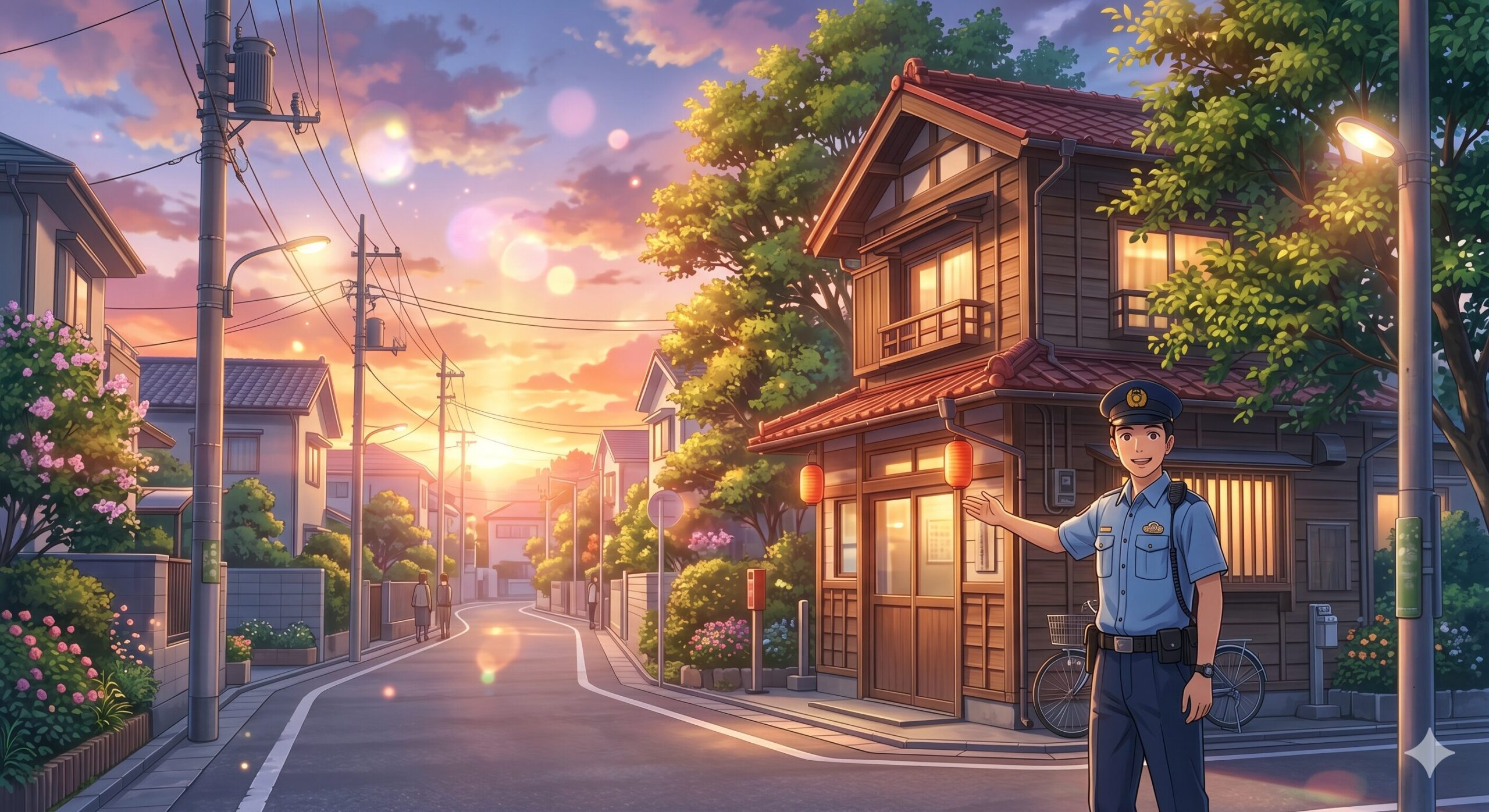
June 17 is known as “Policeman’s Day” (Omawari-san no Hi) in Japan. This anniversary is not just an event on the calendar; it is a significant day that symbolizes the origin of Japan’s world-renowned public safety and its unique, community-rooted police system. On this day in 1874 (Meiji 7), the patrol system was introduced in Japan for the first time, laying the foundation for today’s “Koban” (police box) network.
In this article, we will detail the historical background of Policeman’s Day, the footsteps of modernization brought about by Meiji-era infrastructure development, and how the Koban system is deeply connected to Japanese culture, becoming a phenomenon that attracts attention from around the world.
The Meiji Restoration and the Birth of the Police System: The Path to a Modern State
Following the Meiji Restoration in 1868, Japan faced a rapid wave of modernization. During the preceding Edo period, public order during the roughly 260 years of peace was maintained by “Machi-bugyo” (town magistrates) and those who served them, such as “Doshin” and “Okappiki.” However, for the new government to build a centralized modern state, an organized, professional police force comparable to those of Western countries was essential.
On June 17, 1874, the Meiji government officially introduced the “Junsa” (patrol officer) system. This is the origin of Policeman’s Day. The person who devoted himself to establishing this system was Toshiyoshi Kawaji, known as the “Father of the Japanese Police.” He observed European police systems, particularly the French system, and uniquely adapted them to fit Japan’s social structure.
A notable feature was the introduction of the “Koban” concept—not merely establishing police stations, but placing police officers at strategic points within the community. The infrastructure development of the Meiji era was not just about railways and communications; it was also the construction of a “public order infrastructure” to protect people’s safety. This was the first step toward the myth of Japanese safety that continues to this day.
The Name “Omawari-san” and Its Deep Connection to Japanese Culture
Japanese police officers are affectionately called “Omawari-san.” This word originates from their daily duty of “going around” or patrolling the neighborhood. This clearly reflects a cultural difference: while Western police are often seen as “law enforcers,” Japanese police act as “guardians of the local community and part of the community itself.”
The Koban system is deeply linked to the spirit of “local community” in Japanese culture. A Koban exists right next to people’s living areas in each district, keeping a 24-hour watch over the town’s safety. Giving directions to lost people, protecting lost children, and returning lost property to their owners are crucial duties of an Omawari-san.
The extremely high probability that a dropped wallet will be returned with its contents intact in Japan is spoken of with global astonishment. This is because, in addition to the high moral standards of the Japanese people, the behavioral pattern of “taking it to the Koban immediately if something happens” has completely taken root as social infrastructure over 150 years of history.
The KOBAN System Exported to the World
Today, Japan’s “KOBAN” system is exported to countries around the world as an excellent model of community policing. Many countries, including Singapore, Brazil, and Honduras, have introduced the Japanese police box system, succeeding in lowering local crime rates and improving residents’ sense of security.
The fact that a system learned from the West in the Meiji era was fused with Japan’s unique culture, and eventually returned to the world as the international standard known as “KOBAN,” is a highly fascinating point when interpreting the transition of Japanese history and culture.
To Our Readers
If you see a “Koban” with its small red lamp glowing on a street corner in Japan, please remember that it is the crystallization of consideration for the community and a desire for safety that has continued since 1874.
What is the police system and the system for protecting the community like in your country? Have you ever asked an Omawari-san for directions or received help from a Koban while visiting Japan? Please share your experiences and thoughts in the comments!
Reference Links:
- Internal Link: Read more in the What’s Today’s Special Day Series
- External Link: National Police Agency (Japan)
6月17日は「おまわりさんの日」:日本の治安と「交番」システムの歴史
6月17日は、日本において「おまわりさんの日」として知られています。この記念日は、単なるカレンダー上のイベントではなく、日本が世界に誇る卓越した治安の良さと、地域社会に根差した独自の警察システムの始まりを象徴する重要な日です。1874年(明治7年)のこの日、日本で初めて巡査制度が導入され、今日の「交番(Koban)」ネットワークの基礎が築かれました。
この記事では、「おまわりさんの日」の歴史的背景から、明治時代のインフラ整備がもたらした近代化の足跡、そして「交番」というシステムがどのように日本文化と深く結びつき、世界中から注目される存在となったのかを詳細に紐解いていきます。
明治維新と警察制度の誕生:近代国家への歩み
1868年の明治維新を経て、日本は急激な近代化の波に直面しました。それまでの江戸時代、約260年にわたる平和な時代における治安維持は、「町奉行」や彼らに仕える「同心」「岡っ引き」といった人々によって担われていました。しかし、新政府が中央集権的な近代国家を建設するためには、西洋諸国に匹敵する、組織化されたプロフェッショナルな警察組織が不可欠でした。
1874年(明治7年)6月17日、明治政府は「巡査制度」を正式に導入しました。これが「おまわりさんの日」の由来です。この制度の確立に尽力したのが、「日本警察の父」と呼ばれる川路利良(かわじ としよし)です。彼はヨーロッパの警察制度、特にフランスのシステムを視察し、それを日本の社会構造に合わせて独自にアレンジしました。
特筆すべきは、単に警察署を設置するだけでなく、地域の要所に警察官を配置する「交番(当初は交番所と呼ばれました)」の概念を取り入れたことです。明治のインフラ整備は鉄道や通信だけでなく、人々の安全を守る「治安のインフラ」の構築でもありました。これが、現代へと続く日本の安全神話の第一歩となったのです。
「おまわりさん」という呼称と日本文化の深い繋がり
日本の警察官は、親しみを込めて「おまわりさん」と呼ばれます。この言葉は、「周囲を見回る(巡回する)」という警察官の日常的な業務に由来しています。ここには、西洋の警察が「法を執行する権力者(Enforcer)」という側面が強いのに対し、日本の警察が「地域社会の守護者であり、コミュニティの一部である」という文化的な違いが如実に表れています。
交番システムは、日本文化における「地域共同体(コミュニティ)」の精神と深くリンクしています。交番は各地域の生活圏のすぐそばに存在し、24時間体制で街の安全を見守ります。道に迷った人に道を教えること、迷子を保護すること、そして落とし物を持ち主の元へ返すことは、おまわりさんの重要な任務です。
日本で財布を落としても中身がそのまま戻ってくる確率が極めて高いことは、世界中で驚きをもって語られます。これは、日本人の道徳観念の高さに加えて、「何かあればすぐに交番に届ける」という行動様式が、150年以上の歴史を経て社会のインフラとして完全に定着しているからです。
世界へ輸出されるKOBANシステム
現在、日本の「KOBAN」システムは、優秀なコミュニティ・ポリシング(地域警察活動)のモデルとして、世界各国に輸出されています。シンガポール、ブラジル、ホンジュラスなど、多くの国々が日本の交番制度を導入し、地域の犯罪率低下や住民の安心感向上に成功しています。
明治時代に西洋から学んだシステムを日本独自の文化と融合させ、やがてそれを「KOBAN」という国際的なスタンダードとして世界に還元しているという事実は、日本の歴史と文化の変遷を読み解く上で非常に興味深いポイントです。
読者の皆様へ
日本の街角で、小さな赤いランプが灯る「交番」を見かけたら、それは1874年から続く、地域への思いやりと安全への願いの結晶であることを思い出してください。
あなたの国の警察制度や、地域を守るシステムはどのようなものですか?日本を訪れた際、おまわりさんに道を尋ねたり、交番の助けを借りたりした経験はありますか?ぜひ、あなたの体験や考えをコメントで教えてください。
参考リンク:


コメント