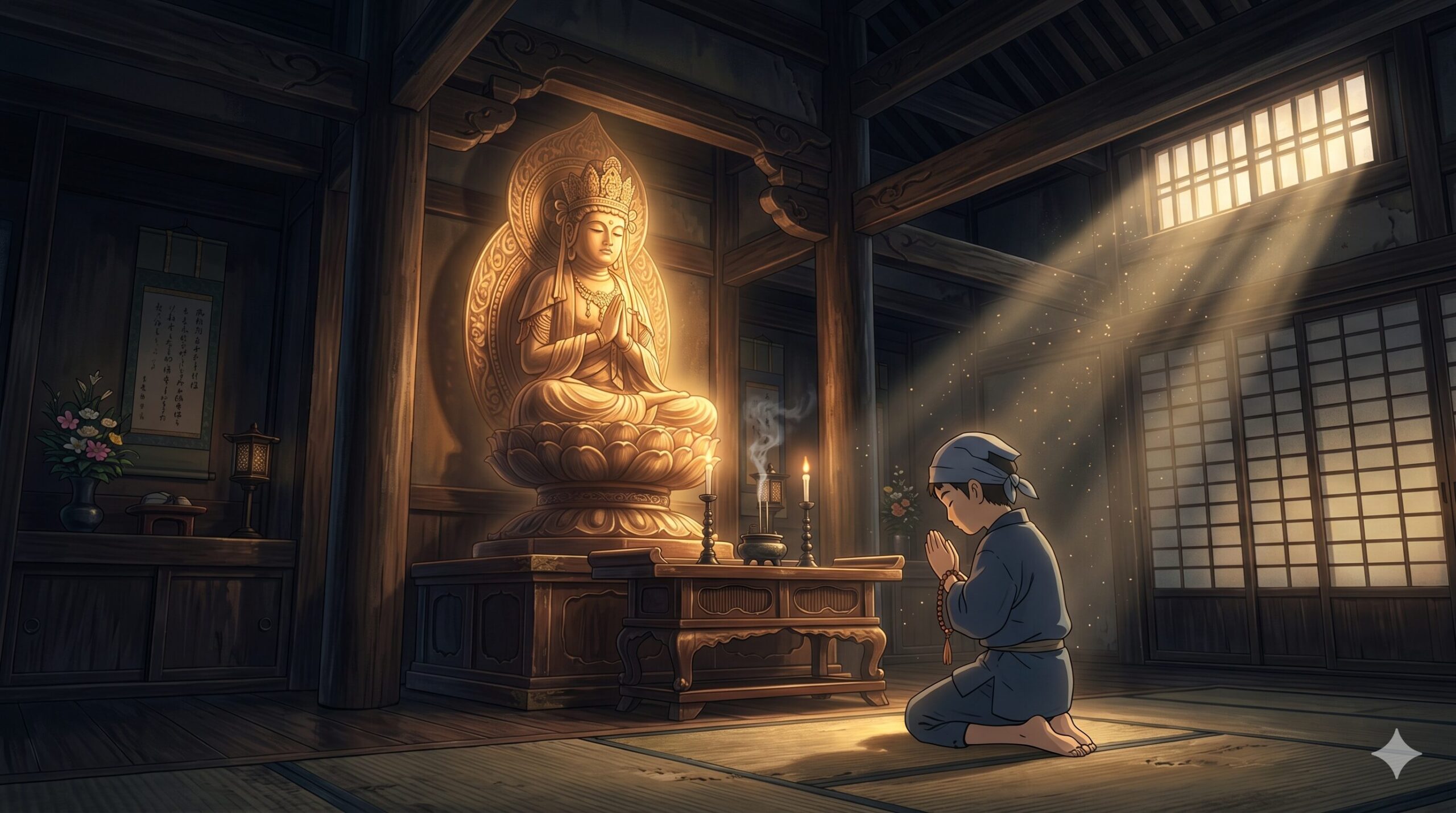
Once upon a time, in a quiet Japanese village, there was an old, weathered temple named “Jokoin”. Housed within its main hall was a statue of Kokuzo Bosatsu (Akasagarbha Bodhisattva), a deity believed to possess boundless wisdom and compassion. The villagers affectionately referred to the deity as “Kokuzo-san.”
In this village lived a kind-hearted boy named Kichi. Kichi was the hardest worker in the village, deeply respecting his parents and the elders. However, he was born with a very poor memory. He would forget things almost as soon as he was taught them, which led to frequent teasing from children his own age. Despite lamenting his own clumsiness, Kichi never held a grudge against anyone. Every single day, without fail, he would visit Jokoin Temple. He meticulously swept the temple grounds and sat before Kokuzo-san, praying single-mindedly: “Please, grant me just enough wisdom so that I may be of some use to the people of this village.”
Years passed, and one summer, an unprecedented drought struck the village. The fields cracked open, crops withered away, and even the drinking water was on the verge of running out. The village elders remembered that an ancient, passed-down manuscript contained the location of a “hidden underground water vein.” However, the document was heavily eaten by insects and written in highly complex, archaic characters that no one in the village could decipher. On the night the villagers fell into despair, Kichi was praying in the temple hall as usual.
Suddenly, in the pitch-black hall, the wooden statue of Kokuzo-san began to emit a soft, golden light. The light enveloped Kichi’s body, bringing a sensation like pure, clear water flowing into his mind. The next morning, when Kichi went to the village gathering place and peered at the ancient text surrounded by the elders, a miracle occurred. The complex characters, which Kichi could never have remembered before, jumped into his eyes with clear, undeniable meaning. “Elders, it says here, ‘Dig deep at the roots of the three cedar trees to the north.'” Kichi read the words without a hint of hesitation.
Though half-doubting, the desperate villagers had nothing else to rely on. They followed Kichi’s words and began to dig at the roots of the three northern cedars. Before long, cold, clear water gushed out vigorously from deep within the earth. The village was saved. Kichi’s pure heart, demonstrated by his daily prayers and selfless sweeping of the temple grounds, had drawn forth the infinite wisdom of Kokuzo Bosatsu. From then on, Kichi was deeply respected as the village’s wise man, and Kokuzo-san of Jokoin was worshipped even more fervently as a “Buddha who grants true, selfless wishes.”
In-Depth Analysis: The Fruition of Pure Faith and Effort
“Kokuzo-san of Jokoin” is not merely a tale of a magical miracle. The core of this story lies in “pure service without expecting a reward” and the “power of perseverance.” Kichi, the protagonist, did not pray to become smart for his own personal gain or wealth; he prayed with an altruistic desire “to be useful to others.” In Buddhism, a Bodhisattva is a being who prioritizes the salvation of others over their own enlightenment. Kichi’s selfless actions perfectly resonated with the spirit of the Bodhisattva.
Furthermore, Kichi’s sudden ability to read the ancient text may seem like magic, but it can also be interpreted as the blossoming of wisdom built upon the “foundation” of his daily visits to the temple, absorbing the sounds of the sutras and the atmosphere of the sacred grounds. In Japanese folktales, deities never extend a helping hand to lazy people who merely pray. The gods smile only upon those who accompany their prayers with “action (practice),” just as Kichi cleaned the grounds every day despite his clumsiness. This strongly reflects the universal Japanese view of labor and ethics: that continuous, humble effort ultimately generates great power.
Connection to Japanese Culture: Kokuzo Bosatsu and “Jusan-mairi”
An important element of Japanese culture to decode from this story is the “localization of Buddhist faith” deeply rooted in Japanese life. Kokuzo Bosatsu is known in Sanskrit as “Akasagarbha,” meaning a vast Bodhisattva with infinite wisdom and compassion as vast as the universe. In Japan, since ancient times, this deity has been worshipped as the Buddha of memory and academic improvement. It is also famous as the principal image of the “Kokuzo Gumonji-ho,” a grueling ascetic practice undertaken by Kukai (Kobo Daishi) to enhance his memory.
In certain regions of Japan (especially the Kansai region), there is still a traditional event called “Jusan-mairi” (The 13-year-old pilgrimage). When children reach the traditional age of 13, they visit Kokuzo Bosatsu to be blessed with wisdom and good fortune. This ritual, where one “borrows wisdom” from the deities during the transition from childhood to adulthood, aligns perfectly with the process in the story where Kichi receives wisdom from Kokuzo-san and grows into an admirable adult who saves his village. Japanese deities are not distant figures in the heavens; they are intimate presences, like the local “Kokuzo-san,” who stand closely by people’s growth and daily lives.
To Our Readers: What Would You Do?
In our modern, fast-paced society, it is incredibly difficult to face one’s own weaknesses and consistently believe in and continue one thing without immediate results, just like Kichi did. However, his pure wish ultimately produced a miracle great enough to save an entire village.
If you were in Kichi’s position, could you endure the ridicule of others while continuing to pray and act not for yourself, but for the sake of others? Also, have you ever experienced a time in your own life where time and perseverance eventually transformed into true “wisdom”? We hope this folktale provides an opportunity for you to reflect on your daily actions and what is truly important in life.
Reference Links
- Internal Link: (https://kiri53.com/category/japanese-folktale-series/)">Japanese Folktale Series
 Japanese Folktale Series「Japanese Folktale Series」の記事一覧です。kiri53.com
浄光院の虚空蔵さん(ストーリー)
昔々、ある静かな村に「浄光院(じょうこういん)」という古びたお寺がありました。このお寺のお堂には、無限の知恵と慈悲を持つとされる「虚空蔵菩薩(こくうぞうぼさつ)」が祀られており、村人たちからは親しみを込めて「虚空蔵さん」と呼ばれていました。
この村に、吉(きち)という名の心優しい少年が住んでいました。吉は誰よりも働き者で、親や村の大人たちを敬っていましたが、生まれつき物覚えが悪く、何かを教わってもすぐに忘れてしまうため、同年代の子供たちからよくからかわれていました。吉は自分の不器用さを嘆きながらも、決して他人を恨むことはありませんでした。彼は毎日欠かさず浄光院へ足を運び、境内を丁寧に掃き清め、虚空蔵さんの前に座っては「どうか、少しでも村の皆の役に立てるような知恵をお授けください」と、ただ一心に祈り続けました。
数年の月日が流れたある夏のことです。村を未曾有の干ばつが襲いました。田畑はひび割れ、作物は枯れ果て、飲み水すら底をつきかけていました。村の長老たちは、古くから伝わる村の古文書に「隠された地下水脈」の場所が記されていることを思い出しましたが、その古文書は虫食いがひどく、古代の難解な文字で書かれていたため、誰一人として解読することができませんでした。村人たちが絶望に暮れていたその夜、吉はいつものように浄光院のお堂で祈りを捧げていました。
すると、真っ暗なお堂の中で、虚空蔵さんの仏像がふわりと柔らかな黄金色の光を放ち始めました。その光は吉の体を包み込み、彼の心の中に清らかな水が流れ込むような感覚を与えました。翌朝、吉が村の集会場へ向かい、長老たちが囲む古文書を覗き込むと、不思議なことが起こりました。これまでどんな文字も覚えられなかった吉の目に、その難解な文字がはっきりと意味を持って飛び込んできたのです。「長老様、ここは『北の三本杉の根元を深く掘れ』と書いてあります」。吉は迷いなく読み上げました。
半信半疑ながらも、他にすがるもののない村人たちは、吉の言葉に従って北の三本杉の根元を掘り進めました。すると、地中深くから冷たく澄んだ水が勢いよく湧き出したのです。村は救われました。吉が毎日欠かさず虚空蔵さんに祈り、境内を清め続けたその純粋な心が、虚空蔵菩薩の無限の知恵を引き寄せたのです。それ以来、吉は村の知恵袋として慕われ、浄光院の虚空蔵さんは「真の願いを叶える仏様」として、さらに深く信仰されるようになりました。
昔話の深い考察:純粋な信仰と努力の結実
「浄光院の虚空蔵さん」は、単なる奇跡の物語ではありません。この物語の核心は、「見返りを求めない純粋な奉仕」と「継続する力」にあります。主人公である吉は、自分が賢くなることで私腹を肥やすためではなく、「他者の役に立ちたい」という利他的な願いのために祈り続けました。仏教における菩薩(ぼさつ)は、自らの悟りよりも他者の救済を優先する存在です。吉の無私の行動は、まさに菩薩の精神と共鳴するものでした。
また、吉が突然古文書を読めるようになったのは、魔法のような出来事に見えますが、彼が毎日お寺に通い、お経の響きや境内の空気に触れ続けていたという「下地」があったからこそ開花した知恵だと読み解くこともできます。日本の昔話では、神仏はただ祈るだけの怠け者には決して手を差し伸べません。吉のように、不器用であっても毎日境内を掃除するという「実践(行動)」を伴う者にのみ、神仏は微笑むのです。これは、努力の継続こそが最終的に大きな力を生むという、日本人の普遍的な労働観・倫理観を色濃く反映しています。
日本文化との関連:虚空蔵菩薩と「十三参り」
この物語から読み解くべき重要な日本文化の要素は、日本人の生活に根付く「仏教信仰の土着化」です。虚空蔵菩薩は、サンスクリット語で「アーカーシャガルバ」と呼ばれ、宇宙のように無限の知恵と慈悲を持つ広大な菩薩を意味します。日本では古くから、記憶力や学業向上の仏様として信仰を集めてきました。空海(弘法大師)が記憶力を増進させるために行ったとされる過酷な修行「虚空蔵求聞持法(こくうぞうぐもんじほう)」の本尊としても有名です。
日本の特定の地域(特に関西地方)では、現在でも子供が数え年で13歳になった際に、知恵と福徳を授かるために虚空蔵菩薩にお参りする「十三参り(じゅうさんまいり)」という伝統行事が行われています。子供が大人へと成長する過渡期に、神仏から「知恵」を借りるというこの儀式は、物語の中で吉が虚空蔵さんから知恵を授かり、村を救う立派な大人へと成長したプロセスと完全に一致しています。日本の神仏は、はるか遠くの天界にいるのではなく、村の身近な寺の「虚空蔵さん」として、人々の成長と生活に寄り添う親密な存在なのです。
読者の皆様へ:あなたならどうしますか?
吉のように、すぐに結果が出なくても、自分の弱さと向き合いながら一つのことを信じて継続することは、現代のスピード社会においては非常に困難なことです。しかし、彼の純粋な願いは、最終的に村全体を救うほどの大きな奇跡を生み出しました。
もしあなたが吉の立場なら、他人の嘲笑に耐えながら、自分のためではなく他人のために祈り、行動し続けることができるでしょうか?また、あなた自身の人生において、時間をかけて「知恵」へと変わった経験はありますか?この昔話が、あなたの日々の行いや、本当に大切なものは何かを見つめ直すきっかけとなれば幸いです。
参考リンク
- 内部リンク:(https://kiri53.com/category/japanese-folktale-series/)">日本の昔話シリーズ (Japanese Folktale Series)Japanese Folktale Series「Japanese Folktale Series」の記事一覧です。kiri53.com
コメント