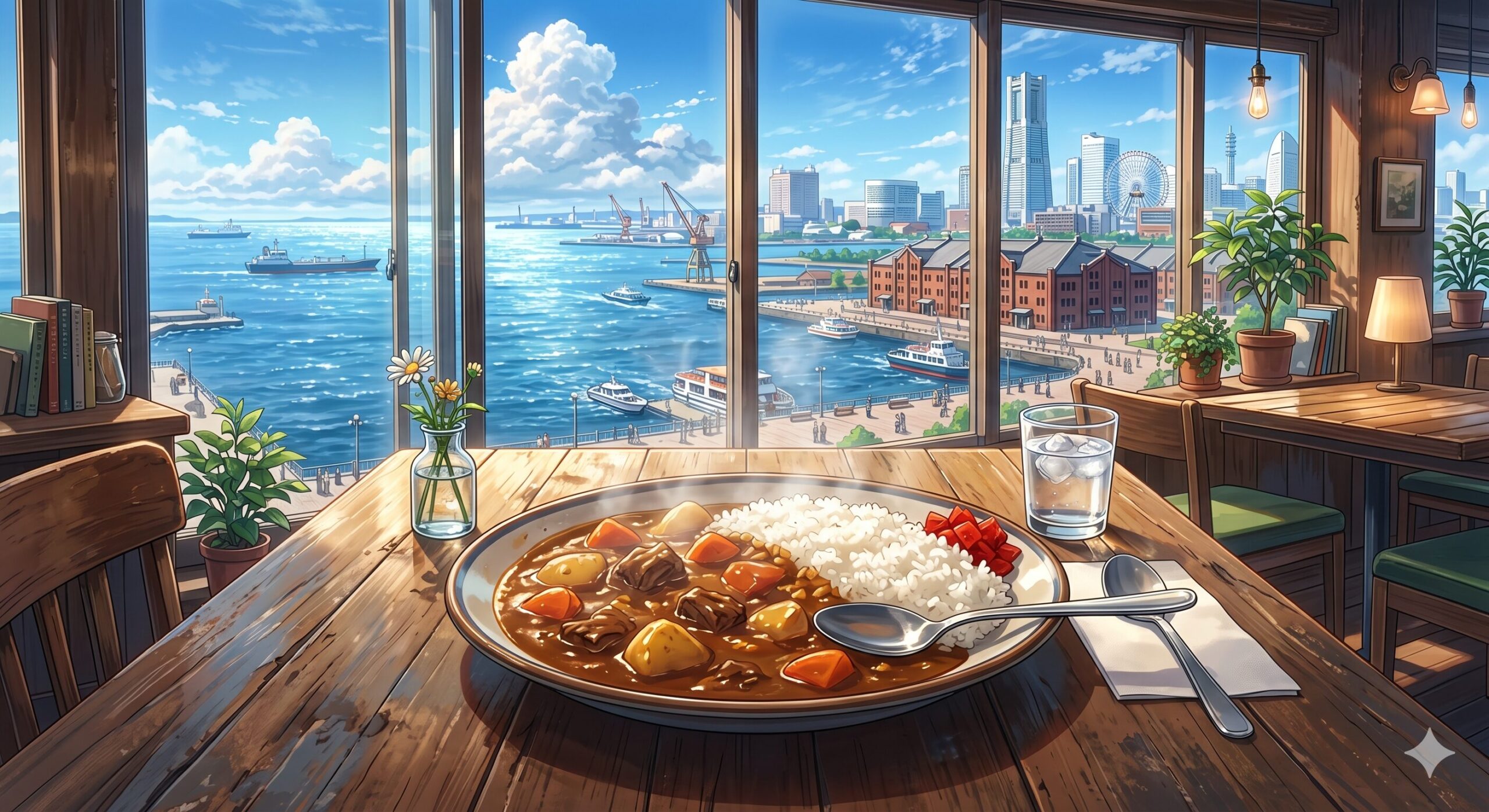
When travelers visit Japan, they often come expecting traditional cuisine like sushi, tempura, and wagyu beef. However, many are surprised to discover that one of the most deeply rooted dishes in modern Japanese society is “Curry Rice” (Kare Raisu). June 2nd marks “Yokohama Curry Day.” This is not just a celebration of food; it is a historical turning point that vividly illustrates how Japan embraces foreign cultures and elevates them into unique masterpieces.
- The Opening of Yokohama Port: A Gateway to a New World
- From the British Navy to the Imperial Japanese Navy: The Fight Against Beriberi
- Wa-Yō Setchū: The Genius of Japanese Cultural Adaptation
- Curry as the Ultimate Comfort Food
- Over to You: What is Your Country’s Culinary Fusion?
- 横浜港の開港:新しい世界への扉
- イギリス海軍から大日本帝国海軍へ:脚気との戦いとカレーの進化
- 和洋折衷(Wa-Yō Setchū):異文化を日本化する天才的な能力
- 究極のコンフォートフードとしてのカレー
- 読者の皆様へ:あなたの国の「食の融合」は何ですか?
The Opening of Yokohama Port: A Gateway to a New World
On June 2, 1859, Japan ended over 200 years of national isolation and opened the Port of Yokohama to the world. This dramatic event brought not only political shifts but also a massive influx of culture, particularly in the realm of food.
As Western merchants and military personnel established settlements in Yokohama, they brought their lifestyles with them. Among them were sailors of the British Royal Navy, who introduced curry to Japan. At the time, Britain ruled India, and the British Navy served a curry stew on board using curry powder developed by the Crosse & Blackwell (C&B) company. Therefore, curry did not arrive in Japan directly from India, but rather via Britain as a form of “Yōshoku” (Western food).
From the British Navy to the Imperial Japanese Navy: The Fight Against Beriberi
The reason Japanese curry evolved into its unique, thick, and hearty form lies in a serious health crisis within the Japanese military. During the Meiji era, the Japanese Navy suffered from widespread beriberi (a severe vitamin B1 deficiency) due to a diet centered almost exclusively on white rice.
To combat this, Naval surgeon Kanehiro Takagi looked to the diet of the British Navy. Curry, packed with meat and vegetables and thickened with flour, was highly nutritious and had the added benefit of not spilling easily on a swaying ship. Furthermore, the spices stimulated the appetite. The technique of using a flour-based roux perfectly matched Japan’s sticky Japonica rice. The resulting “Navy Curry” (Kaigun Kare) quickly spread throughout the country and became the prototype for the Japanese curry we know today.
Wa-Yō Setchū: The Genius of Japanese Cultural Adaptation
Yokohama Curry Day is a key to understanding the history of Japanese cultural adaptation. Japan has a long-standing philosophy known as “Wa-Yō Setchū” (the blending of Japanese spirit and Western techniques), where foreign concepts are adopted and heavily optimized to suit the local environment and palate.
Japanese curry is vastly different from authentic Indian spice curries or British stews. It is an entirely new dish created by slowly caramelizing onions for sweetness, adding secret ingredients like apples and honey, and pursuing “Umami” to its absolute limit. Japan didn’t stop there; they expanded the concept by topping it with a fried pork cutlet (“Katsu Curry”), mixing it with thick noodles (“Curry Udon”), and deep-frying it inside bread (“Curry Pan”). Japanese curry is a testament to Japanese craftsmanship—not merely imitating foreign culture, but grasping its essence and reconstructing it to align with Japanese aesthetics and taste.
Curry as the Ultimate Comfort Food
Today, curry is considered a national dish of Japan. It is a favorite on school lunch menus, a symbol of a mother’s home cooking, and a fast-food staple that fuels busy salarymen. The fact that unfamiliar Western spices that landed at the Port of Yokohama have, over 160 years later, become the ultimate comfort food that heals the Japanese soul is nothing short of miraculous.
Over to You: What is Your Country’s Culinary Fusion?
A single plate of Japanese curry rice is packed with the history of the Age of Discovery, British naval navigation, advancements in Japanese medicine, and the passion of the Japanese people for elevating foreign cultures. When you visit Japan, please taste the deep, sweet, and spicy Japanese curry while reflecting on this fascinating history.
Has reading this changed your perspective on Japanese curry? Does your country have a dish that arrived from abroad and evolved uniquely to be loved by the nation? Please share the story of your country’s greatest culinary fusion!
Reference Links
- Yokohama Official Visitor’s Guide
- What’s Today’s Special Day? Japanese Anniversaries, Calendars, and Events Series
6月2日は横浜カレー記念日:外国のスパイスがいかにして日本の国民食へと進化したのか
日本を訪れる旅行者の多くは、寿司、天ぷら、和牛といった伝統的な日本料理を期待してやってきます。しかし、現代の日本社会に最も深く根付いている料理の一つが「カレーライス」であると知ると、多くの人が驚きます。6月2日は「横浜カレー記念日」です。この日は、単なる食べ物の記念日ではなく、日本という国が異文化をどのように受け入れ、独自の傑作へと昇華させてきたのかを如実に物語る、歴史的なターニングポイントなのです。
横浜港の開港:新しい世界への扉
1859年6月2日(旧暦の安政6年)、日本は200年以上続いた鎖国政策に終止符を打ち、横浜港を世界に向けて開港しました。この劇的な出来事は、単に政治的な変化をもたらしただけでなく、食文化を含む大規模な文化の流入を引き起こしました。
西洋の商人や軍人が横浜に居留地を構えると同時に、彼らのライフスタイルが日本に持ち込まれました。その中で、イギリス海軍の船員たちが持ち込んだのが、カレーでした。当時イギリスはインドを植民地支配しており、「Crosse & Blackwell(C&B)」社が開発したカレー粉を使って、船上での食事としてカレーシチューを提供していました。つまり、日本のカレーはインドから直接伝わったのではなく、イギリスを経由して「西洋料理(洋食)」として日本に上陸したのです。
イギリス海軍から大日本帝国海軍へ:脚気との戦いとカレーの進化
日本に伝わったカレーが、現在のようなとろみのある独自の形態に進化した背景には、日本の軍隊における深刻な健康問題がありました。明治時代の日本海軍では、白米中心の食事によるビタミンB1不足が原因で「脚気(かっけ)」が蔓延し、多くの兵士が命を落としていました。
この問題を解決するために海軍軍医であった高木兼寛が注目したのが、イギリス海軍の食事です。肉や野菜がたっぷり入り、小麦粉でとろみがつけられたカレーは、栄養価が高く、揺れる船上でもこぼれにくいという利点がありました。さらに、カレー粉に含まれるスパイスは食欲を増進させます。小麦粉を炒めてとろみをつける手法は、日本の主食である粘り気のあるジャポニカ米に完璧にマッチしました。こうして誕生した「海軍カレー」は、瞬く間に日本全国に広がり、現在の日本のカレーライスの原型となりました。
和洋折衷(Wa-Yō Setchū):異文化を日本化する天才的な能力
横浜カレー記念日は、日本の文化受容の歴史そのものを読み解く鍵です。日本には古くから、外国の文化や技術を取り入れ、それを自国の環境や好みに合わせて最適化する「和洋折衷(和の精神と西洋の技術の融合)」という強力な文化哲学があります。
日本のカレーは、インドの本格的なスパイスカレーとも、イギリスのシチューとも異なります。玉ねぎをじっくりと炒めて甘みを引き出し、リンゴやハチミツなどの隠し味を加え、旨味(Umami)を極限まで追求した、全く新しい料理です。さらには、とんかつを乗せた「カツカレー」、うどんと合わせた「カレーうどん」、パンで包んで揚げた「カレーパン」など、カレーという概念そのものを拡張し続けています。日本のカレーは、異文化をそのまま模倣するのではなく、本質を理解した上で日本の美意識と味覚に合わせて再構築する、日本人の職人芸の結晶なのです。
究極のコンフォートフードとしてのカレー
現在、カレーは日本の「国民食」と呼ばれています。学校給食の人気メニューであり、家庭の味の象徴であり、多忙なビジネスマンを支えるファストフードでもあります。横浜港に降り立った見知らぬ西洋のスパイスが、160年以上の時を経て、日本人の魂を癒す究極のコンフォートフード(安心感を与える食べ物)になったという事実は、驚異的です。
読者の皆様へ:あなたの国の「食の融合」は何ですか?
一皿の日本のカレーライスには、大航海時代の歴史、イギリス海軍の航海術、日本の医学の進歩、そして異文化を昇華させる日本人の情熱がすべて詰まっています。日本を訪れた際は、ぜひこの歴史に想いを馳せながら、深く、甘く、スパイシーな日本のカレーを味わってみてください。
この記事を読んで、日本のカレーに対する見方は変わりましたか?あなたの国にも、外国から伝わり、独自の変化を遂げて国民に愛されている料理はありますか?ぜひ、あなたの国の素晴らしい「食の融合」のストーリーを教えてください。


コメント