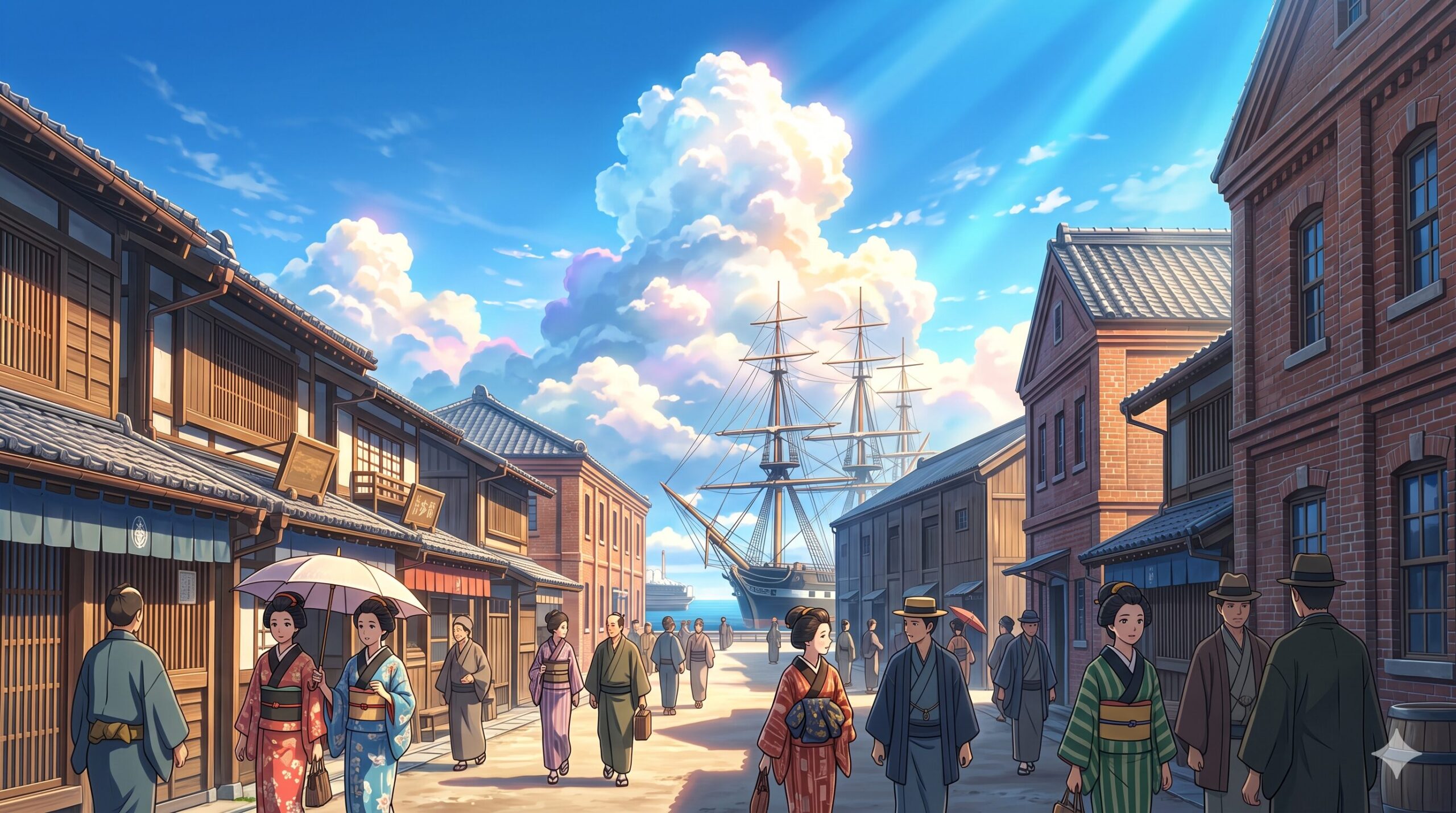
On June 28, 1859 (May 28 in the 6th year of the Ansei era under the lunar calendar), Japan awoke from a deep sleep of over 200 years of national isolation, known as “Sakoku,” and threw its doors wide open to the world. On this day, the Edo Shogunate permitted free trade at three designated ports: Yokohama, Nagasaki, and Hakodate. Today, Japan commemorates this historic turning point as “Trade Memorial Day” on June 28. In this article, we will explore the profound significance of the day Japan opened its borders and how it triggered a unique chemical reaction within Japanese culture.
From 214 Years of Isolation to the Arrival of the Black Ships
Since the early 17th century, Japan had strictly limited international exchange—with the exception of a few countries like the Netherlands and China—to prevent the spread of Christianity and to stabilize the Shogunate’s power. Under this “Sakoku” policy, Japan cultivated a highly mature, peaceful, and uniquely domestic culture during the Edo period. However, this changed drastically in 1853 when the heavily armed “Black Ships,” led by U.S. Commodore Matthew Perry, arrived at the shores of Uraga. Overwhelmed by superior military might and cutting-edge technology, Japan made the momentous decision to open its country, eventually signing the Ansei Five-Power Treaties with the U.S., the Netherlands, Russia, the UK, and France in 1858.
Then came June 28, 1859. Yokohama, once a quiet fishing village, transformed overnight into a bustling international trading hub. Massive quantities of raw silk and green tea were exported overseas, while Western cotton fabrics, advanced machinery, and modern weaponry flowed into Japan. This was not merely an exchange of goods; it was the beginning of an intense collision and subsequent fusion of entirely different civilizations.
“Wakon Yosai”: The Hybrid Culture of Western Technology and Japanese Spirit
Following the opening of the ports, a tidal wave of Western culture flooded into Japan, an era known as “Bunmei Kaika” (Civilization and Enlightenment). Western-style brick buildings lined the streets of Yokohama, gas lamps illuminated the night, and samurai cut off their traditional topknots to wear Western hats. However, the Japanese people did not simply copy the West blindly. Instead, they applied a philosophy known as “Wakon Yosai”—meaning “Japanese spirit, Western techniques.” This concept emphasized adopting superior Western technology and systems while firmly maintaining Japanese values and identity.
This brilliant approach to cultural integration is most evident in Japan’s food culture. For instance, before the ports opened, eating meat was generally avoided due to Buddhist influences. When Western beef was introduced, the Japanese didn’t just grill steaks; they invented “Sukiyaki” (beef hotpot) by simmering the meat in traditional seasonings like soy sauce, sugar, and mirin. Another great example is “Anpan,” a baked good created by stuffing Western-style bread with traditional Japanese sweet red bean paste. In architecture, wealthy merchants built “Japanese-Western eclectic” homes featuring Western brick exteriors but traditional tatami mats and shoji sliding doors inside. Rather than being crushed by the culture shock of globalization, Japan chewed up the foreign influences, merged them with their own traditions, and created entirely new cultural value.
Learning from History: Embracing Foreign Cultures
The opening of the ports in 1859 was the greatest turning point for Japan’s growth into a modern nation. Although the doors were forced open by external pressure, the Japanese people ultimately approached the unknown with immense curiosity, adapting it into their own unique style. This delicate balance of “flexibility toward foreign cultures” combined with “the strength to protect one’s cultural core” is precisely why Japanese culture remains so universally loved today.
Now, I have a question for you, the reader. If you could travel back in time to 1859 Japan and were a citizen of the Edo period experiencing Western culture (like a camera, a gas lamp, or Western cuisine) for the very first time, what would surprise you the most, and how would you incorporate it into your daily life? Also, does your own country have an amazing example of a fusion between native and foreign cultures? Please think about this historic turning point and let me know your thoughts!
Related Links:
- Internal Link: What’s Today’s Special Day Series
- External Link: Official Japan Travel Guide: Yokohama (Explore the historic port city)
- External Link: Wikipedia: Bakumatsu (The End of the Edo Period)
6月28日:日本が世界に扉を開いた日(貿易記念日)
1859年6月28日(旧暦の安政6年5月28日)、日本は200年以上続いた「鎖国」という長い眠りから目覚め、世界に向けてその扉を大きく開きました。この日、江戸幕府は横浜、長崎、函館の3つの港での自由貿易を許可しました。現在、日本ではこの歴史的な日を記念して、6月28日を「貿易記念日」と定めています。この記事では、日本の歴史を根本から変えたこの開国記念日が持つ意味と、それが日本の独自の文化にどのような化学反応を起こしたのかを詳細に解説します。
214年間の「鎖国」から黒船来航、そして開港へ
17世紀前半から、日本はキリスト教の布教を防ぎ、幕府の権力を安定させるため、オランダや中国など一部の国を除いて海外との交流を厳格に制限していました。この状態は「鎖国」と呼ばれ、日本は独自の平和で成熟した文化(江戸文化)を育みました。しかし、1853年にアメリカのペリー提督率いる「黒船」が浦賀に来航したことで、状況は一変します。圧倒的な軍事力と最新のテクノロジーを見せつけられた日本は、ついに開国を決断し、1858年にアメリカ、オランダ、ロシア、イギリス、フランスと「安政の五カ国条約」を結びました。
そして迎えた1859年6月28日。静かな漁村であった横浜は、一夜にして国際的な貿易港へと変貌を遂げました。生糸や茶が海外へ大量に輸出され、代わりに西洋の綿織物や最新の機械、武器などが日本に流れ込んできました。これは単なるモノのやり取りではなく、まったく異なる文明同士の激しい衝突と融合の始まりでした。
「和魂洋才」:西洋技術と日本精神のハイブリッド文化の誕生
開国後、日本には西洋の文化が怒涛のように押し寄せました。これを「文明開化」と呼びます。横浜の港町にはレンガ造りの洋館が建ち並び、ガス灯が通りを照らし、人々はちょんまげを切り落として西洋の帽子を被るようになりました。しかし、日本人はただ西洋文化をそのまま模倣したわけではありません。ここで日本人が発揮したのが「和魂洋才(Wakon Yosai)」という精神です。これは「日本人としての精神やアイデンティティ(和魂)を保ちながら、西洋の優れた技術や学問(洋才)を取り入れる」という考え方です。
このアプローチは、食文化に最もわかりやすく表れました。例えば、仏教の影響で肉を食べる習慣がなかった日本に牛肉が持ち込まれると、日本人は醤油、砂糖、みりんといった伝統的な調味料で肉を煮込む「すき焼き(牛鍋)」を発明しました。また、西洋のパンに日本の伝統的なお菓子である「餡(小豆のペースト)」を詰め込んだ「あんぱん」もこの時代に生まれました。建築においても、外観は洋風のレンガ造りでありながら、内装には畳や障子を取り入れた「和洋折衷建築」が数多く建てられました。日本は開国によるカルチャーショックに圧倒されることなく、異文化を咀嚼し、自分たちの文化と融合させることで、全く新しい価値を生み出したのです。
歴史から学ぶ、異文化との向き合い方
1859年の開国は、日本が近代国家へと成長するための最大の転換点でした。外からの強い圧力によって開かれた扉でしたが、日本人は未知の文化を恐れるのではなく、好奇心を持って学び、独自の形にアレンジして受け入れました。この「異文化に対する柔軟性」と「自国文化の核を守る強さ」のバランスこそが、今日の日本文化が世界中で愛される理由の一つと言えるでしょう。
さて、この記事を読んでいるあなたに質問です。もしあなたが1859年の日本にタイムスリップして、初めて西洋の文化(例えばカメラやガス灯、西洋料理など)を目にした江戸時代の日本人だとしたら、何に一番驚き、それをどう生活に取り入れようとするでしょうか?また、あなたの国には、外国の文化と自国の文化が見事に融合した例はありますか?ぜひ、歴史の転換点に思いを馳せながら考えてみてください。
関連情報へのリンク:
コメント