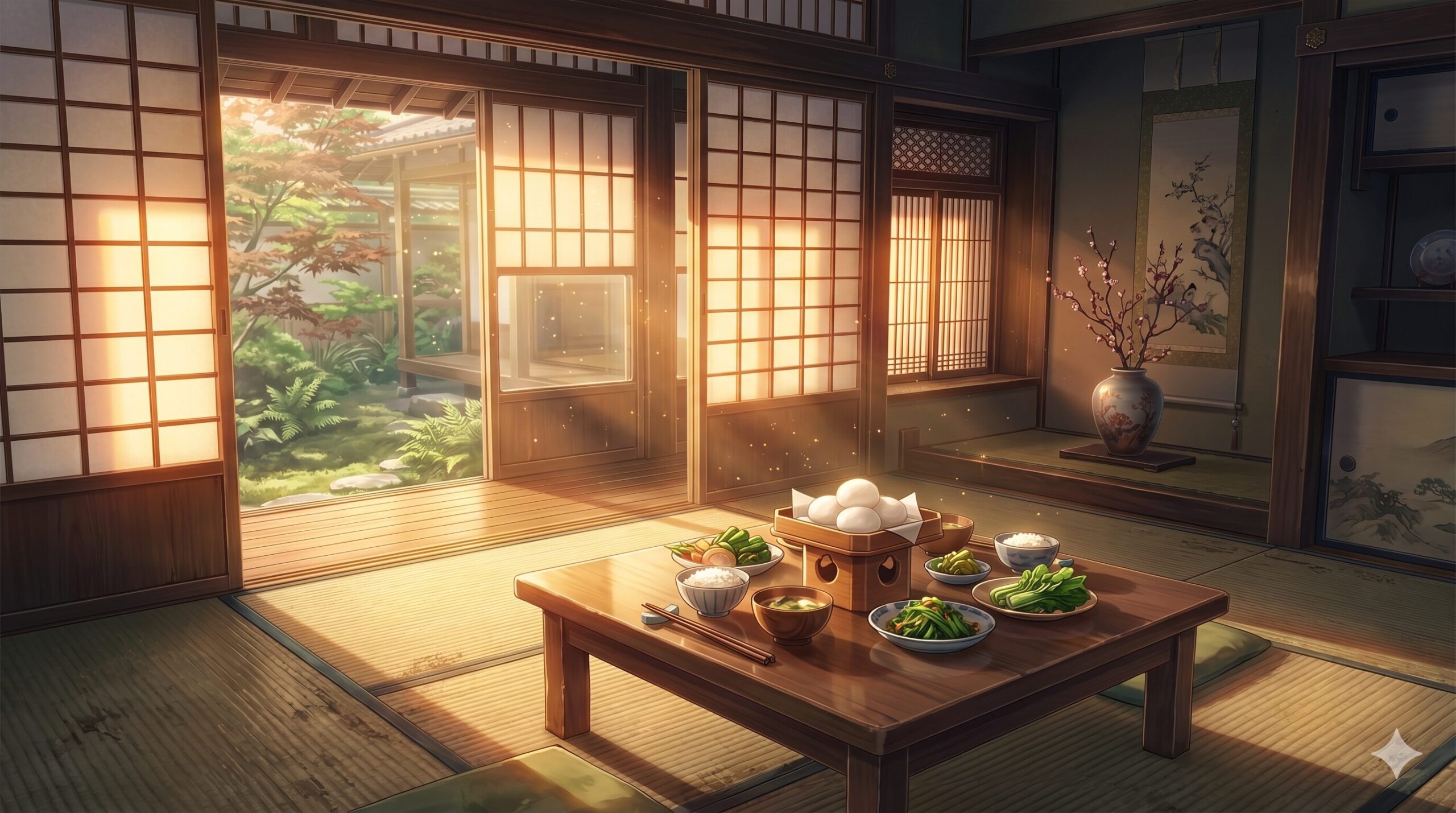
In Japan, there are countless events and customs that have been passed down since ancient times alongside the changing of the seasons. When flipping the calendar and seeing the date June 1st, modern people might think of the approaching rainy season or the changing of their wardrobe. However, if we wind the clock back over a thousand years to the Heian period, there was a special ritual filled with entirely different, yet deeply earnest wishes. This custom was called “Hagatame” (meaning “hardening of the teeth”).
What is Hagatame? Chewing Hard Foods to Strengthen Life
During the Heian period, June 1st was not merely the beginning of the month; it was positioned as an extremely important day to pray to the gods and Buddha for health and longevity. The “Hagatame” ritual of that time involved intentionally eating “hard things” such as mochi (rice cakes), daikon radishes, melons, salted sweetfish, and wild boar meat.
Why was it necessary to eat hard foods? This is deeply connected to the medical conditions and the views of life and death of the people back then. In the Heian period, when medicine was not as developed as it is today and nutritional conditions were far from perfect, illness and plagues were constant threats. The average life expectancy was short, and for people of that era, “living long and healthy” required much stronger and more earnest prayers than we can imagine today.
Therefore, they focused on “teeth.” Since ancient times in Japan, as shown by the Chinese character for age (“齢” which contains the radical for tooth), “age” and “teeth” have been thought to be closely linked. Being able to firmly crush things with one’s own teeth is proof of maintaining strong vitality. By chewing hard foods, they believed they could set their teeth firmly in place and enhance their life force from within. This was the fundamental philosophy of Hagatame.
From Imperial Court Events to the Common People
Originally, this custom was a solemn ritual performed among the imperial court and aristocrats. Documents recording imperial events of the Heian period describe hard foods being presented to the Emperor to celebrate longevity. The sight of aristocrats dressed in beautiful garments, chewing hard mochi with serious expressions while praying for a year of good health, seems to symbolize their attachment to the power of life and their sense of aesthetics.
As time passed, this Hagatame custom gradually permeated the samurai class and commoners, changing its form along the way. It began to be held on milestone days such as the New Year, and is said to be one of the roots of “Kagami-biraki,” the custom of breaking and eating the offered kagami mochi.
Deep Connection with Japanese Culture: Resonance of “Food” and “Soul”
What we can decipher from this “Hagatame” on June 1st is Japan’s unique culture of “praying through food.” In Japan, food is not merely a source of energy. There is a fundamental animistic belief that the power of deities resides in the blessings of nature, and by taking them into the body, one strengthens one’s own soul (life force).
Furthermore, this custom has been firmly inherited by modern Japanese culture. The most understandable example is the “Okuizome” ritual for babies, held around the 100th day after birth. In this ritual, parents make a pretense of feeding the baby with the wish that they “will never starve in their lifetime.” During this, there is a practice where a small stone called a “Hagatame stone” is touched with chopsticks, and the chopsticks are gently applied to the baby’s gums. This is exactly the proof that the prayer of Hagatame from the Heian period—”May you grow teeth as strong as stones and live a long life”—has been passed down from modern parents to their children.
Transcending over a thousand years, though changing in form, the universal human emotion of “wishing for the health and longevity of loved ones” continues to live vibrantly without fading in Japanese culture.
How Would You Pray?
Just as the ancient Japanese prayed for their own health while chewing hard mochi, various cultures around the world likely have their own customs of wishing for health and longevity through specific meals.
Reading this article, what traditions from your own country or region did you remember? If you were to pray for your own health or the long life of your loved ones today, what kind of food would you eat, and how would you pray? Please look back on the wonderful customs of your culture and spend today meaningfully.
External Reference: Okuizome and the Hagatame Tradition (Wikipedia)
Internal Category Link: What’s Today’s Special Day Series
6月1日の記憶:平安時代に息づく「歯固め(はがため)」の儀式と長寿への祈り
日本には、季節の移ろいとともに古くから受け継がれてきた数多くの行事や風習が存在します。カレンダーをめくり、6月1日という日付を目にしたとき、現代の私たちは梅雨の足音や衣替えを思い浮かべるかもしれません。しかし、時計の針を千年以上前の平安時代に巻き戻すと、そこにはまったく異なる、しかし非常に切実な願いを込めた特別な儀式が存在していました。それが「歯固め(はがため)」と呼ばれる風習です。
歯固めとは何か:硬いものを噛み、命を強くする
平安時代において、6月1日は単なる月のはじめではなく、健康と長寿を神仏に祈る極めて重要な日として位置づけられていました。当時の「歯固め」の儀式は、餅、大根、瓜、押鮎(塩漬けの鮎)、そして猪の肉などの「硬いもの」をあえて食べるというものです。
なぜ硬いものを食べる必要があったのでしょうか。それには、当時の医療事情と人々の死生観が深く関わっています。現代のように医療が発達しておらず、栄養状態も決して万全とは言えなかった平安時代において、病気や疫病は常に身近にある脅威でした。平均寿命も短く、人々にとって「健康で長生きすること」は、現代人の私たちが想像する以上に、切実で強い祈りを必要とするものだったのです。
そこで注目されたのが「歯」です。古来より、日本では「齢(よわい)」という漢字が示す通り、「年齢」と「歯」は密接に結びついていると考えられてきました。自分の歯でしっかりと物を噛み砕けることは、すなわち強い生命力を維持している証です。硬いものを噛むことで歯の根を張り巡らせ、内面からの生命力を高める。これが、歯固めの根本的な思想でした。
宮中行事から庶民への広がり
この風習は、元々は宮中や貴族の間で行われていた厳かな儀式でした。平安時代の宮中行事を記した文献にも、天皇に硬い食べ物が献上され、長寿を祝う様子が記録されています。美しい装束を身にまとった貴族たちが、一年の無病息災を祈りながら、真剣な面持ちで硬い餅を噛む姿は、当時の人々の生きる力への執着と美意識を象徴しているかのようです。
時代が下るにつれて、この歯固めの風習は武家や庶民の間にも少しずつ形を変えながら浸透していきました。お正月などの節目の日に行われるようになり、供えられた鏡餅を割って食べる「鏡開き」のルーツのひとつにもなったと言われています。
日本文化との深いつながり:「食」と「魂」の共鳴
この6月1日の「歯固め」から読み解くことができるのは、日本特有の「食を通じた祈り」の文化です。日本では、食べ物は単なるエネルギーの補給源ではありません。自然の恵みには神仏の力が宿っており、それを体内に取り込むことで、自らの魂(生命力)を強化するというアニミズム的な思想が根底に流れています。
また、この風習は現代の日本文化にも確かな形で受け継がれています。最も分かりやすい例が、生後100日目頃に行われる赤ちゃんの「お食い初め(おくいぞめ)」の儀式です。この儀式の中で、赤ちゃんに「一生食べ物に困らないように」と願いを込めて食事の真似事をさせますが、その際に「歯固め石」と呼ばれる小石を箸で触れ、その箸を赤ちゃんの歯茎にそっと当てる作法があります。これはまさに、「石のように丈夫な歯が生え、長生きできるように」という、平安時代から続く歯固めの祈りが現代の親から子へと受け継がれている証拠です。
千年以上の時を超えて、形を変えながらも「愛する人の健康と長寿を願う」という人間の普遍的な感情が、日本の文化の中で色褪せることなく脈々と生き続けているのです。
あなたなら、どう祈りますか?
かつての日本人が、硬いお餅を噛みしめながら自身の健康を祈ったように、世界中の様々な文化には、特有の食事を通じて健康や長寿を願う風習があることでしょう。
この記事を読んで、あなたは自分の国や地域のどんな伝統を思い出しましたか? もし、今日あなたが自分の健康や、大切な人の長生きを願うとしたら、どんな食べ物を口にし、どのように祈りますか? ぜひ、あなたの文化の素晴らしい風習を振り返り、今日という一日を意味深く過ごしてみてください。
参考外部リンク:お食い初めと歯固めの文化(Wikipedia)
内部リンクカテゴリー:What’s Today’s Special Day Series


コメント