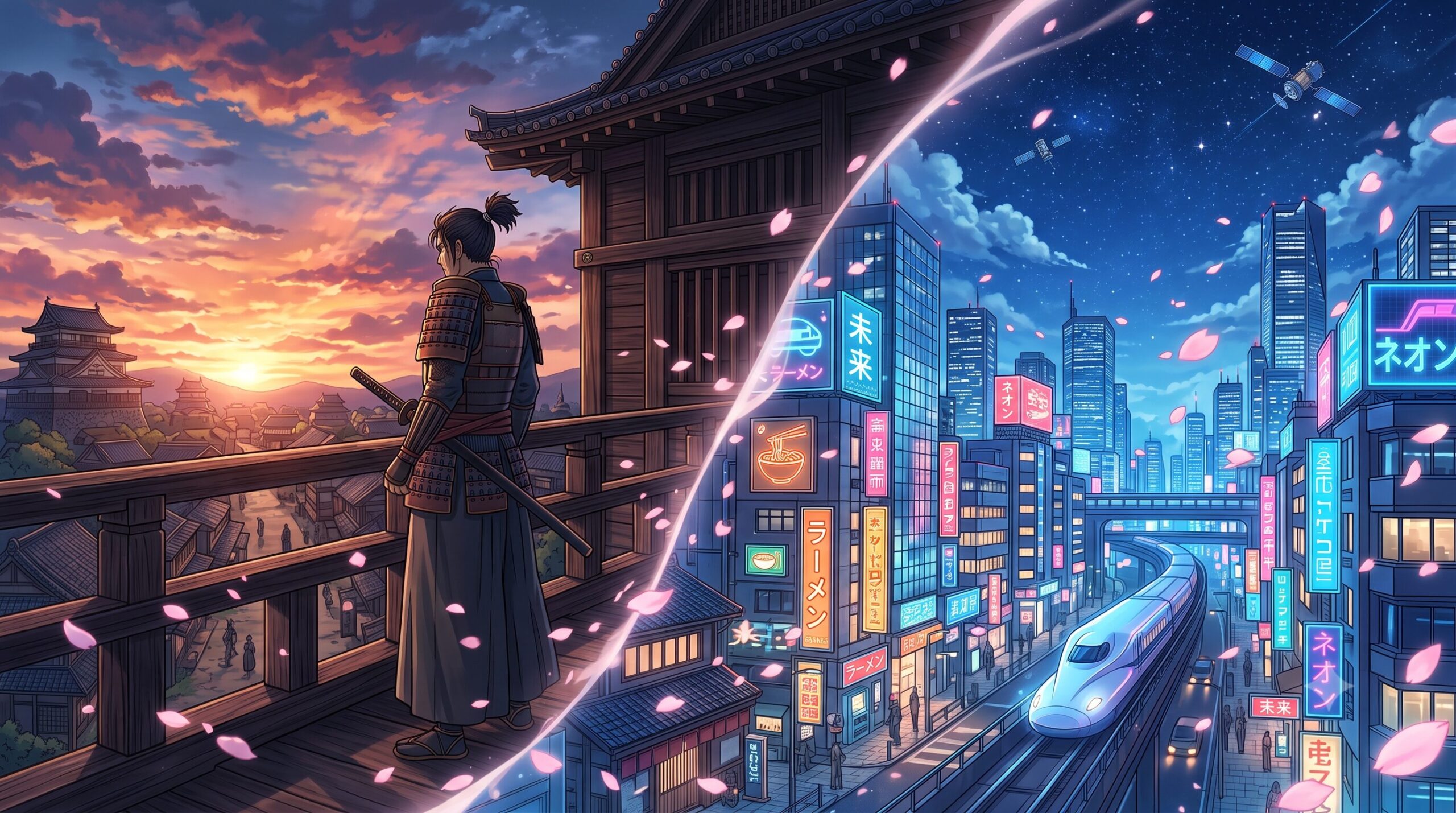
On July 14, 1871, Japan achieved a massive, peaceful coup d’état unparalleled in world history. This event is known as “Haihan-chiken” (the abolition of the han system and establishment of the prefecture system). It was not merely a change in administrative districts. It was the day the feudal system of the Edo period, which had lasted for about 260 years, was completely dismantled, transforming Japan overnight from a samurai-ruled society into a modern centralized state.
Breaking Away from the Edo Period and the “Han” System
To understand Haihan-chiken, we must first look at the state of Japan at the time. During the Edo period, under the massive government of the Tokugawa Shogunate, there were about 260 “Han” (domains). A Han was like a small independent country ruled by a local lord called a Daimyo. Each domain had its own military, enacted its own laws, and even issued its own currency.
For the people of that era, the word “country” did not refer to Japan as a whole, but to the Han where they were born. A person from the Satsuma domain loved Satsuma, and a person from Choshu loved Choshu, pledging their absolute loyalty there. However, this system had a fatal flaw. In the late 19th century, when powerful Western nations began expanding into Asia, a collection of disjointed small domains could not withstand foreign threats.
A Miraculous Bloodless Revolution
The leaders of the new Meiji government (such as Toshimichi Okubo, Takayoshi Kido, and Takamori Saigo) harbored a strong sense of crisis. “If we do not unite Japan into a single, powerful nation, we will be colonized by the West.” Therefore, they secretly devised a plan to abolish all domains and establish “Ken” (prefectures) directly managed by the central government.
On July 14, the new government summoned the Daimyo from across the country to the Imperial Palace and abruptly declared the “abolition of domains” as an imperial decree. Astonishingly, the Daimyo, who possessed their own armies, did not resist. They obediently surrendered their power and territories to the state. Looking across world history, there is almost no other example of such a massive dismantling of a privileged class and transformation of a national system executed in “just one day” without sparking a large-scale civil war. Japan demonstrated incredible self-discipline and a spirit of sacrifice to modernize itself.
Connection to Japanese Culture: The Concept of “Kenmin-sei”
Through Haihan-chiken, the “Han” disappeared, giving birth to the “To-Do-Fu-Ken” (prefectures) that shape modern Japan. Governors were dispatched from the center, all taxes were paid to the national treasury, and Japan finally united as a “single nation.”
However, from a cultural perspective, the spirit of the “Han” did not entirely vanish. Even today, the distinct temperaments and cultures of each region remain strong in Japan, known as “Kenmin-sei” (prefectural character). For example, people in Osaka (a former merchant hub) are still known for being friendly and pragmatic, while people in the harsh natural environment of the Tohoku region are considered patient and stoic. These are all proof that the education and climate of the “Han” that lasted for hundreds of years have been passed down to modern Japanese people.
Haihan-chiken unified the administrative structure, but it did not erase the deep affection for local regions and their unique cultures residing in people’s hearts. The reason modern Japan is a highly modernized society yet possesses a rich diversity—where just a short trip changes the flavor of food and the intonation of language completely—lies in this historical background.
What Do You Think?
How would you feel if the system of the country or state where you grew up was suddenly abolished tomorrow, and you were told to follow completely new rules? How do you evaluate the decision of the Japanese leaders who gave up hundreds of years of tradition in a single day, all to protect the future of their nation? Please let us know your thoughts on this article and what you would have done in the comments below.
References & Related Articles
- Abolition of the han system – Wikipedia
- Read more from “What’s Today’s Special Day?” Series (Internal Link)
7月14日:日本が一日で生まれ変わった日「廃藩置県」
1871年(明治4年)の7月14日、日本という国は歴史上類を見ない、巨大で平和的なクーデターを成し遂げました。それが「廃藩置県(はいはんちけん)」です。これは単なる行政区画の変更ではありません。約260年続いた江戸時代の封建制度を完全に終わらせ、武士が支配する社会から近代的な中央集権国家へと、一夜にして姿を変えた日なのです。
江戸時代からの脱却と「藩」の存在
廃藩置県を理解するためには、まず当時の日本がどのような状態だったのかを知る必要があります。江戸時代の日本は、徳川幕府という巨大な政府の下に、約260の「藩(はん)」が存在していました。藩とは、大名(だいみょう)と呼ばれる地元の領主が治める独立した小さな国のようなものです。各藩は独自の軍隊を持ち、独自の法律を定め、独自の通貨さえ発行していました。
当時の人々にとって、「国」とは日本全体を指す言葉ではなく、自分が生まれた「藩」を意味していました。薩摩藩の者は薩摩を、長州藩の者は長州を愛し、そこに忠誠を誓っていたのです。しかし、このシステムには大きな弱点がありました。強力な西洋列強がアジアに進出してきた19世紀後半、バラバラの小さな国の集合体では、外国の脅威に対抗できなかったのです。
血を流さずに成し遂げられた奇跡の革命
明治維新を経て誕生した新政府のリーダーたち(大久保利通、木戸孝允、西郷隆盛など)は、強い危機感を抱いていました。「日本を一つの強力な国家にまとめ上げなければ、西洋の植民地にされてしまう」。そこで彼らは、すべての藩を廃止し、中央政府が直接管理する「県(けん)」を設置する計画を極秘裏に進めました。
7月14日、新政府は全国の大名(当時は知藩事と呼ばれていました)を皇居に呼び出し、天皇の命令として突如「藩の廃止」を宣告しました。驚くべきことに、独自の軍隊を持っていた大名たちはこれに抵抗することなく、自らの権力と領地を素直に国へと返上しました。世界史を見渡しても、これほどの巨大な特権階級の解体と国家体制の変革が、大規模な内戦を伴わずに「たった一日」で実行された例は他にありません。日本は自らを近代化するために、驚異的な自己規律と犠牲の精神を発揮したのです。
日本文化と「県民性」への繋がり
廃藩置県によって「藩」は消滅し、現在の日本を形作る「都道府県(To-Do-Fu-Ken)」が生まれました。中央から県知事が派遣され、税金はすべて国庫に納められ、日本はついに「一つの国」としてまとまりました。
しかし、文化の観点から見ると、「藩」の精神は完全に消え去ったわけではありません。日本の各地域には、現在でも「県民性(Kenmin-sei)」と呼ばれる独特の気質や文化が色濃く残っています。例えば、かつての商業の中心地だった大阪(商人の町)の人々は今でもフレンドリーで実利を重んじ、厳しい自然環境にあった東北地方の人々は忍耐強く寡黙であると言われます。これらはすべて、何百年も続いた「藩」ごとの教育や風土が現代の日本人に受け継がれている証拠です。
廃藩置県は、行政の形を統一しましたが、人々の心の中にある地域への深い愛情と独自の文化までは統一しませんでした。現代の日本が、高度に近代化された社会でありながら、少し移動するだけで食べ物の味付けや言葉のイントネーションが全く異なる豊かな多様性を持っているのは、この歴史的背景があるからです。
あなたはどう考えますか?
自分の生まれ育った国や州のシステムが、明日から突然なくなり、全く新しいルールに従うように言われたら、あなたはどう感じますか?国の未来を守るためとはいえ、数百年の伝統を一日で手放した日本のリーダーたちの決断を、あなたはどのように評価しますか?ぜひ、この記事の感想とともに、あなたならどう行動したか教えてください。
参考リンク・関連記事

コメント