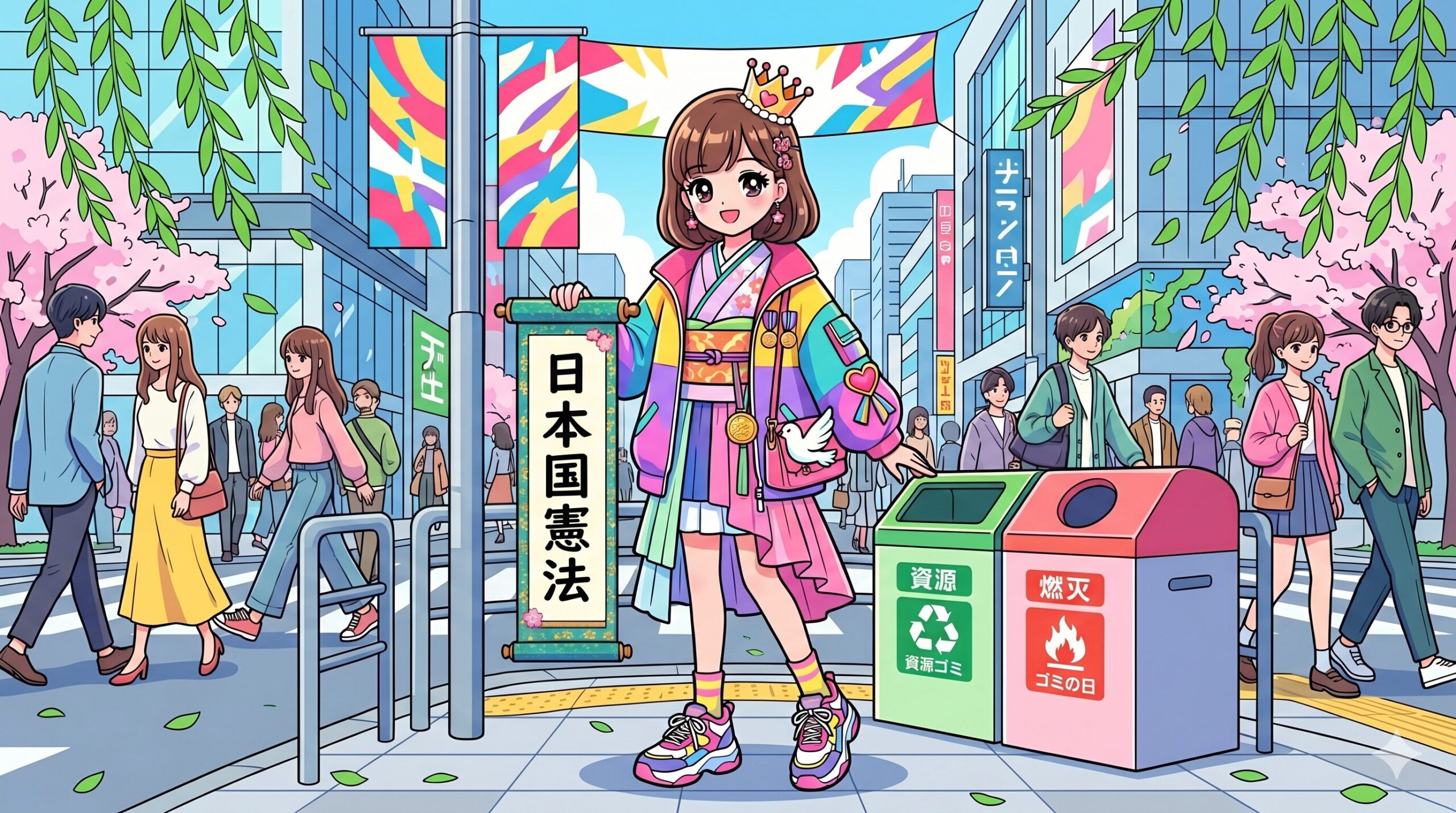
May 3 marks the birthday of “Licca-chan” (Licca Kayama), the national dress-up doll universally loved throughout Japan. Since her debut in 1967, she has captured the hearts of Japanese children across generations and has now garnered attention from fans worldwide. In this article, we will explore Licca-chan’s historical journey in detail, as well as her deep connection to Japanese pop culture and the “Kawaii” aesthetic.
Who is Licca-chan? History and Detailed Profile
Licca-chan was introduced by the toy manufacturer Takara (now Takara Tomy) in 1967. At the time, imported dress-up dolls dominated the Japanese market. However, by adopting a size perfectly suited for playing in typical Japanese homes (21 cm tall) and a design that Japanese girls could relate to, Licca-chan became an explosive hit.
What truly set her apart was her meticulously crafted profile. Her full name is Licca Kayama. Born on May 3 (Taurus), she is an 11-year-old fifth grader. Her father, Pierre, is a French musician, and her mother, Orie, is a Japanese fashion designer. Licca-chan herself has a bright, slightly clumsy personality. This realistic background story transformed her from a mere “toy” into a relatable “friend,” establishing a deep emotional connection with children.
Evolving Faces and Fashion Through the Eras
From her launch to the present day, Licca-chan has constantly adapted her appearance to match the trends of the times. Her facial design can be broadly divided into four generations:
- 1st Generation (1967-): Strongly influenced by shojo manga (girls’ comics), featuring a slightly melancholic expression.
- 2nd Generation (1972-): Characterized by a white rose hairpin. With more “stars” in her eyes, her expression became brighter and more approachable.
- 3rd Generation (1982-): Featuring straight hair as the standard look and a slightly more mature smile.
- 4th Generation (1987-Present): Her eyes became even larger, establishing the glamorous and incredibly cute Licca-chan we know best today.
Her fashion has also faithfully mirrored the cutting edge of every era. From 1960s miniskirts and 1970s bell-bottoms to 1980s idol dresses, and today’s Harajuku street fashion and high-brand collaborations, Licca-chan has always been a mirror reflecting Japanese fashion trends.
Interpreting Japanese “Kawaii” and Miniature Culture Through Licca-chan
Licca-chan’s success is deeply intertwined with Japan’s unique cultural background. First, she is the embodiment of “Kawaii” (cute) culture, a term that has now become universal. While Western dolls often symbolized the mature beauty of adult women, Licca-chan emphasized the “innocent, endearing charm of a young girl you want to protect.” This is a direct extension of the traditional Japanese aesthetic that appreciates “small and adorable things.”
Second is her connection to Japan’s “Hakoniwa” (miniature garden) culture. Licca-chan’s houses, finely crafted miniature furniture, and accessories strongly stimulate the Japanese sensibility of creating a personal, ideal world within a limited space—a concept shared with bonsai and traditional miniature gardens. Through Licca-chan, children have safely experienced complex social concepts—fashion, relationships, and lifestyle production—within a miniature universe.
Today, there is a prominent culture known as “Licca-katsu,” where adults dress Licca-chan in realistic outfits and share photos on social media. Licca-chan has transcended her role as a children’s toy, continually evolving as an icon of Japanese art and pop culture.
What Does “Kawaii” Mean to You?
May 3, Licca-chan’s birthday, is the perfect opportunity to look back on the history of Japanese fashion and “Kawaii.” Licca-chan’s ability to flexibly embrace the changing times while maintaining her unique charm symbolizes the resilience and adaptability of Japanese culture itself.
After reading this article, what are your thoughts on Japan’s “Kawaii” culture? If you were to produce your own Licca-chan today, what kind of modern fashion would you dress her in, and what story would you give her? Please share your thoughts and ideas on social media!
Reference Links
5月3日はリカちゃんの誕生日!日本の「かわいい」文化を牽引する国民的ドールの歴史と魅力
5月3日は、日本中で愛され続けている国民的着せ替え人形「リカちゃん」(香山リカ)の誕生日です。1967年(昭和42年)の誕生以来、世代を超えて日本の子供たちの心を掴み、現在では世界中のファンから注目を集める存在となっています。この記事では、リカちゃんの歴史的な歩みから、日本のポップカルチャーや「かわいい(Kawaii)」文化との深いつながりまでを詳細に紐解きます。
リカちゃんとは?誕生の歴史と緻密なプロフィール
リカちゃんは、玩具メーカーのタカラ(現在のタカラトミー)によって1967年に発売されました。当時の日本では、外国製の着せ替え人形が主流でしたが、日本の家屋事情に合わせた遊びやすいサイズ(身長21cm)と、日本の少女たちが親近感を持てるデザインを採用したことで爆発的なヒットを記録しました。
特筆すべきは、その緻密に設定されたプロフィールです。本名は「香山リカ」。5月3日生まれの牡牛座で、年齢は11歳の小学5年生です。父親のピエールはフランス人の音楽家、母親の織江は日本人のファッションデザイナーであり、リカちゃん自身も明るくてちょっぴりおっちょこちょいな性格という、まるで実在する少女のようなリアリティを持たせています。この詳細なバックグラウンドストーリーこそが、単なる「おもちゃ」の枠を超え、子供たちが感情移入できる「友達」としての地位を確立した最大の理由です。
時代とともに進化する顔とファッション
リカちゃんは、発売から現在に至るまで、時代のトレンドに合わせてその姿を変化させてきました。お顔のデザインは大きく分けて4世代存在します。
- 初代(1967年〜): 少女漫画の影響を色濃く受けた、少し憂いを帯びた表情が特徴。
- 2代目(1972年〜): 白いバラのヘアピンがトレードマーク。瞳の星が増え、より明るく親しみやすい表情に。
- 3代目(1982年〜): ストレートヘアが基本となり、少し大人びた微笑みを浮かべるデザイン。
- 4代目(1987年〜現在): 瞳がさらに大きくなり、現在私たちが最もよく知る、華やかで可愛らしいリカちゃん。
また、ファッションもその時代の最先端を反映しています。1960年代のミニスカートから、1970年代のパンタロン、1980年代のアイドル風ドレス、そして現代の原宿系ストリートファッションや有名ブランドとのコラボレーションに至るまで、リカちゃんは常に日本のファッショントレンドの鏡であり続けています。
リカちゃんから読み解く日本の「かわいい」文化と箱庭的感性
リカちゃんの成功は、日本独自の文化的背景と深く結びついています。第一に、現代の世界共通語にもなった「Kawaii(かわいい)」文化の具現化です。西洋のドールが成熟した大人の女性の美しさを象徴していたのに対し、リカちゃんは「未完成で守ってあげたくなるような少女の愛らしさ」を強調しました。これは日本の伝統的な美意識の一つである「小さくて愛らしいもの」を愛でる文化の延長線上にあります。
第二に、日本の「箱庭文化」との関連です。リカちゃんハウスや精巧に作られたミニチュアの家具、小物類は、限られた空間の中に自分だけの理想の世界を構築するという、盆栽や箱庭に通じる日本人の感性を強く刺激します。子供たちはリカちゃんを通じて、ファッション、人間関係、そして生活空間のプロデュースという高度な社会体験を、安全なミニチュアの世界で行ってきたのです。
現在では「リカ活」と呼ばれる、大人がリカちゃんにリアルな洋服を着せてSNSで発信する文化も定着しており、リカちゃんは子供のおもちゃという枠を超え、日本発のアートやポップカルチャーのアイコンとして進化し続けています。
あなたにとっての「かわいい」とは?
5月3日のリカちゃんの誕生日は、日本のファッションと「かわいい」の歴史を振り返る絶好の機会です。時代の変化を柔軟に受け入れながらも、独自の愛らしさを保ち続けるリカちゃんの姿は、日本文化そのものの柔軟性を象徴していると言えるでしょう。
この記事を読んで、あなたは日本の「かわいい」文化についてどう感じましたか?もしあなたがリカちゃんをプロデュースするとしたら、現代のどのようなファッションを着せ、どのようなストーリーを与えますか?ぜひ、あなたの考えやアイデアをSNSでシェアしてみてください。
コメント