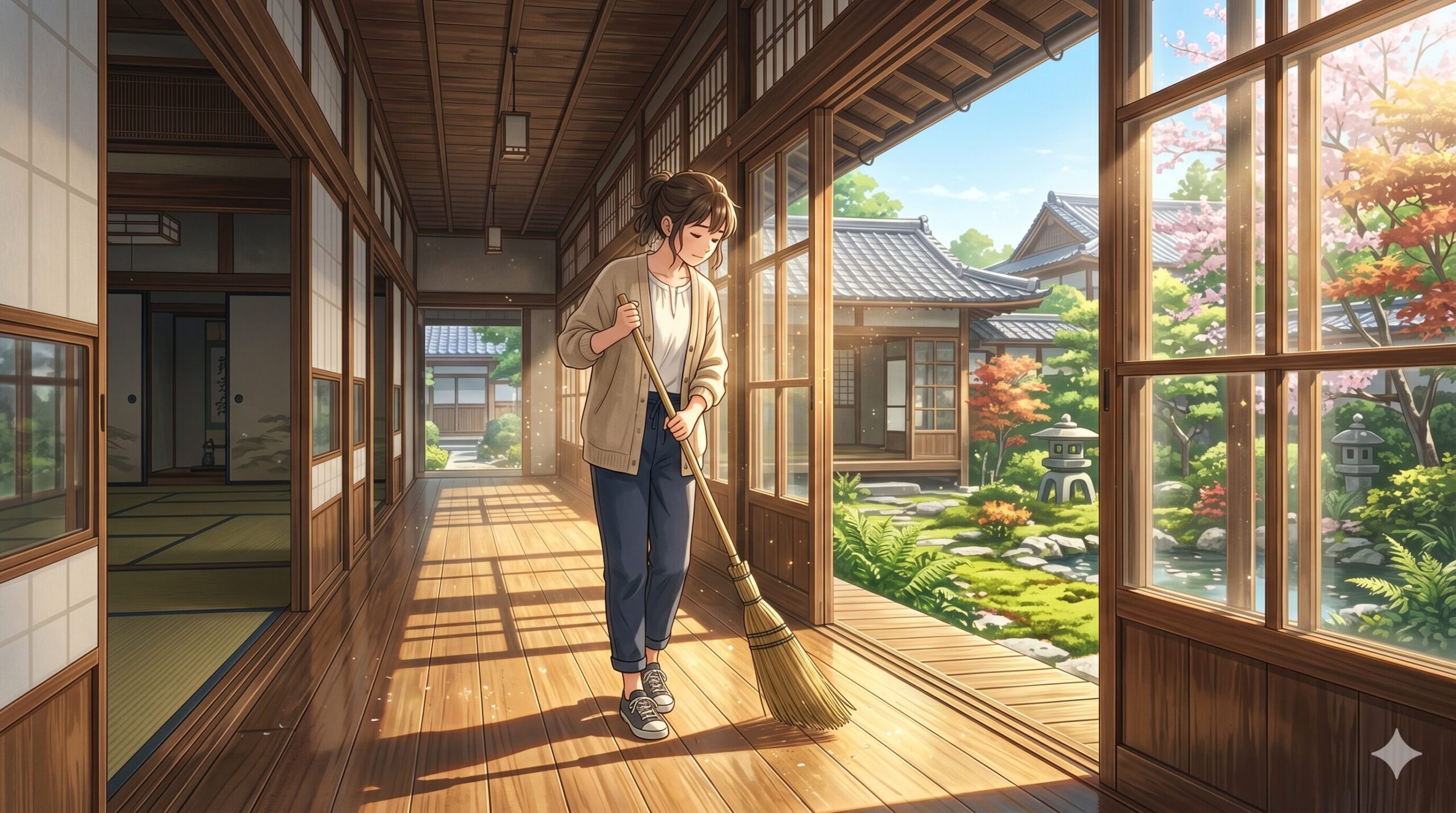
Foreign travelers walking the streets of Japan are often surprised by one particular thing: “Why are the streets so incredibly clean when there are hardly any public trash cans?” The key to unlocking this secret lies deep within Japan’s history and deeply rooted culture. Today, April 22nd, is “Cleaning Day” (Seisou no Hi) in Japan. Let’s delve deep into the meaning of this day and the special spirituality that Japanese people pour into the act of “cleaning.”
April 22, 1954: Enactment of the “Cleaning Law” and Post-War Recovery
The origin of “Cleaning Day” dates back to April 22, 1954 (Showa 29), when the “Cleaning Law” (Seisou-hou) was enacted. At that time, Japan was in a transitional period, recovering from the scars of World War II and heading towards rapid economic growth. As the population began to concentrate in urban areas, waste disposal and the deterioration of public hygiene became serious social issues.
Taking this situation seriously, the government completely revised older laws and enacted the Cleaning Law. This was an epoch-making law that didn’t just set rules for throwing away trash, but obligated the national government, local municipalities, and every single citizen to cooperate in keeping the living environment clean. This law laid the foundation for Japan’s modern waste management system and led to the prevention of infectious diseases and a dramatic improvement in sanitary conditions.
“Cleaning” in Japanese Culture: Not Just Labor, but Purification of the Spirit
Even though laws were established, that alone doesn’t make an entire country clean. The fundamental reason supporting Japan’s cleanliness lies in ancient Japanese religious views and philosophy. For Japanese people, cleaning is not merely the “task of removing dirt,” but a “ritual to polish the mind.”
Shinto and the Concept of “Kegare” (Impurity)
In Shinto, Japan’s indigenous religion, not only physical dirt but also spiritual impurity and stagnation are called “Kegare.” When visiting a shrine, washing one’s hands and mouth with water at the Chozuya (water pavilion) is to wash away this Kegare. Keeping one’s home and surroundings clean has been passed down for thousands of years as a preparation to welcome the Kami (spirits of nature) and a sacred act to ward off bad luck and evil spirits.
“Samu” in Zen Buddhism
Furthermore, in the teachings of Zen Buddhism, cleaning is an extremely important part of ascetic practice. In Zen temples, daily labor such as cleaning and tending the garden is called “Samu,” and it is positioned as spiritual training equally important to Zazen (seated meditation). By completely concentrating on the immediate act of wiping the floor or sweeping fallen leaves, one clears away worldly thoughts and faces their inner self. As the saying goes, “Disorder in a space is disorder in the mind,” arranging one’s environment is directly connected to arranging one’s own mind.
“Cleaning Time” in School Education: Learning Cooperation and Equality
When discussing Japan’s cleaning culture, school education is indispensable. In most elementary, junior high, and high schools in Japan, there is a daily “Cleaning Time” (Soji no Jikan) where the students themselves clean the classrooms, toilets, and hallways. While many countries leave this to professional cleaners, this system is quite rare globally.
This custom is not simply to reduce cleaning costs. It holds significant educational value by fostering a sense of responsibility (“We clean the places we use”) and cultivating cooperation by working together with classmates. Regardless of age or family wealth, everyone equally wipes the floors with a damp cloth (zoukin), naturally acquiring compassion for others and a moral sense to cherish public spaces. At international sporting events, Japanese supporters are often praised for picking up trash in the stadium after a match. It is no exaggeration to say that the roots of this behavior lie in this “School Cleaning Time.”
Osoji (Big Cleaning) and Spring Cleaning
In Japan, it is common to perform “Osoji” (Big Cleaning) at the end of the year to remove the dirt and bad luck of the past year and welcome the New Year in a pure state. However, triggered by “Cleaning Day” on April 22nd, a movement encouraging “Spring Cleaning” is also spreading—organizing the house in the warm spring climate and dusting off the accumulation of winter. Resetting the environment in April, when the new fiscal and academic year begins in Japan, makes perfect sense for making a fresh start.
Conclusion: What Does “Cleaning” Mean to You?
Starting with the enactment of the law in 1954, “Cleaning Day” is an important day that reminds us modern people of the spiritual culture of “purification” that the Japanese have cherished since ancient times. Picking up trash on the street or wiping the desk in your room—these are all beautiful acts that polish your own mind and show respect for others.
After reading this article, has your perspective on “cleaning” changed? What meaning is attached to cleaning in your country or culture? If you like, try spending just 5 minutes today silently organizing the space around you. You will surely feel your mind become a little clearer than usual.
[Related Articles & Reference Links]
- Internal Link: Read more from the “What’s Today’s Special Day” Series
- External Link (Reference): Cleaning Law (Wikipedia Japan) – History of Waste Management
- April 22, 1954: Enactment of the “Cleaning Law” and Post-War Recovery
- “Cleaning” in Japanese Culture: Not Just Labor, but Purification of the Spirit
- “Cleaning Time” in School Education: Learning Cooperation and Equality
- Osoji (Big Cleaning) and Spring Cleaning
- Conclusion: What Does “Cleaning” Mean to You?
- 4月22日は「清掃の日」:日本の美しい街並みを支える歴史と精神性
4月22日は「清掃の日」:日本の美しい街並みを支える歴史と精神性
日本の街を歩いたことがある海外の旅行者は、しばしばあることに驚きます。「ゴミ箱がほとんどないのに、なぜ街がこんなにも綺麗なのか?」と。その秘密を解き明かす鍵は、日本の歴史と深く根付いた文化にあります。本日、4月22日は日本の「清掃の日(Cleaning Day)」です。この日が持つ意味と、日本人が「掃除」に込める特別な精神性について深く掘り下げてみましょう。
1954年4月22日:「清掃法」の制定と戦後日本の復興
「清掃の日」の由来は、1954年(昭和29年)4月22日に「清掃法」という法律が制定されたことに遡ります。当時の日本は、第二次世界大戦の爪痕から立ち直り、高度経済成長へと向かう過渡期にありました。人口が都市部に集中し始めると同時に、ゴミの処理や公衆衛生の悪化が深刻な社会問題となっていたのです。
この事態を重く見た政府は、それまでの古い法律を全面改正し、「清掃法」を制定しました。この法律は、単にゴミを捨てるルールを定めただけでなく、国や自治体、そして国民一人ひとりが協力して生活環境を清潔に保つことを義務付けた画期的なものでした。この法律によって、日本の現代的な廃棄物処理システムの基礎が築かれ、伝染病の予防や衛生環境の劇的な改善へと繋がっていったのです。
日本文化における「掃除」:単なる労働ではない、精神の浄化
法律が整備されたとはいえ、それだけで国全体が綺麗になるわけではありません。日本の清潔さを支えている根本的な理由は、日本古来の宗教観や哲学にあります。日本人にとって、掃除は単なる「汚れを落とす作業」ではなく、「心を磨く儀式」なのです。
神道と「ケガレ(穢れ)」の概念
日本固有の信仰である神道(Shinto)では、物理的な汚れだけでなく、精神的な不浄や停滞を「ケガレ(穢れ)」と呼びます。神社に参拝する際、手水舎で手と口を水で清めるのも、このケガレを落とすためです。家の中や身の回りを綺麗に保つことは、神様(神羅万象の精霊)を迎え入れるための準備であり、不運や邪気を払う神聖な行為として何千年も前から受け継がれてきました。
禅仏教における「作務(さむ)」
また、禅(Zen)の教えにおいても、掃除は非常に重要な修行の一部です。禅寺では、掃除や庭の手入れといった日常の労働を「作務(さむ)」と呼び、座禅を組むことと同等に重要な精神修養と位置づけています。床を拭き、落ち葉を掃くという目の前の行為に完全に集中することで、雑念を払い、自己の内面と向き合うのです。「空間の乱れは心の乱れ」という言葉があるように、環境を整えることは、自分の心を整えることと直結しています。
学校教育における「掃除の時間」:協調性と平等の学び
日本の掃除文化を語る上で欠かせないのが、学校教育です。日本のほとんどの小中高校では、生徒たち自身が教室やトイレ、廊下を掃除する「掃除の時間」が毎日設けられています。プロの清掃業者に任せる国が多い中、これは世界的に見ても珍しいシステムです。
この習慣は、単に清掃コストを削減するためではありません。「自分たちが使った場所は自分たちで綺麗にする」という責任感を育み、クラスメイトと協力して作業を行うことで協調性を養うという、重要な教育的意義を持っています。年齢や家庭の裕福さに関係なく、誰もが平等に雑巾がけをすることで、他者への思いやりや、公共の場を大切にする道徳心が自然と身についていくのです。国際的なスポーツ大会で、日本のサポーターが試合後にスタジアムのゴミ拾いをする姿が度々称賛されますが、そのルーツはこの「学校の掃除の時間」にあると言っても過言ではありません。
大掃除(Osoji)と春の清掃
日本では年末に「大掃除(Osoji)」を行い、一年間の汚れと厄を落として新年を清らかな状態で迎えるのが一般的です。しかし、4月22日の「清掃の日」をきっかけに、春の暖かな気候の中で家の中を整理整頓し、冬の間に溜まったほこりを払う「春の掃除」を推奨する動きも広まっています。新しい年度が始まる4月に環境をリセットすることは、心機一転、新たなスタートを切るために非常に理にかなっています。
まとめ:あなたにとって「掃除」とは何ですか?
1954年の法律制定から始まった「清掃の日」は、日本人が古くから大切にしてきた「清める」という精神文化を、現代の私たちに改めて思い出させてくれる大切な日です。街のゴミを拾うこと、自分の部屋の机を拭くこと。それはすべて、自分自身の心を磨き、他者への敬意を示す美しい行為なのです。
この記事を読んで、あなたは「掃除」に対する考え方が変わりましたか? あなたの国や文化では、掃除に対してどのような意味を持たせているでしょうか。もしよろしければ、今日はほんの5分だけでも、身の回りの空間を無心で整えてみてください。きっと、いつもより少しだけ、心が澄み渡るのを感じるはずです。
【関連記事・参考リンク】
- 内部リンク:今日は何の日シリーズをもっと読む
- 外部リンク(参考):清掃法(Wikipedia)- 廃棄物処理の歴史

コメント