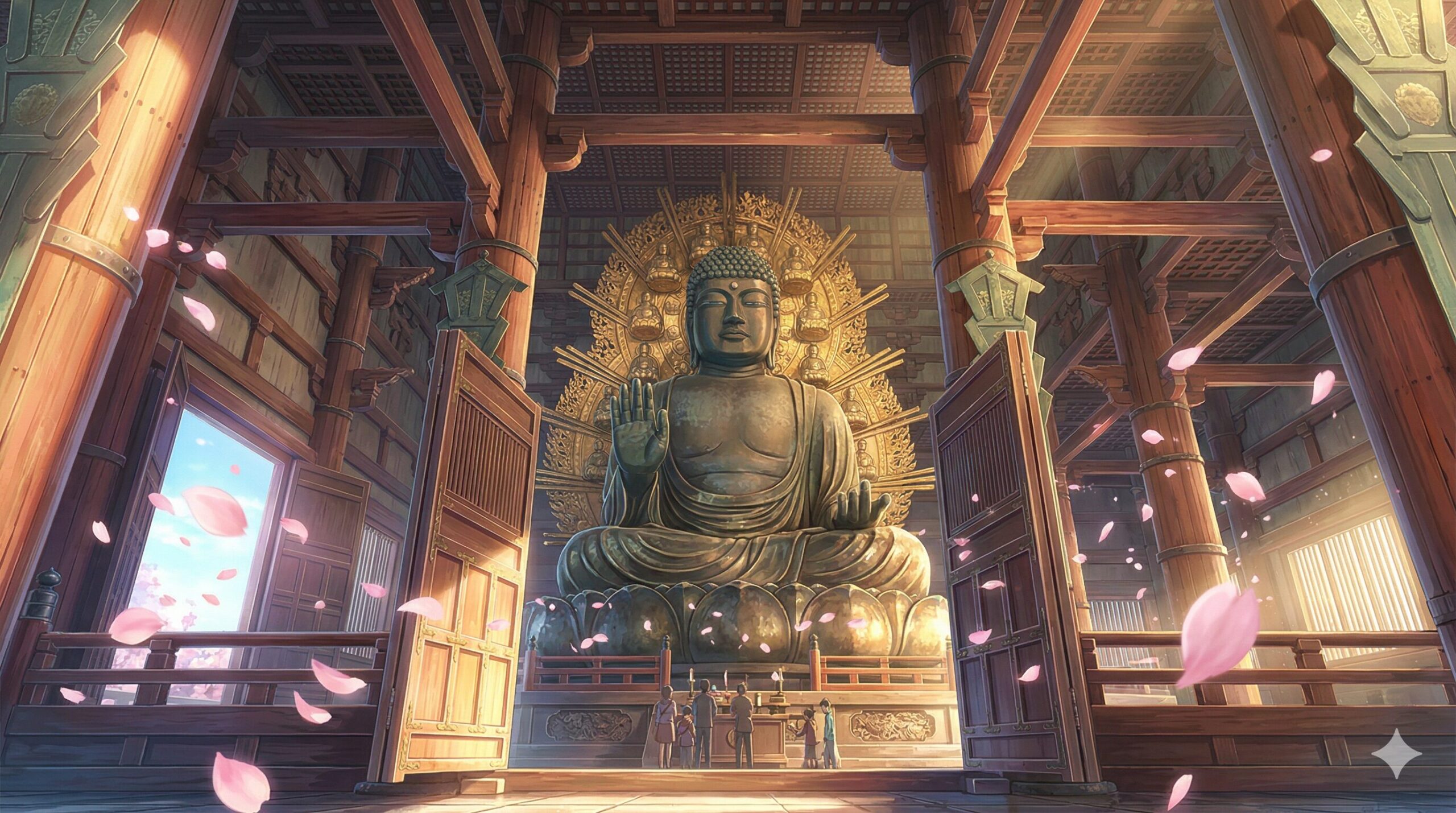
The Historical Background of April 9, “Great Buddha Day”
Every year on April 9, Japan observes “Daibutsu Day” (Great Buddha Day) or “Daibutsu Kaigen Day” (The Day of Opening the Eyes of the Great Buddha), a date of supreme importance in Japanese history and Buddhist culture. On this day in 752 AD, a grand ceremony called “Kaigen Hoyo” was held at Todai-ji Temple in the ancient capital of Nara to consecrate and awaken the soul of the colossal Rushana-butsu, widely known as the Great Buddha of Nara.
Why did 8th-century Japan need such an immensely massive statue? At the time, Japan was facing unprecedented national crises, including repeated major earthquakes, droughts, famines, and a devastating smallpox epidemic. With societal anxiety at its peak, Emperor Shomu, the ruler of the time, held a strong desire to stabilize the nation and save all living beings through the teachings of Buddhism. In 743 AD, the Emperor issued an imperial edict to construct the Great Buddha, launching an unprecedented megaproject that staked the prestige of the entire nation.
Records indicate that approximately 2.6 million people—roughly half of Japan’s population at the time—were involved in the construction. Materials such as copper were gathered from all over the country, and the statue slowly took shape through the donations and labor of the people. Finally, on April 9, 752, the eye-opening ceremony was performed by painting in the eyes of the statue with ink, symbolizing the infusion of its soul. The brush was held by Bodhisena, an Indian monk, and the ceremony was attended by over 10,000 monks and dignitaries from across Asia, including Tang Dynasty China and Champa (modern-day Vietnam). It was a historic moment that demonstrated how international Japan was at the time, flourishing as the eastern terminus of the Silk Road.
Decoding Japanese Culture and Spirituality through the Great Buddha
Unraveling the history of the Great Buddha’s construction reveals the “Spirit of Wa (Harmony)” and the resilience against adversity that form the foundation of Japanese spirituality.
What is particularly noteworthy is that the construction of the Great Buddha was not achieved solely by the power of a privileged few. A monk named Gyoki traveled across the country, preaching Buddhist teachings to the common people and appealing for their cooperation. The highest authority of the state (the Emperor) and nameless commoners shared a single prayer to “create a peaceful world” and sweat together to achieve it. This stands as a powerful symbol of Japan’s unique spirit of harmony and cooperation that transcends social status.
Furthermore, the Great Buddha of Todai-ji was not entirely safe even after its completion. Throughout its long history, the temple complex was burned down twice due to wars, and the statue itself suffered severe earthquake damage. Yet, every time disaster struck, the Japanese people meticulously repaired and rebuilt the Great Buddha. The current head dates back to the Edo period, parts of the torso to the Kamakura period, and only fragments like parts of the pedestal remain from the original 8th-century construction. The sight of the Great Buddha, scarred many times but resurrected by the hands of the people of each era, embodies the very tenacity of Japanese culture that has overcome countless natural disasters and wars. The Great Buddha is not just a giant sculpture; it is a “baton of prayer” passed down through generations.
Todai-ji and the Great Buddha Today
Today, Todai-ji is registered as a UNESCO World Heritage site and is one of Japan’s premier tourist destinations, visited by millions of people from around the globe every year. Standing before the Great Buddha, which is approximately 15 meters tall and weighs around 250 tons, visitors are universally left breathless by its overwhelming presence and its calm, compassionate expression. The prayers for peace instilled by the people over 1,200 years ago continue to resonate powerfully with us today.
To Our Readers
April 9 is not just a day to look back on a past event; it is a day for those of us living in the present to question “What do we pray for, and what will we leave for future generations?” Much like 8th-century Japan, our modern society faces numerous anxieties, including pandemics, natural disasters, and global conflicts. If you had lived in Japan 1,200 years ago, would you have participated in the project to build this Great Buddha? And what do you think is the modern equivalent of a symbol of peace—like the Great Buddha—that we should leave for future generations?
Please share your thoughts with us.
Related Links
- Internal Link: Read more from the “What’s Today’s Special Day” series
- External Link: Official Website of Todai-ji Temple
4月9日は「大仏の日・大仏開眼の日」:奈良の大仏が語る日本の歴史と精神性
4月9日「大仏の日」の歴史的背景
毎年4月9日は、日本の歴史と仏教文化において極めて重要な意味を持つ「大仏の日」、あるいは「大仏開眼(かいげん)の日」です。西暦752年(天平勝宝4年)のこの日、日本の古都・奈良にある東大寺で、巨大な盧舎那仏(るしゃなぶつ)、すなわち「奈良の大仏」に魂を入れる「大仏開眼供養会(かいげんくようえ)」が盛大に執り行われました。
なぜ、8世紀の日本にこれほど巨大な仏像が必要だったのでしょうか。当時の日本は、度重なる大地震、干ばつ、飢饉、そして天然痘の大流行という未曾有の国難に直面していました。社会不安が極限に達する中、時の権力者である聖武天皇は、仏教の教えによって国家を安定させ、生きとし生けるすべてのものを救済したいという強い願いを抱きました。西暦743年、天皇は「大仏造立の詔(みことのり)」を発布し、国家の威信をかけた前代未聞の巨大プロジェクトが始動しました。
この大仏の建設には、当時の日本の人口の約半分にあたる延べ260万人もの人々が関わったと記録されています。銅などの物資は全国から集められ、人々の寄付と労働力によって少しずつ形作られていきました。そして752年4月9日、大仏の目に墨を入れ、仏像に魂を宿す開眼供養が実施されました。この儀式には、インド出身の僧・菩提僊那(ぼだいせんな)が筆を執り、中国(唐)や林邑(現在のベトナム)など、アジア各地から1万人を超える僧侶や参列者が集まりました。当時の日本がいかに国際的で、シルクロードの東の終着点として栄えていたかを示す歴史的瞬間です。
大仏から読み解く日本文化と精神性
大仏造立の歴史を紐解くと、日本人の精神性の根底にある「和の心」と「困難に立ち向かう回復力(レジリエンス)」が見えてきます。
まず注目すべきは、大仏造立が一部の特権階級だけの力で行われたのではないという点です。行基(ぎょうき)という僧侶が全国を巡り、一般民衆に仏教の教えを説きながら協力を呼びかけました。天皇という国家の頂点と、名もなき民衆が「平穏な世の中を創る」という一つの祈りを共有し、共に汗を流したのです。これは、身分を超えて協力し合う日本特有の「和(調和)」の精神の象徴と言えます。
また、東大寺の大仏は完成後も決して安泰だったわけではありません。その後の長い歴史の中で、戦火によって二度も焼け落ち、地震による損傷も経験しました。しかし、その度に日本人は大仏を修復し、再建してきました。現在の頭部は江戸時代に、胴体の一部は鎌倉時代に修復されたものであり、創建当時の部分は台座の一部などに限られています。何度も傷つきながらも、その時代の人々の手によってよみがえってきた大仏の姿は、自然災害や戦乱といった幾多の困難を乗り越えてきた日本文化の粘り強さそのものです。大仏は単なる巨大な彫刻ではなく、世代を超えて受け継がれる「祈りのバトン」なのです。
東大寺と大仏の現在
現在、東大寺はユネスコの世界文化遺産に登録され、世界中から年間数百万人もの人々が訪れる日本屈指の観光名所となっています。高さ約15メートル、重さ約250トンの大仏を目の前にした時、誰もがその圧倒的な存在感と、穏やかで慈愛に満ちた表情に息を呑みます。1200年以上前の人々が込めた平和への祈りは、現代の私たちにも強く響き渡ります。
読者の皆様へ
4月9日という日は、過去の出来事を振り返るだけでなく、現代を生きる私たちが「何に祈り、何を後世に残すのか」を問い直す日でもあります。パンデミックや自然災害、世界的な紛争など、現代社会もまた8世紀の日本と同じように多くの不安を抱えています。もしあなたが1200年前の日本に生きていたら、この大仏造立のプロジェクトに参加したでしょうか?そして、現代の私たちが未来の世代に残すべき「大仏」のような平和への象徴とは、一体何だと思いますか?
ぜひ、あなたの考えを聞かせてください。
関連リンク
- 内部リンク:今日は何の日シリーズをもっと読む
- 外部リンク:華厳宗大本山 東大寺 公式ウェブサイト
コメント