Look around you today, and you are highly likely to spot the “Panasonic” logo on a television, refrigerator, air conditioner, or camera. This electronics giant, which has permeated households worldwide, did not start with massive factories and abundant funding. It all began on this very day, March 7, in 1918, inside a tiny, two-story rented house in Osaka, Japan.
Today, we will take you on a journey through the history and philosophy of how a young man named Konosuke Matsushita founded “Matsushita Electric Housewares Manufacturing Works” (now Panasonic) and shaped Japanese business culture itself.

A Frail Young Man and the Revolutionary “Attachment Plug”
Konosuke Matsushita, the founder, did not come from a privileged background. His family fell into ruin when he was young, forcing him to drop out of elementary school to work as an apprentice. Throughout his life, he struggled with frail health. However, he possessed an extraordinary eye for observation and a burning passion for manufacturing.
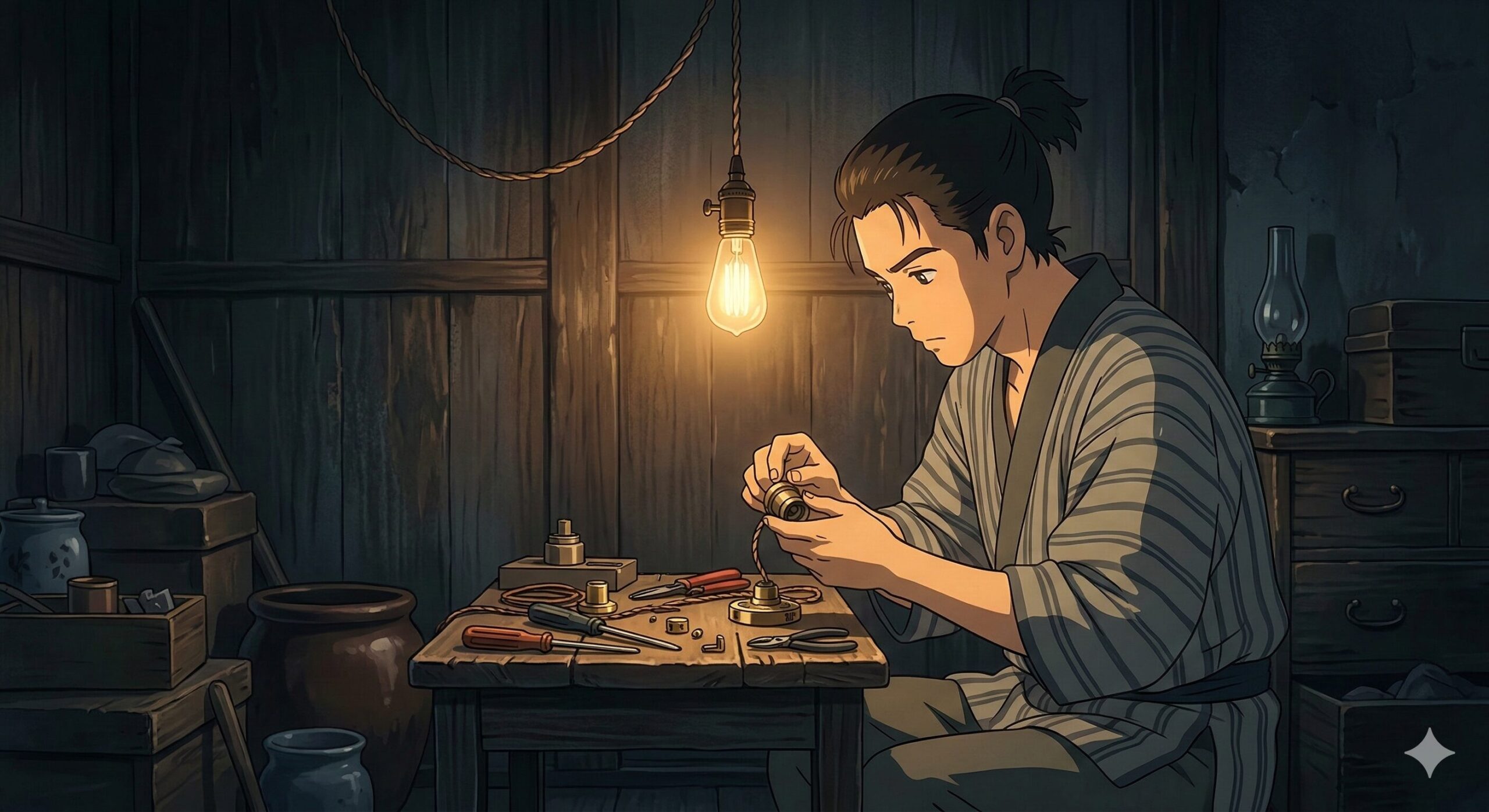
At the time, he was working as an inspector at the Osaka Electric Light Company. There, he invented an “improved attachment plug” designed to make conventional light bulb sockets more convenient. However, his supervisor dismissed the idea, coldly stating, “This will never sell.” Possessing absolute confidence in his idea, the 23-year-old Matsushita quit his stable job and decided to strike out on his own.
On March 7, 1918, along with his wife Mumeno and his brother-in-law Toshio Iue (who would later found Sanyo Electric), he started his manufacturing business in a small house. Initially, the plugs didn’t sell at all. They lived in extreme poverty, pawning their clothes just to survive the day. However, they managed to perfectly fulfill a large order for insulator plates for electric fans, which gave them much-needed capital. They followed this up with a “two-way socket” (a product that allowed two electrical devices to be plugged into a single light socket), which became a massive hit. This was the first step toward the global empire that exists today.
Impact on Japanese Culture: The “God of Management” and the Tap Water Philosophy
The reason Konosuke Matsushita is deeply respected in Japan not just as a successful businessman, but as the “God of Management,” lies in his unique business philosophy. His ideas have had a profound impact on modern Japanese business culture and the ethical views of society as a whole.
The most famous of these is the “Tap Water Philosophy” (Suido Tetsugaku).
In 1932, on a hot summer day, Matsushita saw a vagrant drinking water from a tap outside a house. The owner did not complain. Why? Because water was abundant and cheap. In this, he found the ultimate purpose of business.
“The mission of an industrialist is to overcome poverty,” he declared. “To eradicate poverty from society, we must produce an abundant supply of goods as cheaply as tap water.”
Furthermore, he preached that “A company is a public vessel of society.” This means a company does not belong privately to its managers or shareholders; it exists to better society. This can be seen as a modern, global-scale redefinition of the traditional Japanese merchant spirit of “Sanpo Yoshi” (Good for the seller, good for the buyer, good for society). His philosophy—that profit is merely a “reward” given as a result of contributing to society—anticipated modern concepts like ESG investing and SDGs by nearly a century.
Japanese Manufacturing Evolving with Society
The history of Panasonic is the history of Japan’s modernization. When Matsushita realized that riding bicycles on dark roads was dangerous, he developed the revolutionary “bullet-shaped battery lamp.” When he saw housewives exhausted by daily chores, he popularized electric irons and washing machines. The desire to “make people’s lives easier and richer” was at the root of all his product development.
Today, Japanese products are praised worldwide for being high quality and closely tailored to users’ detailed needs. This is largely because Konosuke Matsushita’s DNA—which prioritizes “service to society”—is deeply rooted in the entirety of Japanese manufacturing (Monozukuri).
What Do You Think?
The story of Panasonic began today in 1918 with a single, small plug, ultimately enriching the lives of people all over the world. Konosuke Matsushita once said, “There are infinite paths.”
If you were to bring just one new idea to life today to make people’s lives slightly better, what would it be? What kind of world-changing product could be born from an “inconvenience” in your daily surroundings?
Please share your ideas and your thoughts on this article in the comments below!
Reference Links:
- Internal Link: Read more from the What’s Today’s Special Day Series
- External Link: Panasonic Official: Corporate History
3月7日:世界的企業「パナソニック」の誕生と、一人の青年の不屈の精神
今日、私たちの身の回りを見渡せば、テレビ、冷蔵庫、エアコン、あるいはカメラなど、ありとあらゆる場所に「Panasonic」のロゴを見つけることができます。世界中の家庭に浸透しているこの巨大な電子機器メーカーは、最初から巨大な工場と潤沢な資金を持っていたわけではありません。すべては、1918年(大正7年)の今日、3月7日に、日本の大阪にあるわずか2階建ての小さな借家から始まりました。
本日は、松下幸之助という一人の青年がいかにして「松下電器器具製作所(現在のパナソニック)」を創業し、日本のビジネス文化そのものを形作ったのか、その歴史と哲学の旅へご案内します。
病弱な青年と、画期的な「アタッチメントプラグ」
創業者である松下幸之助は、決して恵まれた環境の出身ではありませんでした。幼い頃に家が没落し、小学校を中退して丁稚奉公(住み込みの働き手)に出され、さらに生涯にわたって肺尖カタルという病を抱える病弱な体質でした。しかし、彼には類まれなる観察眼と、モノづくりへの情熱がありました。
当時、彼は「大阪電燈」という会社で検査員として働いていました。そこで彼は、従来の電球用ソケットをもっと便利にする「改良アタッチメントプラグ」を考案します。しかし、上司の評価は「こんなものは売れない」という冷酷なものでした。自分のアイデアに絶対の自信を持っていた幸之助は、23歳という若さで安定した仕事を辞め、独立を決意します。
1918年3月7日、妻のむめの、そして後に三洋電機を創業することになる義弟の井植歳男とともに、小さな家で製造業をスタートさせました。当初は全くプラグが売れず、質屋に衣類を入れてその日の生活費を工面するほどの極貧生活でした。しかし、扇風機の碍盤(がいばん:絶縁用の部品)の大量注文を完璧にこなしたことで資金を得て、続いて考案した「二灯用差込みプラグ(一つのコンセントから二つの電気を取れる製品)」が大ヒット。これが、現在に続く巨大帝国の第一歩となったのです。
日本文化への影響:「経営の神様」と水道哲学
松下幸之助が単なる成功した実業家ではなく、日本で「経営の神様(The God of Management)」として今なお深く尊敬されている理由は、彼が残した独自の経営哲学にあります。彼の思想は、現代の日本のビジネス文化、さらには社会全体の倫理観に多大な影響を与えました。
その最も有名なものが「水道哲学」です。
1932年、幸之助はある暑い日に、通りすがりの人が他人の家の水道の蛇口をひねり、水を飲んでいるのを目撃しました。持ち主は文句を言いません。なぜなら、水は豊富にあり、安価だからです。ここに彼はビジネスの究極の目的を見出しました。
「産業人の使命は、貧乏を克服することである。社会から貧困をなくすために、良い品物を、水道の水のように安く、豊富に提供しなければならない」
さらに彼は、「企業は社会の公器である」と説きました。会社は経営者や株主の私物ではなく、社会を良くするために存在するという考え方です。これは、古くから日本商人に伝わる「三方よし(売り手よし、買い手よし、世間よし)」という精神を、近代的な工業化社会においてグローバルな規模で再定義したものと言えます。利益は、社会に貢献した結果として与えられる「報酬」に過ぎないという彼の哲学は、今日のESG投資やSDGsの考え方を、なんと100年も前に先取りしていたのです。
社会の発展とともに歩む日本のモノづくり
松下電器の歴史は、そのまま日本の近代化の歴史でもあります。自転車の夜道が暗くて危険だと知れば、画期的な「砲弾型電池ランプ」を開発し、主婦が家事に追われていると知れば、電気アイロンや洗濯機を普及させました。「人々の生活を楽にしたい、豊かにしたい」という思いが、すべての製品開発の根底にありました。
今日、日本の製品が高品質でありながら、ユーザーの細やかなニーズに寄り添っていると世界から評価されるのは、こうした「社会への奉仕」を第一とする松下幸之助のDNAが、日本のモノづくり全体に深く根付いているからです。
あなたはどう考えますか?
1918年の今日、たった一つの小さなプラグから始まり、世界中の人々の生活を豊かにしたパナソニックの物語。松下幸之助は「道は無限にある」と語りました。
もしあなたが今日、人々の生活を少しだけ良くするために、たった一つだけ新しいアイデアを形にするとしたら、それはどんなものですか? あなたの身の回りにある「不便」から、世界を変えるどんな製品が生まれるでしょうか?
ぜひ、あなたのアイデアやこの記事の感想を、コメント欄で教えてください。
参考リンク:


コメント