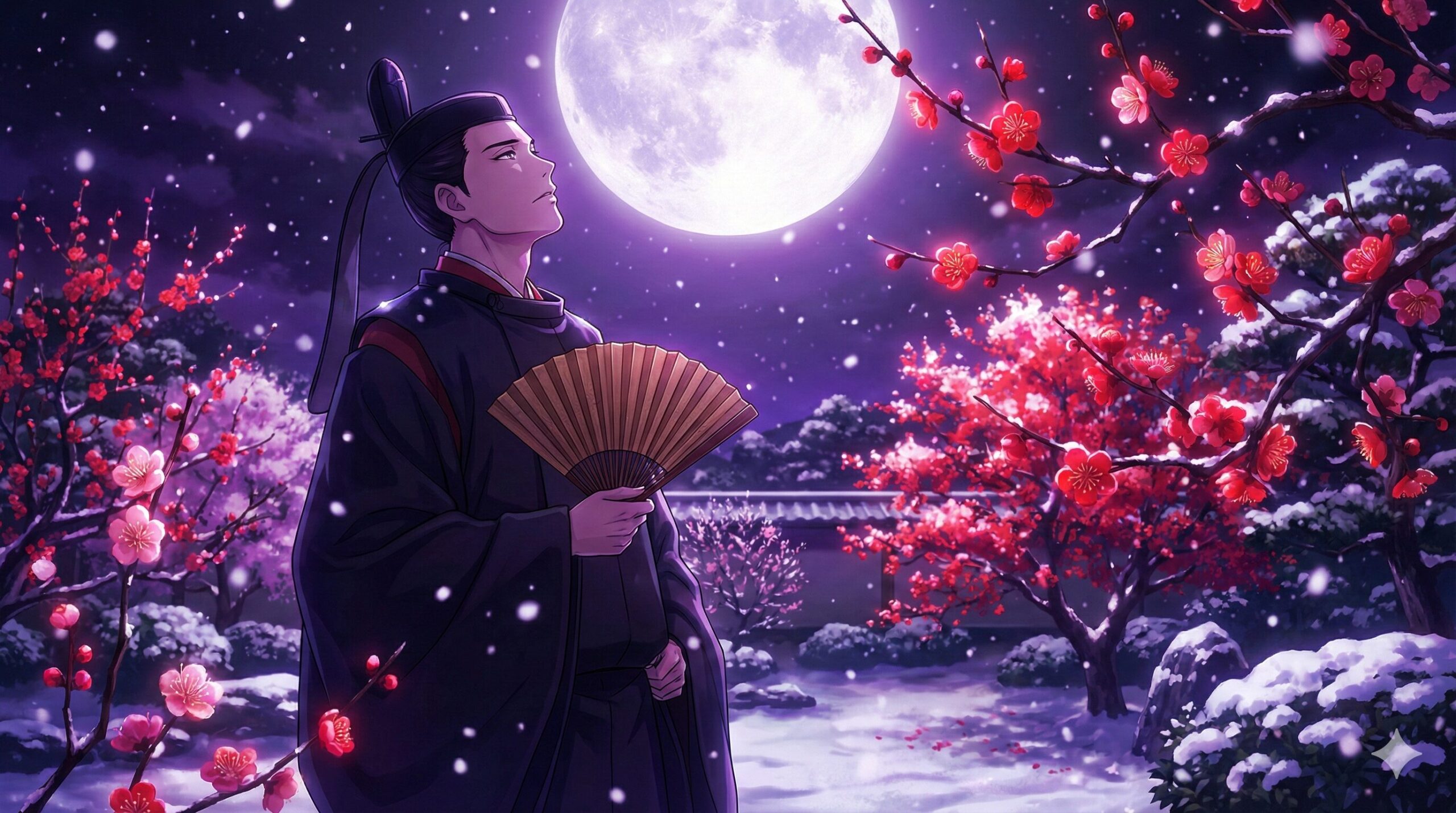

- What is “Michizane-ki” on February 25th?
- From Vengeful Spirit to Deity: When Terror Turns into Prayer
- The Legend of the Flying Plum and the Ox: Beautiful Symbols of Tenjin
- The Depths of Japanese Culture: The Lessons of “Goryo Shinko”
- A Question for You
- 2月25日「道真忌(みちざねき)」とは何か?
- 怨霊から神へ:恐怖が祈りに変わる時
- 飛梅伝説と牛:天神様を象徴する美しいシンボル
- 日本文化の深層:「御霊信仰」が教えること
- あなたに問いかけたいこと
What is “Michizane-ki” on February 25th?
Every year on February 25th, Japan observes “Michizane-ki,” the anniversary of the death of Sugawara no Michizane. He is one of the most famous, once the most feared, and now the most beloved historical figures in Japan. On this day, significant Shinto rituals, such as the “Baika-sai” (Plum Blossom Festival), are held at shrines across the country known as “Tenmangu.”
Sugawara no Michizane (845–903) was a brilliant scholar and an outstanding politician during the early Heian period. Born into a lineage of scholars, he displayed immense talent for waka (Japanese poetry) and Chinese poetry from a young age. He rose through the ranks of the imperial court with unprecedented speed. Earning the deep trust of the Emperor, he eventually reached the position of “Udaijin” (Minister of the Right), the second most powerful role in the country.
However, this extraordinary success bred fierce jealousy and vigilance among the Fujiwara clan, the ultimate power-holders of the time. In 901, through a conspiracy by his political rival, Fujiwara no Tokihira, Michizane was falsely accused of plotting to dethrone the Emperor. Consequently, he was exiled to Dazaifu in present-day Fukuoka Prefecture. Torn away from his family and forced into confinement in a harsh environment, Michizane prayed to the heavens to prove his innocence. On February 25th, 903, he passed away in despair. This tragic end is the origin of “Michizane-ki.”
From Vengeful Spirit to Deity: When Terror Turns into Prayer
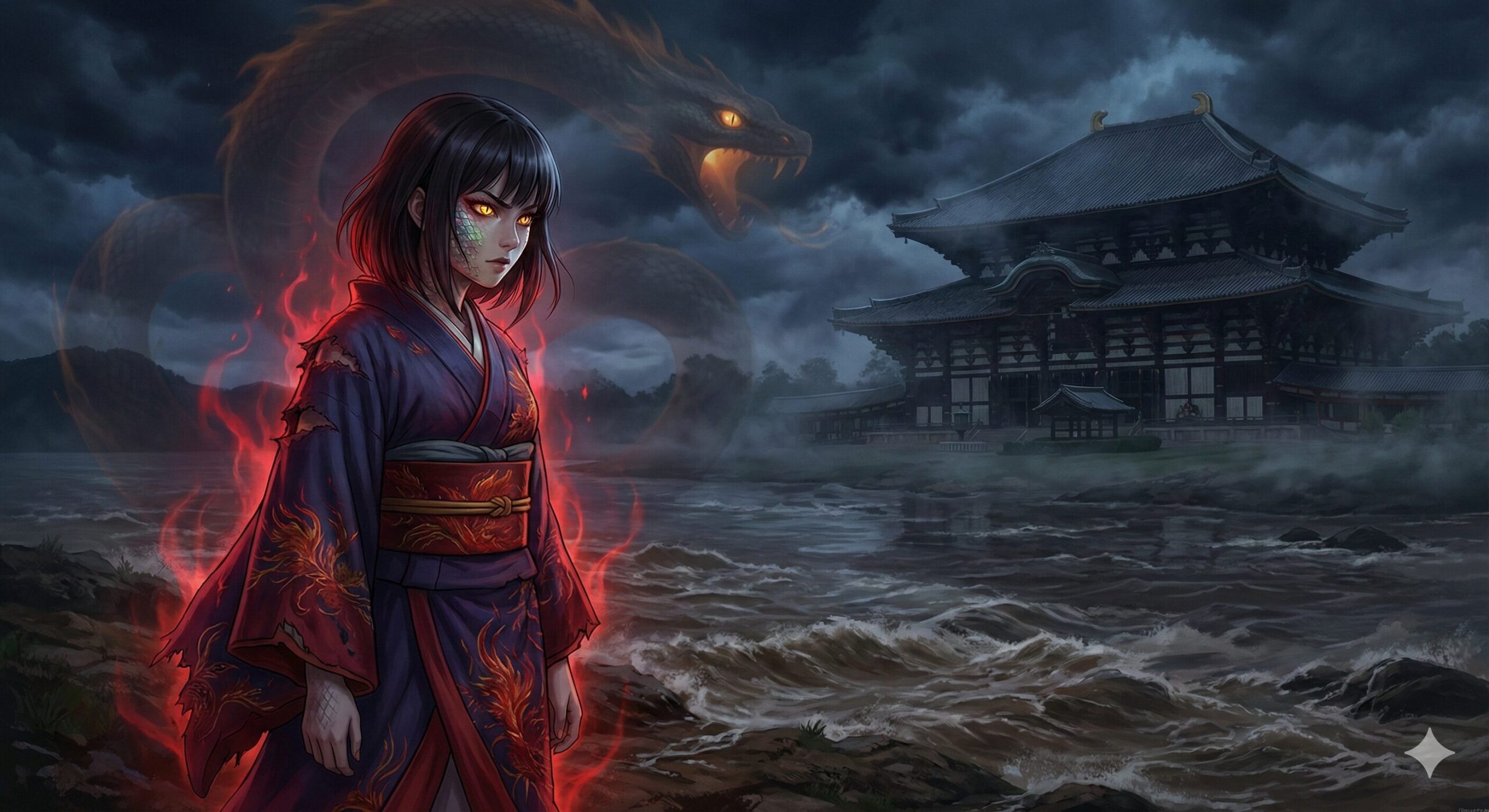
Following Michizane’s death, a series of bizarre and terrifying events began to unfold in Kyoto, the capital of Japan. Starting with the sudden illness and premature death of Fujiwara no Tokihira—the man who orchestrated Michizane’s downfall—the Crown Princes and those close to the Emperor perished one after another. Furthermore, plagues spread throughout the city, and a severe, prolonged drought struck the land.
The climax occurred in 930 when a massive lightning bolt struck the “Seiryoden,” the heart of the Imperial Palace in Kyoto, killing many high-ranking court officials in a fiery explosion. The Emperor, who witnessed this horrific event, fell ill from the shock and passed away a few months later.
The people of the time were convinced: “This is the work of the Onryo (vengeful spirit) of Sugawara no Michizane, who was murdered by false accusations.”
Trembling with terror, the imperial court sought to pacify Michizane’s wrath. They officially pardoned him, restoring and elevating his rank to higher than it was during his life. They built a shrine in the Kitano area of Kyoto to worship him as a heavenly deity named “Tenman-Daijizai-Tenjin.” This was the beginning of the renowned Kitano Tenmangu. Another shrine, Dazaifu Tenmangu, was erected directly over his grave in Dazaifu.
Although initially feared as a god of thunder and disaster, as centuries passed, Michizane’s true legacy as an “exceptional scholar” took center stage. During the Edo period (17th–19th centuries), as education spread among the commoners, his portrait was hung in Terakoya (temple schools). He became widely worshipped as the benevolent “God of Learning.” Today, as the annual entrance exam season approaches, millions of students visit Tenmangu shrines nationwide to pray for academic success.
The Legend of the Flying Plum and the Ox: Beautiful Symbols of Tenjin
You cannot talk about Michizane without mentioning “Ume” (plum blossoms). Michizane possessed a profound love for plum trees. When he was exiled to Dazaifu, he stood before the plum tree in his garden and composed a famous and heartbreaking poem:
“Kochi fukaba nioi okoseyo ume no hana aruji nashi tote haru wo wasuruna”
(When the east wind blows, send your fragrance to me, oh plum blossoms. Even though your master is gone, do not forget the spring.)
According to legend, this very plum tree yearned for its master so deeply that it uprooted itself and flew from Kyoto to Dazaifu in a single night. This is known as the legend of “Tobiume” (The Flying Plum). Because of this deep connection, plum trees are planted at every Tenmangu shrine. Around the time of Michizane-ki on February 25th, these trees bloom vibrantly and beautifully, defying the harsh winter cold.
Additionally, you will always find a bronze statue of a “Gagyu” (a resting ox) within the shrine grounds. This is based on the fact that Michizane was born in the Year of the Ox, and a legend stating that the ox pulling the cart with his remains suddenly sat down and refused to move. Taking this as a divine sign, he was buried at that exact spot. Visitors today believe that rubbing the head of the bronze ox will grant them wisdom.
The Depths of Japanese Culture: The Lessons of “Goryo Shinko”
The core of Japanese culture that we must decipher from “Michizane-ki” on February 25th is the unique spirituality known as “Goryo Shinko” (the belief in pacifying vengeful spirits).
In many Western cultures, evil spirits or vengeful ghosts are typically viewed as entities to be “exorcised or eliminated.” However, the Japanese chose a different path. When faced with a soul that died holding immense resentment, they chose to enshrine and worship it as a “God” with the utmost respect, despite their deep fear. By comforting and empathizing with the raging soul, they transformed a former enemy into a powerful guardian deity.
This mindset perfectly aligns with how Japanese people face uncontrollable natural threats like earthquakes and typhoons. Instead of trying to suppress the fury of nature with force, they accept it and revere it as divine. Michizane’s life and posthumous deification symbolize the strength and gentleness of the Japanese spirit, which sublimates even tragic despair into beautiful, powerful faith. The plum blossom, enduring the bitter winter to bloom proudly before all other flowers, is the very embodiment of Michizane’s indomitable spirit.
A Question for You
When you harbor deep sorrow or anger due to an unreasonable fate or unjust treatment from others, how do you react? Over a thousand years, the soul of Sugawara no Michizane transformed “anger” into a “light that guides people” (the God of Learning).
How do you overcome the unreasonable hardships or tragedies you face in your own life, turning them into nourishment for your soul? Furthermore, does your country or culture have a tradition of praising a tragic figure as a sacred entity, passing their story down to future generations?
Please share your thoughts and feelings after reading this article!
>> Read more articles from the “What’s Today’s Special Day?” series
2月25日は道真忌。日本の「学問の神様」の悲劇と怨霊信仰を読み解く
2月25日「道真忌(みちざねき)」とは何か?
毎年2月25日は、日本の歴史上最も有名で、かつ最も恐れられ、そして現在最も愛されている人物の一人、菅原道真(すがわら の みちざね)の命日である「道真忌(みちざねき)」です。全国各地の「天満宮(てんまんぐう)」と呼ばれる神社では、この日に合わせて「梅花祭(ばいかさい)」などの重要な神事が行われます。
菅原道真(845年~903年)は、平安時代前期の卓越した学者であり、優れた政治家でもありました。代々学者の家系に生まれた彼は、幼少期から和歌や漢詩の才能を発揮し、異例のスピードで朝廷の要職へと出世していきました。当時の天皇からの厚い信頼を得て、ついには国のナンバーツーである「右大臣(うだいじん)」にまで登り詰めます。
しかし、その異例の出世は、当時の最大権力者であった藤原氏の激しい嫉妬と警戒を買うことになります。901年、政敵であった藤原時平(ふじわらの ときひら)の陰謀により、道真は「天皇を廃立しようと企てた」という無実の罪を着せられました。結果として、彼は現在の福岡県にあたる太宰府(だざいふ)へと左遷されてしまいます。家族とも引き離され、劣悪な環境の中で謹慎生活を送った道真は、自身の潔白を天に祈りながら、903年の2月25日、無念のうちにこの世を去りました。これが「道真忌」の由来です。
怨霊から神へ:恐怖が祈りに変わる時
道真の死後、日本の首都である京都(平安京)では、次々と不可解で恐ろしい出来事が起こり始めます。道真を陥れた藤原時平が若くして病死したのを皮切りに、皇太子や天皇の周辺の人々が次々と命を落としました。さらに、都では疫病が蔓延し、長い干ばつが続きました。
極めつけは930年、平安京の中心である「清涼殿(せいりょうでん)」に巨大な落雷があり、朝廷の要人たちが多数焼け死ぬという大事件が発生します。これを目撃した天皇もショックで体調を崩し、数ヶ月後に崩御しました。
当時の人々は確信しました。「これは、無実の罪で殺された菅原道真の怨霊(おんりょう)の仕業だ」と。
恐怖に震えた朝廷は、道真の怒りを鎮めるために、彼の罪を取り消し、生前よりも高い位を贈りました。そして、京都の北野という場所に彼を「天満大自在天神(てんまんだいじざいてんじん)」という神として祀る神社を建立しました。これが現在の北野天満宮の始まりです。また、彼が亡くなった太宰府の墓所の上にも太宰府天満宮が建てられました。
雷神として恐れられた道真でしたが、時代が下るにつれて、彼の生前の「優れた学者」としての側面がクローズアップされるようになります。江戸時代(17世紀~19世紀)になり、庶民の間で教育が普及すると、寺子屋(当時の学校)に道真の肖像画が飾られ、彼は「学問の神様」として広く信仰されるようになりました。現在では、毎年受験シーズンになると、合格祈願のために何百万人もの学生が全国の天満宮を訪れます。
飛梅伝説と牛:天神様を象徴する美しいシンボル
道真を語る上で欠かせないのが「梅」の花です。道真はこよなく梅を愛していました。太宰府へ左遷される際、彼は自宅の庭の梅の木に向かって、有名な和歌を詠みました。
「東風(こち)吹かば 匂ひおこせよ 梅の花 あるじなしとて 春を忘るな」
(春の東風が吹いたら、香りを太宰府まで届けておくれ、梅の花よ。主人がいないからといって、春を忘れてはいけないよ)
伝説によれば、この梅の木は主人の後を追いかけて、一晩で京都から太宰府まで飛んでいったと言われています。これを「飛梅(とびうめ)」伝説と呼びます。そのため、全国の天満宮には必ず梅の木が植えられており、2月25日の道真忌の時期には、厳しい冬の寒さの中で力強く美しい花を咲かせます。
また、天満宮の境内には必ず「臥牛(がぎゅう:伏せた牛)」の銅像があります。道真の出生年が丑年であったことや、彼が亡くなった際に遺体を運んでいた牛車が、ある場所で突然座り込んで動かなくなったため、そこを墓所(現在の太宰府天満宮)としたという伝説に基づいています。参拝者は、この牛の頭を撫でることで、知恵を授かると信じています。
日本文化の深層:「御霊信仰」が教えること
この2月25日の「道真忌」から私たちが読み解くべき日本文化の核心は、「御霊信仰(ごりょうしんこう)」という独特の精神性です。
西洋の文化圏では、悪霊や怨霊は「退治・排除」すべき対象として描かれることが多いでしょう。しかし、日本人は強い恨みを持って死んだ魂に対し、畏れ(おそれ)を抱きながらも、最高級の敬意を払って「神」として祀り上げるという道を選びました。怒り狂う魂を慰め、寄り添うことで、かつての敵を、国を守る強力な守護神へと変容させたのです。
これは、地震や台風といった「コントロール不可能な大自然の脅威」に対する日本人の向き合い方と完全に一致しています。自然の猛威を力でねじ伏せるのではなく、それを受け入れ、神として畏れ敬う。道真の生涯と死後の神格化は、悲劇的な絶望をも、美しく力強い信仰へと昇華させる日本人の心の強さと優しさを象徴しています。厳しい冬を耐え抜き、桜よりも先に百花の魁(さきがけ)として咲き誇る「梅」の花こそ、まさに道真の不屈の精神そのものなのです。
あなたに問いかけたいこと
理不尽な運命や、他者からの不当な扱いによって、深い悲しみや怒りを抱えた時。菅原道真の魂は、千年の時を経て「怒り」を「人々を導く光(学問の神)」へと変えました。
あなたは、人生で直面した理不尽な困難や悲劇を、どのように乗り越え、自分自身の糧としていますか? また、あなたの国や文化には、悲劇の人物を神聖な存在として讃え、後世に語り継ぐような伝統はあるでしょうか?
ぜひ、この記事を読んだ感想と合わせて、あなたの考えを教えてください。

コメント