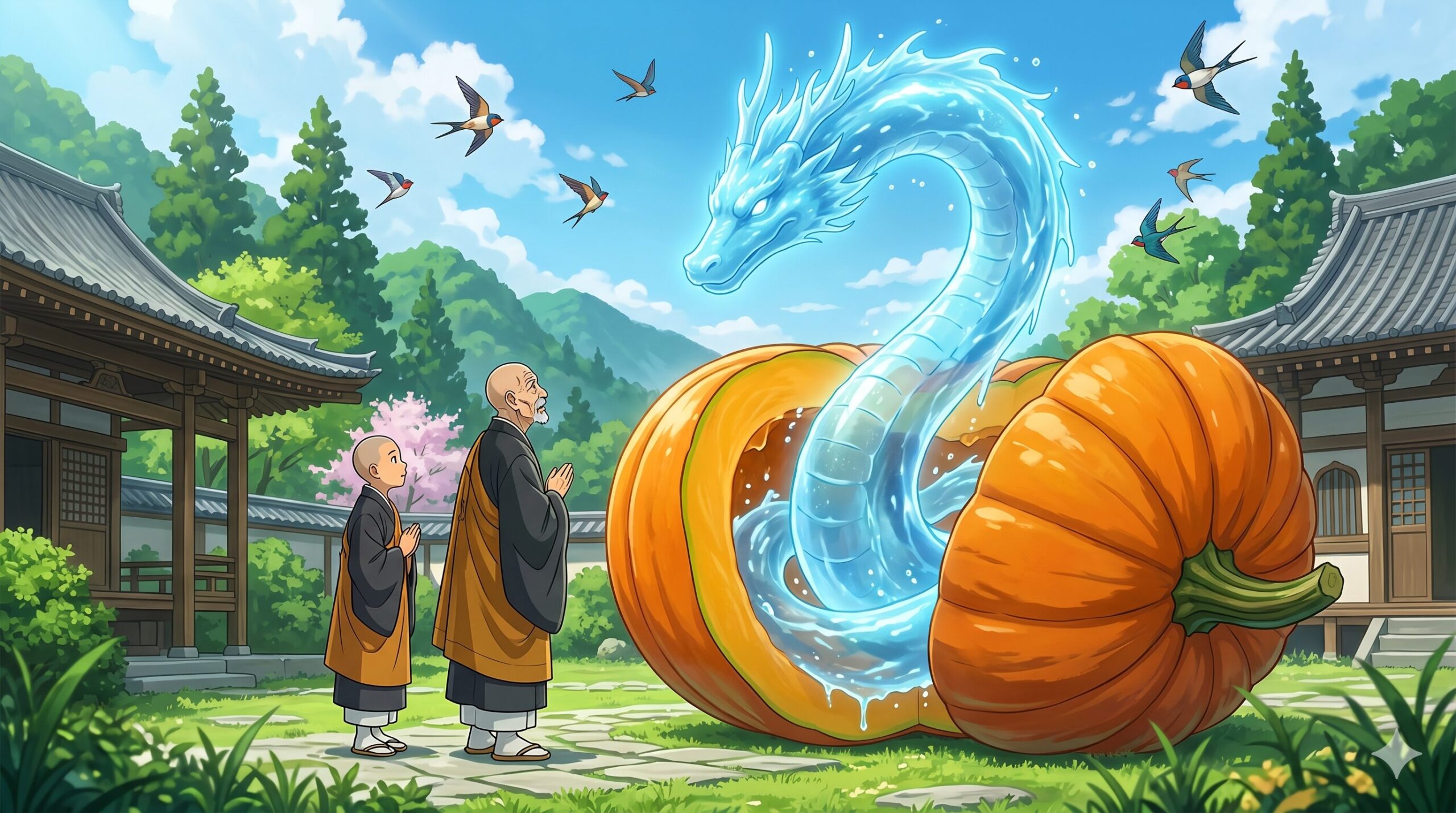
Japanese folktales often contain surprising twists that completely overturn our modern expectations. Unlike Western fairy tales, which typically end with a simple “they found the treasure and lived happily ever after,” Japanese folklore possesses a profound, sometimes terrifying depth. Today, we will introduce a seemingly frightening yet deeply meaningful folktale called “The Swallow’s Gratitude” (Tsubame no Orei). Through this story, we will clearly unravel how the Japanese people have historically interacted with nature and perceived their gods.
- 1. The Story of “The Swallow’s Gratitude”
- 2. Tale Analysis: Why was the “Reward” a Terrifying Snake and a Storm?
- 3. Connection to Japanese Culture: Awe of Nature and Communal Prosperity
- 4. Conclusion: What Would You Do?
- ① 昔話「ツバメのお礼」の物語
- ② 物語の考察:なぜ「お礼」が恐ろしい蛇と嵐だったのか?
- ③ 日本文化との関連:自然への畏敬と「共存共栄」の精神
- ④ 最後に:あなたなら、どう感じ、どう行動しますか?
1. The Story of “The Swallow’s Gratitude”
Long ago, in a quiet mountain temple, there lived a kind-hearted head priest and a young, energetic monk. Every spring, swallows would reliably arrive at this temple to build their nests under the eaves. The parent birds flew about busily, and the chicks chirped loudly. Both the priest and the young monk looked forward to this lively scene every year.
One spring, the head priest jokingly called out to the swallows under the eaves: “You guys stay at this temple for free every single year. Bring me some lodging fees for a change! Hahaha.” The priest was merely teasing, but the swallows were listening closely.
Some time later, a swallow flew down to the priest and dropped something right in front of him. It was a single “pumpkin seed.” The priest and the monk laughed, saying, “So this is the swallow’s lodging fee!” and promptly planted the seed in the temple’s garden.
Soon, the seed sprouted, grew long vines, and produced a pumpkin larger than anyone had ever seen. It was so massive that it took both of them to carry it. “This is a magnificent pumpkin. The inside must be packed tightly with delicious flesh!” Rejoicing, the two men took a large knife and split the pumpkin right down the middle.
However, what emerged from inside was not appetizing pumpkin flesh, nor was it gleaming gold and silver. To their absolute horror, a giant snake was coiled up inside the pumpkin!
Panicking and screaming, the young monk grabbed both the snake and the pumpkin and hurled them with all his might into the small pond behind the temple. At that exact moment, the sky suddenly turned pitch black, and a violent, terrifying storm began to rage. Even as night fell, the torrential rain and howling wind showed no signs of stopping. Trembling with fear, the priest and the monk cautiously peeked at the back pond. There, thrashing amidst churning waves, were multiple giant snakes swimming wildly. The two monks did not sleep a wink; they frantically chanted sutras until dawn.
The next morning, the storm finally passed, and silence returned. When they timidly went to check the pond, an unbelievable sight awaited them. The place that was just a small pond yesterday had transformed into a vast, deep swamp stretching as far as the eye could see. It was brimming with an endless supply of fresh water.
This swamp later became known as “Hebinuma” (Snake Swamp). The abundant water from this massive reservoir thoroughly irrigated the rice fields of all the surrounding villages. Even during long summer droughts, the villagers’ rice crops never withered again. Seeing the overflowing water, the villagers rejoiced and expressed their deepest thanks, saying, “The swallow’s gratitude was truly a magnificent gift.”
2. Tale Analysis: Why was the “Reward” a Terrifying Snake and a Storm?
When reading this story for the first time, many people will undoubtedly be confused: “If this is a story of gratitude, why did the swallow bring such terrifying things as a snake and a violent storm?” In Western fairy tales, snakes are almost exclusively depicted as symbols of evil or temptation. However, in the foundational beliefs of Japan, the meaning of the snake is entirely different.
Since ancient times in Japan, snakes have been worshipped as messengers of the “Suijin” (Water God) or “Ryujin” (Dragon God), or even as the deities themselves. Water is the source of life, but it is also a terrifying natural force capable of causing devastating floods. The snake and the storm brought by the swallow were not punishments for the monks; they were manifestations of the raw, immense power of nature (divine will).
In response to the priest’s joking demand for “lodging fees,” the swallow did not provide gold coins to satisfy personal wealth. Instead, it provided an immeasurable blessing: an eternal water source that would sustain the entire village forever. The snake emerged from the pumpkin because the seed was not merely a plant, but a vessel connecting the human world with the realm of the gods. This story clearly dictates the truth that gifts from the gods do not always appear in a convenient or beautiful form for humans.
3. Connection to Japanese Culture: Awe of Nature and Communal Prosperity
What can be deciphered from this folktale is the core Japanese spirit of “Animism” (the belief in eight million gods residing in all things) and a “communal culture” centered around rice farming.
Japan is a mountainous country blessed with rich water resources, but it is also highly prone to natural disasters like typhoons and torrential rains. Historically, Japanese people have not tried to completely control nature. Instead, they chose a way of life that involves deeply fearing its violent aspects (Aratama) while graciously receiving its blessings (Nigitama). The narrative progression of this story—where the ultimate blessing of a rich water source is only achieved after enduring a terrifying storm—is the exact embodiment of the Japanese view of nature.
Furthermore, the head priest and the monk did not gain personal wealth. However, by hydrating the rice fields of the entire village, the temple ultimately received blessings from the villagers (in the form of donations and food), allowing everyone to live prosperously together. The Japanese mentality that prioritizes the prosperity of the entire local community over fulfilling individual desires is heavily reflected in “The Swallow’s Gratitude.”
4. Conclusion: What Would You Do?
If you were that young monk, and a giant snake suddenly appeared from a pumpkin you had carefully grown, what would you have done? Would you have run away in sheer terror? Or would you have stayed, believing there must be some profound meaning behind it?
Behind events that we normally perceive as “terrifying” or “inconvenient,” there may actually be a massive blessing hidden that enriches an entire community. Through this Japanese folktale, what are your thoughts on nature and “unexpected gifts”? We invite you to reflect deeply on this and share how similar stories might unfold in your own culture.
References & Internal Links
【驚愕の結末】日本の昔話「ツバメのお礼」から読み解く、自然の神々と日本人の心
日本の昔話には、しばしば現代の私たちの常識を大きく覆すような驚きの展開が待っています。西洋のおとぎ話のように「宝物を手に入れて幸せに暮らしました」という単純な結末で終わらないのが、日本の民話の奥深い魅力です。今回は、一見すると恐ろしく、しかし非常に深い意味を持つ昔話「ツバメのお礼」をご紹介します。この物語を通じて、日本人が古来よりどのように自然と向き合い、神々を捉えてきたのかをはっきりと解き明かしていきます。
① 昔話「ツバメのお礼」の物語
昔々、ある静かな山の寺に、心優しい和尚さんと元気な小僧さんが住んでいました。この寺には、春になると毎年決まってツバメたちがやってきて、軒先に巣を作りました。親鳥たちは忙しく飛び回り、ヒナたちは賑やかに鳴き声を上げます。和尚さんも小僧さんも、その光景を毎年の楽しみにしていました。
ある春のこと、和尚さんは軒先のツバメに向かって、冗談交じりにこう声をかけました。「お前たち、毎年毎年この寺にタダで泊まっているな。たまには宿代でも持って来いや、ハハハ」と。和尚さんはただからかっただけでしたが、ツバメはそれをしっかりと聞いていたのです。
それからしばらく経ったある日、一羽のツバメが和尚さんのもとへ飛んできて、ぽとりと何かを落としました。見ると、それは一粒の「かぼちゃの種」でした。和尚さんと小僧さんは「これがツバメの宿代か」と笑い合い、さっそく寺の畑にその種を植えました。
やがて種は芽を出し、ツルを伸ばし、見たこともないほど巨大なかぼちゃを実らせました。二人がかりでやっと運べるほどの大きさです。「これは素晴らしいかぼちゃだ。さぞかし中身も詰まっているだろう」と喜んだ二人は、包丁を取り出してかぼちゃを真っ二つに割りました。
しかし、中から出てきたのは美味しそうな果肉でも、光り輝く金銀財宝でもありませんでした。なんと、かぼちゃの中には「巨大な蛇」がとぐろを巻いていたのです。
驚き慌てた小僧さんは、悲鳴を上げながら蛇とかぼちゃを掴み、寺の裏にある小さな池へと力いっぱい投げ込みました。するとその瞬間、空は急に黒雲に覆われ、ものすごい嵐が吹き荒れ始めました。夜になっても暴風雨は一向に収まりません。恐怖に震える和尚さんと小僧さんが恐る恐る裏の池を見ると、かぼちゃを投げ込んだ池の中では、何匹もの大蛇が荒れ狂う波を立てながらウネウネと泳ぎ回っていました。二人は一睡もせず、夜が明けるまで必死にお経を唱え続けました。
翌朝、ようやく嵐が去り、静けさが戻りました。二人が恐る恐る裏の池を見に行くと、そこには信じられない光景が広がっていました。なんと、昨日まで小さな池だった場所が、見渡す限りの広大な沼へと姿を変えていたのです。水は豊かに満ちており、底知れぬ深さを持っていました。
この沼は後に「蛇沼(へびぬま)」と呼ばれるようになりました。そして、この巨大な沼の豊かな水は、周囲の村々の田んぼを隅々まで潤すことになったのです。日照り続きの夏であっても、村の稲が枯れることはなくなりました。村人たちは豊かな水を見て大喜びし、「ツバメのお礼は、なんて素晴らしいものだったんだ」と深く感謝しました。
② 物語の考察:なぜ「お礼」が恐ろしい蛇と嵐だったのか?
この物語を初めて読んだとき、多くの人は「恩返しなのに、なぜ蛇や嵐といった恐ろしいものがもたらされたのか?」と戸惑うはずです。西洋の童話において、蛇は邪悪な存在や悪魔の象徴として描かれることがほとんどです。しかし、日本の基層信仰において、蛇の持つ意味は全く異なります。
日本では古来より、蛇は「水神(すいじん)」や「龍神(りゅうじん)」の使い、あるいは神そのものとして崇拝されてきました。水は命の源であると同時に、時に水害を引き起こす恐ろしい自然の力です。ツバメがもたらした蛇と嵐は、決して和尚さんたちを罰するものではなく、「強大な自然の力(神威)」の顕現でした。
和尚さんが冗談で求めた「宿代」に対し、ツバメは個人を満たす金貨ではなく、村全体を永遠に潤す「水源」という計り知れない恩恵で応えました。かぼちゃから蛇が出てきたのは、その種が単なる植物ではなく、神の世界と人間界を繋ぐ器だったからです。この物語は、神々からの贈り物が常に人間の都合の良い形(綺麗な宝箱など)で現れるとは限らないという真実を、はっきりと示しています。
③ 日本文化との関連:自然への畏敬と「共存共栄」の精神
この昔話から読み解けるのは、日本特有の「アニミズム(八百万の神々)」の精神と、稲作を中心とした「共同体文化」です。
日本は山がちで水資源が豊かな反面、台風や豪雨といった自然災害が非常に多い国です。日本人は自然を完全にコントロールしようとするのではなく、その荒々しさ(荒魂・あらみたま)を畏れ敬いながら、恵み(和魂・にぎみたま)を受け取るという生き方を選んできました。嵐という恐ろしい体験を経て初めて、豊かな水源という究極の恵みがもたらされるというこの物語の展開は、まさに日本人の自然観そのものです。
また、和尚さんと小僧さんは個人的な富を得たわけではありません。しかし、村全体の田んぼが潤うことで、結果的に寺も村人からの恩恵(お布施や食料)を受け取り、皆が豊かに暮らすことができます。個人の欲望を満たすのではなく、地域社会全体(共同体)の繁栄を重んじる日本の精神性が、この「ツバメのお礼」には色濃く反映されています。
④ 最後に:あなたなら、どう感じ、どう行動しますか?
もしあなたがこの小僧さんで、大切に育てたかぼちゃから突然巨大な蛇が現れたら、どうしたでしょうか?恐怖のあまり逃げ出してしまうでしょうか。それとも、何か意味があるはずだとその場に留まるでしょうか。
私たちが普段「恐ろしい」「不都合だ」と感じる出来事の裏に、実は地域や社会全体を豊かにする大きな恵みが隠されているかもしれません。この日本の昔話を通して、あなたは自然や「予期せぬ贈り物」に対して、どのような思いを抱きましたか?ぜひ、あなたの考えや文化での類似するお話について、深く考え、教えてください。

コメント