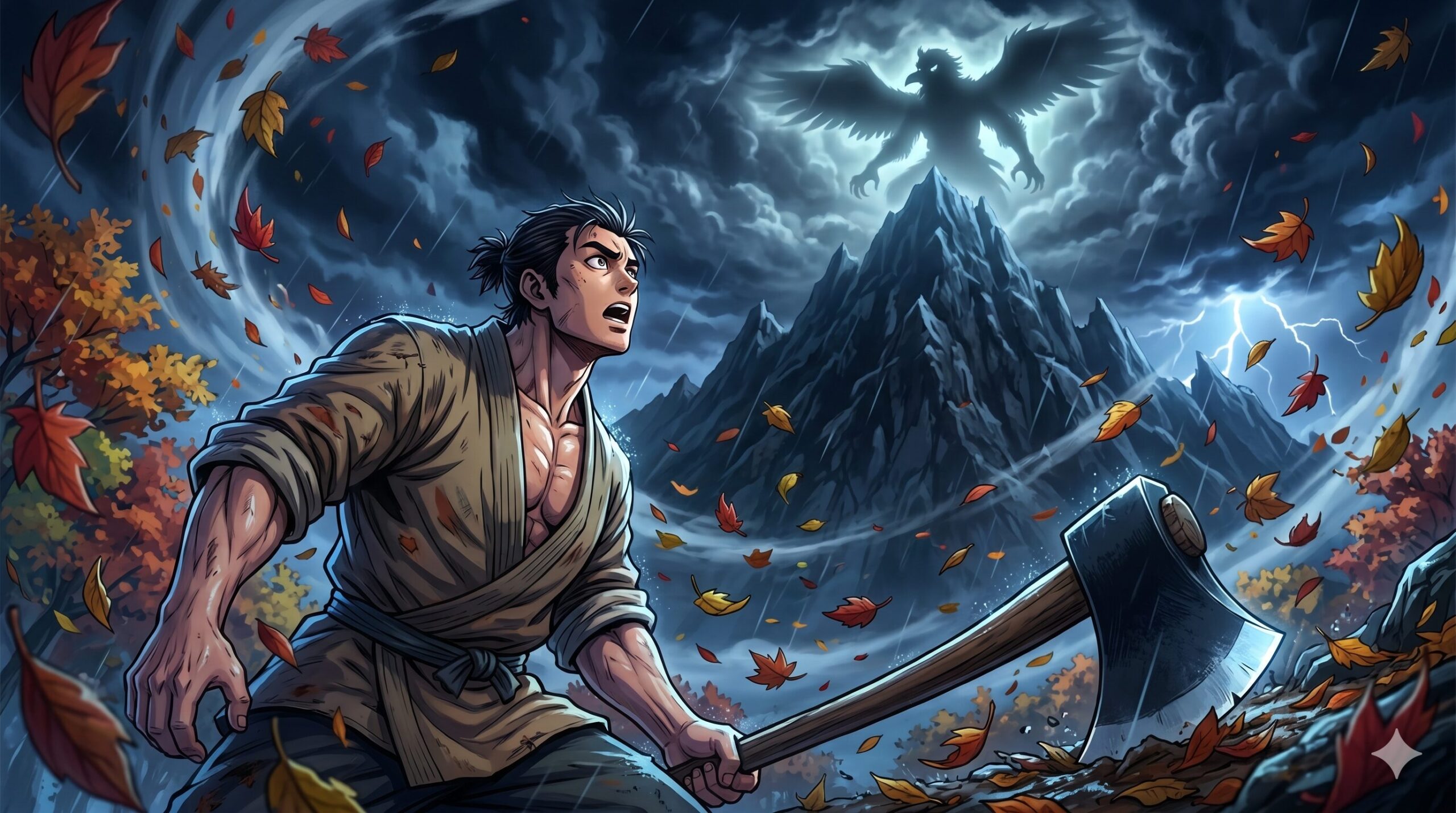
In the lush, mountainous landscapes of Japan, it has long been believed that gods and mystical creatures beyond human comprehension dwell in nature. Today, we introduce a terrifying yet highly moralistic folktale passed down in the Chichibu region of Saitama Prefecture: “Dairiki Daibee” (Daibee of Great Strength). Let’s dive deep into a story about strength that transcends human limits and the tragedy it ultimately brings.
The Story of Dairiki Daibee: Extraordinary Power and Challenging the Tengu
Long ago, in a village completely surrounded by beautiful nature called Hinosawa, located in present-day Chichibu, Saitama, lived a young man named Daibee. He possessed a terrifying, superhuman physical strength that ordinary people could not even begin to imagine.
Initially, Daibee was very kind-hearted and hardworking. Once he finished his own farm work, he voluntarily helped the villagers with their heavy labor, using his incredible strength for the benefit of others. The villagers deeply trusted him and were entirely grateful for his presence. When asked to help with woodcutting, Daibee would lightly swing a massive axe (Masakari), instantly felling giant trees that would take other woodcutters several days to chop down.
“Daibee’s strength is the greatest in Japan!” “No human is a match for him!”
Rumors of Daibee spread to neighboring villages, and he was praised by people day after day. However, as he continued to bathe in the cheers and admiration, “hubris” began to sprout in his heart. He gradually started refusing the villagers’ requests for help, finding joy solely in showing off his own power.
“My strength is second to none. I am definitely stronger than the terrifying Tengu that lives on Mount Jomine!”
A Tengu is a powerful, half-human, half-bird legendary creature that rules the mountains in Japanese folklore, often considered a messenger of the mountain gods. Daibee had become so completely intoxicated by his own strength that he looked down upon the very entity that people had revered and feared since ancient times.
One evening at dusk, long after the other woodcutters had descended the mountain and returned home, Daibee remained alone. He continued to swing his axe at a giant tree. “Don’t you know Dairiki Daibee?! I am stronger than the Tengu!” he shouted loudly, chopping the tree like a madman. In the dead silence of the night, only Daibee’s arrogant screams and the sound of his axe echoed eerily throughout the village.
Late that night, a massive windstorm suddenly struck the village. It was no ordinary wind. The earth shook violently, and a deafening tremor roared as if the mountain itself was enraged.
The next morning, when the storm had passed and the villagers stepped outside, an unbelievable sight awaited them. On top of Daibee’s house sat a colossal boulder that could only have flown in from the mountain, completely crushing the building flat. Daibee was nowhere to be found. Whether he was crushed beneath the rock or snatched away by the Tengu, no one ever knew the truth.
There was only one trace left behind. At the very top of the tallest cedar tree on a nearby mountain peak, Daibee’s heavy axe was deeply embedded into the wood. The villagers trembled in terror and passed down the story, saying, “This is the punishment for angering the Tengu, the God of the Mountain.”
Analysis of Dairiki Daibee: Human Limits and Awe of Nature
This tale is not a story about the heroic deeds of a superhumanly strong man; rather, it is a bitter warning against the dark side of human psychology: “Hubris.” The trigger for Daibee’s tragedy was not his “great strength” itself, but his dangerous “overconfidence” in it.
As long as Daibee used his strength for others, he was loved as a hero. However, the moment he used his power to prove his superiority and provoke a supernatural entity of the natural world (the Tengu), he met his doom. The giant boulder that suddenly fell from the sky and the axe stuck in a tree far out of reach visually demonstrate the overwhelming truth: “Human strength is utterly powerless before Mother Nature and the gods.”
Connection to Japanese Culture: Respect for Nature and the phrase “Tengu ni naru”
In Japanese culture, this story holds deep spiritual significance. Japan has an ancient belief in “Animism” (the idea that gods reside in all things), and mountains, rivers, giant trees, and rocks have been worshipped as sacred. A mountain is not a place ruled by humans, but a sanctuary belonging to the mountain gods and Tengu. Daibee’s actions went beyond mere boasting; they were an act of “blasphemy” that disrupted the order of the natural world.
Furthermore, there is a famous idiom in modern Japanese: “Tengu ni naru” (To become a Tengu). This means “to be overconfident in one’s abilities and behave arrogantly.” It describes someone who acts boastful with their nose held high, much like a long-nosed Tengu. The story of Dairiki Daibee perfectly embodies the moral lesson behind this phrase. In Japanese society, there is a deeply rooted moral view that no matter how exceptionally talented one is, one must never forget humility (Modesty) and harmony with others (Wa – 和).
What do you think?
How did you feel reading this folktale? Do you think Daibee’s fate was an inevitable consequence of his own actions? Or do you feel the punishment was a bit too harsh?
If you were given a power stronger than anyone else in the world, what would you use it for? When people acquire great power or talent, how can they maintain their humility? Please take a moment to reflect on this.
External Reference Link:Manga Nippon Mukashibanashi Database: Dairiki Daibee
Read more stories from our Japanese Folktale Series here:Japanese Folktale Series
【日本の昔話】大力大べえ(Dairiki Daibee)〜天狗の怒りと傲慢の代償〜
日本の豊かな山々には、古くから人知を超えた神々や妖怪が棲んでいると信じられてきました。今回は、埼玉県秩父地方に伝わる恐ろしくも教訓に満ちた昔話「大力大べえ」をご紹介します。人間の限界を超えた力と、それがもたらす悲劇の物語に深く足を踏み入れてみましょう。
大力大べえのストーリー:並外れた力と天狗への挑戦
昔々、現在の埼玉県秩父にある日野沢(ひのさわ)という自然豊かな村に、「大べえ」という名の若者が住んでいました。大べえは、常人には到底考えられないほどの恐るべき怪力の持ち主でした。
最初は、大べえはとても心優しく働き者でした。自分の畑仕事が終わると、進んで村人たちの重労働を手伝い、その怪力を人々のために役立てていました。村人たちも大べえを深く信頼し、彼がいてくれることを心から感謝していました。木こりの仕事を頼まれた際にも、大べえは巨大な斧(鉞・まさかり)を軽々と振り回し、他の木こりたちが何日もかかるような大木を次々と一瞬にして切り倒してしまいました。
「大べえの力は日本一だ!」「彼にかなう人間はいない!」
隣の村まで大べえの噂が広がり、人々から絶賛される日々が続きました。しかし、賞賛の声を浴び続けるうちに、大べえの心の中に「驕り(おごり)」が芽生え始めました。彼は次第に村人たちの頼み事を断るようになり、自分の力を誇示することだけを喜ぶようになったのです。
「俺の力は誰にも負けない。あの城峰山(じょうみねさん)に棲む恐ろしい天狗様よりも、俺の方が強いに決まっている!」
天狗とは、日本の山を支配する強大な力を持った半人半鳥の妖怪、あるいは山の神の使いです。古来より人々が恐れ敬う存在である天狗を見下すほど、大べえは完全に己の力に酔いしれていました。
ある日の夕暮れ。他の木こりたちが山を下りて帰宅した後も、大べえは山に残り、巨大な木に向かって斧を振り下ろし続けました。「大力大べえを知らねぇか!俺は天狗様より力持ちだ!」と大声を上げながら、狂ったように木を切り続けました。静まり返った夜の村に、大べえの傲慢な叫び声と斧の音だけが不気味に響き渡っていました。
その日の深夜、突如として村を巨大な暴風が襲いました。ただの風ではありません。大地が激しく揺れ、山そのものが怒り狂っているかのような、耳を劈く地響きが轟きました。
翌朝、嵐が去った後に村人たちが外へ出ると、信じられない光景が広がっていました。大べえの家の上には、山から飛んできたとしか思えない巨大な岩がどっしりと乗っかっており、家は完全に押し潰されていました。大べえの姿はどこにもありません。岩の下敷きになったのか、それとも天狗に連れ去られてしまったのか、真実は誰にも分かりませんでした。
ただ一つ残された痕跡がありました。近くの山頂にある、一番高い杉の木のてっぺんに、大べえが使っていたあの重たい斧が、深く突き刺さっていたのです。村人たちは恐怖に震え、「山の神、天狗様を怒らせた報いだ」と語り継ぎました。
大力大べえの考察:人間の限界と自然の畏怖
この物語は、超人的な力を持った英雄の活躍を描くものではなく、「傲慢さ(Hubris)」に対する痛烈な警告です。大べえの悲劇の引き金は、彼の「怪力」そのものではなく、その力に対する「過信」でした。
大べえは力を他者のために使っている間は、英雄として愛されていました。しかし、その力を自分自身の優位性を証明するため、そして人智を超越した自然界の存在(天狗)を挑発するために使った瞬間、破滅を迎えました。突然空から降ってきた巨大な岩と、手が届かないほどの高い木に突き刺さった斧は、「人間の力など、大自然や神々の力の前では無力である」という圧倒的な事実を視覚的に示しています。
日本文化との関連性:自然への敬意と「天狗になる」という言葉
日本の文化において、この物語は非常に重要な精神性を表しています。日本には古くから「アニミズム(万物に神が宿るという信仰)」があり、山や川、巨木や岩は神聖なものとして崇拝されてきました。山は人間が支配する場所ではなく、山の神や天狗の領域(聖域)です。大べえの行いは、単なる自慢話を超えて、自然界の秩序を破壊する「神への冒涜」に他なりませんでした。
また、現代の日本語には「天狗になる(Tengu ni naru)」という有名な慣用句があります。これは「自分の能力にうぬぼれ、傲慢に振る舞うこと」を意味します。鼻の長い天狗のように、自信過剰で鼻を高くしている様子を表す言葉ですが、まさに「大力大べえ」の物語は、この言葉の持つ教訓を物語として体現したものです。日本の社会では、どんなに優れた才能を持っていても、謙虚さ(Modesty)と他者との調和(Wa – 和)を忘れてはならないという強い道徳観が根付いています。
あなたはどう思いますか?
この昔話を読んで、あなたはどのように感じましたか? 大べえの結末は、自業自得の避けられない運命だったと思いますか? それとも、少し厳しすぎる罰だったと感じますか?
もしあなたに、世界中の誰よりも強い力が与えられたら、あなたはその力を何のために使いますか? 権力や才能を手に入れた時、人はどうすれば謙虚さを保ち続けることができるのでしょうか。ぜひ、あなたの考えを巡らせてみてください。
参考リンク(出典元):まんが日本昔ばなし〜データベース〜 大力大べえ
その他の日本昔話シリーズはこちら:Japanese Folktale Series

コメント