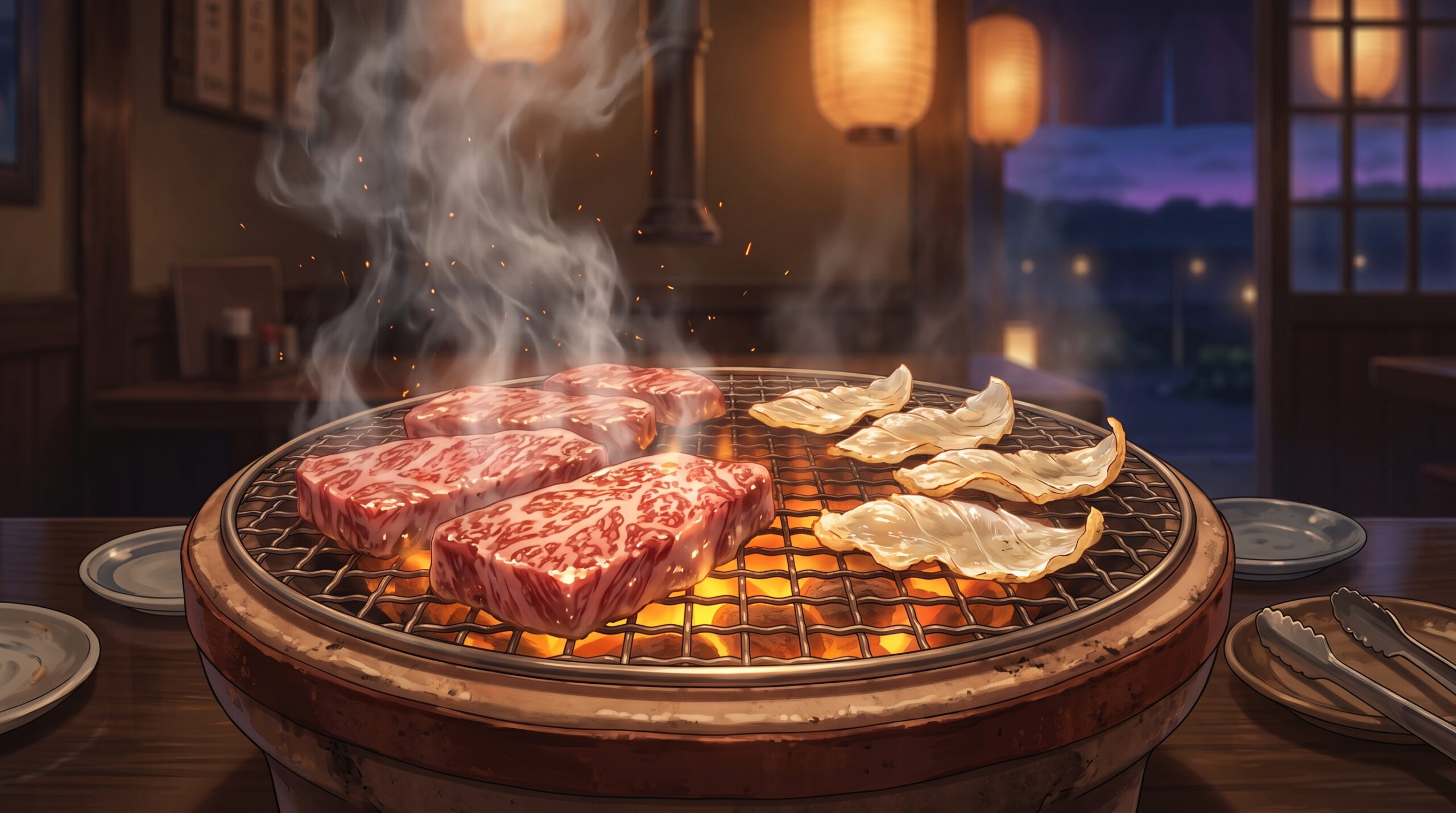
In Japan, August 29 is a day that makes mouths water nationwide. It is officially recognized as Yakiniku Day (Grilled Meat/BBQ Day) and Yaki-Fugu Day (Grilled Pufferfish Day). This is not a coincidence or a historical accident. It stems from a unique Japanese linguistic culture called Goroawase, where numbers are substituted with phonetic sounds to form words.
In Japanese, the number 8 can be read as “Ya”, 2 as “Ni”, and 9 as “Ku”. Put them together, and “8-2-9” becomes “Ya-ni-ku”, which sounds exactly like Yakiniku. Similarly, the number 9 can also be read as “Gu”, making “8-2-9” read as “Ya-ni-gu” or “Yaki-Fugu”. By officially establishing this day, Japanese culinary associations created a powerful cultural reminder to enjoy high-quality grilled delicacies right at the peak of late-summer exhaustion.
A Late Summer Illusion: The Tale of the Reviving Flame
The oppressive humidity of late August in Kyoto clings to the skin like a wet blanket. A weary traveler, drained of all energy by the phenomenon known as Natsubate (summer fatigue), wandered off the main streets into a narrow, lantern-lit alley. Guided by a savory, smoky aroma and the rhythmic sound of sizzling fat, the traveler slipped through a heavy noren curtain into a hidden tavern.
Behind the counter stood an old master, silently tending to a glowing charcoal grill. Without asking for an order, the master placed two dishes on the counter. On the left, thickly sliced Wagyu beef, marbled like white marble, instantly bursting into a fragrant pillar of fire as it hit the grill. On the right, translucent slices of Fugu (pufferfish)—a notoriously venomous delicacy expertly prepared to be perfectly safe—gently roasting until golden and tender.
With the first bite of the rich, savory Yakiniku, energy surged back into the traveler’s tired muscles. With the second bite of the delicate, umami-rich Yaki-Fugu, the suffocating heat of the summer faded into a cool, satisfying breeze. In Japan, fire does not just cook food; it breathes life back into the weary soul.
Japanese Culinary Philosophy: Wordplay and Stamina
The concept of August 29 goes far beyond simple wordplay. In Japanese culture, late summer is the hardest time for the human body. The tradition of eating specific foods to gain “stamina” is deeply rooted in daily life. Yakiniku represents raw, powerful energy—proteins and fats that immediately fuel the body. Fugu, on the other hand, represents the height of luxury and refined culinary skill, as chefs train for years to acquire the license to safely prepare this lethal fish.
Combining these two on August 29 reflects the Japanese dedication to seasonal eating. The Goroawase system (like 8-2-9) is an ingenious cultural tool that turns dates on a calendar into actionable events, weaving traditional dietary wisdom directly into modern pop culture and marketing.
Which Flame Will You Choose?
When you visit Japan in the summer, you will face a culinary crossroads. Will you choose the roaring flames and rich, marbled fats of Yakiniku to power through the heat? Or will you seek out the rare, golden crispiness of Yaki-Fugu, trusting your life to the legendary skills of a master chef?
Let us know in the comments: Are you brave enough to try Fugu, or is Wagyu BBQ your ultimate comfort food?
Reference Links:
Wikipedia: Yakiniku (Japanese BBQ)
Wikipedia: Fugu (Pufferfish)
Explore More in the What’s Today’s Special Day Series
8月29日の秘密:「焼肉の日」と「焼きふぐの日」
日本では、8月29日は全国の人々の食欲をそそる特別な日です。この日は正式に「焼肉の日」および「焼きふぐの日」として認定されています。これは偶然や歴史的な出来事によるものではありません。数字の音を言葉に置き換える、日本のユニークな「語呂合わせ」の文化から生まれたものです。
日本語では、8は「ヤ」、2は「ニ」、9は「ク」と読むことができます。これをつなげると「8・2・9」が「ヤ・ニ・ク」となり、「焼肉」と同じ響きになります。また、9は「グ」とも読めるため、「8・2・9」は「ヤ・ニ・グ」すなわち「焼きふぐ」にもなります。この記念日を正式に制定することで、日本の食肉・水産関係者は、夏の終わりの疲労がピークに達する時期に、極上の焼き物を楽しむという強力な文化的習慣を作り上げました。
夏の終わりの幻:炎がもたらす復活の物語
8月下旬、京都のまとわりつくような湿気は、まるで濡れた毛布のように肌に張り付きます。「夏バテ」と呼ばれる現象によって体力を完全に奪われた一人の旅人が、大通りを外れ、提灯の灯る狭い路地へと迷い込みました。香ばしい煙の匂いと、脂が弾けるリズミカルな音に導かれ、旅人は重い暖簾をくぐって隠れ家のような居酒屋へと足を踏み入れました。
カウンターの奥では、年老いた店主が赤々と燃える炭火を静かに見つめていました。注文を聞くこともなく、店主は2つの皿をカウンターに置きました。左側には、大理石のように美しいサシが入った厚切りの和牛。網に乗せた瞬間、香ばしい炎の柱が立ち上がります。右側には、猛毒を持つことで知られる高級魚、ふぐの透き通るような切り身。完璧な技術で無毒化されたその身は、黄金色に柔らかく焼き上げられていきます。
濃厚で旨味の詰まった焼肉を一口食べると、疲労しきった旅人の筋肉にエネルギーが蘇りました。続いて、繊細な旨味が凝縮された焼きふぐを口にすると、息苦しい夏の暑さが、心地よい涼風へと変わっていきました。日本では、炎は単に食べ物を調理するだけでなく、疲れ果てた魂に生命を吹き込む力を持っているのです。
日本の食文化:語呂合わせと「スタミナ」の哲学
8月29日のコンセプトは、単なる言葉遊びにとどまりません。日本の文化において、晩夏は人体にとって最も過酷な時期です。「スタミナ」をつけるために特定の食べ物を食べるという伝統は、日常生活に深く根付いています。焼肉は、体に即座にエネルギーを供給するタンパク質と脂質という、力強い生命力を象徴しています。一方、ふぐは、この危険な魚を安全に調理するための免許を取得するのに何年も修行を積む料理人の技術と、最高峰の贅沢を象徴しています。
8月29日にこれら2つが組み合わさることは、季節の移り変わりと食に対する日本人のこだわりを表しています。8-2-9のような「語呂合わせ」は、カレンダーの日付を具体的な行動へと結びつけ、伝統的な食の知恵を現代のポップカルチャーやマーケティングに直接織り込む、巧妙な文化的ツールなのです。
あなたはどちらの炎を選びますか?
夏に日本を訪れたとき、あなたは食の岐路に立つことになります。燃え盛る炎と濃厚な和牛の脂を選び、暑さを乗り切るための力を得ますか?それとも、伝説的な料理人の技術に命を預け、希少で黄金色に輝く焼きふぐのサクサクとした食感を探求しますか?
この記事を読んでどう思いましたか?あなたはふぐに挑戦する勇気がありますか、それとも極上の和牛BBQを選びますか?ぜひコメントで教えてください。
参考リンク:
焼肉の歴史(Wikipedia)
フグの文化(Wikipedia)
What’s Today’s Special Day Seriesの他の記事を読む

コメント