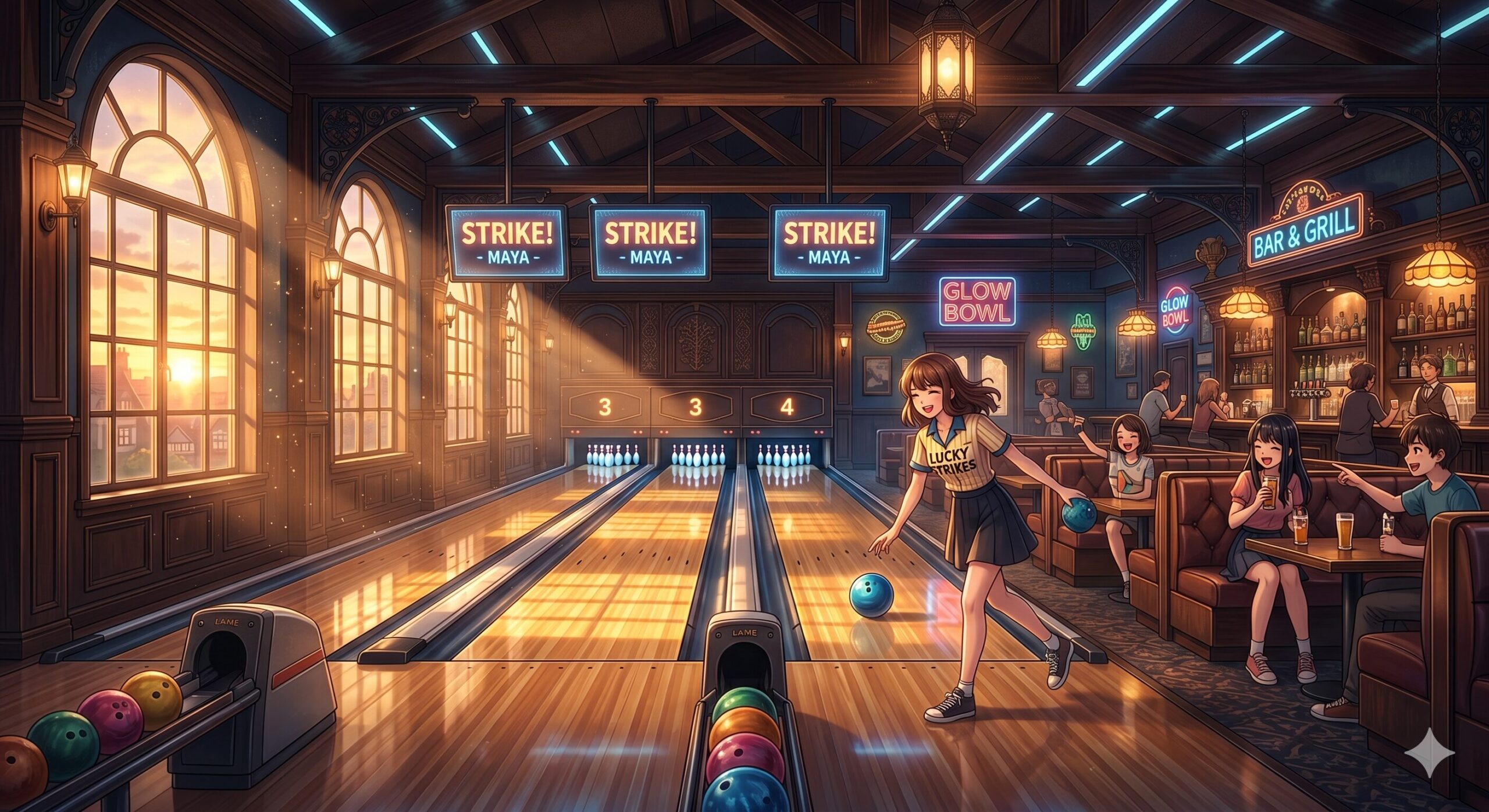
In Japan, June 22 is officially recognized as “Bowling Day.” While bowling has firmly established itself as an easily accessible leisure activity enjoyed by many, its history in Japan dates all the way back to the twilight years of the Edo period. How did a sport brought over from the West take root in Japanese society and evolve into a unique entertainment culture? Today, we will unravel the deep connection between bowling and Japanese culture, starting from a historical event in Nagasaki in 1861.
- June 22, 1861: Japan’s First Bowling Alley Advertised in a Nagasaki English Newspaper
- Bowling as a Symbol of Japan’s Culture of “Adaptation and Evolution”
- Bowling as a Hub for Communication
- Conclusion: What Does Bowling Mean to You?
- 1861年6月22日:長崎の英字新聞に掲載された「日本初のボウリング場」
- ボウリングが象徴する日本の「受容と進化」の文化
- コミュニケーションの場としてのボウリング
- まとめ:あなたにとってのボウリングとは?
June 22, 1861: Japan’s First Bowling Alley Advertised in a Nagasaki English Newspaper
Bowling Day originates from an advertisement for Japan’s very first bowling alley, the “International Bowling Salon,” which was published in an English-language newspaper called The Nagasaki Shipping List and Advertiser on June 22, 1861. At that time, Japan was in a turbulent era, having just ended centuries of national isolation and steering toward opening its doors to the world.
Nagasaki was the primary gateway for absorbing Western culture via Dejima. The foreign settlement there was home to many merchants and sailors. The bowling alley was opened primarily for their entertainment. Unlike today’s automated lanes, the bowling of that era relied on young boys known as “pinboys” who manually reset the pins. This exotic sport gradually attracted the curiosity of not only the foreigners living in the settlement but also progressive Japanese locals. At this historical turning point, bowling served as a powerful icon symbolizing the “modern Western lifestyle.”
Bowling as a Symbol of Japan’s Culture of “Adaptation and Evolution”
The explosive popularity of this Western sport in Japan occurred during the period of rapid economic growth in the 1970s. Triggered by the emergence of star professional bowlers like Ritsuko Nakayama, a massive “bowling boom” swept across the country. Bowling alleys were built nationwide, and families and coworkers gathered at the lanes for weekend recreation.
What is truly remarkable here is the Japanese people’s extraordinary ability to optimize and develop foreign culture to suit their own society. They did not let it remain just a sport; they evolved the bowling alley into a “comprehensive entertainment facility.” Modern Japanese bowling alleys have transformed into complex leisure centers (exemplified by chains like Round1) featuring highly advanced computerized scoring systems, impeccably clean spaces, arcades, karaoke, and food courts. This is the perfect fusion of Japan’s traditional spirit of Omotenashi (hospitality) and cutting-edge technological innovation. Japan polished a Western sport into the most comfortable and multifaceted leisure experience in the world.
Bowling as a Hub for Communication
Furthermore, bowling in Japan is deeply tied to the culture of valuing Wa (harmony). Despite being an individual sport, the act of giving high-fives and sharing the joy of a strike or spare has served as an optimal tool for corporate team building and cross-generational family communication. The act of “sharing the same space, the same goal, and the same emotions” is a modern expression of the sense of community that Japanese people have cherished since ancient times.
Conclusion: What Does Bowling Mean to You?
The Japanese bowling culture, which let out its first cry in a small foreign settlement in Nagasaki in 1861, rode the waves of time, evolved uniquely, and grew into the massive entertainment industry we see today. Knowing this history might give the bowling ball you throw on your next day off a slightly different, more romantic weight.
Has reading this article changed your perception of bowling? The next time you visit a bowling alley, who do you want to go with, and what kind of time do you want to share? I invite you to reflect on your own thoughts and memories regarding this fascinating cultural bridge.
Reference Links
- Internal Link: Read more from the “What’s Today’s Special Day” series
6月22日はボウリングの日!1861年の長崎から始まった日本独自の進化と文化の融合
毎年6月22日は、日本において「ボウリングの日」として制定されています。多くの人が手軽に楽しむレジャーとして定着しているボウリングですが、その歴史の始まりは幕末の日本にまで遡ります。西洋から持ち込まれた一つのスポーツが、どのようにして日本社会に根付き、独自のエンターテインメント文化として発展していったのか。今回は、1861年の長崎での出来事を起点に、ボウリングと日本文化の深い繋がりを紐解いていきます。
1861年6月22日:長崎の英字新聞に掲載された「日本初のボウリング場」
ボウリングの日は、1861年(文久元年)6月22日に、長崎で発行されていた英字新聞『The Nagasaki Shipping List and Advertiser』に、日本初となるボウリング場(インターナショナル・ボウリング・サロン)の広告が掲載されたことに由来します。当時の日本は、長く続いた鎖国が終わりを告げ、開国へと舵を切った激動の時代でした。
長崎は出島を通じていち早く西洋の文化を吸収していた窓口であり、外国人居留地には多くの商人や船乗りが滞在していました。彼らの娯楽として開設されたのが、このボウリング場です。当時のボウリングは現在の自動化されたレーンとは異なり、ピンボーイと呼ばれる少年たちが手作業でピンを並べていました。この異国情緒あふれるスポーツは、居留地に住む外国人だけでなく、次第に新しい物好きな日本人の興味を惹きつけることになります。歴史の転換点において、ボウリングは「西洋の近代的なライフスタイル」を象徴するアイコンの一つだったのです。
ボウリングが象徴する日本の「受容と進化」の文化
西洋で生まれたボウリングが日本で爆発的な人気を博すのは、1970年代の高度経済成長期です。中山律子選手をはじめとするスター選手の登場により、日本中で「ボウリングブーム」が巻き起こりました。全国各地にボウリング場が建設され、家族連れや会社の同僚同士が週末の娯楽としてレーンに集まりました。
ここで注目すべきは、日本人の「外来文化を自国に合わせて最適化し、発展させる」という特異な能力です。単なるスポーツとして終わらせるのではなく、ボウリング場を「総合エンターテインメント施設」へと進化させました。現代の日本のボウリング場は、高度なコンピューター制御によるスコア管理システム、清潔で快適な空間、そしてゲームセンターやカラオケ、フードコートが併設された複合施設(ラウンドワンなどに代表される形態)へと変貌を遂げています。これは、日本特有の「おもてなしの心」と「技術革新」が見事に融合した結果です。西洋のスポーツを、世界で最も快適で多角的なレジャーへと磨き上げたのです。
コミュニケーションの場としてのボウリング
また、日本におけるボウリングは、特有の「和」を重んじる文化とも深く結びついています。個人競技でありながら、ハイタッチを交わし、ストライクやスペアを共に喜び合うボウリングは、企業内のチームビルディングや、世代を超えた家族のコミュニケーションツールとして最適な役割を果たしてきました。「同じ空間で同じ目的を共有し、感情を分かち合う」という行為は、日本人が古くから大切にしてきた共同体意識(コミュニティの絆)を現代的な形で表現していると言えます。
まとめ:あなたにとってのボウリングとは?
1861年の長崎の小さな居留地で産声を上げた日本のボウリング文化は、時代の波に乗り、独自の進化を遂げて現代の巨大なエンターテインメントへと成長しました。歴史を知ることで、次回の休日に投げる一球が、少しだけ違った重みとロマンを持つかもしれません。
この記事を読んで、あなたはボウリングに対するイメージが変わりましたか?次にボウリング場へ足を運ぶとき、あなたは誰と、どのような時間を共有したいですか?ぜひ、あなたの考えや思い出を振り返ってみてください。
参考リンク
- 内部リンク:今日は何の日シリーズをもっと読む
コメント