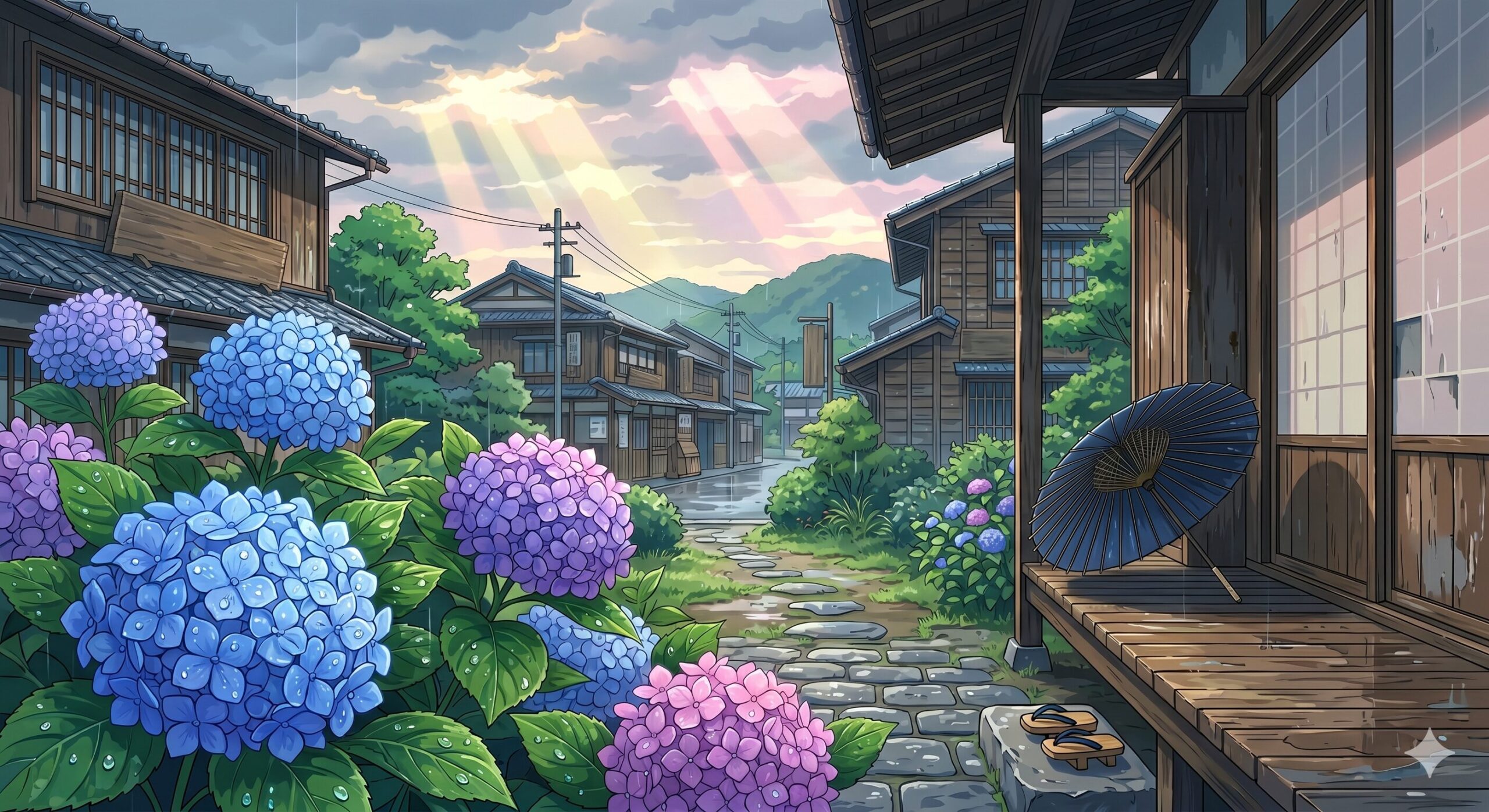
The four seasons of Japan are world-renowned for their distinct beauty. However, traditional Japanese culture recognizes far more than just four phases of the year. There are subtle, poetic transitions woven into the calendar, and one of the most significant is “Nyubai” (入梅), which occurs around June 11th. Rather than a mere meteorological event marking the start of the rainy season, Nyubai represents centuries of ancestral wisdom—a vital calendar marker that taught the Japanese people how to live in perfect harmony with nature.
In this comprehensive guide, we delve into the deep history of this unique solar term and explore how Japanese culture transformed the gloom of rain into a profound form of artistic appreciation.
1. What is “Nyubai”? Unlocking Its Historical and Astronomical Origins
In modern Japan, the Japan Meteorological Agency announces the official start of the rainy season (called Tsuyu) based on real-time weather observations. However, independent of actual weather patterns, the traditional Japanese calendar designates a specific, fixed day for the seasonal shift: Nyubai. In the year 2026, this falls precisely on June 11th.
Astronomically, Nyubai is defined as the exact moment the sun reaches a celestial longitude of 80 degrees. While ancient Japan adopted the 24 solar terms from China, the unique and volatile Japanese climate required further precision. To adapt, the Japanese created supplemental solar terms known as “Zassetsu” (雑節), and Nyubai remains one of the most culturally vital markers among them.
Why Does the Kanji Mean “Entering the Plum Season”?
As the characters “入梅” (Nyubai) literally translate to “Entering the Plums,” this period aligns perfectly with the time when Japanese plums (Ume) ripen to a vibrant yellow and reach their harvest peak. One historical theory suggests the term originated from “Baiko” (梅露), meaning plum dew, which eventually evolved into the word “Tsuyu” (梅雨). Another theory points out that because of the high humidity, this was a season prone to mold—originally written with the character for mold (黴). To elevate the season’s mood, ancestors elegantly replaced the grim word for mold with the beautifully fragrant “Plum” (梅). By changing the written character, they successfully transformed a seasonal melancholy into a poetic aesthetic.
A Matter of Life and Death for Edo Period Farmers
During the Edo period (1603–1867), accurately calculating the date of Nyubai was not a matter of mere curiosity; it was literally a matter of survival for farmers. Nyubai served as the absolute baseline for rice planting, the foundational sustenance of the entire nation. If farmers planted the rice seedlings too early, the cold would kill them; if they planted too late, the autumn harvest would fail. In an era without modern meteorology, Nyubai was the ultimate agricultural compass, prompting farming communities nationwide to begin working the paddies simultaneously.
2. Loving the Rain: Over 30 Distinct Words for Rainfall in Japanese
In many Western and modern cultures, rain is viewed negatively—an inconvenience that ruins outdoor plans or induces sadness. In Japan, however, the perception is entirely different. The Japanese language possesses dozens of unique, evocative names for rain, depending on its intensity, the season, and the emotional atmosphere it creates.
By understanding these words, one can catch a glimpse of the deep empathy the Japanese historical mind shared with the natural environment:
| Name of Rain (Pronunciation) | The Cultural Meaning and Sentiment |
|---|---|
| Samidare (五月雨) | Early summer rain that falls continuously and gently. Immortalized by master poet Matsuo Basho, it is synonymous with the classic Japanese rainy season. |
| Suiu (翠雨) | Literally “Emerald Rain.” It refers to rain that drench fresh, vibrant green leaves, making the summer foliage look extraordinarily radiant with life. |
| Ao-shigure (青時雨) | “Green Shower.” This does not refer to actual rain falling from the sky, but rather the beautiful phenomenon of water droplets showering down from lush green tree canopies. |
| Kiu (喜雨) | “Joyous Rain.” Rain that arrives as a profound blessing after a long drought, celebrating the rejuvenation of the soil and crops. |
For the Japanese, rain has never been just water falling from the sky; it is a manifestation of the planet’s colors and emotions. Spending a rainy day indoors reading or reflecting is culturally celebrated as a way to sharpen one’s inner peace and mindfulness.
3. Modern Aesthetics Born from Nyubai: Hydrangeas and Wagasa
Even today, visiting Japan during the period of Nyubai reveals breathtaking seasonal aesthetics. The absolute icon of this period is the Hydrangea (Ajisai). These magnificent flowers reach their peak beauty precisely when drenched in heavy rain. Because their petals shift in color—from deep blues and purples to soft pinks depending on soil acidity—they have long been used in classical literature to symbolize the beautiful, fleeting nature of human emotions.
Furthermore, the traditional Japanese umbrella, the Wagasa, is intimately tied to this season. Crafted meticulously from bamboo structures and hand-painted washi paper coated with waterproof persimmon tannin or oil, the Wagasa creates a distinct, rhythmic sound when rain strikes its surface—a soft, soothing “totsu-totsu” acoustic that stands in sharp contrast to the harsh, noisy clatter of modern plastic umbrellas. Converting the sound of rain into comforting music is the quintessential essence of Japanese daily aesthetics.
4. Conclusion: How Will You Spend Your Next Rainy Day?
The traditional milestone of Nyubai teaches us a timeless lesson: the importance of surrendering ourselves gracefully to the natural cycles of the earth. Rather than fighting the rain, we can choose to recognize that it nurtures life and creates landscapes of unparalleled beauty. This mindset of positive acceptance and deep reverence for nature is the bedrock of the Japanese soul.
After reading about the history and philosophy of Nyubai, how do you feel about the rainy season now?
The next time you find yourself staring out at a downpour, perhaps you could try tuning in to the rhythm of the rain. Why not brew a warm cup of green tea, put away your distractions, and appreciate the vibrant world outside your window just like the ancient Japanese did?
What is your personal favorite way to spend a rainy day? Let us know in the comments below!
■ Related Category Link
Discover more about Japan’s traditional calendars, festivals, and cultural milestones here:
What’s Today’s Special Day? Series
日本の美学が詰まった雨の始まり:「入梅」に隠された知恵と文化
日本の四季は美しい。しかし、日本には春夏秋冬の「四つの季節」だけでは語り尽くせない、繊細な時の移ろいがあります。その代表例が、毎年6月11日頃に訪れる「入梅(にゅうばい)」です。これは単に「雨の季節が始まる」という気象現象を指す言葉ではありません。何百年もの間、日本人が自然と対話し、限られた資源の中で豊かに生きるために生み出した「暦(こよみ)の知恵」なのです。
今回は、現代の天気予報とは一線を画す、日本独自の雑節(ざっせつ)である「入梅」の深い歴史と、雨を芸術にまで昇華させた日本文化の感性を徹底的に解説します。
1. 「入梅」とは何か?歴史と天文学から紐解くその正体
現代の日本では、気象庁が「梅雨入り(つゆいり)」を発表します。これは実際の気象データに基づいた観測結果です。しかし、それとは別に、日本の伝統的な暦には「入梅」という定まった日が存在します。2026年においては、6月11日が入梅にあたります。
入梅は、天文学的には「太陽が黄経80度の大経度を通過する日」と定義されています。古代中国から伝わった「二十四節気(にじゅうしせっき)」だけでは、日本の複雑な気象変化や農作業のタイミングを完全にカバーできなかったため、日本人は独自に「雑節」という暦の補足基準を作りました。入梅はその中の一つです。
なぜ「梅」の文字が使われるのか?
「入梅」という漢字が示す通り、この時期はちょうど梅の実が黄色く熟し、収穫の最盛期を迎える時期と重なります。一説には、梅の実の表面に露がつく様子から「梅露(ばいろ)」と呼ばれ、それが転じて「梅雨」になったとも言われています。また、カビが生えやすい季節であることから「潰雨(ばいう)」や「黴雨(ばいう)」と書かれていたものが、同じ音を持つ高雅な「梅」の字に置き換わったという説もあります。いずれにせよ、日本人はジメジメとした不快な季節に、あえて美しく香る「梅」の文字を当てることで、季節の憂鬱さを風流なものへと変えたのです。
江戸時代の農民にとっての死活問題
江戸時代、暦学が発展する中で、入梅の日付を正確に把握することは農民にとって文字通り「命がけ」の作業でした。なぜなら、日本の主食である「米」の田植えを行う最適なタイミングが、この入梅の時期だったからです。早すぎれば苗が育たず、遅すぎれば秋の収穫に間に合わない。天気予報がない時代、農民たちはこの暦の上の「入梅」を絶対的な基準として、一斉に田植えの準備を始めました。入梅は、日本人の命を繋いできた農業の羅針盤だったのです。
2. 雨を「愛でる」日本文化:30種類以上の雨の名前
世界中の多くの文化において、雨は「外出を阻むもの」「憂鬱なもの」としてネガティブに捉えられがちです。しかし、日本文化は異なります。日本人は、雨の強さ、風情、降る時期によって、雨に何十種類もの美しい名前をつけ、それを文学や芸術として楽しんできました。
入梅の時期に降る雨を読み解くだけでも、日本人がいかに自然の機微を愛してきたかが分かります。
| 雨の名前(読み方) | その意味と日本人の感性 |
|---|---|
| 五月雨(さみだれ) | 旧暦の5月(現在の6月〜7月頃)に連綿と降る雨。松尾芭蕉の俳句にも登場する、梅雨の代名詞です。 |
| 翠雨(すいう) | 新緑のみずみずしい葉を濡らし、緑をより一層鮮やかに引き立てる雨。命の輝きを感じさせる表現です。 |
| 青時雨(あおしぐれ) | 実際に雨が降っているのではなく、青葉から滴り落ちる水滴が、まるで時雨のように見える情緒的な情景。 |
| 喜雨(きう) | 日照りが続いた後に降る、恵みの雨。大地を潤し、作物を育てる雨への感謝が込められています。 |
このように、日本人は雨を単なる「水」ではなく、地球が織りなす「色彩」や「感情」として捉えてきました。雨音を聴きながら静かに室内で過ごす時間を「雨宿り」や「雨読」と呼び、精神を研ぎ澄ます機会としていたのです。
3. 現代に息づく入梅の美学:紫陽花と和傘
入梅を迎えた日本を訪れると、現代でもその季節特有の圧倒的な美しさに出会うことができます。その筆頭が「紫陽花(アジサイ)」です。雨に濡れることで最も美しく発色するこの花は、日本の梅雨の象徴です。土壌の酸性度によって青、紫、ピンクへと色が変化する紫陽花は、移ろいやすい人間の心や、季節の境界線を表現する植物として、古くから和歌に詠まれてきました。
また、日本の伝統的な「和傘」も、この季節の文化と深く結びついています。竹の骨組みに、防水性のある柿渋や油を塗った和紙を張った和傘は、雨粒が当たると「トツ、トツ」と、現代のビニール傘とは異なる優しく低い音を奏でます。雨の音さえも音楽として楽しむ、これが日本人が長い歴史の中で培ってきた「暮らしの美学」なのです。
4. 結び:あなたなら、この雨の季節をどう過ごしますか?
「入梅」という暦の節目は、私たちに「自然のサイクルに身を委ねることの大切さ」を教えてくれます。雨を拒むのではなく、雨があるからこそ育つ命があり、雨だからこそ出会える美しい景色がある。このポジティブな諦念と自然への畏敬の念こそが、日本文化の根底にある精神です。
この記事を読んで、皆さんはどう思いましたか?
もしあなたが今、雨の降る街にいるなら、その雨音に少しだけ耳を澄ませてみてください。日本の先人たちのように、静かに温かいお茶を淹れ、窓の外のみずみずしい緑を眺める時間を過ごしてみるのも悪くないと思いませんか?
あなた独自の「雨の日の楽しみ方」があれば、ぜひコメントで教えてください!
■ 関連カテゴリーリンク
もっと日本の特別な日や暦の文化を知りたい方は、こちらのカテゴリーをご覧ください:
What’s Today’s Special Day? Series

コメント