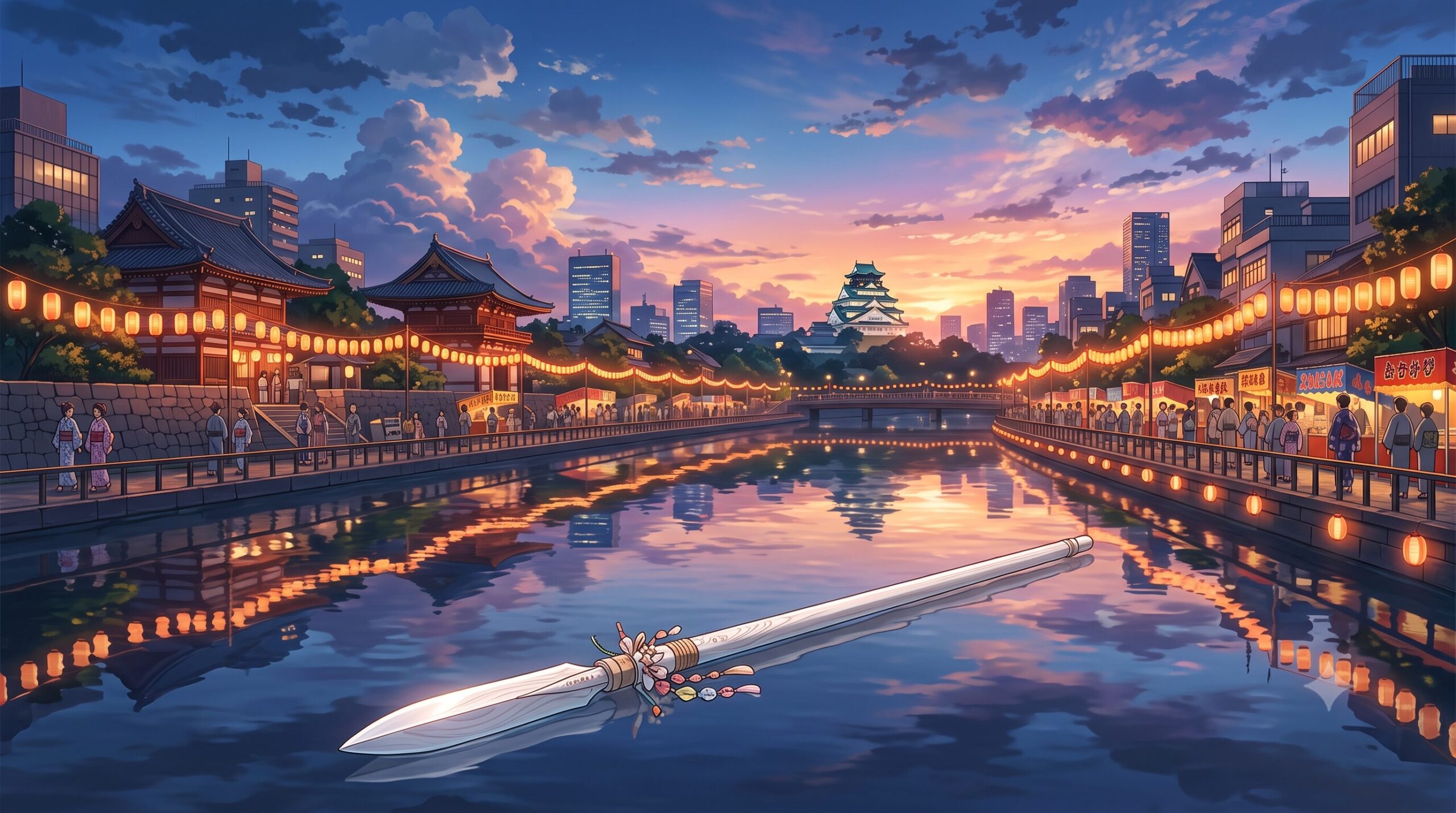
Summer in Japan is a mystical and passionate season where the realms of gods and humans intersect. Among the countless celebrations, the Tenjin Matsuri (Tenjin Festival), held annually on July 24th and 25th in Osaka, stands as one of Japan’s top three festivals—alongside Kyoto’s Gion Matsuri and Tokyo’s Kanda Matsuri. July 24th marks the Yoimiya (the eve of the festival), signaling the grand opening of this epic cultural phenomenon.
This is not merely a massive street party. The Tenjin Matsuri is a solemn Shinto ritual with over 1,000 years of history. It originated as a ceremony to appease the spirit of Sugawara no Michizane, a brilliant scholar and politician of the Heian period who died tragically in exile. Today, he is universally revered in Japan as the “Deity of Learning.” The festival’s origins trace back to the year 951 AD, when a sacred spear (hoko) was washed down the river near Osaka Tenmangu Shrine to determine the site for the festival grounds.
The Core of Yoimiya: The Sacred Hokonagashi Shinji
Early in the morning on July 24th, before the bustling metropolis of Osaka fully awakens, the most crucial and sacred ritual of the festival takes place on the Dojima River: the Hokonagashi Shinji (Spear-Floating Ritual). A local schoolboy, chosen as a divine messenger (shindo), boards a small wooden boat with Shinto priests and floats a pristine white wooden spear down the river. This ancient ceremony dictates the pure location where the deity will descend. It powerfully embodies Misogi, the traditional Japanese belief in purifying sins and worldly impurities through the power of water.
The moment this solemn ritual concludes, the atmosphere in the city transforms instantly. The fierce, heart-pounding rhythms of the Moyooshi-daiko (traditional festival drums) echo through the grounds of Osaka Tenmangu and the surrounding shopping arcades. Lion dances perform vibrantly, and locals clad in colorful traditional garments parade through the streets. Yoimiya is the accumulation of kinetic energy for the main event the following day—a city-wide expression of unbridled joy to welcome the deity.
Decoding Japanese Culture: Goryo Shinko and the City of Water
The profound cultural layer we must decode from this festival is the uniquely Japanese concept of Goryo Shinko (the appeasement of vengeful spirits). Sugawara no Michizane was an exceptional man who died in despair due to the political conspiracies of his rivals. Following his death, the capital was struck by plagues and lightning, which terrified the people into believing it was Michizane’s vengeful curse. However, rather than simply fearing and rejecting this spirit, the Japanese people respectfully enshrined him, elevating him into a powerful protective deity. This flexible, peaceful spirituality—transforming terror into reverence—is a fundamental pillar of Japanese culture.
Furthermore, the Tenjin Matsuri fiercely proves Osaka’s identity as the “City of Water.” In a city woven with countless rivers, waterways were the arteries of commerce and the center of daily life. From the morning spear-floating ritual to the spectacular riverboat procession (Funatogyo) the next day, the festival is a living monument to Osaka’s history and its inseparable bond with water.
What Will You Feel Amidst This Fervor?
Yoimiya on July 24th transitions seamlessly from silent, sacred prayers to the earth-shattering reverberations of drums and human ecstasy. A space where divinity and secular energy merge so perfectly is incredibly rare to find anywhere else in the world.
If you find yourself in Osaka on July 24th, you must feel the crisp, quiet morning air by the Dojima River as the sacred spear is cast into the water. By night, you should surrender to the rhythm of the taiko drums alongside the locals in streets illuminated by thousands of paper lanterns. You will physically experience the depths of the Japanese soul—which turned a tragic figure into a god of wisdom—and the explosive vitality of Osaka.
On this festival night with a millennium of history, would you choose to offer a quiet prayer at the ancient shrine, or would you rush into the neon-lit streets to dive into the vortex of local celebration? Let us know what you would do!
Reference Links
7月24日:千年の歴史が息づく水都大阪の熱狂「天神祭(宵宮)」
日本の夏は、神々と人々が交差する神秘的で情熱的な季節です。その中でも、毎年7月24日と25日に大阪で開催される「天神祭(てんじんまつり)」は、京都の祇園祭、東京の神田祭と並ぶ「日本三大祭」の一つとして、圧倒的なスケールと熱気を誇ります。7月24日は、その壮大な祭りの幕開けを告げる「宵宮(よいみや)」の日です。
単なるどんちゃん騒ぎのフェスティバルではありません。天神祭は、1000年以上の歴史を持つ厳格な神事です。この祭りは、平安時代の天才学者であり、非業の死を遂げた後に「学問の神様」として祀られた菅原道真(すがわらの みちざね)公の御霊を慰めるために始まりました。951年、大阪天満宮の近くの川から神の鉾(ほこ)を流し、それが流れ着いた場所に祭場を設けたことが起源とされています。
宵宮の核心:静寂と神聖なる「鉾流神事」
7月24日の早朝、まだ大阪の街が本格的に目覚める前に、天神祭の最も重要で神聖な儀式である「鉾流神事(ほこながししんじ)」が堂島川で行われます。神童と呼ばれる地元の小学生が、神職と共に小舟に乗り込み、白木の鉾を川へと流します。これは、神様が降臨する清らかな場所を決めるための古代からの儀式であり、水によって罪や穢れを祓うという日本の伝統的な信仰「禊(みそぎ)」の精神を力強く体現しています。
この厳粛な儀式が終わると同時に、街の空気は一変します。大阪天満宮の境内や周辺の商店街では、威勢の良い掛け声と共に「催太鼓(もよおしだいこ)」の激しいリズムが鳴り響き、獅子舞が舞い、色鮮やかな装束に身を包んだ人々が街を練り歩きます。宵宮は、翌日の本番(本宮)に向けたエネルギーの蓄積であり、神様を歓迎するための街全体の歓喜の表現なのです。
天神祭から読み解く日本文化:怨霊信仰と「水の都」
この祭りから私たちが読み解くべき日本文化の深い層は、「御霊信仰(ごりょうしんこう)」という独自の死生観と宗教観です。菅原道真は優れた人物でしたが、政敵の陰謀により太宰府に左遷され、失意の中で亡くなりました。その後、都で雷や疫病が相次いだため、人々はこれを「道真の怨霊の祟り」と恐れました。しかし、日本人はその怨霊をただ恐れて排除するのではなく、神として丁重に祀り上げることで、強力な「守護神」へと昇華させたのです。恐怖を崇拝へと変換するこの柔軟かつ平和的な精神性は、日本文化の基盤をなしています。
また、天神祭は大阪が「水の都」であることを強烈に証明する祭りです。無数の川が網の目のように流れる大阪において、川は物流の動脈であり、人々の生活の中心でした。鉾流神事から始まり、翌日のクライマックスである大船団のパレード(船渡御)へと至るプロセスは、水と共に発展してきた大阪の歴史とアイデンティティそのものです。
あなたはこの熱狂の中で何を感じますか?
静寂な祈りから始まり、大地を揺るがす太鼓の響きと人々の熱狂へと変わる7月24日の宵宮。神聖さと世俗的なエネルギーがこれほど見事に融合した空間は、世界中を探してもなかなか見つかりません。
もしあなたが7月24日に大阪にいるなら、堂島川のほとりで鉾が流される静寂な朝の空気を感じ、夜には提灯の灯りに照らされた街で地元の人々と共に太鼓のリズムに身を委ねるべきです。あなたは、悲劇の人物を学問の神へと変えた日本人の心の深淵と、水都大阪の爆発的な生命力を肌で感じることでしょう。
あなたなら、この1000年の歴史を持つ祭りの夜、静かな神社で祈りを捧げますか?それとも、街に飛び出して地元の人々と共に熱狂の渦に飛び込みますか?ぜひ、あなたの考えを聞かせてください。
コメント