In Japan, there is an ancient belief that gods and mysterious spirits dwell within nature. Massive trees, deep forests, and rugged mountains are not merely domains for humans, but boundary lines crossing into the unseen world. The Japanese folktale we are introducing today, “The Tengu of the Great Zelkova,” is a fascinating story where such a mystical being intersects with humans in a surprisingly humorous and gentle way.
Folktales are not just fantasies for children. They strongly reflect how people in the past interacted with nature and the core values they held. Let us now raise the curtain on a mysterious and heartwarming tale passed down in Ishikawa Prefecture: “The Tengu of the Great Zelkova.”
Chapter 1: The Needle-Hole Flask and a Gallon of Sake
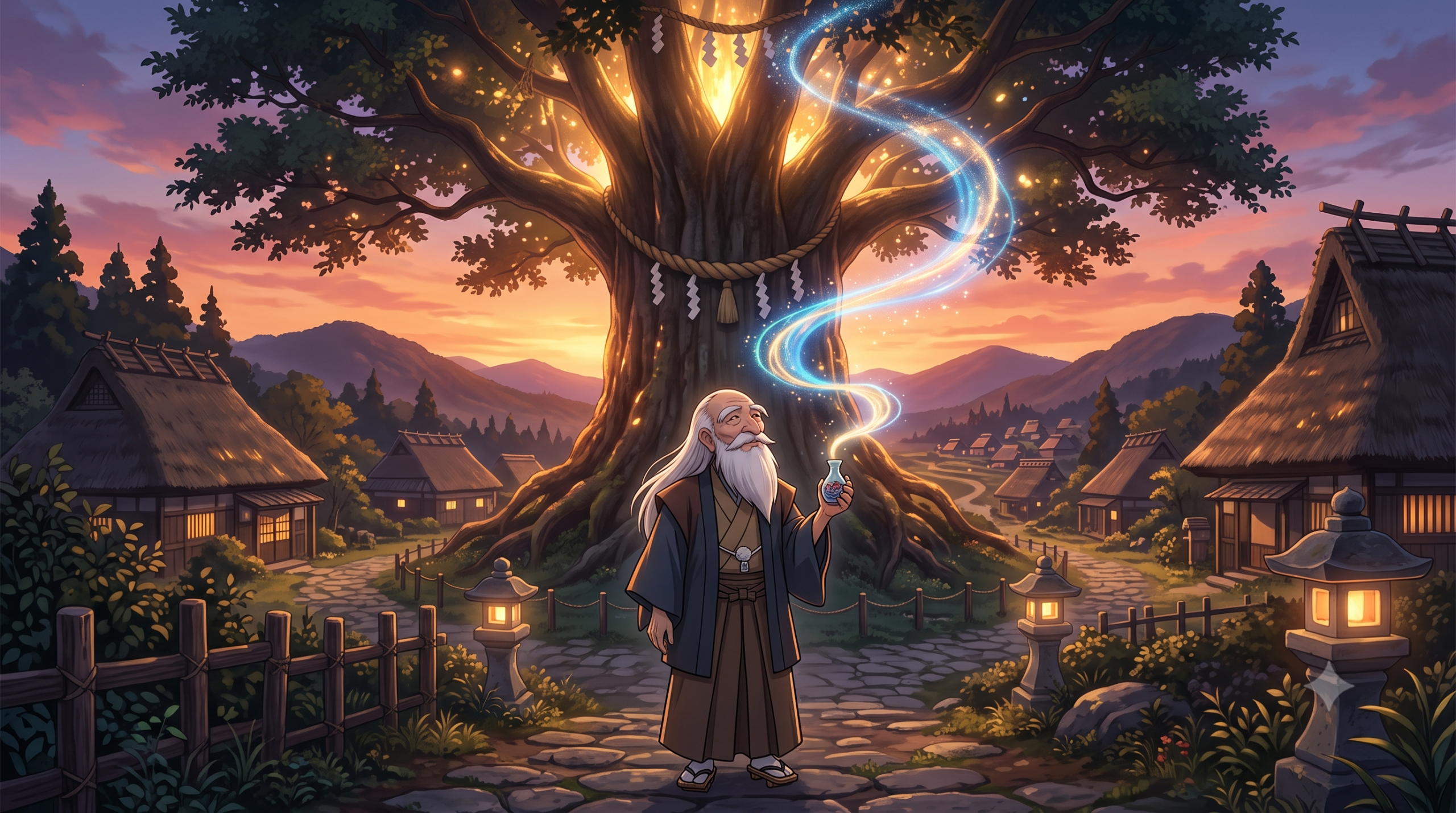
Once upon a time, in a village called Iigawa in Ishikawa Prefecture, there stood a magnificent zelkova tree that seemed to pierce the sky. This ancient giant was the symbol of the village, watching over the history of the land for countless centuries. Right in front of this great tree was the largest sake brewery in the region.
One evening at dusk, a solitary old man wandered up to the storefront. He was a complete stranger to the area. He had hair as white as snow, a long white beard reaching his chest, and an unusual, mystical aura that distinguished him from ordinary humans.
The old man handed a tiny tokkuri (a traditional sake flask) to the shopkeepers. It was incredibly small, fitting easily into the palm of a hand, and looked like it could hold no more than one or two small sips. Even stranger, the opening of the flask was merely the size of a needle prick.
“Fill this flask with one shou (about 1.8 liters) of your sake,” the old man said quietly but clearly.
The shopkeepers were dumbfounded. There was no way a tiny flask could hold such a massive amount of sake. Furthermore, with an opening the size of a needle hole, it was impossible to pour even a single drop inside.
“Old man, you must be joking. There is no way this tiny flask can hold a shou, and with a hole that small, neither sake nor water will pass through!”
Despite their refusal, the old man did not back down. “Whether it fits or not, just try pouring it. Even if it spills, I will pay the full price for the shou of sake,” he insisted.
Since he offered to pay regardless, they couldn’t refuse him as merchants. Half-annoyed, the shopkeepers placed a funnel over the tiny flask and began pouring heavily from a large bottle of sake, fully expecting it to spill everywhere.
However, in the next moment, they couldn’t believe their eyes.
The vast amount of sake poured like a waterfall, yet not a single drop spilled outside. It was beautifully sucked into the needle-sized hole of the flask. It was as if an infinite universe existed inside the tiny container, swallowing the large volume of liquid without a sound. The onlookers stood there with their mouths wide open in sheer astonishment.
Chapter 2: The Shadow that Vanished into the Zelkova
Having masterfully received his large order of sake, the old man paid the exact amount as promised and left the shop looking highly satisfied. Recovering from their shock, the shopkeepers caused a massive uproar. “Who in the world is that old man using such magical arts?” they wondered. They immediately ordered one of their servants to secretly follow him.
The servant trailed the old man with silent footsteps. Whether the old man knew he was being followed or not, he walked at a mysterious pace—neither rushed nor slow—seemingly gliding over the ground. He took a leisurely walk, making a complete circle around the village boundaries.
After walking for a while, the servant suddenly looked up and was surprised to realize they had returned right to the front of the sake brewery. The old man had patrolled the entire village and come back to where he started.
The old man stopped in front of the towering zelkova tree. He slowly turned around, looked directly at the hiding servant, and gave a gentle, knowing smile. In the blink of an eye, the old man’s figure thinned out, melting into the air, and he was seamlessly sucked into the trunk of the massive zelkova tree, vanishing completely.
Witnessing this, the servant and the shopkeepers finally understood.
“That old man wasn’t human. He must be the Tengu we’ve heard rumors about, the guardian who lives in the great zelkova tree!”
The village’s guardian deity, a Tengu, had simply come to buy his favorite sake. His walk around the village was surely his way of patrolling and ensuring the safety of the land. Since that incident, the villagers held a deep reverence for the magical Tengu and began to worship and protect the great zelkova tree more than ever before. And the Tengu of the great zelkova continued to watch over the village for eternity.
Deep Consideration of “The Tengu of the Great Zelkova”
The true charm of this story lies in the fact that a Tengu—typically a powerful and fearsome Yokai—appears in the human world to do something as mundane and human as buying alcohol. Tengu are usually depicted as mountain ascetics with the power of flight, sometimes feared for abducting humans.
However, the Tengu in this tale is incredibly gentlemanly. He doesn’t steal the sake by force; he pays properly and even offers to pay if the sake spills. The reason he deliberately brought an impossibly small flask was not to harass the humans, but rather to show his divine power with a sense of humor and playfulness. By instantly overturning human common sense (the laws of physics and volume), he gently taught the villagers that a world beyond human comprehension exists right next to their daily lives. Furthermore, his act of walking around the village before returning to the tree can be interpreted as an expression of his deep love for the land and his role as its protector.
Connection to Japanese Culture: Animism and the Myriad Gods
The most important Japanese cultural concepts to decode from this story are “Animism” and “Shinboku” (Sacred Trees).
Since ancient times, Japanese people have believed that souls and gods reside in mountains, rivers, rocks, and massive, long-lived trees. This is known as “Yaoyorozu no Kami” (the eight million, or myriad, gods). An old tree like the great zelkova acts as a “Yorishiro”—a physical medium or beacon for gods and spirits to descend into this world, making the tree itself an object of worship.
Additionally, the role of “Yokai” in Japan is highly unique. While Western monsters are often depicted as absolute evils that must be vanquished, Japanese Yokai and Tengu are “incarnations of nature to be respected and feared.” They exist somewhere between humans and gods, sometimes playing tricks, and other times bringing blessings and protection. When the villagers discovered the Tengu’s true identity, they didn’t try to exorcise him. Instead, the story ends with them cherishing the tree even more. This perfectly represents Japan’s beautiful ethical mindset of awe and harmonious coexistence with nature.
What Would You Do?
If you were the owner of this sake brewery, how would you have reacted to the mysterious old man handing you a microscopic flask with a needle-sized hole? Would you have gotten angry and turned him away, relying entirely on common sense? Or would you have trusted his words and tried pouring the sake?
Our modern lives are filled with logic and efficiency. However, perhaps it is essential to leave some room in our hearts to embrace beings and phenomena that transcend our understanding. The next time you have the opportunity to visit Japan, gently touch a giant tree standing in a shrine, a temple, or an old village. If you listen closely, you might just hear the joyful laughter of a Tengu mixed with the rustling of the leaves.
What would you say to a mysterious spirit if you sensed its presence hiding in nature?
Reference URL: Manga Nippon Mukashibanashi Database – Tengu of the Great Zelkova (Japanese)
Discover more wonderful Japanese tales in our Japanese Folktale Series category.
日本の神秘と交差する日常:「大けやきの天狗」の世界へようこそ
日本には、古くから自然の中に神や不思議な存在が宿るという信仰があります。巨大な木々や深い森、険しい山々は、人間だけの領域ではなく、目に見えない存在との境界線でもありました。今回ご紹介する日本の昔話「大けやきの天狗」は、そんな神秘的な存在と人間が、驚くほどユーモラスに、そして穏やかに交差する魅力的な物語です。
昔話は単なる子供向けのファンタジーではありません。その裏には、当時の日本の人々がどのように自然と向き合い、どのような価値観を持っていたのかが色濃く反映されています。それでは、石川県に伝わる不思議で心温まる物語、「大けやきの天狗」の幕を開けましょう。
第一章:針の穴の徳利と、一升の酒
むかしむかし、石川県の飯川という村に、天を突くほど立派な大けやきがありました。そのけやきは村のシンボルであり、長い年月をかけて村の歴史を見守り続けてきた巨大な老木でした。そして、その大けやきの目の前には、村でも一番大きな造り酒屋がありました。
ある日の夕暮れ時のことです。造り酒屋の店先に、この辺りでは全く見かけたことのない一人の老人がふらりとやってきました。雪のように真っ白な髪と、胸のあたりまで伸びた長い白ひげ。そして、どこか普通の人間とは違う、不思議な威厳を漂わせていました。
老人は店の人間に向かって、持っていた小さな徳利(酒を入れる容器)を差し出しました。それは、せいぜいお猪口に一杯か二杯分しか入らないような、手のひらにすっぽり収まる極小の徳利でした。さらに奇妙なことに、その徳利の口には、針の先で突いたほどの小さな小さな穴しか開いていなかったのです。
「この徳利に、酒を一升(約1.8リットル)入れてくれ」
老人は静かに、しかしはっきりと言いました。店の者たちは呆気にとられました。一升もの大量の酒が、そんな小さな徳利に入るわけがありません。第一、針の穴のような口では、一滴の酒さえ注ぐことは不可能です。
「おじいさん、冗談を言っちゃ困る。こんな小さな徳利に一升も入るわけがないし、この穴じゃ酒も水も通りはしないよ」
店の者が断っても、老人は引き下がりません。「入るか入らないか、とにかく入れてみてくれ。もしこぼれても、一升分の酒代はきっちり払うから」と一点張りです。
そこまで言われたら、商売人として断るわけにもいきません。店の者は半ば腹を立てながらも、小さな徳利に漏斗(じょうご)をあてがい、一升瓶からなみなみと酒を注ぎ始めました。「ほら見ろ、どうせこぼれるに決まっている」と思いながら。
ところが、次の瞬間、店の者たちは自分の目を疑いました。
滝のように注がれた一升の酒は、一滴たりとも外にこぼれることなく、見事に針の穴のような徳利の口へと吸い込まれていったのです。まるで徳利の中に無限の宇宙が広がっているかのように、大量の酒は音もなく消えていきました。周囲で見ていた者たちは、ただただ口を開けて驚愕するばかりでした。
第二章:大けやきに消えた影
見事に一升の酒を受け取った老人は、約束通りしっかりとお金を払い、満足そうに店を出て行きました。我に返った店の者たちは、「あんな不思議な術を使う老人は、いったいどこの誰だ?」と大騒ぎになりました。そして、店の使用人の一人に、老人の後をこっそりつけるよう命じたのです。
使用人は足音を忍ばせて老人を尾行しました。老人は、自分がつけられていることに気づいているのかいないのか、急ぐ風でもなく、かといって遅くもなく、地面を滑るような不思議な足どりで歩いていきます。老人は村の中をぐるりと一周するように歩き回りました。
しばらく歩き続け、ふと使用人が顔を上げると、驚いたことに彼らは再び造り酒屋の前に戻ってきていました。老人は村を一周し、元の場所へ帰ってきたのです。
そして老人は、目の前にそびえ立つ大けやきの前で立ち止まりました。ゆっくりと後ろを振り向くと、尾行していた使用人に向かって、ニッコリと優しく微笑みかけました。次の瞬間、老人の姿は空気に溶け込むようにスーッと薄くなり、そのまま巨大な大けやきの幹の中へと吸い込まれて消えてしまったのです。
この一部始終を見た使用人と店の者たちは、ついに理解しました。
「あの老人は人間じゃない。昔から噂に聞いていた、この大けやきに住む天狗様に違いない!」
村の守り神である天狗が、大好きな酒を買いに来ていたのです。村をぐるりと一周したのは、きっと村の安全を見回ってくれていたのでしょう。この出来事以来、村の人々は不思議な術を使う天狗に畏敬の念を抱き、大けやきをこれまで以上に大切にお祀りするようになりました。そして大けやきの天狗は、いつまでも村を見守り続けたということです。
「大けやきの天狗」の深い考察
この物語が持つ魅力は、強大な力を持つ妖怪である「天狗」が、人間の生活圏にふらりと現れ、非常に人間臭い行動(お酒を買いに来る)をとる点にあります。天狗といえば、本来は山伏の格好をし、空を飛び、時には人間をさらうなど、恐ろしい存在として描かれることが多い妖怪です。
しかし、この物語に登場する天狗は非常に紳士的です。無理やり酒を奪うのではなく、きちんとお金を払い、さらには「こぼれてもお金は払う」という配慮すら見せます。彼がわざわざ小さな徳利を持ってきたのは、人間たちを困らせるためではなく、自らの神通力をユーモアを交えて見せるための、一種の「遊び心」だったと考えられます。人間の常識を一瞬にして覆すことで、日常のすぐ隣に「人智を超えた世界」が存在することを、村人たちにそっと教えたのです。また、村を一周してから木に帰るという行動には、土地への深い愛情と、守護者としてのパトロールの意味合いが込められていると考察できます。
日本文化への繋がり:自然信仰と八百万の神
この物語から読み解くべき最も重要な日本文化は、「アニミズム(自然信仰)」と「神木(しんぼく)」の概念です。
日本では古来より、山、川、岩、そして長く生きた巨大な木には、魂や神が宿ると信じられてきました。これを「八百万の神(やおよろずのかみ)」と呼びます。大けやきのような老木は、神や精霊がこの世に降り立つための「依り代(よりしろ)」であり、それ自体が信仰の対象となります。
また、日本における妖怪の立ち位置も非常に独特です。西洋のモンスターが退治されるべき絶対悪として描かれることが多いのに対し、日本の妖怪や天狗は「畏れ敬うべき自然の化身」です。時には人間に悪戯をし、時には恵みや守護をもたらす、人間と神様の中間のような存在なのです。村人たちが天狗の正体を知った後、彼を退治しようとするのではなく、「大けやきをさらに大切にするようになった」という結末には、自然に対する畏敬の念と共生の精神という、日本独自の美しい倫理観が完璧に表現されています。
あなたならどうしますか?
もしあなたがこの造り酒屋の主人だったら、針の穴しか開いていない極小の徳利を差し出す謎の老人に対して、どのように接したでしょうか?常識で考えて「不可能だ」と怒って追い返してしまいますか?それとも、老人の言葉を信じて酒を注いでみるでしょうか。
私たちの現代の生活は、論理と効率で満たされています。しかし、時には自分の理解を超えた存在や不思議な出来事に対して、心を開いてみる余裕を持つことも大切なのかもしれません。次に日本を訪れる機会があれば、神社やお寺、あるいは古い村に立つ巨大な木にそっと手を触れてみてください。もしかすると、葉擦れの音に混じって、天狗の楽しそうな笑い声が聞こえてくるかもしれませんよ。
あなたなら、自然の中に潜む不思議な存在に気づいたとき、何を語りかけますか?
参考URL: まんが日本昔ばなし〜データベース〜 大けやきの天狗
その他の素晴らしい日本の物語は、こちらのカテゴリーからお楽しみいただけます。Japanese Folktale Series

コメント