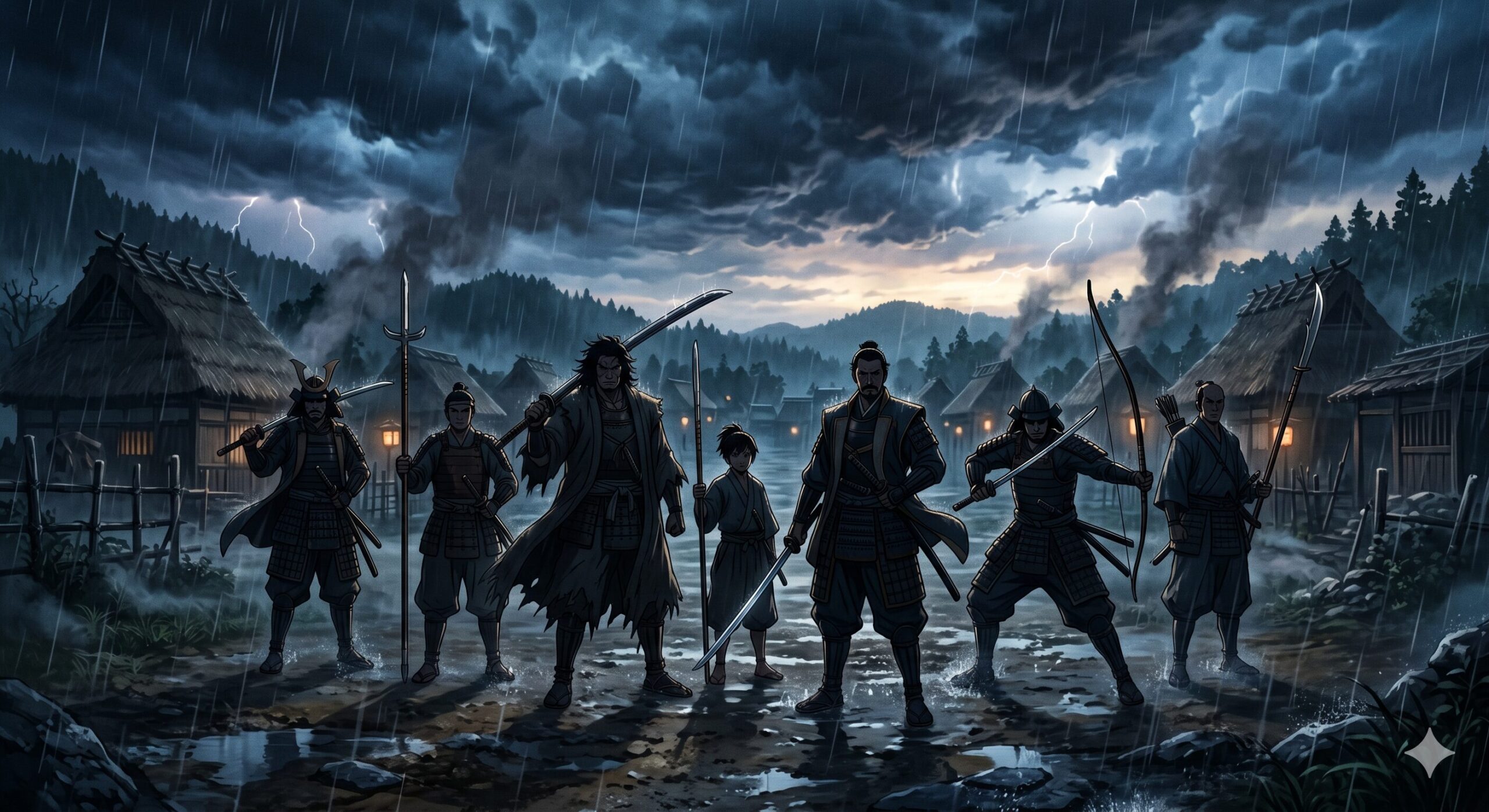
Every year on April 26, Japan celebrates “Seven Samurai Day” to commemorate the theatrical release of Akira Kurosawa’s masterpiece, *Seven Samurai* (1954). Even decades after its premiere, this film remains one of the greatest cinematic achievements in history, continuing to profound influence creators and movie fans worldwide.
What is the Historical Masterpiece “Seven Samurai”?
Released on April 26, 1954, *Seven Samurai* is a period action film set in the Sengoku (Warring States) period. It tells the story of a poor farming village plagued by ruthless bandits. In a desperate attempt to survive, the villagers hire seven masterless samurai (ronin) to protect them, leading to an epic battle fought alongside the farmers.
The film cemented its place in cinematic history due to its unprecedented scale and innovative filming techniques. Kurosawa’s use of multiple cameras simultaneously and the breathtaking climax shot in torrential rain shattered the filmmaking conventions of the time. Furthermore, the intense performances by legends like Toshiro Mifune and Takashi Shimura breathed deep humanity and distinct personalities into each character. Countless films, including Hollywood’s *The Magnificent Seven* and *Star Wars*, have drawn direct inspiration from this masterpiece.
Deciphering Japanese Culture and the Essence of Bushido
*Seven Samurai* is not merely an action movie. At its core, it pulsates with ancient Japanese “Bushido” (the way of the warrior) and deep spirituality.
First is the concept of “self-sacrifice and justice without expectation of reward.” The only payment the destitute villagers could offer was white rice. In a battle devoid of glory or financial gain, these samurai chose to risk their lives to protect the weak. This embodies the ultimate aesthetic of Bushido—the spirit of “Gi” (righteousness or justice) that transcends mere calculation of loss and gain.
Second is “solidarity beyond social class and the spirit of harmony (Wa).” While strict class hierarchies defined Japan during that era, the film depicts the samurai and farmers gradually bridging the gap, eventually fighting together as comrades. The leader, Kambei, asserts that “war is fought as a group,” a philosophy symbolizing the importance of “Wa” (teamwork) that still resonates in modern Japanese society.
Third is the “sense of impermanence (Mujo) in life and death.” After a brutal conflict with many casualties, peace is restored to the village. The surviving samurai watch the farmers singing planting songs, and Kambei murmurs, “In the end, we lost this battle too… The victory belongs to those peasants. Not to us.” This iconic final scene contrasts the fleeting, tragic existence of the warrior class with the enduring, life-affirming resilience of the farmers connected to the earth, profoundly expressing the traditional Japanese concept of impermanence.
A Question for the Readers
The “selfless spirit” and “unity in the face of adversity” portrayed in *Seven Samurai* are deeply relevant to us in modern society. If you were asked to undertake a difficult, dangerous task with no tangible reward, would you be able to stand up for your beliefs like these seven warriors? Please share your thoughts and your reactions to the film in the comments below.
Reference Links
- External Link: Toho Co., Ltd. Official Site (Production and Distribution)
- External Link: IMDb – Seven Samurai (1954)
- Internal Link: Read more from the “What’s Today’s Special Day?” series
4月26日は「七人の侍の日」:黒澤明の歴史的傑作から読み解く日本の武士道と文化
毎年4月26日は、日本が世界に誇る映画監督・黒澤明の代表作『七人の侍』(1954年)が劇場公開されたことを記念する「七人の侍の日」です。公開から何十年という歳月が流れた現在でも、この作品は映画史における最高傑作の一つとして、世界中のクリエイターや映画ファンに多大な影響を与え続けています。
歴史的傑作『七人の侍』とは何か
1954年4月26日に公開された『七人の侍』は、戦国時代を舞台に、野盗(野武士)の襲撃に苦しむ貧しい農村を守るため、7人の浪人(主君を持たない侍)が雇われ、村人と共に壮絶な戦いに挑む姿を描いたアクション時代劇です。
この作品が映画史に刻まれた理由は、その圧倒的なスケールと革新的な撮影手法にあります。複数のカメラを同時に回すマルチカム方式や、土砂降りの雨の中で行われたクライマックスの決戦シーンは、当時の常識を打ち破るものでした。また、三船敏郎や志村喬をはじめとする俳優陣の鬼気迫る演技は、キャラクター一人ひとりに深い人間味と個性を与え、観客を物語の奥深くへと引き込みました。ハリウッド映画『荒野の七人』や『スター・ウォーズ』など、数え切れないほどの作品が本作からインスピレーションを受けています。
作品から読み解く、日本文化と武士道の真髄
『七人の侍』は単なるアクション映画ではありません。その根底には、日本古来の「武士道」と、深い精神性が息づいています。
第一に、「自己犠牲と見返りを求めない正義」です。村人たちが侍に提示できた報酬は「白米」のみでした。名誉も金銭的利益もない戦いにおいて、彼らは自らの命を懸けて弱者を守ることを決意します。これこそが、損得勘定を超越した武士道の美学、「義」の精神です。
第二に、「身分を超えた連帯と和の精神」です。当時の日本は厳格な身分制度が存在していましたが、映画の中では侍と農民が次第に心を通わせ、共に戦う仲間へと変化していきます。リーダーである勘兵衛が説く「戦とは集団でするものだ」という言葉は、現代の日本社会にも通じる「和(チームワーク)」の重要性を象徴しています。
第三に、「生と死の無常観」です。激しい戦いの末、多くの犠牲を払って村は平和を取り戻しますが、生き残った侍たちは田植えの歌を歌う農民たちを見つめ、「勝ったのはあの百姓たちだ。わしたちではない」と呟きます。このラストシーンには、武士という存在の儚さと、大地に根を張り命を繋ぐ農民のたくましさが対比され、日本特有の「無常観」が色濃く表現されています。
読者の皆様へ
『七人の侍』が描いた「無私の心」や「困難に立ち向かう団結力」は、現代社会を生きる私たちにとっても決して無縁ではありません。もしあなたが、見返りのない困難な任務を頼まれたとき、この7人のように自らの信念に従って立ち上がることができるでしょうか? ぜひ、あなたの考えや、本作を観た感想をコメント欄で教えてください。
参考リンク
- 外部リンク:東宝株式会社 公式サイト(制作・配給)
- 外部リンク:IMDb – Seven Samurai (1954)
- 内部リンク:今日は何の日シリーズをもっと読む

コメント