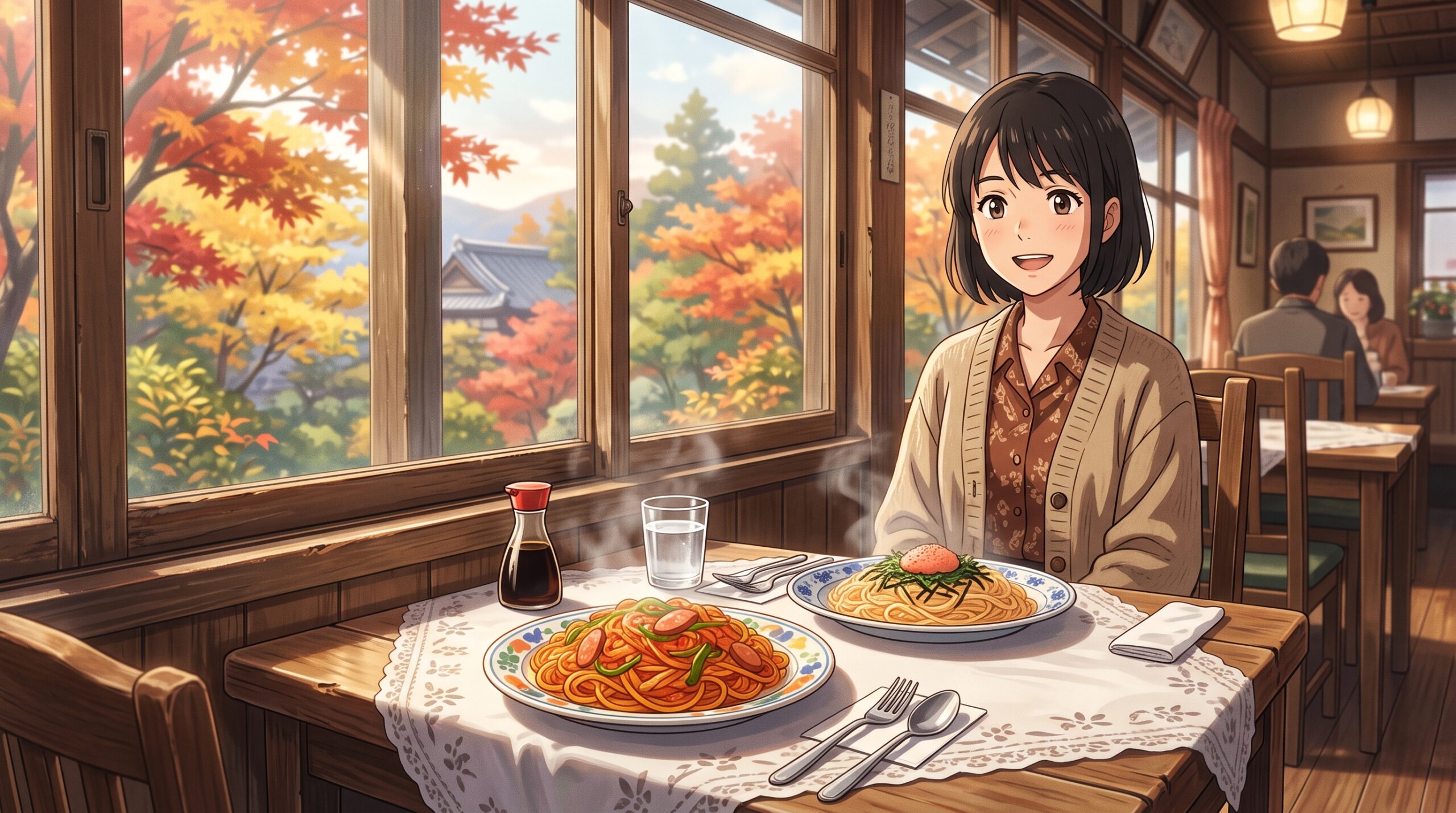
Every year on September 17th, Japan celebrates “Italian Food Day” (イタリア料理の日 – Italia Ryori no Hi). This special day was officially established by the Associazione Cuochi Cucina Italiana (ACCI) in Japan, and certified by the Japan Anniversary Association, with the aim of promoting and developing the rich culture of Italian cuisine across the country [cite: 1.1.3]. But out of 365 days in a year, why was September 17th specifically chosen? The answer lies in a unique blend of Japanese humor and the nation’s flexible approach to cultural assimilation.
The date originates from the Italian word “Cucina,” meaning cooking or kitchen. In Japanese, numerical wordplay—known as goroawase—is a very popular and traditional custom. The numbers 9, 1, and 7 can be read in Japanese as “Ku,” “Chi,” and “Na.” Put them together, and you get “Ku-chi-na” (Cucina). The brilliant idea of using a foreign word to create a Japanese numerical pun perfectly symbolizes Japan’s traditional approach to foreign cultures: embracing them flexibly and seamlessly weaving them into everyday life.
Chapter 1: The Miracle of “Italiaken” – Japan’s First Italian Restaurant
To truly understand the deep connection between Japan and Italian cuisine, we must rewind the clock to the Meiji era. The setting is Niigata Prefecture, a snowy region in northern Japan. At this time, Japan had just ended its long period of national isolation and was in the dawn of its modernization, eagerly absorbing Western culture.
A young Italian man named Pietro Migliore traveled all the way across the ocean to Japan as a member of a French circus troupe [cite: 1.2.3]. However, during a performance in Niigata, he tragically suffered an injury [cite: 1.2.3]. Due to their schedule, the circus troupe was forced to move on to their next destination, leaving Pietro behind [cite: 1.2.3]. Stranded in a foreign land, facing loneliness, language barriers, and despair, Pietro was ultimately saved by the profound warmth and compassion of the local Japanese people. The townspeople provided him with devoted care, allowing Pietro to fully recover.
Deeply moved by the kindness of the people of Niigata, Pietro decided to stay and repay his debt of gratitude. In 1874 (the 7th year of the Meiji era), he opened a beef stew and Western food shop near the prefectural office [cite: 1.2.3]. Supported by the Western-culture-loving governor, Masataka Kusumoto, his business thrived [cite: 1.2.3]. Following a major fire in 1880, he relocated and built a beautiful Western-style building decorated with stained glass and chandeliers, naming it “Italiaken” (The Italian Pavilion) [cite: 1.2.3]. It was hailed as the “Rokumeikan of Niigata” and established a firm position as Japan’s first authentic Western and Italian restaurant. This story is not just about opening a restaurant; it is a testament to human bonds that cross borders and is still passed down today as an emotional first step in the history of Italian food in Japan.
Chapter 2: Post-War Reconstruction and the Birth of “Naporitan”
The culinary seeds planted by Pietro Migliore underwent a dramatic, unique evolution after World War II. The most iconic masterpiece of this era is “Spaghetti Naporitan,” a pasta dish entirely unique to Japan.
In Yokohama, just after the end of the war, the requisitioned Hotel New Grand became the stage for a new culinary history. Shigetada Irie, the hotel’s second executive chef, observed American soldiers eating boiled spaghetti mixed with ketchup. Seeing this austere meal, Irie was ignited by a chef’s pride and passion: “As a professional chef, I want them to eat something far more delicious and nutritious.”
Instead of relying on simple ketchup, he developed a refined sauce using fresh tomato puree as a base, combined with onions, garlic, mushrooms, and bacon. Thus, the original “Spaghetti Naporitan” was completed at the Hotel New Grand. Over time, this dish left the luxury hotel and spread to kissaten (retro Japanese cafes) across the country. As it became popularized, it was adapted into a more casual, ketchup-based flavor. Today, it stands as the ultimate soul food representing Japan’s Showa era. Though you will never find “Naporitan” in Italy, it is an absolute historical masterpiece when discussing Japanese Western-style food (Yoshoku) culture and the ingenuity of the Japanese people.
Chapter 3: The Pinnacle of Fusion – The Philosophy of “Wafu Pasta”
Entering the 1950s, Japanese Italian cuisine began to showcase even greater originality. From a specialty pasta shop named “Kabe no Ana” (Hole in the Wall) founded in 1953, the unprecedented history of “Wafu Pasta” (Japanese-style pasta) began.
One day, a regular customer requested the chef to make a pasta dish using caviar. The owner created an exquisite dish, but caviar was far too expensive for an everyday menu. The owner had a groundbreaking culinary epiphany: why not substitute it with tarako (salted cod roe), a traditional Japanese ingredient? This was the exact moment the beloved “Tarako Spaghetti” was born.
Following this success, “Kabe no Ana” established an entirely new genre of “Wafu Pasta,” beautifully harmonizing pasta with traditional Japanese ingredients like natto and sea urchin. This is not merely a recipe variation; it is the culinary manifestation of Wakon Yosai—the Japanese philosophy of adopting Western techniques and knowledge while preserving the Japanese spirit and tradition. Rather than simply imitating foreign imports, the Japanese reconstruct them to suit their local climate and palate, creating entirely new value.
A Culinary Bridge to the Future
September 17th, “Italian Food Day,” is not just a day to eat delicious pizza or pasta. It is a day to honor the human warmth that Pietro Migliore experienced in Niigata, the proud dedication of chef Shigetada Irie, and the relentless creativity of the Japanese people who invented Wafu pasta.
Italian cuisine has completely dissolved into the daily lives of the Japanese. From family dining tables to high-end restaurants, Italian food that has undergone a unique Japanese evolution is now attracting global attention as an integral part of “Japanese culinary culture.”
I pose a question to you, reading this article today: If you were presented with a plate of uniquely Japanese “Naporitan” or “Tarako Spaghetti,” what would be your honest thoughts? Between the authentic, traditional flavors of the origin country and the innovative flavors born from cultural fusion, which culinary adventure would you choose? I would love to hear your thoughts.
- Reference Link: Associazione Cuochi Cucina Italiana (ACCI) Official Website
- Read more about Japanese culture and anniversaries: What’s Today’s Special Day Series
9月17日は「イタリア料理の日」:海を越えた情熱と、日本独自の食文化への進化の物語
日本のカレンダーには、毎日数多くの記念日が刻まれています。その中でも毎年9月17日は、日本において「イタリア料理の日」として広く親しまれている特別な日です。イタリアの豊かな食文化を日本国内にさらに普及させ、その発展を目的として一般社団法人日本イタリア料理協会(ACCI)によって制定され、日本記念日協会により認定されました[cite: 1.1.3]。では、数ある365日の中で、なぜ9月17日が選ばれたのでしょうか。そこには、日本ならではのユニークなユーモアと、異文化を受容する柔軟な姿勢が隠されています。
この日付の由来は、イタリア語で「料理」や「台所」を意味する「クチーナ(cucina)」という単語にあります。この「クチーナ」という音を、日本語の数字の読み方に当てはめ、「ク(9)チー(1)ナ(7)」とする語呂合わせから、9月17日が選定されたのです。異国の言語を自国の言葉遊びに変換して記念日を作ってしまうこの発想こそ、外国の文化を軽やかに受け入れ、自らの生活の一部として馴染ませていく、日本の伝統的な姿勢を象徴していると言えます。
第一章:雪国・新潟に咲いた奇跡。日本初のイタリア料理店「イタリア軒」の物語
日本とイタリア料理の深い繋がりを知り、その本質を読み解くためには、時計の針を明治時代まで巻き戻す必要があります。舞台は、雪深い北国、新潟県。当時、日本は長く続いた鎖国を終え、西洋文化を積極的に取り入れようとしていた近代化の黎明期にありました。
一人の若きイタリア人青年、ピエトロ・ミリオーレは、フランスの曲馬団(サーカス団)に同行し、はるばる海を越えて日本へとやってきました[cite: 1.2.3]。しかし、興行で訪れた新潟の地で、彼は不運にも怪我を負ってしまいます[cite: 1.2.3]。曲馬団はスケジュールの都合上、彼を置き去りにして次の目的地へと旅立ってしまいました[cite: 1.2.3]。異国の地で孤独と絶望の淵に立たされたピエトロ。言葉も通じず、頼る者もいない状況で、彼を救ったのは、新潟の人々の温かい人情でした。地元の人々は彼を手厚く看護し、その献身的なサポートのおかげで、ピエトロは無事に回復を果たすことができました。
新潟の人々の優しさに深く感動したピエトロは、恩返しのためにこの地に留まることを決意します。明治7年(1874年)、彼は県庁に近い営所通一番町で、牛肉屋兼洋食店を開業しました[cite: 1.2.3]。当時は普通の民家を借りた営業でしたが、県令(当時の知事)である楠本正隆が西洋好みであったこともあり、店は大繁盛しました[cite: 1.2.3]。その後、明治13年(1880年)の大火を機に西堀通へ移転し、内部にステンドグラスを入れ、シャンデリアで飾った美しい洋館を新築し、その店を「イタリア軒」と名付けました[cite: 1.2.3]。この店は高級宴会場や社交場として「新潟の鹿鳴館」と謳われ、日本初の本格的西洋料理店、そしてイタリア料理店の源流として確固たる地位を築きました。異国の地で倒れた一人の青年が、一杯の温かい料理を通じて地元の人々と結んだ絆。この物語は、単なる飲食店の開業史ではなく、国境を越えた人と人との繋がりの証であり、日本のイタリア料理史における感動的な第一歩として、今も新潟の地で語り継がれています。
第二章:戦後復興と「ナポリタン」の誕生。横浜から全国の喫茶店へ
ピエトロ・ミリオーレが蒔いた西洋料理の種は、やがて日本独自の劇的な進化を遂げることになります。その最も象徴的な傑作が、日本独自のパスタ料理「ナポリタン」です。
第二次世界大戦が終結した直後の横浜。焼け野原から復興へと歩み始めたこの街で、進駐軍に接収されたホテルニューグランドの厨房が新たな歴史の舞台となりました。第2代総料理長であった入江茂忠は、進駐軍の兵士たちが茹でたスパゲッティに、ケチャップを和えて食べている光景を目にします。その簡素な食事を見た入江の心に、「プロの料理人として、もっと美味しく、栄養のあるものを食べてほしい」という強い情熱が燃え上がりました。
彼は単なるケチャップの使用を避け、新鮮なトマトピューレをベースに、玉ねぎ、にんにく、マッシュルーム、そしてベーコンを使用し、日本人の味覚に合う洗練されたソースを開発しました。これがホテルニューグランドで完成した「スパゲッティ・ナポリタン」の誕生です。その後、この料理はホテルから街へと飛び出し、日本全国の「喫茶店(レトロな日本のカフェ)」に広まっていきました。大衆化する過程で、より手軽なケチャップを使った味へとアレンジされ、熱々の鉄板に乗せられて提供されるスタイルなども生まれ、日本の昭和時代を象徴するソウルフードとして完全に定着しました。本場イタリアには存在しない「ナポリタン」ですが、日本の洋食文化と、戦後の困難な時代を生き抜いた日本人の創意工夫を語る上で、絶対に外すことのできない歴史的遺産です。
第三章:和洋折衷の極致。「和風パスタ」という哲学の誕生
1950年代に入ると、日本のイタリア料理はさらなる独自性を発揮し始めます。昭和28年(1953年)に創業したパスタ専門店「壁の穴」から、世界に類を見ない「和風パスタ」の歴史が幕を開けました。
ある日、常連客であった人物が、「スパゲッティの上にキャビアを載せてくれ」と店に要望を出しました。店主は見事に美味しいパスタを完成させましたが、高級食材であるキャビアを日常のメニューにすることは不可能です。そこで店主は、キャビアの代わりに、日本の伝統的な食材である「たらこ」を載せるという画期的なアイデアを閃きました。これが、今では日本中で愛されている「たらこスパゲッティ」の誕生の瞬間でした。
これを皮切りに、「壁の穴」は納豆やウニなど、日本の伝統食材とパスタを見事に融合させた「和風スパゲッティ」という全く新しいジャンルを確立していきました。これは単なる料理のアレンジではありません。「和魂洋才(西洋の優れた技術や文化を学びつつ、日本固有の精神や伝統を活かす)」という日本の思想そのものの体現です。外国のものをそのまま模倣するのではなく、自分たちの風土や味覚に合わせて再構築し、新しい価値を生み出す。これこそが、日本の食文化の最も美しく、力強い側面です。
未来へ受け継がれる食の架け橋
9月17日の「イタリア料理の日」は、単に美味しいパスタやピザを食べる日ではありません。それは、ピエトロ・ミリオーレが感じた新潟の人々の温もり、入江茂忠の料理人としての誇りと優しさ、そして和風パスタを生み出した日本人の飽くなき探求心と創造性を称える日なのです。
イタリア料理は今や日本人の日常に完全に溶け込みました。家庭の食卓に並ぶミートソースから、世界中から美食家が集まる高級レストランまで、日本独自の進化を遂げたイタリア料理は、今や「日本の食文化」の重要な一部として世界中から注目を集めています。
この記事を最後まで読んでくださったあなたへ問いかけます。もしあなたが今日、日本独自の進化を遂げた「ナポリタン」や「たらこスパゲッティ」を目の前にしたら、どのような感想を抱くでしょうか? オリジナルの伝統を厳格に守る本場の味と、異文化と融合して生まれた革新的な新しい味。あなたなら、どちらの食の冒険を選びますか? ぜひ、あなたの考えを聞かせてください。
- 参考リンク:一般社団法人日本イタリア料理協会公式ウェブサイト
- 日本の記念日や文化についてもっと読む:今日の記念日シリーズ

コメント