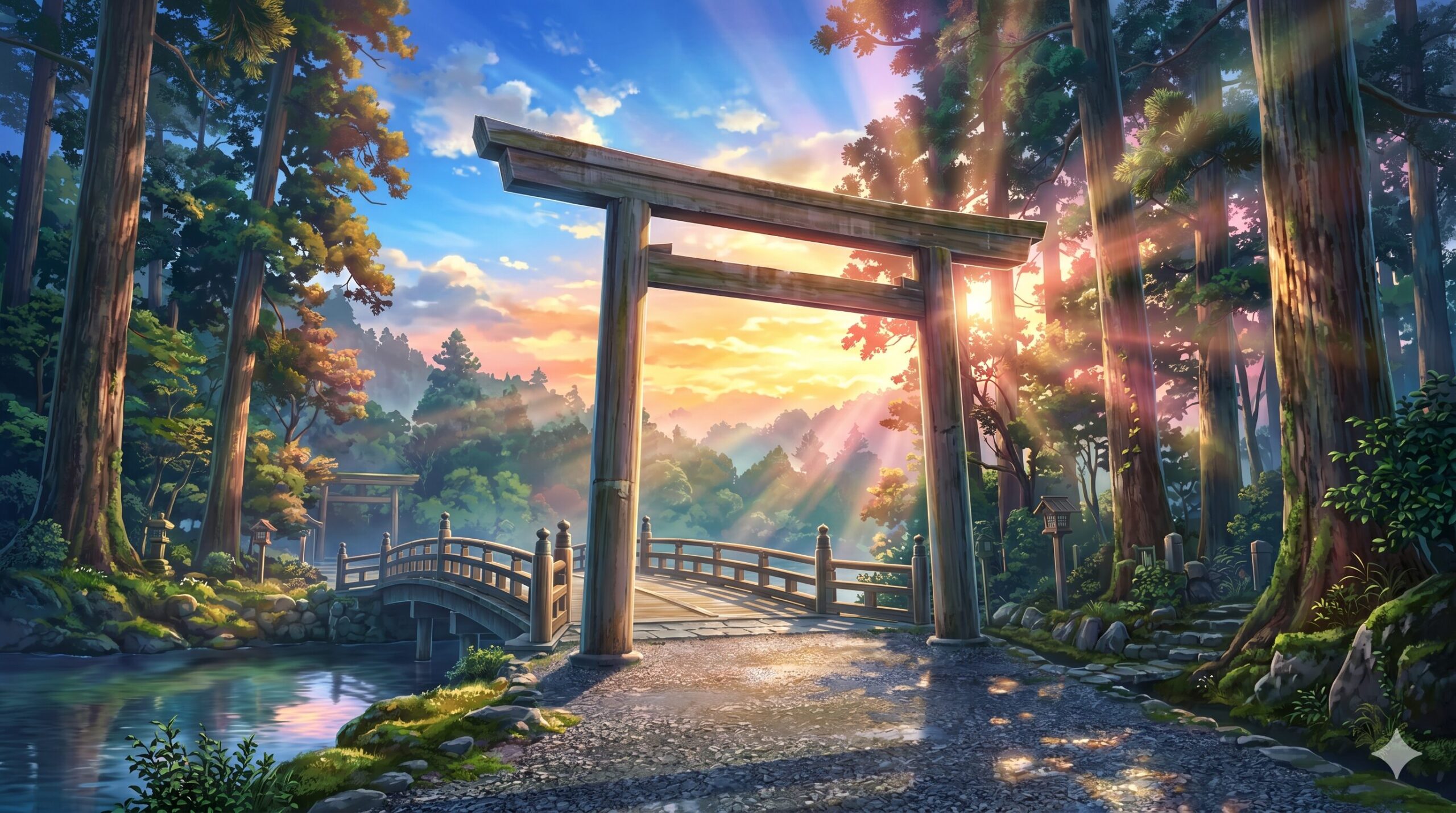
In the long history of Japan, there are definitive days that fundamentally changed the shape of the nation and the spirituality of its people. April 23, 1869 (the 2nd year of the Meiji era), was exactly one of those days. On this day, Emperor Meiji became the first reigning emperor in history to visit Ise Jingu (the Grand Shrine of Ise) in Mie Prefecture. To modern eyes, one might wonder, “Isn’t it normal for an emperor to visit a shrine?” However, this event carried immeasurable shock and significance in Japan at the time, deeply shaping the Japanese culture we know today.
Why Was It the “First Time”? The Veiled History of the Emperor
Ise Jingu is the most prestigious shrine in Japan, dedicated to Amaterasu Omikami, the sun goddess and mythological ancestor of the Japanese Imperial Family. Surprisingly, however, throughout the long history spanning from the Asuka and Nara periods, the emperors themselves never set foot in Ise Jingu. In the past, there was a system where an unmarried imperial princess, known as the “Saiou,” was sent to Ise as the emperor’s representative to serve the deities.
For centuries, the emperor was a “being above the clouds” who rarely left the Imperial Palace in Kyoto, shrouded in a veil of sacred inviolability. Actual political power was held by the samurai (the Shogunate), and it was extremely rare for the emperor to step onto the public stage. Therefore, the act of the emperor personally leaving Kyoto, traveling hundreds of kilometers to Ise, and offering prayers to his ancestral deities was an unprecedented event that completely overturned historical traditions.
The Awakening of a Modern Nation and the True Purpose of the Visit
The year 1869 was a period of massive transition for Japan. The Edo Shogunate, which had lasted for about 260 years, had fallen, and a revolution toward modernization known as the “Meiji Restoration” was underway. The newly born Meiji government needed to create a strong modern nation capable of standing shoulder-to-shoulder with Western powers. To achieve this, a powerful “central force” to unite the previously fragmented hearts of the Japanese people was absolutely essential.
Emperor Meiji’s visit to Ise Jingu was a highly sophisticated political and cultural demonstration designed to elevate this national cohesion. It was necessary to visually and spiritually impress upon the masses across Japan that a new era had arrived where the emperor directly governed the country. By personally reporting his resolve to build a modern nation to Amaterasu Omikami, Japan began to brilliantly fuse two contradictory elements: “traditions dating back to the age of myths” and “Western modernization.”
- Why Was It the “First Time”? The Veiled History of the Emperor
- The Awakening of a Modern Nation and the True Purpose of the Visit
- Interpreting Japanese Culture from This Day: The Perfect Balance of Tradition and Innovation
- To Our Readers: What Can We Learn from This Turning Point in History?
- 1869年4月23日:明治天皇の伊勢神宮初参拝が日本の歴史と文化を動かした日
- この日から読み解く日本文化:伝統と革新の絶妙なバランス
- 読者の皆様へ:歴史の転換点から何を学びますか?
Interpreting Japanese Culture from This Day: The Perfect Balance of Tradition and Innovation
This historical event serves as a crucial key to deeply understanding the unique culture and spirituality of Japan. The Japanese people possess a spirit called “Wakon Yosai” (Japanese spirit, Western techniques), which means adopting new things while using ancient traditions as a foundation, rather than completely destroying the old to build the new.
Reverence for Nature and the Spirit of Shinto
Anyone who has visited Ise Jingu will undoubtedly feel an indescribably sacred atmosphere amid the towering, centuries-old trees and the murmuring of the pristine Isuzu River. Shinto does not have a specific holy book; it developed from an animistic belief that finds deities (Kami) in nature itself. Emperor Meiji’s visit was a silent declaration that even amidst rapid Westernization and industrialization, the Japanese people would never lose their ancient reverence for nature.
The Culture of “Prayer” Breathing in Modern Japan
Even today, Japanese people visit shrines for the New Year (Hatsumode) and offer prayers at shrines during major life milestones. Even in the valleys of skyscrapers in high-tech metropolises like Tokyo, small shrines quietly stand. The attitude demonstrated by the emperor on April 23, 1869—”pioneering a new era while maintaining respect for the ancient deities”—is a direct microcosm of modern Japanese society. Japan’s unique culture of accepting the world’s most advanced technology while preserving traditional spirituality became solidified from this day forward.
To Our Readers: What Can We Learn from This Turning Point in History?
On this day in 1869, Japan took a powerful step into the unknown modern world while reaffirming its own identity. This history teaches us that cherishing our past roots actually provides the greatest energy for moving toward the future.
How do you blend the traditions and roots of your own culture with modern, new values?
If you ever have the chance to visit Japan, please walk through the vast forests of Ise Jingu. You will be able to feel firsthand the resolve for the nation’s future held by a young emperor over 150 years ago, harmonized with the eternal tranquility of Japan’s nature that has remained unchanged for millennia.
Related Links
1869年4月23日:明治天皇の伊勢神宮初参拝が日本の歴史と文化を動かした日
日本の長い歴史の中には、国のかたちや人々の精神性を根底から変えてしまうような「決定的な一日」が存在します。1869年(明治2年)4月23日は、まさにそのような日でした。この日、明治天皇は歴代の天皇として初めて、三重県にある伊勢神宮に参拝しました。現代の私たちからすれば「天皇が神社に参拝するのは普通のことではないか?」と思うかもしれません。しかし、この出来事は当時の日本において、そして現在の日本文化を形作る上で、計り知れない衝撃と意味を持っていました。
なぜ「歴代初」だったのか?ベールに包まれた天皇の歴史
伊勢神宮は、日本の皇室の祖先神とされる天照大御神(あまてらすおおみかみ)を祀る、日本で最も格式の高い神社です。しかし驚くべきことに、飛鳥時代や奈良時代から続く長い歴史の中で、天皇自身が直接伊勢神宮に足を運ぶことはありませんでした。かつては「斎王(さいおう)」と呼ばれる未婚の皇女が天皇の代理として伊勢に赴き、神に仕えるという制度がありました。
長きにわたり、天皇は京都の御所から外に出ることのない「雲の上の存在」であり、神聖で不可侵な存在としてベールに包まれていました。政治の実権は武士(幕府)が握っており、天皇が直接表舞台に立って行動することは極めて稀だったのです。したがって、天皇が自ら京都を離れ、数百キロ離れた伊勢の地へ向かい、自らの祖先神に祈りを捧げるという行為は、これまでの伝統を根底から覆す前代未聞の出来事でした。
近代国家への目覚めと、伊勢神宮参拝の真の目的
1869年という年は、日本が大きな転換期を迎えていた時期です。約260年続いた江戸幕府が倒れ、「明治維新」という近代化への革命が進行していました。新しく誕生した明治政府は、西洋の列強諸国に肩を並べる強い近代国家を創り上げる必要がありました。そのためには、これまでバラバラだった日本人の心を一つにまとめる「強力な中心」が不可欠でした。
明治天皇が伊勢神宮を参拝したのは、まさにこの「国家の求心力」を高めるための高度な政治的、そして文化的なデモンストレーションでした。「天皇が直接国を治める新しい時代が来た」ということを、日本全国の民衆に視覚的かつ精神的に強く印象付ける必要があったのです。天皇が自ら天照大御神に近代国家建設の決意を報告することで、日本は「神話の時代から続く伝統」と「西洋の近代化」という、相反する二つの要素を見事に融合させる道を歩み始めました。
この日から読み解く日本文化:伝統と革新の絶妙なバランス
この歴史的出来事は、日本特有の文化や精神性を深く理解するための重要な鍵となります。日本人は、古いものを完全に破壊して新しいものを作るのではなく、古い伝統を土台にしながら新しいものを取り入れる「和魂洋才(わこんようさい)」という精神を持っています。
自然への畏敬と神道の精神
伊勢神宮に足を運んだことがある人なら、そこにそびえ立つ樹齢数百年の木々や、清らかな五十鈴川のせせらぎに、言葉にできない神聖な空気を感じるはずです。神道は特定の教典を持たず、自然そのものの中に神を見出すアニミズム的な信仰から発展しました。明治天皇の参拝は、急速な西洋化・工業化が進む中にあっても、日本人が古来から持つ「自然への畏敬の念」を決して失わないという無言の宣言でもありました。
現代日本に息づく「祈り」の文化
現在でも、日本人はお正月になれば神社に初詣に行き、人生の節目には神前で祈りを捧げます。最新のテクノロジーにあふれた東京のような大都会のビルの谷間にも、小さな神社が静かに佇んでいます。1869年4月23日に天皇が示した「古い神々への敬意を持ちながら、新しい時代を切り拓く」という姿勢は、そのまま現代の日本社会の縮図と言えます。伝統的な精神性を保ちながら、世界最先端の技術を受け入れる日本の独特なカルチャーは、この日を境により確固たるものになったのです。
読者の皆様へ:歴史の転換点から何を学びますか?
1869年のこの日、日本は自らのアイデンティティを再確認しながら、未知の近代世界へと力強く一歩を踏み出しました。過去のルーツを大切にすることが、実は未来へ進むための最大のエネルギーになるということを、この歴史は教えてくれます。
あなたは、自らの国の伝統やルーツと、現代の新しい価値観をどのように融合させていますか?
もし日本を訪れる機会があれば、ぜひ伊勢神宮の広大な森を歩いてみてください。150年以上前に一人の若き天皇が抱いた国家の未来への決意と、何千年と変わらない日本の自然の静寂を、あなた自身の肌で感じることができるはずです。

コメント