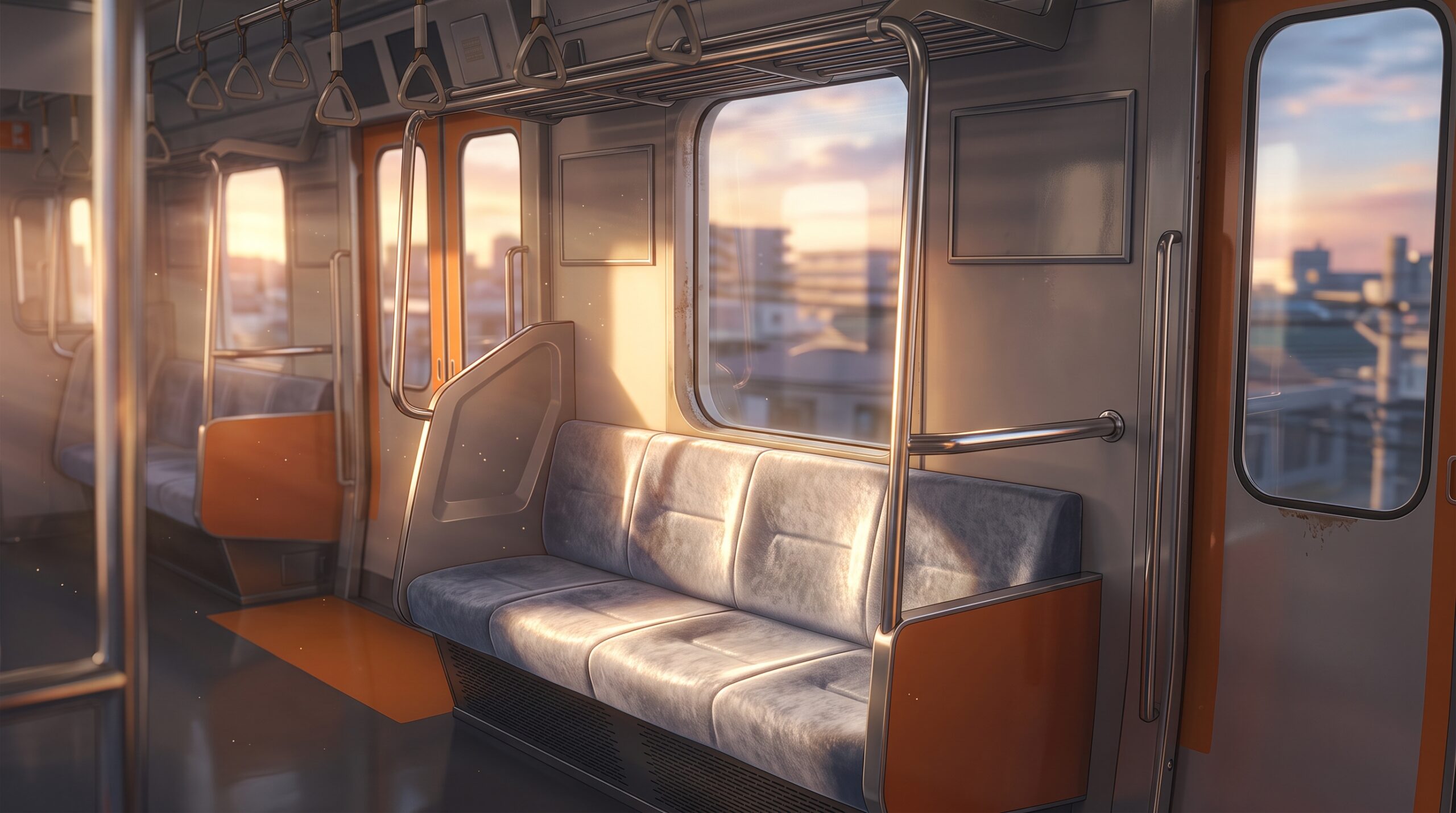
It is 5:00 PM at Shinjuku Station. The Chuo Line platform is overflowing with the heat of commuters rushing home and the constant echo of station announcements. As a train adorned with an orange stripe glides into the station, people are simultaneously drawn into its doors. The interior instantly reaches full capacity. In a space so crowded that standing passengers brush shoulders, everyone is either staring at their smartphones or immersed in their own world through earphones.
Amidst this, a petite woman who appears to be in her mid-seventies boards the train. She grasps a handrail, letting out a small sigh that betrays her fatigue. Directly in front of her sits a young office worker utterly absorbed in a mobile game, his eyes never leaving the screen. However, a high school student sitting next to him suddenly looks up. After a fleeting moment of hesitation, the student silently stands up, gives a slight bow toward the woman, and offers his seat.
The woman looks momentarily surprised before her face blooms into a bright smile. “Thank you very much,” she says, bowing her head deeply. The high school student, looking somewhat bashful, shifts his gaze out the window. For a brief moment, a warm and gentle atmosphere seems to flow through the packed train car. This scene repeats itself daily on Japanese trains. Yet, this “special space for giving up a seat” is deeply etched with the evolution of Japanese society and its unique culture of compassion.
Today, September 15th, marks “Silver Seat Memorial Day,” a day that significantly changed the history of Japanese railways and societal norms.
September 15, 1973: Compassion Born from Surplus Shinkansen Fabric
The history of priority seating in Japan dates back to September 15, 1973. At the time, September 15th was “Respect for the Aged Day,” a national holiday to honor the elderly and celebrate longevity. On this day, the Japanese National Railways (JNR, now JR) introduced dedicated seats for the elderly and physically disabled for the first time on the Chuo Line rapid service trains operating in Tokyo.
These special seats were named the “Silver Seat.” But why “Silver”? The reason stems from a pressing necessity and a clever idea unique to Japan’s period of rapid economic growth. To make these dedicated seats instantly recognizable, they needed to be upholstered in a fabric different from the regular seats. However, budget and time for ordering new fabric were strictly limited. JNR officials set their sights on a surplus stock of “silver-gray” upholstery that was originally used for the standard class seats of the Tokaido Shinkansen (0 Series bullet trains).
They repurposed this leftover silver fabric from the factory to reupholster the corner seats of the Chuo Line cars. This highly practical decision was the major catalyst for cementing the uniquely Japanese color association of “Elderly = Silver.” Subsequently, Silver Seats rapidly spread to railways and buses nationwide, becoming a standard feature of Japan’s public transportation system.
From “Silver” to “Priority”: A Changing Society and the Culture of “Reading the Air”
In the late 1990s, nearly 20 years after the birth of the Silver Seat, a significant shift occurred regarding its name and system. There was a growing societal demand for consideration not only for the elderly and disabled but also for people whose need for support is not visually apparent, such as pregnant women, passengers with infants, and those with internal illnesses. Furthermore, it was pointed out that the label “exclusively for Silver (the elderly)” made other people who genuinely needed the seats hesitate to use them.
Consequently, from around 1997, railway companies sequentially changed the name to “Priority Seating (Yusenseki).” Today, these seats have evolved into spaces that accommodate a more diverse range of people safely, functioning in tandem with visual cues like the Maternity Mark and Help Mark.
The dynamics surrounding priority seating vividly illustrate the Japanese communication style and the shape of their “Omoiyari” (compassion/consideration). In Japan, there is a cultural concept called “Kuuki wo yomu” (reading the air)—sensing the situation and the feelings of others without relying on spoken words. Even regarding priority seating, it is rare for someone to vocally demand, “Please give me your seat.” It is considered a virtue for the seated person to observe their surroundings, “sense” someone in need, and voluntarily offer the seat.
However, this “culture of sensing” sometimes creates complex conflicts. A person might hesitate, thinking: “Should I offer my seat to this person? But what if they get offended and think, ‘I’m not that old yet’?” In modern Japan, a super-aging society, there is an increasing number of youthful, active elderly individuals. Therefore, out of an overabundance of consideration for each other’s feelings, a strange tension can sometimes arise in front of priority seats. Still, when someone musters the courage to act, like the high school student in our story, the quiet words of gratitude exchanged remain one of the most beautiful aspects of urban life in Japan.
A Seat Passed Down to the Next Generation
Although it has changed its name and form from the Silver Seat to Priority Seating, the fundamental spirit of “showing consideration for the vulnerable” embedded in that day in 1973 has firmly taken root in modern Japanese society. Amidst the packed commuter trains of Tokyo, where efficiency and speed are paramount, priority seats function not just as physical chairs, but as social infrastructure that visualizes human empathy and compassion.
When you visit Japan and ride a train, take a moment to look at the differently colored seats at the ends of the cars. There, you will witness the delicate consideration and quiet communication of the Japanese people.
What kind of systems and cultural norms exist in your country’s public transportation for helping those in need? And when you try to offer your seat to someone, how do you initiate the interaction, and how does that situation make you feel?
■ Related Series
What’s Today’s Special Day Series
■ References
Ministry of Land, Infrastructure, Transport and Tourism: Barrier-Free Policy
新宿駅の喧騒と、ある秋の日の静寂
午後5時の新宿駅。中央線のホームは、帰路を急ぐ人々の熱気とアナウンスの音で溢れかえっています。オレンジ色の帯を巻いた電車が滑り込んでくると、人々は一斉にドアへと吸い込まれていきます。車内はあっという間に満員となり、立っている人々の肩が触れ合うほどの空間で、誰もがスマートフォンを見つめるか、イヤホンをして自分の世界に没入しています。
そんな中、70代半ばと思われる小柄な女性が乗車してきました。彼女は手すりに掴まり、少し疲れを見せながら小さく息をつきます。その目の前には、スマートフォンでゲームに夢中になっている若いサラリーマンが座っていました。彼は画面から目を離しません。しかし、その隣に座っていた高校生が、ふと顔を上げました。彼は少し迷うような素振りを見せた後、無言で立ち上がり、女性に向かって軽く会釈をして席を譲りました。
女性は驚いたような顔をした後、花が咲いたような笑顔で「ありがとうございます」と深く頭を下げました。高校生は照れくさそうに窓の外へ視線を移します。その一瞬、満員の車内にほんの少しだけ、温かく緩やかな空気が流れたように感じられました。日本の電車内で日常的に繰り返されるこの光景。しかし、この「席を譲るための特別な空間」には、日本社会の変遷と、独特の思いやりの文化が深く刻み込まれています。
本日9月15日は、日本の鉄道史と社会の在り方を大きく変えた「シルバーシート記念日」です。
1973年9月15日:新幹線の余剰布地から生まれた思いやり
日本における優先席の歴史は、1973(昭和48)年の9月15日に遡ります。当時の9月15日は、高齢者を敬い長寿を祝う国民の祝日「敬老の日」でした。この日、日本国有鉄道(国鉄、現在のJR)は、東京を走る中央線の快速電車に、高齢者や身体の不自由な方のための専用席を初めて導入しました。
この特別な席は「シルバーシート」と名付けられました。なぜ「シルバー」だったのでしょうか。そこには、高度経済成長期の日本ならではの切実な理由とアイデアがありました。当時、専用席を一目で識別できるようにするため、一般の座席とは異なる色の布地を張る必要がありました。しかし、新しい布地を発注する予算や時間は限られていました。そこで国鉄の職員が目を付けたのが、東海道新幹線(0系)の普通車座席に使用されていた「シルバーグレー」の予備布地でした。
工場に余っていたこの銀色の布地を再利用し、中央線の車両の端の座席に張り替えたのです。この実用的な判断が、「高齢者=シルバー」という日本独自の色彩イメージを定着させる大きなきっかけとなりました。その後、シルバーシートは全国の鉄道やバスへと急速に普及し、日本の公共交通機関における標準的な設備となっていきました。
「シルバー」から「優先席」へ:変容する日本社会と「空気を読む」文化
シルバーシートの誕生から約20年が経過した1990年代後半、この名称と制度に大きな変化が訪れます。高齢者や障害を持つ方だけでなく、妊婦や乳幼児を連れた方、内部疾患を持つ方など、外見からは分かりにくい支援を必要とする人々への配慮が社会的に求められるようになりました。また、「シルバー(高齢者)専用」という名称が、逆に他の必要とする人々の利用を躊躇させているという指摘もありました。
そこで、1997年頃から各鉄道会社は名称を「優先席(Priority Seating)」へと順次変更していきました。現在では、マタニティマークやヘルプマークといった視覚的なサインと連動し、より多様な人々が安心して利用できる空間へと進化しています。
この優先席をめぐる動向は、日本人のコミュニケーションスタイルや「思いやり」の形を如実に表しています。日本には「空気を読む(Kuuki wo yomu)」という、言葉に出さずともその場の状況や他者の感情を察する文化があります。優先席においても、誰かが「席を譲ってください」と声を上げることは稀です。座っている側が周囲を観察し、必要としている人を「察して」自発的に席を譲ることが美徳とされています。
しかし、この「察する文化」は時に複雑な葛藤を生み出します。「この方に席を譲るべきか、しかし『私はまだそんなに年寄りではない』と気分を害されたらどうしよう」という躊躇です。超高齢化社会を迎えた現代の日本では、若々しく活動的な高齢者が増えています。そのため、席を譲る側も譲られる側も、互いの気持ちを推し量りすぎるあまり、優先席の前で奇妙な緊張感が生まれることすらあります。それでも、冒頭の高校生のように、勇気を出して行動を起こしたときに行き交う小さな感謝の言葉は、日本の都市生活における最も美しい瞬間の一つと言えるでしょう。
次世代へと受け継がれる席
シルバーシートから優先席へと名前や形を変えながらも、1973年のあの日に込められた「弱者を思いやる」という根本的な精神は、現代の日本社会に確実に根付いています。効率とスピードが重視される東京の満員電車の中で、優先席は単なる物理的な座席ではなく、人々の共感と思いやりを可視化する社会的インフラとして機能しているのです。
あなたが日本を訪れ、電車に乗ったとき、車端部にある異なる色の座席に注目してみてください。そこでは、日本人の繊細な配慮と、静かなコミュニケーションが行われています。
あなたの国の公共交通機関では、助けを必要とする人々に対してどのようなシステムや文化が存在しますか?また、あなたが誰かに席を譲ろうとする時、どのように声をかけ、その状況をどう感じますか?
■ 関連シリーズ
What’s Today’s Special Day Series(今日は何の日シリーズ)
■ 参考資料
国土交通省:バリアフリー政策(Ministry of Land, Infrastructure, Transport and Tourism: Barrier-Free Policy)
コメント