1. The Story of “Gosuke’s Business”
Once upon a time in Japan, there lived a poor young man named Gosuke. To help support his family, he had been working honestly since childhood as an apprentice at a general store that sold daily necessities and cosmetics.
One day, the master of the store gathered all his employees and made an announcement: “I will distribute the store’s merchandise among you. You will all go out and do business. The one who sells all their goods and brings back the money the fastest will become my daughter’s husband.” The goods were assigned, and Gosuke was given “Tawashi” (traditional scrubbing brushes) and ropes to sell.
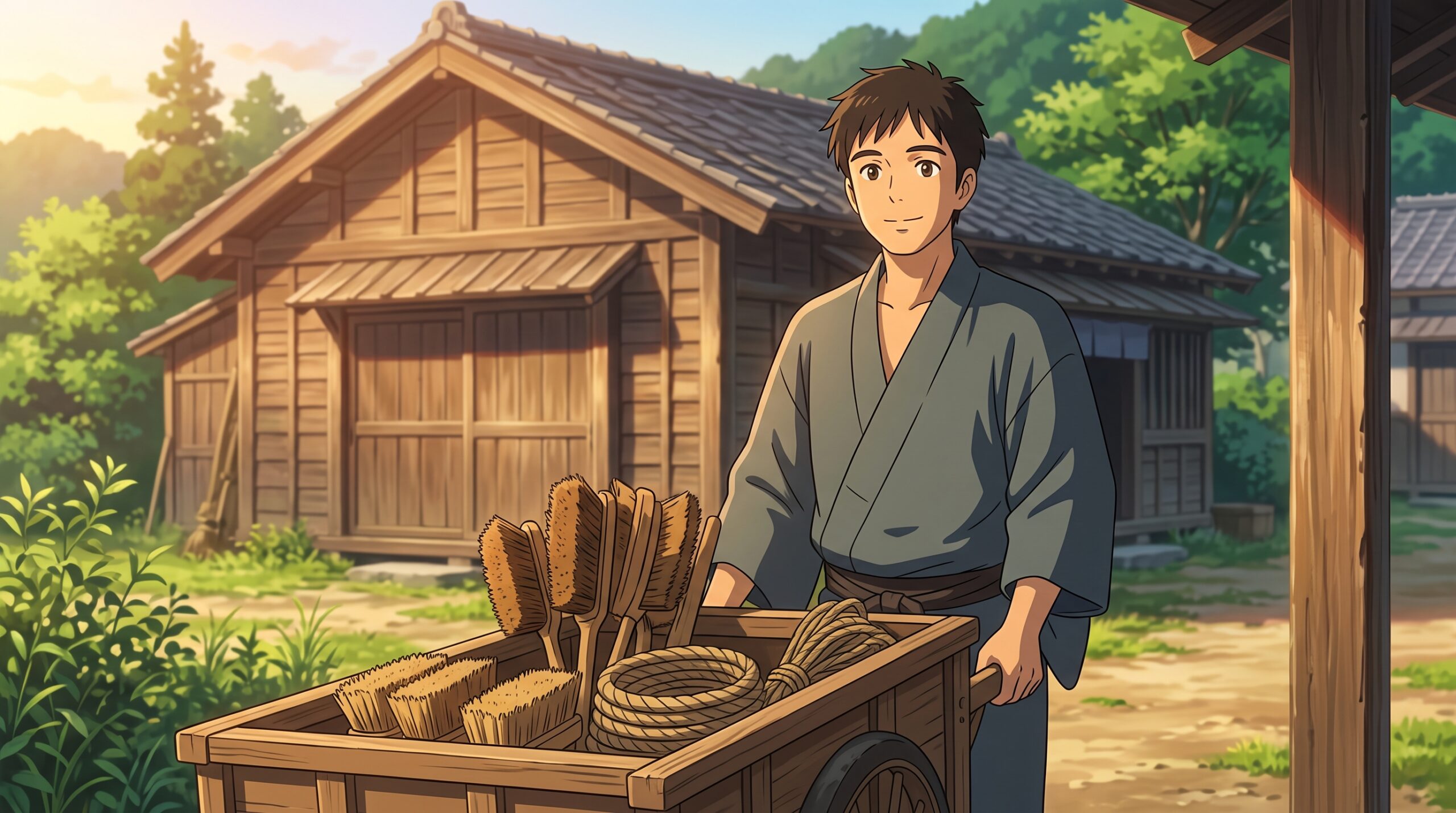
However, having only worked in the back of the store, Gosuke had no experience in actually selling things to people. At a loss as to how to sell brushes and ropes, he loaded the goods onto a handcart and decided to return to his parents’ home to ask for their advice.
When he arrived home, he was shocked to find his mother severely ill and bedridden. He learned that she hadn’t been able to take a bath for days. Heartbroken and desperate to make her feel refreshed, Gosuke went to the mansion of the wealthy village headman, explained the situation, and asked to borrow their outdoor bath.
Unfortunately, the bathtub outside was terribly dirty. Without hesitation, Gosuke took out the “Tawashi” he was supposed to sell and scrubbed the tub until it sparkled. Then, to draw water from the well quickly, he combined his ropes with a bamboo pole to create a makeshift well bucket system, finishing the grueling task of drawing water in no time. Thanks to his efforts, he was able to give his sick mother a warm, comforting bath.
The village headman and the neighbors who watched this unfold were amazed by the usefulness of the brushes and ropes. “With that brush, cleaning the bath is so easy!” and “With that rope, drawing water is effortless!” they exclaimed. Deeply impressed, the villagers rushed to the town to buy these wonderful tools.
After his mother felt a little better from the bath, Gosuke pulled his handcart back to town to try and sell his goods. To his surprise, he found a massive crowd gathered in front of a store. The people, having seen Gosuke’s brilliant demonstration, were desperately trying to buy brushes and ropes. The store’s stock sold out in an instant.
Just then, Gosuke arrived with his handcart full of brushes and ropes. The crowd immediately swarmed him, and his goods sold like hotcakes. He sold out completely and was the very first to return to his master’s store with a large sum of money.
The master was deeply impressed by Gosuke’s wit and business talent. True to his word, he welcomed Gosuke as his son-in-law. Gosuke eventually became the respectable master of the store and lived happily ever after with his family.
2. Analysis of the Folktale
This story is much more than a simple “rags-to-riches” tale. It is a profound narrative where the essence of business intersects with human warmth and kindness.
Initially, Gosuke had no idea how to sell his products. However, by using the goods for the pure purpose of helping his sick mother, he unintentionally performed the ultimate “product demonstration.” In modern marketing, it is crucial to “show the benefit and experience a product provides, rather than just talking about its specs.” Gosuke executed this perfectly, albeit by accident.
Furthermore, the driving force behind his actions was not “making a profit” but “love and filial piety towards his mother.” The moral that altruistic actions ultimately yield the greatest rewards strongly reflects traditional Japanese ethics. The story teaches us that destiny is not a matter of chance, but is carved out through daily sincerity and a heart that cares for others.
3. Connection to Japanese Culture
This folktale vividly reflects unique aspects of Japanese culture and values. Here are some fascinating points for international readers:
1. The Strong Devotion to Bathing Culture (Ofuro)
In Japan, bathing has historically been more than just washing away dirt; it holds an almost sacred meaning of purifying the mind and body and restoring health. The fact that the sick mother wished for a bath, and Gosuke went to great lengths to provide one, illustrates how deeply Japanese people value the culture of “Ofuro.”
2. Respect for Tools and Ingenuity (Tawashi and Rope)
The “Tawashi” (a scrub brush made from natural fibers) is a traditional tool still widely used in Japanese kitchens and for cleaning baths today. Seeing Gosuke scrub dirt and create a makeshift device with rope reveals the roots of Japanese craftsmanship and ingenuity—making the most of limited tools to enrich daily life.
3. The Spirit of Filial Piety
Respecting and caring for one’s parents and elders, known as filial piety, is one of the most prominent themes in Japanese folklore. Gosuke’s success is portrayed not merely as a result of his business skills, but as a heavenly reward for his kind and devoted nature toward his family.
4. What Would You Do?
By using products he didn’t know how to sell to help someone he loved, Gosuke proved their true value to the world.
If you were in Gosuke’s shoes and were handed items you had no idea how to use or sell, what would you do? Would you give up, or would you try to find a way they could solve a problem right in front of you?
Also, have you ever experienced a moment where acting for the sake of others, rather than for your own profit, ultimately brought you a great reward? Please share your thoughts and experiences!
Reference: Manga Nippon Mukashibanashi Database – Gosuke’s Business
Category: Japanese Folktale Series
日本昔話「五助どんの商売」:親孝行と機転が幸運を呼ぶ物語
① 昔話「五助どんの商売」のストーリー
昔々、日本のあるところに五助という貧しい若者がおりました。家計を助けるため、五助は幼い頃から小間物屋(日用品や化粧品を売る店)へ奉公に出て、真面目に働いていました。
ある日のこと、小間物屋の主人が店の者たちを全員集めてこう言いました。「店の商品を皆に割り当てる。それぞれ商売をして、一番早く商品を売り切って金に換えてきた者を、私の娘の婿にしよう」と。店の若者たちにはそれぞれ商品が割り当てられ、五助は「タワシ」と「綱(ロープ)」を売ることになりました。
しかし、五助はこれまで店の奥で働いていたため、自分で物を売る商売の経験がありません。どうやってタワシと綱を売ればいいか分からず途方に暮れた彼は、荷車に商品を積んで、ひとまず両親に相談しようと実家へ帰ることにしました。
実家に着くと、なんと母親が重い病に倒れ、床に伏せっていました。五助が話を聞くと、母親は何日もお風呂に入っていないと言います。五助は胸を痛め、母親をさっぱりさせてあげたい一心で、近所の庄屋様の屋敷へ向かい、事情を話してお風呂を借りることにしました。
ところが、庄屋様の家の外にあるお風呂はひどく汚れていました。そこで五助は、自分が売るはずだった商品の「タワシ」を取り出し、お風呂をピカピカに磨き上げました。さらに、井戸から急いで水を汲み上げるため、商品の「綱」と竹竿を組み合わせて即席の釣瓶(つるべ)を作り、あっという間に水汲みを終わらせました。こうして、無事に母親を温かいお風呂に入れてあげることができたのです。
その様子を見ていた庄屋様や近所の人々は、タワシと綱のあまりの便利さに驚きました。「あのタワシがあれば風呂が綺麗になる」「あの綱があれば水汲みが楽になる」と感動した人々は、五助のタワシと綱を求めて次々と町へ出かけていきました。
お風呂に入って母親の具合も少し良くなったため、五助は商売を再開しようと荷車を曳いて町へ戻りました。すると、ある店の前に黒山の人だかりができています。人々は五助が見せたタワシと綱の便利な使い方を真似しようと、我先にと商品を買い求めていたのです。店にあったタワシと綱はあっという間に売り切れてしまいました。
そこへ、荷車にタワシと綱を積んだ五助が現れました。人々は五助の荷車に殺到し、商品は飛ぶように売れました。五助はすべての商品を売りさばき、誰よりも早く、たくさんの売上金を持って小間物屋へ戻りました。
店の主人は五助の機転と商売の才能に感心し、約束通り五助を娘の婿に迎えました。その後、五助は小間物屋の立派な主人となり、家族とともに幸せに暮らしたということです。
② 昔話「五助どんの商売」の考察
この物語は、単なる「貧しい若者が成功するシンデレラストーリー」ではありません。ビジネスの本質と、人間の温かい心が見事に交差する深い物語です。
五助は最初、商品の売り方が分かりませんでした。しかし、病気の母親を助けるという純粋な目的のために商品を使った結果、それが最高の「実演販売(デモンストレーション)」となりました。現代のマーケティングにおいて、「商品のスペックを語るのではなく、商品がもたらす体験や利益(ベネフィット)を見せる」ことが重要とされますが、五助は意図せずしてそれを実践したのです。
また、彼の行動の原動力は「利益を得ること」ではなく「母親への愛と親孝行」でした。利他的な行動が、結果的に最大の利益をもたらすという教訓は、日本の伝統的な道徳観を強く反映しています。運命は偶然ではなく、日々の誠実な行動と、他者を思いやる心によって切り開かれるものだということを、この物語は教えてくれます。
③ 昔話から読み解く日本文化との関連
この昔話には、日本独自の文化や価値観が色濃く反映されています。海外の読者にとって興味深いポイントをいくつか紹介しましょう。
1. 入浴文化(お風呂)への強いこだわり
日本では古くから、入浴は単に体の汚れを落とすだけでなく、心身を清め、健康を回復させる神聖な儀式のような意味を持っていました。病気の母親が「お風呂に入りたい」と願い、五助がそれを叶えようと奔走する描写からは、日本人がどれほどお風呂を大切にしているかが分かります。
2. 道具への敬意と工夫(タワシと綱)
タワシ(自然の繊維で作られた洗浄用ブラシ)は、現在でも日本の台所やお風呂掃除で活躍する伝統的な道具です。五助がタワシで汚れを落とし、綱で即席の装置を作る姿は、限られた道具を最大限に活用し、日常生活を工夫で豊かにするという日本人の「ものづくり」や「職人魂」の原点を見ることができます。
3. 親孝行(Filial Piety)の精神
目上の人や親を敬い、大切にする「親孝行」は、日本の昔話において最も重要なテーマの一つです。五助の成功は、彼のビジネススキル以上に、その親思いの優しい性格に対する天からのご褒美として描かれています。
④ あなたならどうする? (What Would You Do?)
五助は、売り方が分からない商品を「大切な人を助けるため」に使ったことで、その真の価値を人々に証明しました。
もしあなたが五助の立場で、売り方も使い道も分からないものを手渡されたら、どうしますか? 諦めてしまうでしょうか、それとも五助のように、身近な問題の解決に役立てる方法を考えますか?
また、あなたにとって、自分の利益よりも他人のために行動したことが、結果的に自分自身の大きなプラスになった経験はありますか? ぜひ、あなたの考えやエピソードをシェアしてください。
Reference: まんが日本昔ばなしデータベース – 五助どんの商売
Category: Japanese Folktale Series
コメント