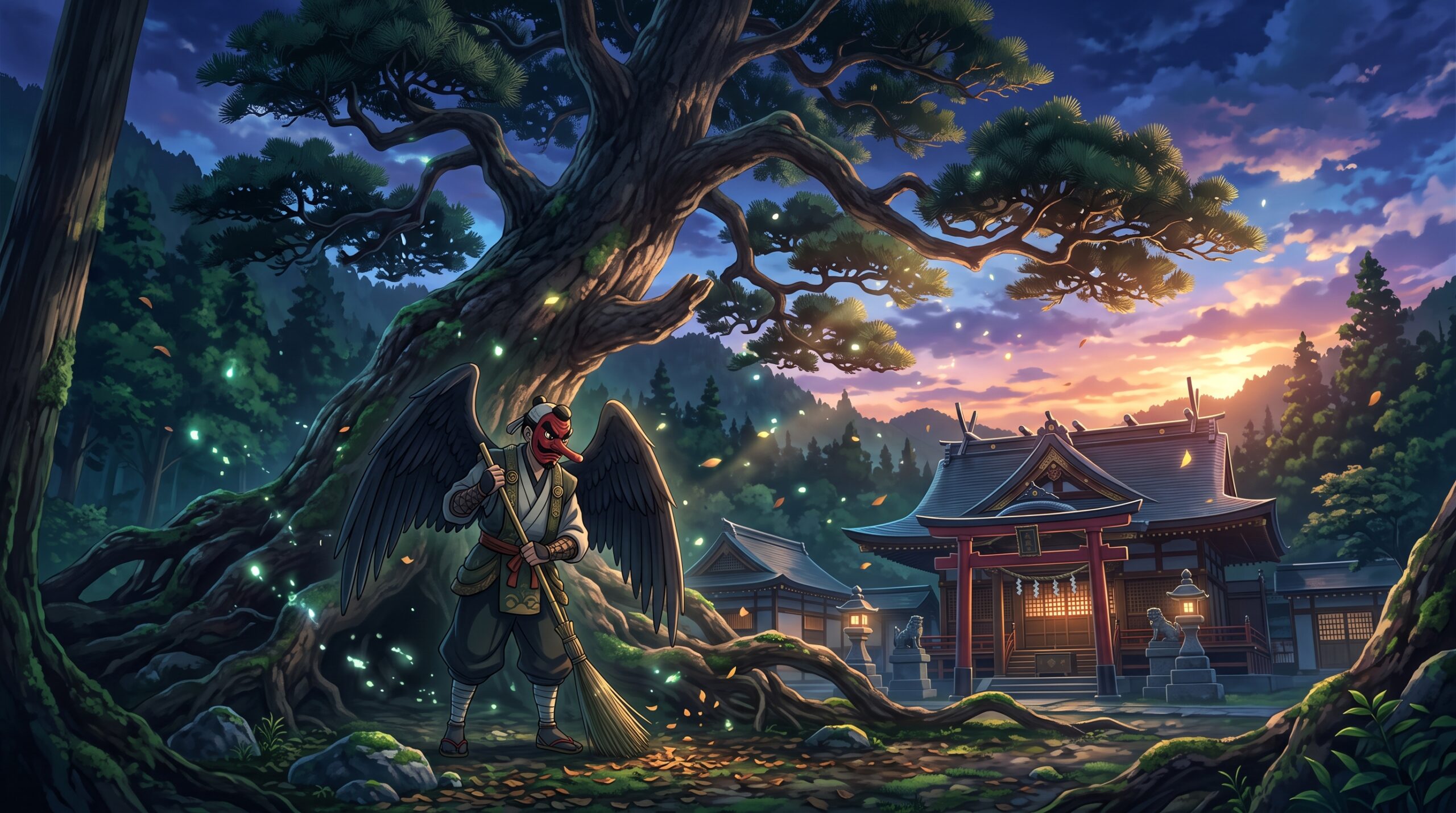
Have you ever walked through a dense forest or an ancient shrine in Japan and felt a sudden, inexplicable presence, as if you were being watched? In Japanese culture, it has long been believed that nature is breathing with invisible spirits and Yokai (supernatural beings). Today, from our Japanese Folktale Series, we introduce an enchanting legend passed down at Takane Shrine in Izu: “The Tengu’s Pine.”
① The Legend of the Tengu’s Pine
Long ago, within the grounds of Takane Shrine in Izu, there stood a colossal pine tree. While this region was famous for its magnificent pines, this “Great Pine” was in a league of its own. It was so overwhelmingly massive that even trees boasting a lifespan of three or four hundred years looked like mere saplings in comparison.
However, there was one bizarre mystery surrounding this Great Pine. No matter how hard the wind blew, not a single pine needle could ever be found on the ground beneath it.
The reason for this was hidden in its branches: a group of “Tengu” (mythical mountain goblins with supernatural powers) had made the tree their home. Surprisingly, these Tengu were absolute neat-freaks. Carefully avoiding the eyes of humans, they took turns sweeping the ground beneath the tree with bamboo brooms, day and night.
One quiet afternoon, a young man from the village passed near the Great Pine and heard a strange sound. Swish, swish, swish… It sounded like someone sweeping. On this particular day, the Tengu assigned to be the lookout was slacking off, and the signal warning of a human’s approach was delayed. The other Tengu scrambled to hide in the branches, but one Tengu failed to notice the signal and continued sweeping innocently.
The young man approached the sound and found, for the first time, scattered pine needles on the ground, and the back of a Tengu sweeping furiously. When the young man nervously called out from behind, the Tengu jolted in surprise and awkwardly turned around.
For a tense moment, the human and the Yokai locked eyes. Then, in the very next second, both of them let out deafening screams of terror and sprinted away in opposite directions as fast as their legs could carry them.
The young man rushed back to the village and brought the villagers to the Great Pine. But there were no pine needles, no Tengu, only the quiet rustle of the wind. The villagers laughed it off, assuming a mischievous fox or tanuki had bewitched the boy.
Sometime later, an unprecedented super-typhoon struck the village. A violent storm, the likes of which neither humans nor Tengu had ever experienced, raged through the area. Even the proud, mighty Great Pine could not withstand the relentless winds and finally toppled over, uprooted from the earth.
The next morning, under a clear blue sky, the villagers stared at the fallen giant in despair. “Rather than letting it rot away miserably, we should cut it up and give it a proper, dignified end,” they decided, planning to bring woodcutters the very next morning.
But that night, an incredible phenomenon occurred. From the direction of the shrine, a lively, rhythmic chanting echoed throughout the village all night long: “Heave-ho! Heave-ho!”
When the villagers awoke and visited the shrine the next morning, they collapsed to their knees in shock. The colossal Great Pine, which had been completely uprooted the day before, was standing perfectly upright once again. The villagers finally understood. “The Tengu really do live there. That chanting last night… it was the Tengu rebuilding their home.”
From that day on, a pine needle never fell around the Great Pine again. The Tengu continued to live there, meticulously sweeping and protecting their beloved home forever.
② Analysis of the Folktale: The Humanity and Labor of Yokai
When we analyze this story deeply, a very unique fact emerges that completely shatters the traditional image of Yokai.
In Japanese folklore, “Tengu” are typically depicted as terrifying lords of the mountains—creatures with red faces, long noses, and wings, possessing immense physical strength and magical powers to strike fear into the hearts of humans. But what about the Tengu in this story?
They are obsessive neat-freaks who diligently sweep every day. Furthermore, when spoken to by a human, they panic and run away screaming. They are surprisingly timid and approachable. This is a brilliant characteristic of Japanese folktales: portraying allegedly all-powerful monsters as relatable, almost human-like local neighbors.
Also, pay attention to the scene where the fallen pine is restored. The Tengu didn’t just snap their fingers and use magic to fix the tree. With chants of “Heave-ho!”, they used grueling physical labor all night long to pull the tree back up. Even powerful Yokai are no match for the true fury of nature (the storm), and they sweat and labor just like humans to protect their homes. It depicts Yokai as living entities striving to survive within nature, just like us.
③ Connection to Japanese Culture: Purity and Animism
From “The Tengu’s Pine,” we can clearly decipher two profound spiritual concepts unique to Japan: “Purity” (Seijou) and “Animism” (Yaoyorozu no Kami – the eight million gods).
First, consider the act of “sweeping.” In Western culture, cleaning is often just a physical chore to remove dirt. However, in Japanese Shinto and Zen Buddhism, cleaning is a spiritual practice—a sacred ritual to remove impurities (Kegare). The Tengu swept the fallen leaves not just to be tidy, but because the Great Pine was a sacred sanctuary where the divine resided. The invisible spirits sweeping the shrine grounds perfectly mirror the daily purification rituals performed by Shinto priests and Zen monks today.
Second, the concept of “Animism” is deeply embedded here. The villagers’ desire to give the fallen tree a “proper end” rather than letting it rot, and the Tengu’s desperate effort to resurrect it, showcase the belief that souls dwell within all of nature. Faced with the destruction of a natural disaster, both humans and Yokai treat the tree with profound reverence. This story beautifully illustrates the original landscape of Japan, where humans, Yokai, and nature coexist while respecting each other’s boundaries.
④ What Would You Do?
The story of “The Tengu’s Pine” teaches us just how many narratives and unseen residents hide in the nature we casually pass by every day.
Now, I have a question for you. If a massive, centuries-old tree in your local park was blown down by a fierce storm tonight, what would you do? Would you believe in a miracle where unseen forest spirits raise it back up by morning? Or would you simply call heavy machinery to clear the debris?
The next time you visit a quiet forest or an ancient temple, look closely at the fallen leaves on the ground. Listen carefully. You just might hear the faint swish, swish, swish of a Tengu’s broom. How did this story make you feel about Japanese Yokai and nature? I would love to hear your thoughts!
Reference:
For details and the original source of this folklore, please refer to the database below:
Manga Nippon Mukashibanashi Database: “Tengu no Matsu” (Japanese)
【日本の怪異と自然信仰】「天狗の松」が語る、見えざる隣人たちとの共生
日本の深い森や古びた神社を歩いていると、ふと「見られている」ような、不思議な気配を感じたことはありませんか? 日本の自然には、古来より目に見えない精霊や妖怪たちが息づいていると信じられてきました。今回は、Japanese Folktale Series(日本の昔話シリーズ)の中から、伊豆の高根神社に伝わる魅惑的な伝説、「天狗の松」をご紹介します。
① 昔話「天狗の松」の物語
昔々、伊豆にある高根神社の境内に、一本の途方もなく巨大な松の木がそびえ立っていました。この一帯は立派な松が多い地域でしたが、この「大松」は桁外れであり、樹齢三百年、四百年の松でさえ比較にならないほどの圧倒的な存在感を放っていました。
しかし、この大松には一つの奇妙な謎がありました。どれほど風が吹いても、「大松の根元には、ただの一枚も松葉が落ちていない」のです。
それもそのはず、この大松には「天狗(てんぐ)」という、神通力を持つ山の妖怪たちが住んでいたからです。驚くべきことに、彼らは極度のきれい好きでした。人間たちに決して姿を見せぬよう用心しながら、昼も夜も交代で、大松の周りを箒(ほうき)で掃き清めていたのです。
ある日の昼下がり、一人の若者が大松の近くを通りかかり、奇妙な音を耳にしました。「サッサッ、サッサッ……」と、何かを掃くような音です。実はこの時、天狗の見張りがサボっており、若者の接近を知らせる合図が遅れてしまったのです。他の天狗たちは慌てて木の上に隠れましたが、一人の天狗だけが合図に気づかず、無心に掃除を続けていました。
若者が音のする方へ行くと、そこには地面に落ちた大量の松葉と、一生懸命に箒を動かす天狗の後ろ姿がありました。若者が恐る恐る背後から声をかけると、天狗はビクッと肩を震わせ、気まずそうに振り返りました。
人間と妖怪の目が合った瞬間。二人はしばらく呆然と見つめ合い――次の瞬間、お互いに鼓膜が破れるほどの大声を上げて、一目散に反対方向へ逃げ出しました。
若者は村へ駆け戻り、村人たちを連れて大松へ戻りました。しかし、そこには落ちた松葉も天狗の姿もなく、ただ静かな風の音が響くのみでした。村人たちは「狐か狸に化かされたのだろう」と笑い飛ばしました。
それからしばらく後、村を未曾有の大嵐が襲いました。村人も天狗も経験したことのない暴風雨が吹き荒れ、あの誇り高き大松も、ついに風に耐えきれず根元から横倒しになってしまいました。
翌朝、嵐が去った青空の下、倒れた大松を見て村人たちは悲しみに暮れました。「腐らせてしまうよりは、切り出して立派な最期を迎えさせてやろう」。村人たちは話し合い、翌朝に木こりを呼んで大松を切ることに決めました。
ところがその晩のことです。神社の方向から、「ヨイショ! ヨイショ!」という、景気の良い掛け声が一晩中、村中に響き渡りました。
翌朝、目を覚ました村人たちは神社へ行き、その場にへたり込みました。なんと、完全に倒れていたはずの巨大な大松が、元通りに真っ直ぐそびえ立っていたのです。村人たちは深く悟りました。「やはり、あの大松には天狗が住んでいたのだ。昨夜の掛け声は、自分たちの家を立て直す天狗たちの声だったのだ」と。
その後も、大松の周りに松葉が落ちることは一度もなく、天狗たちはいつまでも自分たちの住処を綺麗に掃除して暮らしたということです。
② 昔話からの考察:天狗の人間らしさと労働
この物語を深く考察すると、伝統的な妖怪像とは全く異なる、非常にユニークな事実が浮かび上がってきます。
日本の伝承において、「天狗」といえば、赤い顔に長い鼻を持ち、背中に翼を生やし、恐るべき怪力と神通力で人間を恐怖に陥れる傲慢な山の主として描かれるのが一般的です。しかし、この「天狗の松」に登場する天狗たちはどうでしょうか。
彼らは極度の「きれい好き」であり、毎日地道に箒で掃除をしています。さらに、人間に声をかけられて驚き、パニックになって逃げ出してしまうという、驚くほど臆病で親しみやすい一面を持っています。これは、強大な力を持つはずの妖怪を、人間味あふれるローカルな隣人として描く、日本民話の素晴らしい特徴です。
また、倒れた松を元に戻すシーンにも注目すべきです。天狗は魔法のように指を鳴らして木を直したわけではありません。「ヨイショ!」という掛け声とともに、一晩中、肉体労働によって木を引き上げたのです。強大な妖怪であっても、自然の猛威(嵐)には敵わず、そして自らの住処を守るために泥臭く汗を流す。ここには、人間と同じように自然の中で懸命に生きる「生命」としての妖怪の姿が描かれています。
③ 日本文化との関連:清浄と八百万の神
この「天狗の松」からは、日本独自の深い精神性である「清浄(せいじょう)」と「アニミズム(八百万の神)」の概念を明確に読み解くことができます。
まず、天狗が絶えず行っていた「掃除」です。欧米文化において、掃除は単なる物理的な汚れを落とす家事に過ぎないことが多いですが、日本の神道や禅宗において、掃除とは「精神の修行」であり、不浄(ケガレ)を祓う神聖な儀式です。天狗が落ち葉を掃き清めていたのは、その大松が単なる木ではなく、神が宿る「神域」であったからです。見えない彼らが神社を掃除しているという設定は、日本の神社仏閣で日々行われる清掃作業そのものを体現しています。
また、村人たちが倒れた木を「腐らせるより、切って相応しい最期を」と扱おうとした点や、天狗が必死に木を立て直した点には、自然の万物に魂が宿るとする「八百万の神(やおよろずのかみ)」の信仰が表れています。巨大な自然(嵐)によってもたらされた破壊に対し、人間も妖怪も、木に対する深い敬意を持って接しています。この物語は、人間、妖怪、そして自然が、互いの領域を尊重しながら共生している日本の原風景を見事に描き出しています。
④ あなたならどうしますか?
「天狗の松」の物語は、私たちが普段見過ごしている自然の中に、いかに多くの物語や見えざる住人たちが隠れているかを教えてくれます。
さて、あなたに問いかけたいと思います。もし、あなたの街の公園にある樹齢数百年の大木が、ある夜の嵐で倒れてしまったらどうしますか? 翌朝、見えない精霊たちがそれを元通りに立て直してくれる奇跡を信じますか? それとも、すぐに重機を呼んで撤去してしまうでしょうか。
次に静かな森や古い寺社を訪れたときは、地面の落ち葉に目を向けてみてください。そして耳を澄ませてください。もしかすると、どこからか「サッサッ」という、天狗の箒の音が聞こえてくるかもしれません。この記事を読んで、日本の妖怪や自然についてどう感じましたか? ぜひあなたの考えを教えてください。
Reference / 参考リンク:
本記事で紹介した伝承の原典や詳細については、以下のデータベースもご参照ください。
まんが日本昔ばなし〜データベース〜「天狗の松」

コメント