① The Ice-Bound Land and the Threat of Starvation
Long ago, in the harsh and freezing winter of Hokkaido, a deep snow completely blanketed the earth, and the rivers were sealed beneath thick layers of ice. The Ainu people living in this region were struck by an unprecedented and severe famine. Not a single deer appeared in the mountains to be hunted, and not even the life-giving salmon returned to swim up the rivers. The village’s food reserves were completely exhausted. Shivering from starvation and the biting cold, the people were driven to a state of absolute despair, left with nothing to do but wait for death.
The village elders offered prayers to the God of Fire, pleading for salvation from the Kamui (gods) dwelling in the heavens. “Please, save us. If this continues, every child in our village will perish.” Their heartbroken prayers were carried on the freezing wind all the way to the heavens.
The one who answered this prayer was Kotankor Kamui, the guardian deity of the village who took the form of a great owl. Looking down upon the earth, the god’s heart ached deeply at the sight of the starving people. To save them, the god descended to the earth, alighting upon a massive willow tree growing along the banks of the Mu River.
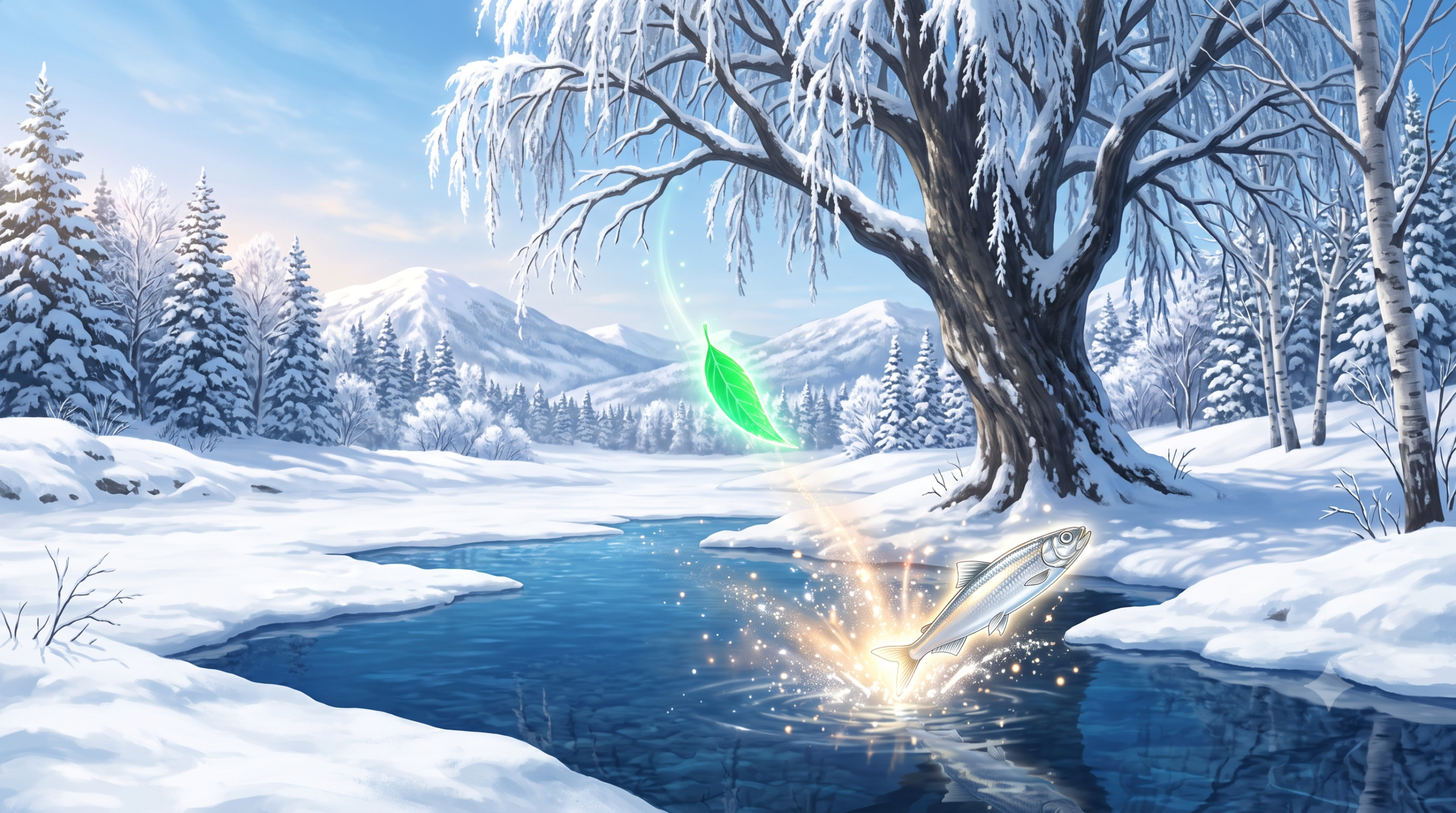
The god plucked leaves from the branches of the willow tree and breathed divine life into them. Then, the god cast the willow leaves one after another into the freezing waters flowing through the cracks in the ice. Suddenly, a breathtaking miracle occurred. The moment the willow leaves touched the surface of the water, they instantly transformed into tiny, silver-shining lives that began to swim vigorously through the river. This was the exact moment of the birth of the “Willow Leaf Fish”—the Shishamo.
Seeing a massive school of Shishamo fill the river, the villagers cried out in boundless joy. Thanks to these tiny lives bestowed by the gods, the villagers were able to stave off starvation and safely survive the brutal winter. From that day forward, the people revered the willow tree as sacred and deeply cherished the Shishamo as a precious gift from the heavens.
② The Deep Meaning Behind the “Willow Leaf Fish”
This story is not merely a legend explaining the origin of a fish. It is a profound drama of survival depicting human helplessness in the face of harsh nature, and the immense mercy of the great existence (nature) that oversees it. The willow tree is a symbol of absolute vitality, extending its branches flexibly even in severe cold and sprouting buds earlier than others in the spring. The depiction of willow leaves turning into living fish clearly illustrates the “continuity of life”—the transfer and circulation of vitality from flora to fauna.
Furthermore, it is crucial to note that the god did not simply manifest food out of thin air, but created the fish through the medium of natural elements—the “willow leaves.” This strikes at a truth that aligns perfectly with modern ecology: humans are part of the natural ecosystem, and the forest (willow) and the river (fish) are inextricably linked. Only when the forest is rich can the river be wealthy, nurturing the life of the sea. This legend uses brilliant metaphor to pass down the perfect balance and interdependent system of the natural world to future generations.
③ Deciphering the Japanese Spirit through Ainu Culture and Animism
The most important element to decode from this folktale is the spirit of “Animism” that lies at the very foundation of Ainu culture. The Ainu people believe that a “Kamui” (spirit/god) dwells in absolutely everything—animals, plants, mountains, rivers, and even everyday tools. The legend of the Shishamo embodies a humble worldview recognizing that humans do not dominate nature, but are “kept alive” by nature’s grace.
The very name “Shishamo” originates from the Ainu words “susu” (willow) and “ham” (leaf), proving that language and natural phenomena are inseparably connected. This spirit of revering and coexisting with nature resonates deeply not only with Ainu culture but also with Japanese Shinto, which worships eight million gods, and the fundamental Japanese view of nature.
Even in modern Japan, Shishamo is a familiar fish on the dining table. However, when we realize that within a single tiny fish lies the vitality of the forest, the mercy of the gods, and the prayers of our ancestors who survived harsh winters, our culinary experience is elevated to something profoundly spiritual.
④ A Question for You
The gods provided hope to the starving people in the form of “willow leaves.” If you found yourself on the brink of absolute despair in your life and received a tiny miracle from nature, how would you pass that grace on to the next generation?
There is immeasurable drama and prayer hidden in the life we casually consume every day. Today, when you eat your meal, try to imagine just for a moment where that life came from. How would you show your gratitude to this endless chain of life?
References & Related Links
– Internal Link: Japanese Folktale Series
– External Link (About the ecology and history of Shishamo): Shishamo – Wikipedia
– External Link (About Ainu Culture): Ainu Language Archives (National Ainu Museum)
柳の葉の魚:神々が与えた命の奇跡
① 氷に閉ざされた大地と飢えの危機
昔々、北海道の厳しく冷たい冬のことです。深い雪が大地を覆い尽くし、川は分厚い氷に閉ざされていました。この地に暮らすアイヌの人々は、かつてない深刻な飢饉に見舞われていました。山には獲物となる鹿が一匹も姿を見せず、川には恵みをもたらす鮭すら遡上してきません。村の蓄えは底をつき、人々は飢えと寒さに震えながら、ただ死を待つしかない絶望的な状況に追い込まれていました。
村の長老たちは火の神に祈りを捧げ、天に住むカムイ(神々)に救いを求めました。「どうか、我々をお救いください。このままでは村の子供たちも皆、命を落としてしまいます」彼らの悲痛な祈りは、冷たい風に乗って天上へと届きました。
その祈りを聞き入れたのは、フクロウの姿をした村の守護神、コタンコロカムイでした。神は地上を見下ろし、飢えに苦しむ人々の姿に深く心を痛めました。神は人々を救うため、自ら地上へと舞い降り、鵡川(むかわ)のほとりに生い茂る一本の大きな柳の木に降り立ちました。
神は柳の木の枝から葉をむしり取ると、それに神聖な息吹を吹き込みました。そして、氷の隙間から流れる冷たい川の水面に向かって、その柳の葉を次々と投げ入れたのです。すると驚くべき奇跡が起きました。川面に落ちた柳の葉は、瞬く間に銀色に輝く小さな命へと姿を変え、川の中を力強く泳ぎ始めたのです。これこそが「柳の葉の魚」、すなわちシシャモ(ススハム)の誕生の瞬間でした。
川を埋め尽くすほどのシシャモの群れを見た村人たちは、歓喜の声を上げました。神が与えてくれたこの小さな命のおかげで、村人たちは飢えをしのぎ、無事に過酷な冬を乗り越えることができました。それ以来、人々は柳の木を神聖なものとして敬い、シシャモを神からの贈り物として大切に食べるようになったのです。
② 「柳の葉の魚」が持つ物語の深層
この物語は、単なる魚の起源を語る伝説ではありません。過酷な大自然の中で生きる人間の無力さと、それに対する大いなる存在(自然)の慈悲を描いた生存のドラマです。柳の木は、厳しい寒さの中でもしなやかに枝を伸ばし、春にはいち早く芽吹く生命力の象徴です。その柳の葉が命(魚)に変わるという描写は、植物の生命力が動物の生命力へと転換・循環する「命の連続性」を明確に示しています。
また、神が直接食べ物を与えるのではなく、「柳の葉」という自然界の要素を媒介して魚を生み出した点に注目すべきです。これは、人間が自然界の生態系の一部であり、森(柳)と川(魚)が密接に結びついているという、現代の生態学にも通じる真理を突いています。森が豊かであればこそ、川が豊かになり、海の命が育まれる。この伝説は、自然界の完璧なバランスと相互依存のシステムを、見事な比喩で後世に伝えているのです。
③ アイヌ文化とアニミズムから読み解く日本の精神
この昔話から読み解くべき最も重要な要素は、アイヌ文化の根底にある「アニミズム(精霊信仰)」の精神です。アイヌの人々は、動植物、山、川、さらには道具にまで、すべてのものに「カムイ(魂・神)」が宿っていると信じています。シシャモの伝説は、人間が自然を支配するのではなく、自然の恩恵によって「生かされている」という謙虚な世界観を体現しています。
「シシャモ」という名前自体が、アイヌ語の「スス(柳)」「ハム(葉)」に由来していることからも、言葉と自然現象が分かち難く結びついていることがわかります。この自然を敬い、共生する精神は、アイヌ文化のみならず、八百万の神々を信仰する日本の神道や、日本人の根源的な自然観と深く共鳴しています。
現代の日本においても、シシャモは食卓に並ぶ身近な魚です。しかし、その小さな魚一匹の中に、森の生命力と神々の慈悲、そして厳しい冬を生き抜いた先人たちの祈りが込められていることを知る時、私たちの食体験はより深く、精神的なものへと昇華されます。
④ あなたへの問いかけ
神々は、飢えに苦しむ人々に「柳の葉」という形で希望を与えました。もしあなたが、人生で最も過酷な絶望の淵に立たされた時、自然からの小さな奇跡を受け取ったなら、その恩恵をどのように次の世代へ繋ぎますか?
私たちが普段何気なく口にしている命には、計り知れないドラマと祈りが隠されています。今日、あなたが食事をする時、その命がどこから来たのか、少しだけ想像してみてください。あなたなら、この命の連鎖にどう感謝を示しますか?
参考・関連リンク
・内部リンク:Japanese Folktale Series (日本の昔話シリーズ)
・外部リンク(シシャモの生態と歴史について):シシャモ – Wikipedia
・外部リンク(アイヌ文化について):アイヌ語アーカイブス(国立アイヌ民族博物館)


コメント