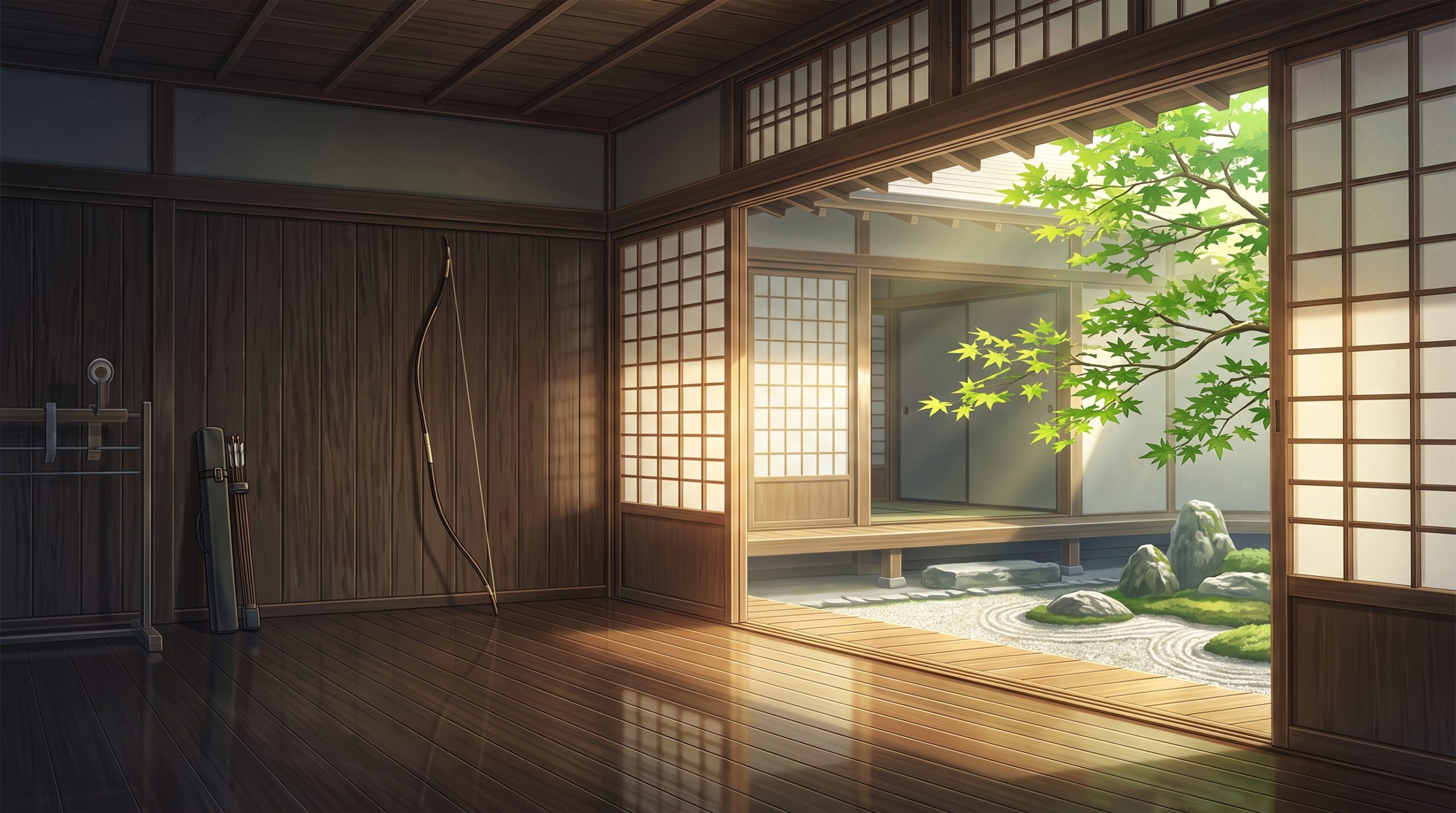
Introduction: What is Kyudo Day on September 10?
Since ancient times, Japan has nurtured a rich culture of finding special meaning in the sounds and wordplays of numbers. September 10th is an anniversary born exactly from this culture, designated as “Kyudo (Japanese Archery) Day.” Through the Japanese wordplay of “9 (Kyu)” and “10 (Do),” the All Nippon Kyudo Federation established this day in hopes of promoting and developing this traditional Japanese martial art. Unlike standard sports that merely compete for technical accuracy or points, Kyudo is a comprehensive art form that encapsulates Japanese spirituality, aesthetic sensibility, and the philosophy of self-discipline. Taking Kyudo Day as a starting point, this article will thoroughly explore the deep-seated Japanese harmony between mind and body. For international visitors, this spiritual approach is a vital key to deeply understanding Japan.
The History of Kyudo: From Hunting to Martial Arts to a Spiritual Path
The roots of Kyudo trace back to the ancient Jomon period. Early bows and arrows were tools for hunting and survival. However, as the samurai class rose to power from the Heian to the Kamakura period, the bow evolved into the most critical weapon in combat. Samurai refined the technique of shooting a bow while riding a horse, known as the “Way of the Bow and Horse.” Up until the Sengoku (Warring States) period, the bow was the undisputed king of long-range battlefield weaponry.
Later, with the introduction of firearms, the practical role of the bow on the battlefield diminished. But it was here that the Japanese bow underwent a unique evolution rarely seen in world history. It transitioned from a “martial art” designed for killing to a “martial way” (Budo) designed for training the mind and perfecting one’s character. During the peaceful Edo period, Kyudo became deeply intertwined with the teachings of Zen Buddhism. The emphasis shifted from “hitting the target” to “how beautifully and with what pure state of mind one draws the bow.” This remains the spiritual foundation of modern Kyudo.
The Philosophy of Kyudo: The Pursuit of “Shin-Zen-Bi”
The ultimate goal of Kyudo lies in embodying “Shin-Zen-Bi” (Truth, Goodness, and Beauty). This is a philosophy unique to Kyudo that sets it apart from any other sport.
- Shin (Truth): A mind without falsehood. It means pursuing correct, logical movements (the eight stages of shooting, or Shahō-Hassetsu) without resisting the bow’s natural repulsive force or the laws of nature.
- Zen (Goodness): Ethical correctness. Maintaining a calm mind, respecting others, and discarding the desire for conflict. In Kyudo, you are not defeating an opponent; it is always a battle with your own inner self.
- Bi (Beauty): When “Truth” and “Goodness” are achieved, a beautiful presence naturally emerges. The flawless movements, the crisp sound of the bowstring echoing in the silence—everything radiates artistic beauty.
In the world of Kyudo, there is a phrase: “Seisha Hicchu” (A true shot never misses). This means that if you shoot correctly, the arrow will inevitably hit the target. If you focus solely on the correct process rather than exposing your desire to win, the result will naturally follow. In our modern society, where we are overloaded with information and constantly demanded to produce results, this is a profound universal truth we must not forget.
The Japanese Bow (Yumi): An Asymmetrical Beauty Unique in the World
When discussing Kyudo, one cannot overlook the equipment used: the “Yumi” (Japanese bow). While Western archery pursues scientific rationality with pulleys and sights, the Yumi maintains an incredibly simple structure made by combining bamboo and wood. Its greatest characteristic is that it is the world’s longest bow, measuring over 2.2 meters, yet it has a highly unique “asymmetrical” shape where the grip is located far below the center.
This asymmetry is said to be the result of seeking ease of handling on horseback, but it simultaneously requires the ultimate physical sensation to control this physical imbalance with human technique and mental strength. The Yumi is an incredibly delicate and sacred tool that reflects the turbulence of the wielder’s mind like a mirror.
The Sound of the Bowstring in Kizugawa: An International Student’s Journey
To deeply understand the spirituality of Kyudo, let me share a story.
Kizugawa City, located in the southern part of Kyoto Prefecture, is a place where gentle nature and ancient history breathe. In a weathered dojo surrounded by a beautiful bamboo grove, stood Michael, a young man from America studying at a Japanese university. He had come to Japan with a strong admiration for anime and samurai culture, but the heavy academic workload and the stress of living in a different culture had left him physically and mentally exhausted. “I thought something would change if I came to Japan, but the reality is just endless frustration.” Carrying these heavy thoughts, he wandered into this dojo by chance.
In the crisp, tense silence, a master dressed in traditional hakama was quietly preparing his bow. His movements flowed without a single wasted gesture. Then, a sharp, clear “paan!”—the sound of the bowstring (Tsurune)—pierced the cold air of Kizugawa. The arrow was pierced dead center in the target, as if it had been there from the very beginning.
“What incredible accuracy. How do you shoot so precisely?” Michael asked. The master smiled gently and handed him the Yumi. “You must not think about hitting the target. The target is merely a mirror reflecting your mind. Attachment, impatience, anger… When you discard all of these and become ‘empty’ (Mushin), the arrow naturally guides itself to the target.”
From that day, Michael’s rigorous training began. At first, he couldn’t hit the target at all. His desire to “hit” caused unnecessary tension in his shoulders and ruined his posture. His master relentlessly corrected his “Shahō-Hassetsu” (the eight fundamental movements). Footing, establishing posture, readying the bow… It was training to focus 100% of his consciousness not on the result, but solely on the step-by-step process of his body’s movements in the present moment. For Michael, who had always pursued efficiency and speed, it was an endless dialogue with himself.
Months passed. One morning, the river mist of the Kizugawa River wrapped the dojo in a magical atmosphere. Michael stood before the target and slowly drew the bow. He felt his “loneliness in a foreign land” and the “desire to hit” simply vanish from his mind. It was a space where only the resistance of the bow and his own breath existed. Before he realized it, the string had left his hand. The clear sound of the bowstring echoed, and the arrow beautifully pierced the dead center of the target.
Michael understood. If we become so obsessed with the result that we lose sight of the “process” of the present moment, our minds wander, and we cannot perform at our true potential. What Kyudo taught him was the “art of the empty mind”—how to create absolute silence within oneself in a noisy world. As Michael walked along the banks of the Kizugawa River after leaving the dojo, his eyes no longer harbored the fear of frustration; they held a quiet, powerful light.
Decoding the Depths of Japanese Culture: The Spirit of “Do” (The Way)
As this story illustrates, Japanese martial arts like Kyudo, as well as cultural arts like Sado (tea ceremony) and Kado (flower arrangement)—all of which end in “Do” (the Way)—are fundamentally connected. Their shared approach is: “Achieving spiritual enlightenment by mastering the form (process).”
While Western culture often leans toward controlling the external world (nature or others), Japanese culture places profound importance on controlling the “inner self.” In Kyudo, the target doesn’t move, and the bow simply exists. If things don’t go well, the reason lies entirely within “oneself.” This spirit of rigorous self-dialogue and personal responsibility is the ethical foundation the Japanese have cherished since ancient times, and it is the source of the politeness and stoicism praised worldwide.
Conclusion: Do You Have Time for an “Empty Mind” in Your Daily Life?
September 10, “Kyudo Day.” This is not just an anniversary on the calendar; it is a quiet message urging us modern people to reclaim the “harmony of mind and body” that we are forgetting. In a modern society where information flows incessantly from smartphone screens and we are constantly rushed to produce results, are you able to find time to focus 100% on “your own actions in the present moment” and empty your mind?
Discard the obsession with the result (hitting the target) and pour all your energy into the process (drawing the bow with correct posture). Having touched upon the unique Japanese spirit of “The Way” through this article, what kind of routine of “silence” will you incorporate into your daily life starting tomorrow? Take a deep breath, and re-examine your own “inner target.”
Reference Links
- External Resource: All Nippon Kyudo Federation
- Related Articles: Explore the “What’s Today’s Special Day?” Series
- Introduction: What is Kyudo Day on September 10?
- The History of Kyudo: From Hunting to Martial Arts to a Spiritual Path
- The Philosophy of Kyudo: The Pursuit of “Shin-Zen-Bi”
- The Japanese Bow (Yumi): An Asymmetrical Beauty Unique in the World
- The Sound of the Bowstring in Kizugawa: An International Student’s Journey
- Decoding the Depths of Japanese Culture: The Spirit of “Do” (The Way)
- Conclusion: Do You Have Time for an “Empty Mind” in Your Daily Life?
- 9月10日は「弓道の日」:日本人が極める「真・善・美」と無心の境地
9月10日は「弓道の日」:日本人が極める「真・善・美」と無心の境地
はじめに:9月10日、弓道の日とは何か
日本には古来より、言葉の響きや語呂合わせから特別な意味を見出す豊かな文化があります。9月10日は、まさにその文化から生まれた記念日「弓道の日」です。「9(きゅう)」と「10(どう)」の語呂合わせにより、公益財団法人全日本弓道連盟が日本の伝統的な武道である弓道の普及と発展を願って制定しました。単に的を射る技術や点数を競うスポーツとは異なり、弓道は日本人の精神性、美意識、そして自己修養の哲学が凝縮された総合芸術とも呼べる存在です。本記事では、この弓道の日を入口として、日本文化の深層にある「心と体の調和」について徹底的に解説します。海外から日本を訪れる方々にとっても、この精神性は日本を深く理解するための重要な鍵となるでしょう。
弓道の歴史:狩猟から武術、そして精神の道へ
弓道のルーツは、はるか昔の縄文時代にまで遡ります。初期の弓矢は、生きるための狩猟の道具でした。しかし、時代が下り武士が台頭する平安時代から鎌倉時代にかけて、弓は戦闘における最重要の武器へと進化を遂げます。武士たちは「弓馬の道」として、馬に乗りながら弓を引く技術を極限まで磨き上げました。戦国時代までは、弓は最強の遠距離武器として戦場の主役でした。
その後、鉄砲の伝来により実戦での弓の役割は大きく低下しますが、ここで日本の弓は世界でも稀に見る独自の進化を遂げます。人を殺傷するための「武術」から、己の精神を鍛え、人格を完成させるための「武道」への転換です。江戸時代に入ると、天下泰平の世の中で、弓道は禅宗の教えと深く結びつきました。「的に当てること」よりも「いかに美しく、正しい心で弓を引くか」が重視されるようになったのです。これが、現代へと続く弓道の精神的基盤となっています。
弓道の哲学:「真・善・美」の追求
弓道の最高目標は「真・善・美」の体現にあります。これは、他のいかなるスポーツとも一線を画す弓道特有の哲学です。
- 真(Shin): 偽りのない心。弓の反発力や自然の法則に逆らわず、理にかなった正しい動作(射法八節)を追求すること。
- 善(Zen): 倫理的な正しさ。平常心を保ち、他者を敬い、争いの心を捨てること。弓道では、相手を打ち負かすのではなく、常に自分自身の心との戦いになります。
- 美(Bi): 「真」と「善」が備わった時、そこに自然と立ち現れる美しい所作。無駄のない動き、静寂の中に響く弦の音、すべてが芸術的な美しさを放ちます。
弓道の世界では「正射必中(せいしゃひっちゅう)」という言葉があります。これは「正しく射れば、必ず的に当たる」という意味です。的に当てようと欲望を剥き出しにするのではなく、ただひたすらに正しいプロセスを踏むことに集中すれば、結果は自然とついてくる。これは、情報過多で結果ばかりを求められる現代社会において、私たちが忘れてはならない極めて普遍的な真理です。
日本の和弓:世界に類を見ない非対称の美
弓道を語る上で欠かせないのが、使用する道具である「和弓(わきゅう)」です。西洋のアーチェリーが科学的な合理性を追求し、滑車や照準器を備えているのに対し、和弓は竹と木を組み合わせた極めてシンプルな構造を保っています。そして最大の特徴は、長さが約2.2メートルにも及ぶ世界最大の長弓でありながら、握る位置が中心よりも下にある「上下非対称」の形をしていることです。
この非対称性は、馬上での扱いやすさを求めた結果とも言われていますが、同時に、物理的なアンバランスさを人間の技術と精神力でコントロールするという、究極の身体感覚を要求します。和弓は、扱う者の心の乱れを鏡のように映し出す、非常に繊細で神聖な道具なのです。
木津川の竹林で響く弦音:ある外国人留学生の体験
ここで、弓道の精神性を深く理解するための、一つのストーリーを紹介しましょう。
京都府の南部、穏やかな自然と古い歴史が息づく木津川市。美しい竹林に囲まれた古びた弓道場に、アメリカから日本の大学へ留学してきた青年、マイケルの姿がありました。彼は日本のアニメや侍文化に強い憧れを抱いて来日しましたが、多忙な学業と異文化での生活によるストレスで、心身ともに疲弊しきっていました。「日本に来れば何かが変わると思っていたのに、現実は焦燥感ばかりだ」。そんな思いを抱えながら、彼は偶然この道場に足を踏み入れました。
ピンと張り詰めた静寂な空気の中、袴姿の師範が静かに弓を構えていました。一切の無駄がない、流れるような動作。そして、「パーン」という甲高く澄んだ弦の音(弦音)が木津川の冷たい空気を切り裂きました。矢は、まるで最初からそこにあったかのように、的の中心に突き刺さっていました。
「素晴らしい命中精度ですね。どうすればそんなに正確に的を射抜けるのですか?」とマイケルは尋ねました。師範は穏やかに首を振り、彼に和弓を手渡しました。「的に当てようと思ってはいけません。的は、己の心を映す鏡に過ぎないのです。心にある執着、焦り、怒り。それらすべてを捨て去り、『無』になった時、矢は自然と的へ向かうのです」
その日から、マイケルの厳しい修行が始まりました。最初は全く的に当たりません。「当てたい」という欲が、肩に余計な力を入れ、姿勢を大きく崩すのです。師範からは何度も「射法八節(弓を引くための8つの基本動作)」を直されました。足踏み、胴造り、弓構え……。結果(的)ではなく、現在の一瞬一瞬のプロセス(自分の体の動き)にだけ100%の意識を向ける訓練です。それは、効率やスピードばかりを追い求めてきたマイケルにとって、自己との果てしない対話でした。
数ヶ月が経ったある朝。木津川の川霧が道場を幻想的に包み込んでいました。マイケルは的の前に立ち、ゆっくりと弓を引きます。頭の中の「異国での孤独」や「当てたいという欲」が、スーッと消えていくのを感じました。ただ、弓の反発力と、自分の呼吸だけが存在する空間。気がつけば、弦は彼の手を離れていました。高く澄んだ弦音が響き、矢は見事に的のど真ん中を射抜いていました。
マイケルは悟りました。結果に執着するあまり、今この瞬間の「過程」を見失えば、心は迷い、本来の力は発揮できません。弓道が彼に教えてくれたのは、ノイズに溢れた世界の中で、自分自身の内面に絶対的な静寂を作り出す「無心の技術」でした。道場を出て木津川のほとりを歩く彼の目は、もはや焦燥感に怯えることはなく、静かで力強い光を宿していました。
日本文化の深層を読み解く:「道」の精神
この物語からも分かるように、弓道をはじめとする日本の武道、あるいは茶道や華道といった「道(どう)」のつく文化は、すべて根底で繋がっています。それは「型(プロセス)を極めることで、精神的な悟りに至る」というアプローチです。
西洋の文化が、自己の外部にある世界(自然や他者)をコントロールしようとする傾向があるのに対し、日本の文化は「自己の内面」をコントロールすることに重きを置きます。弓道において的は動かず、弓もただそこにあるだけです。上手くいかない理由はすべて「自分」の中にあります。この徹底した自己対話と自己責任の精神こそが、日本人が古来より大切にしてきた倫理観であり、世界から称賛される礼儀正しさやストイックさの源泉なのです。
結びに:あなたの日常に「無心」の時間はありますか?
9月10日の「弓道の日」。それは単なるカレンダー上の記念日ではなく、私たち現代人が忘れかけている「心と体の調和」を取り戻すための、静かなるメッセージです。スマートフォンの画面から絶え間なく情報が流れ込み、常に結果を求められて焦燥感に駆られる現代社会。そんな中で、あなたは「今この瞬間の自分の動作」だけに100%集中し、心を「無」にする時間を持てているでしょうか?
的に当てること(結果)への執着を捨て、正しい姿勢で弓を引くこと(過程)に全力を注ぐ。この記事を読んで、日本特有の「道」の精神に触れたあなたは、明日からの日常に、どのような「静寂」のルーティンを取り入れますか?ぜひ、深呼吸をして、あなた自身の「心の的」を見つめ直してみてください。


コメント