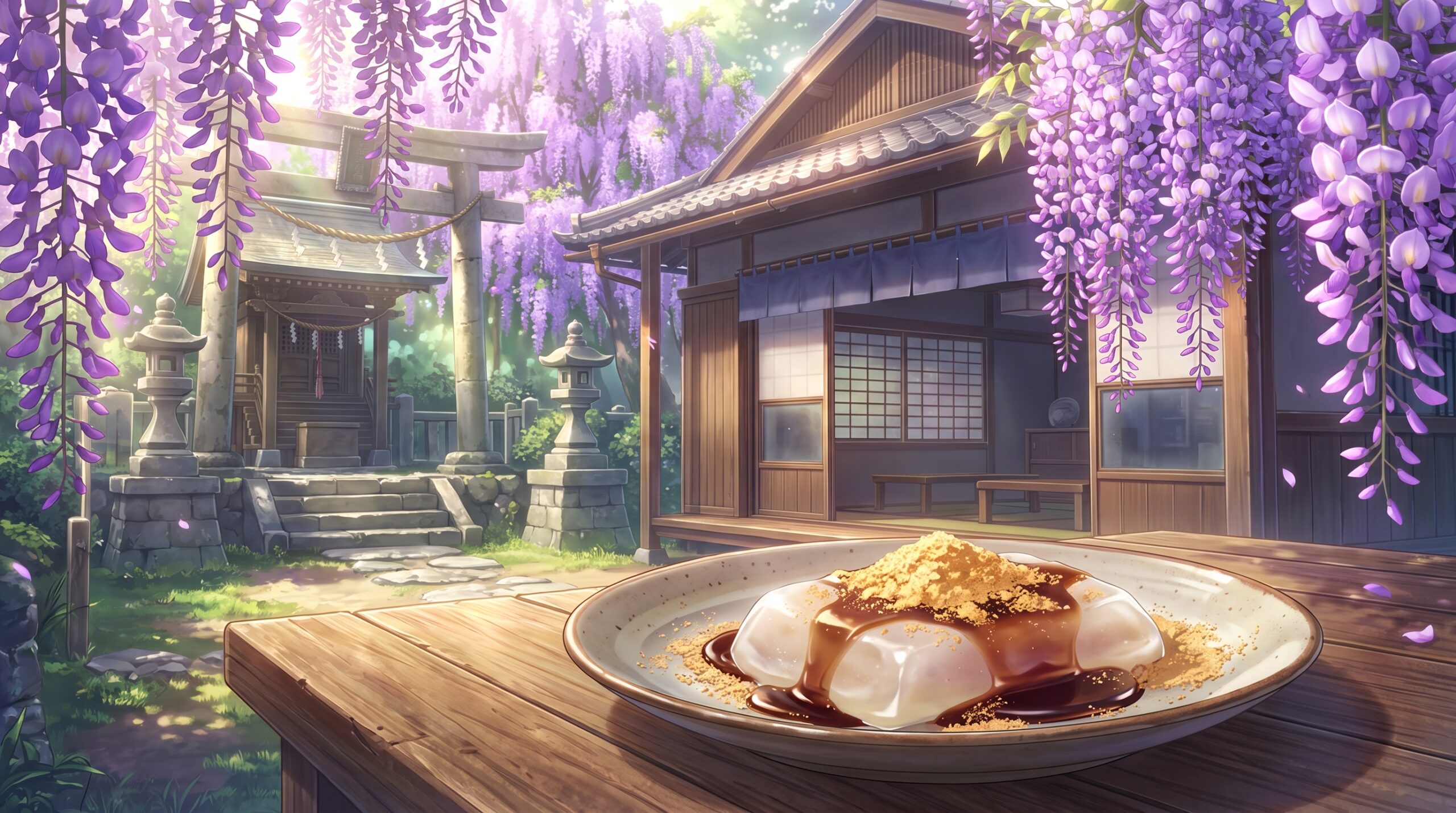
September 2 marks “Kuzumochi Day” in Japan. This anniversary was established in 2003 by Funabashiya, a traditional Japanese confectionery shop with over 200 years of history, headquartered in Kameido, Tokyo. The date was chosen as a Japanese wordplay, where 9 (ku) and 2 (zu) sounds like “Kuzumochi”.
When hearing “Kuzumochi,” many might imagine the transparent sweets made from arrowroot (kudzu) powder popular in the Kansai region. However, the Kuzumochi of the Kanto region—deeply rooted in Edo culture—is completely different. It is a rare “fermented Japanese sweet” made by fermenting wheat starch over a long period.
The History Born from Kameido Tenjin’s Wisteria and a Plate of Sweets
Funabashiya’s origins trace back to 1805 (Bunka 2) during the Edo period. Kansuke, the first-generation founder, traveled to Tokyo from Shimousa Province (northern Chiba Prefecture). At the time, the Kameido Tenjin Shrine was bustling with commoners enjoying plum and wisteria blossoms, but the long walk left worshippers exhausted.
Noticing this, Kansuke used high-quality wheat from his hometown, kneaded the wheat starch with hot water, steamed it in wooden boxes, and generously topped it with rich dark syrup (kuromitsu) and roasted soybean flour (kinako). This revitalizing treat instantly became a sensation among shrine visitors and etched its name in history as an “Edo specialty.” It was even ranked at the very top of famous Edo products in early Meiji era publications.
The “Japanese Aesthetic” Created by 450 Days of Patience
The most remarkable feature of this Kuzumochi is its staggering manufacturing process. After separating the starch from the wheat, it is lacto-fermented in wooden vats for an incredible 450 days (about 15 months). By washing away the sourness with natural groundwater every day while it matures, it develops its unique elasticity and supple texture.
In today’s fast-paced society that heavily prioritizes time efficiency, dedicating 450 days to craft a single type of sweet symbolizes traditional Japanese “fermentation culture” and the “aesthetic of waiting”—aligning closely with nature’s rhythm to cultivate true essence.
The Lactobacillus That Survived the Flames of War
Over its 200-year history, the shop faced numerous crises. During the Great Kanto Earthquake and the devastating Tokyo air raids of World War II, Funabashiya’s storefront burned to the ground. Miraculously, the underground fermentation vats survived the inferno. The lactobacillus that had been passed down since the Edo period lived on. Without this surviving bacteria, today’s Kuzumochi would not exist.
This simple yet profoundly deep flavor was cherished by literary giants such as Ryunosuke Akutagawa and Kafu Nagai. Renowned author Eiji Yoshikawa loved Funabashiya’s dark syrup so much that he spread it on bread to heal his exhaustion from writing. He even specifically brushed the large wooden “Funabashiya” signboard that still proudly hangs in their main store today.
What Kuzumochi Asks of Us Today
Kuzumochi Day on September 2 is not just a celebration of a sweet treat. It is a day to remember the depth of Japanese food culture, which walks hand-in-hand with natural microorganisms, and the resilience of the people who protected what mattered most even through absolute devastation.
Because we live in an era where everything is instantly available, the taste of Kuzumochi—completed slowly over 450 days—asks us, “What is true richness?”
How do you interpret the taste of history packed into these 450 days? In a modern world driven by efficiency, what value do you find in things that intentionally require time and patience?
Related Links:
- Funabashiya Official Website (Japanese)
- Read more in the “What’s Today’s Special Day” Series (Kiri53)
9月2日はくず餅の日:江戸から続く450日間の奇跡と時を味わう和菓子
9月2日は「くず餅の日」です。東京都江東区亀戸に本店を置き、200年以上の歴史を持つ老舗和菓子店「船橋屋」によって2003年に制定されました。日付は「く(9)ず(2)もち」と読む語呂合わせに由来しています。
多くの人が「くずもち」と聞くと、関西圏で親しまれている透明な葛粉(くずこ)を使った和菓子を想像するかもしれません。しかし、関東、特に江戸の文化として根付いている「くず餅(久寿餅)」は全くの別物です。小麦でんぷんを長期間発酵させて作られる、和菓子としては非常に珍しい「発酵食品」なのです。
亀戸天神の藤と、一杯のくず餅から始まった歴史
船橋屋の創業は、江戸時代の文化2年(1805年)に遡ります。11代将軍・徳川家斉が治めていた時代、初代・勘助は下総国(現在の千葉県北部)から上京しました。当時の亀戸天神は、梅や藤の花を楽しむ江戸の庶民たちで溢れかえっていましたが、長距離を歩いて参拝する人々は皆一様に疲労していました。
そこで勘助は、故郷である下総国の良質な小麦を使い、湯で練った小麦でんぷんをせいろで蒸し上げ、濃厚な黒蜜と香ばしいきな粉をたっぷりとかけた餅を考案しました。これが亀戸天神の参拝客の間で瞬く間に評判となり、「江戸名物」として歴史に名を刻むことになります。明治初頭の番付表「大江戸風流くらべ」でも、船橋屋のくず餅は最高ランクに格付けされました。
450日という時間が生み出す「日本の美学」
このくず餅の最大の特徴は、その途方もない製造工程にあります。小麦からでんぷんを分離させた後、なんと450日(約15ヶ月)もの間、木槽で乳酸発酵させます。毎日地下水で酸味を洗い流しながら熟成させることで、あの独特の弾力としなやかな歯触りが生まれるのです。
タイパ(タイムパフォーマンス)が重視される現代社会において、一つの菓子を作るために450日を費やすという事実は、自然の力に寄り添い、時間をかけて本質を育むという日本の伝統的な「発酵文化」と「待つ美学」を象徴しています。
戦火をくぐり抜けた乳酸菌と文豪たちの愛した味
200年を超える歴史の中には、幾多の危機がありました。関東大震災、そして第二次世界大戦の東京大空襲により、船橋屋の店舗は焼け落ちてしまいました。しかし、地中に埋められていた発酵槽だけが奇跡的に戦災を免れ、江戸時代から代々受け継がれてきた乳酸菌は生き延びたのです。この菌が存在しなければ、現在のくず餅は存在しません。
この素朴でありながら奥深い味わいは、芥川龍之介や永井荷風といった名だたる文豪たちにも愛されました。特に吉川英治は、執筆の疲れを癒やすために船橋屋の黒蜜をパンに塗って食べるほど気に入り、現在も本店に掲げられている大きな「船橋屋」の木製看板を特別に揮毫しています。
くず餅が現代に問いかけるもの
9月2日の「くず餅の日」は、単なるスイーツの記念日ではありません。それは、自然の微生物と共に歩む日本の食文化の奥深さと、焼け野原になっても大切なものを守り抜いた人々の精神力(レジリエンス)を思い出す日です。
何でもすぐに手に入る時代だからこそ、450日という時間をかけてゆっくりと完成するくず餅の味わいは、私たちに「真の豊かさとは何か」を問いかけてきます。
あなたは、この450日の時間が詰まった歴史の味を、どのように解釈しますか? 効率化が進む現代において、あえて時間をかけることでしか得られない価値について、あなたならどう考えますか?
関連リンク:


コメント