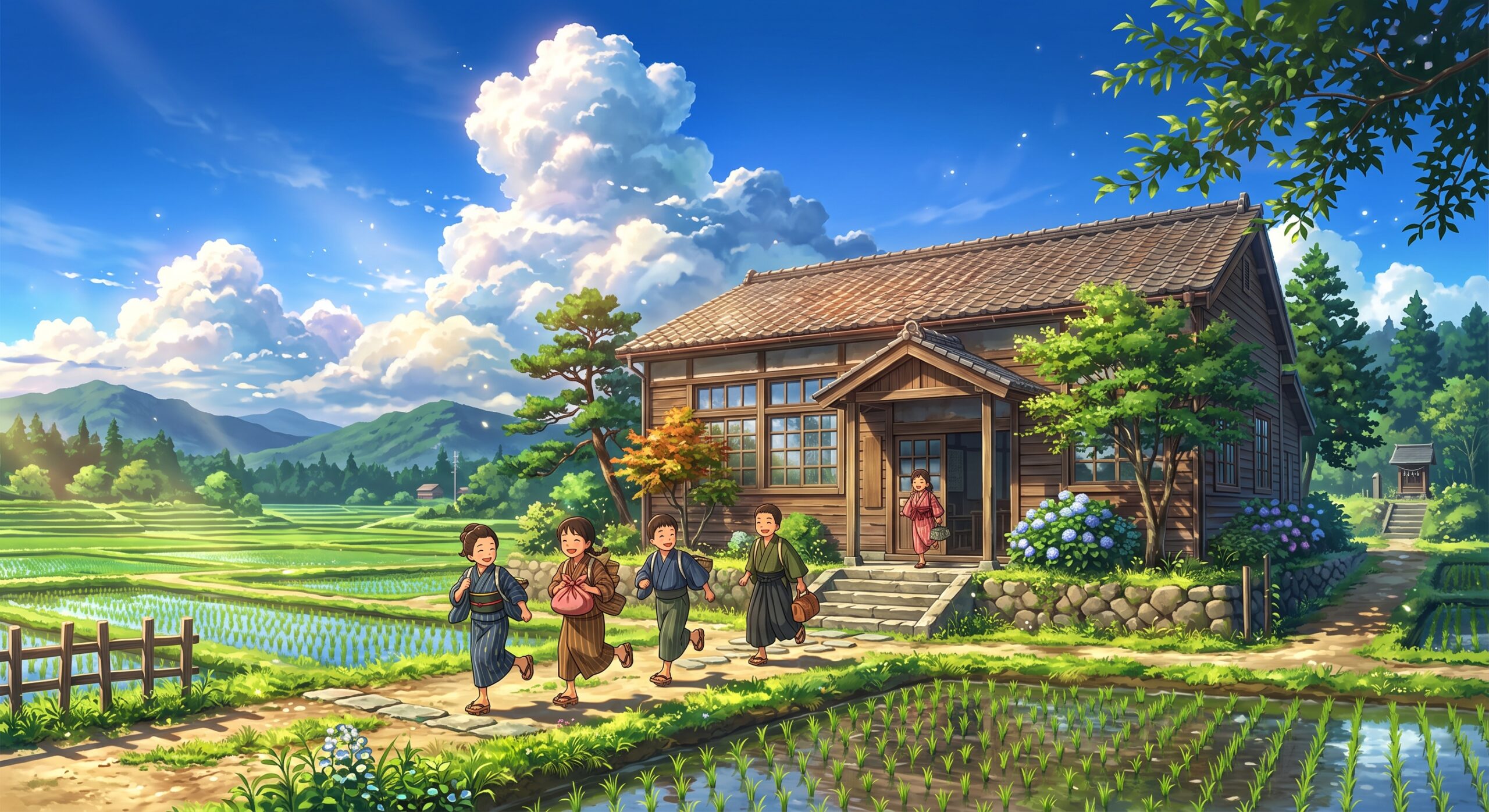
On August 20, 1900 (Meiji 33), the Japanese government promulgated the 3rd Elementary School Order. This was not a mere legal amendment. It marks the precise historical moment when the foundation of modern Japan’s greatest weapons—its phenomenal literacy rate and highly disciplined society—was permanently cemented.
The greatest revolution brought about by this decree was the “free provision of compulsory education (four years of ordinary elementary school)” combined with the “strict enforcement of school attendance.” Before this, schools existed in Japan, but they required tuition fees. In impoverished rural farming communities, parting with a child who was a valuable source of labor—and paying money on top of that—was nearly impossible. However, under this new order, the state bore the financial burden. Simultaneously, it took the uncompromising stance of imposing fines on parents who failed to send their children to school without justifiable cause. This was the moment the nation demonstrated its absolute resolve to elevate the intellectual standard of the entire population.
A Tale from a Rural Village: From the Soil to the Classroom
To understand exactly how this historical fact transformed individual lives, let us look through the eyes of a young boy in a rural village back in 1900.
Meet Taro, an 8-year-old boy living in a small mountain village. His hands are already calloused like a grown man’s from pulling weeds in the rice paddies since he was a toddler. In his village, only the wealthy children of landowners could attend school. To Taro, written characters were nothing more than mysterious patterns drawn on temple talismans. From the day he was born, his future was predetermined: he would spend his entire life tilling the soil of this village.
However, in the autumn of 1900, a government official posted a notice on the village board: “All children must attend school for four years. Tuition will be completely free of charge.” The adults in the village fiercely protested. “If we lose our workers, who will plow the fields!?” But the state’s decree was absolute. Police officers even patrolled the villages to strictly enforce school attendance.
Taro was reluctantly sent to school. At first, simply sitting still at a desk was agonizing. But when he wrote his first kanji character for “Mountain” (山) and read the character for “River” (川), a shock like a lightning bolt struck his mind. He realized that knowing how to read gave him access to the vast world outside his village, events in distant cities, and even the history of the past.
Four years later, Taro proudly graduated. One day, an important tax document from the government arrived at his house. As his illiterate parents trembled in fear, Taro took the paper, read the complex text fluently, and explained the contents simply. Silent tears fell from his mud-stained father’s eyes. “You are going to live in a different world than us,” he said. Taro later moved to the city, became a railway engineer, and worked on the front lines to support Japan’s rapid modernization. This story of Taro is not a fictional fairy tale; it represents the reality of the “explosion of knowledge” experienced by millions of children across Japan during that era.
The “Miracle” and “Japanese Culture” Brought by Homogenized Education
The impact of the 3rd Elementary School Order went far beyond simply learning to read and write. It completely rebuilt the very “culture” of Japan.
Using the same textbooks and following the same curriculum everywhere in the country—this thorough “homogenization of education” instilled shared values and morals within the Japanese people. Everyone cleans the classroom together; everyone prepares the school lunch together. The experience of learning shoulder-to-shoulder in the same classroom, regardless of social class or wealth, powerfully propelled Japan’s unique culture that highly values “Wa” (group harmony).
Why do modern Japanese people form orderly lines without rioting, even during disasters? Why do trains operate precisely on minute-by-minute schedules? These are not traits embedded in Japanese DNA. They are the crystalized results of a compulsory education system prioritizing discipline and perseverance that began in 1900 and has been passed down for generations. Furthermore, the fact that the entire nation became literate created the fertile ground for an explosive development of publishing and subcultures—such as newspapers, magazines, and eventually the “Manga” and “Anime” that would sweep the globe.
What Do You Think?
When a state forces the exact same education on all its citizens, it inevitably restricts absolute individual freedom. However, in 1900, Japan chose to “elevate the entire nation,” even at that cost, and consequently achieved miraculous economic growth.
As you read this article, what are your thoughts on this historical choice? Between an education system designed to nurture a single outstanding genius and a system where every single citizen shares a guaranteed high standard of knowledge—if you were a nation’s leader, which path would you choose for the future? Please compare it with your own country’s education system and share your thoughts.
Reference Links & Category
- Read more from “What’s Today’s Special Day Series” (Category List)
- Wikipedia: Elementary School Order (Japanese)
- MEXT: Transition of Japan’s Compulsory Education System (Japanese)
1900年8月20日:日本の運命を決定づけた「第3次小学校令」の衝撃
1900年(明治33年)8月20日、日本政府は「第3次小学校令」を公布しました。これは単なる法律の改正ではありません。現代日本の最大の武器である「圧倒的な識字率」と「規律正しい社会」の基盤が、完全に完成した歴史的な日です。
この法令がもたらした最大の革命は、「義務教育(尋常小学校4年間)の無償化」と「就学義務の厳格化」です。それまでの日本にも学校は存在していましたが、授業料が必要でした。貧しい農村部において、貴重な労働力である子供から手を離し、さらに学費まで払うことは極めて困難でした。しかし、この法令によって国が学費を負担することになり、同時に「正当な理由なく子供を学校に行かせない親には罰金を科す」という強硬な措置が取られました。国家が本気で「全国民の知的水準を引き上げる」という断固たる決意を示した瞬間です。
ある農村の物語:土から教室へ
この歴史的事実がどれほど人々の人生を変えたのか、1900年当時のとある農村の少年の視点から紐解いてみましょう。
山間の小さな村に住む8歳の少年、太郎。彼の手は、幼い頃から泥にまみれて田んぼの草むしりをするため、すでに大人のように硬くなっていました。村で学校に通えるのは、地主や庄屋の裕福な子供たちだけ。太郎にとって文字とは、お寺のお札に書かれた不思議な模様でしかありませんでした。彼の未来は、生まれた日から「一生、この村で土を耕し続けること」と決められていたのです。
しかし、1900年の秋、村の掲示板に役人が貼り紙をしました。「すべての子供を4年間、学校に通わせること。授業料は一切無料とする」。村の大人たちは猛反発しました。「働き手が減ったら、誰が畑を耕すんだ!」。しかし、国の命令は絶対でした。警察官までもが村を見回り、就学を厳しく指導したのです。
しぶしぶ学校へと送り出された太郎。最初は机の前にじっと座っていることすら苦痛でした。しかし、彼が初めて「山」という字を書き、「川」という字を読んだ時、彼の脳内に雷のような衝撃が走りました。文字を知ることで、村の外にある広大な世界、遠くの街の出来事、そして過去の歴史にまでアクセスできることに気づいたのです。
4年後、立派に尋常小学校を卒業した太郎の家に、政府から税金に関する重要な通知書が届きました。文字が読めない両親が怯える中、太郎はその難解な文章をすらすらと読み上げ、両親に内容をわかりやすく説明しました。その時、泥だらけの父親の目から静かに涙がこぼれ落ちました。「お前は、わしらとは違う世界を生きるんだな」。その後、太郎は都市へ出て鉄道の技術者となり、日本の近代化を最前線で支えることになります。この太郎の物語は決して架空のおとぎ話ではなく、当時の日本全国で無数に起きた「知の爆発」の真実の姿です。
均質化された教育がもたらした「奇跡」と「日本文化」
第3次小学校令がもたらした影響は、読み書きの習得だけに留まりません。日本という国の「文化そのもの」を作り替えました。
全国どこでも同じ教科書を使い、同じカリキュラムで学ぶ。この徹底した「教育の均質化」は、日本人に共通の価値観と道徳観を植え付けました。全員で教室の掃除をし、全員で給食の準備をする。身分や貧富の差に関係なく、同じ教室で肩を並べて学ぶ経験は、日本特有の「和(集団の調和)」を重んじる文化を強力に推し進めました。
現代の日本人が、災害時でも暴動を起こさず整然と列に並ぶこと。電車が分単位のスケジュールで正確に運行されること。これらは決して日本人の遺伝子に組み込まれているわけではありません。1900年から始まった、規律と忍耐を重んじる義務教育システムが数世代にわたって受け継がれてきた「結晶」なのです。また、国民全員が文字を読めるようになったことで、新聞、雑誌、そして後に世界を席巻する「漫画(マンガ)」や「アニメ」といった出版・サブカルチャー文化が爆発的に発展する土壌が形成されました。
あなたはどう考えますか?
国家が国民全員に同じ教育を強制することは、個人の自由を制限する側面もあります。しかし、1900年の日本は、その代償を払ってでも「国全体の底上げ」を選び、結果として奇跡的な経済成長を遂げました。
この記事を読んでいるあなたは、この歴史的選択をどう思いますか?突出した一人の天才を育てる教育システムと、国民全員が一定の高い水準を共有する教育システム、もしあなたが国のリーダーなら、未来のためにどちらを選択するでしょうか?ぜひ、あなたの国の教育システムと照らし合わせて考えてみてください。

コメント