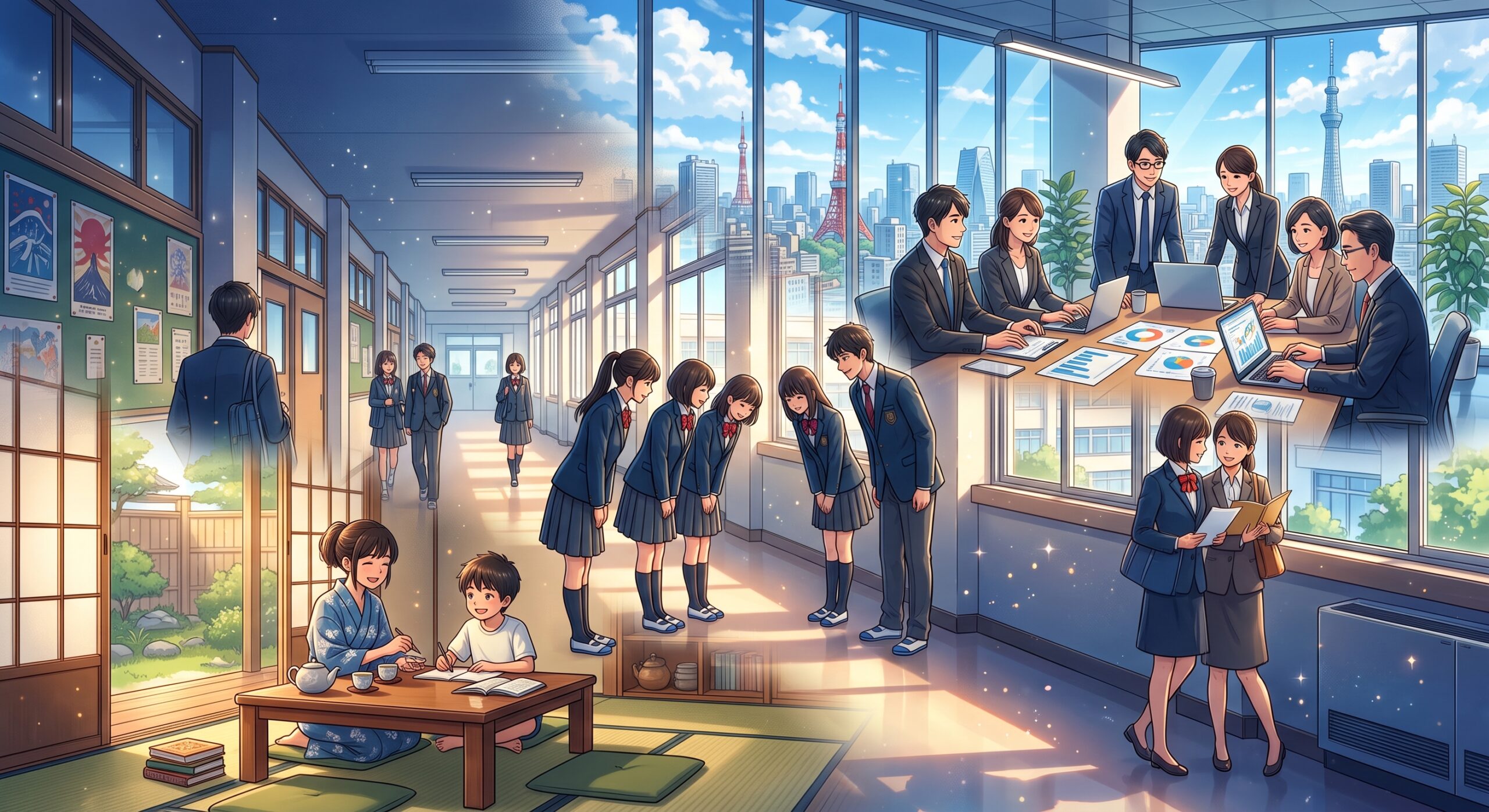
When English speakers say “I have a brother,” they do not need to immediately specify whether he is older or younger. In the Japanese language, however, this ambiguity is strictly not permitted. There is no single everyday word that simply means “brother” or “sister.” To hold a conversation, you must always clarify the specific relationship: “Ani” (older brother), “Otouto” (younger brother), “Ane” (older sister), or “Imouto” (younger sister).
This linguistic characteristic proves that Japanese people are raised to be constantly aware of age hierarchy from early childhood. Even within the family unit, relationships are not equal. Language itself forcefully assigns roles: the elders hold the responsibility to protect and guide the younger ones, while the younger ones are explicitly expected to respect their elders. The language functions as the primary training mechanism for individuals to recognize their relative position in society. The unique nature of this structure is well documented in external resources, such as the Japanese Language (Wikipedia) page.
Loyalty Inherited from Bushido and the “Senpai-Kohai” Bond
The hierarchical awareness cultivated at home naturally evolves into the robust “Senpai” (senior) and “Kohai” (junior) dynamic through school education and extracurricular activities. A Senpai is not merely someone older, but someone with more experience within that specific organization. A Kohai is someone with less experience. This relationship is absolute; even if two people are exactly the same age, the one who joined the group first is invariably treated as the Senpai.
The roots of this vertical relationship and deep loyalty can be traced back to the spiritual structure of the samurai during Japan’s feudal era. For instance, looking at the historical background of the Ako region, famous globally for the tale of loyalty of the 47 Ronin, we see that absolute devotion to a lord or superior has long been considered a Japanese virtue. Furthermore, family crests passed down through generations, such as the proud “Gosan no Kiri,” symbolize a culture that values the continuity of the “house” and bloodline over the individual. This historical spirituality of respecting superiors and fiercely protecting organizations and traditions has seamlessly transformed into the modern “Senpai-Kohai” system.
A Senpai acts as a mentor, teaching rules and actively looking after the Kohai. In return, the Kohai is expected to show unwavering respect, follow instructions diligently, and behave politely at all times. This system functions as a highly rational mechanism for maintaining group harmony and efficiently passing down knowledge to the next generation.
The Corporate Engine of Economic Growth: “Nenko-joretsu”
When Japanese students enter the workforce, they encounter the powerful concept of “Nenko-joretsu.” This is the traditional Japanese seniority-based system where an employee’s rank and salary automatically increase according to their age and years of continuous service. Combined with the lifetime employment system, Nenko-joretsu strongly propelled Japan’s rapid economic growth after World War II.
Standing in stark contrast to Western meritocracy, this system evaluates long-term loyalty and sustained contribution to the organization rather than short-term individual results. Employees are freed from the stress of excessive internal competition, which dramatically enhances team solidarity. Although an increasing number of companies are introducing merit-based systems due to globalization, the underlying spirit of Nenko-joretsu remains deeply rooted in Japanese business culture. Every business etiquette protocol, from seating arrangements in board meetings and the precise order of exchanging business cards to exactly where one stands in an elevator, is entirely based on this invisible hierarchical awareness.
Conclusion: The Ultimate Aesthetic of “Harmony” Brought by Hierarchy
“Siblings,” “Senpai-Kohai,” and “Nenko-joretsu.” All of these concepts clearly demonstrate that the Japanese are a people who define their own identity primarily through their relationships with others. Words like “hierarchy” or “vertical relationship” might evoke a restrictive or negative impression from the outside. However, in Japan, it is precisely because these positions are clearly defined that everyone understands their exact role, allowing society to function incredibly smoothly without friction. The true beauty of Japanese culture, which meticulously avoids conflict and prioritizes group harmony above all else, is seamlessly woven together by these invisible vertical threads.
If you want to dive deeper into the fascinating history, culture, and essence of the Japanese people, please explore more articles on kiri53.com. We are dedicated to continually sharing the profound depths of Japan with the rest of the world.
言語が規定する年齢の絶対性:「兄弟」と「姉妹」
英語圏の人々が「I have a brother(私には兄弟がいます)」と言うとき、その人物が自分より年上か年下かを即座に特定する必要はありません。しかし、日本語においてはこの曖昧さは一切許されません。日本語には、単に「brother」や「sister」を意味する単一の日常語が存在しないのです。会話を成立させるためには、常に「兄(年上の男兄弟)」「弟(年下の男兄弟)」「姉(年上の女兄弟)」「妹(年下の女兄弟)」という具体的な関係性を明示しなければなりません。
この言語的特徴は、日本人が幼少期から「年齢の上下関係」を常に意識して育つことを証明しています。家庭内においてすら、関係は対等ではありません。年長者は年少者を守り導く責任を負い、年少者は年長者を敬うという役割が、言葉そのものによって強制的に割り当てられています。言葉が、社会における自分の相対的な位置を認識させる最初の訓練装置として機能しているのです。この言語構造に関する詳細は、Japanese Language (Wikipedia)でもその特異性が指摘されています。
武士道から受け継がれる忠誠心と「先輩・後輩」の絆
家庭内で培われた階層意識は、学校教育や部活動を通じて「先輩」と「後輩」という強固な関係性へと発展します。先輩とは、単なる年齢が上の人ではなく「その組織における経験が長い者」を指し、後輩は「経験が浅い者」を指します。この関係は絶対的であり、たとえ同年齢であっても、組織に先に入った者が先輩として扱われます。
この上下関係と忠誠心のルーツは、日本の封建時代における武士の精神構造にまで遡ることができます。例えば、忠義の物語として世界的に有名な赤穂浪士を生んだ赤穂地方の歴史的背景を見れば、主君や上位の者に対する絶対的な忠誠心が日本人の美徳とされてきたことがわかります。また、各家系が代々受け継ぐ「五三の桐」などの家紋は、個人よりも「家」や「血統の連続性」を重んじる文化の象徴です。このように、目上の者を敬い、組織や伝統を守り抜くという歴史的な精神性が、現代の「先輩・後輩」というシステムに形を変えて脈々と受け継がれています。
先輩は後輩に対して技術やルールを教え、面倒を見る「メンター」としての役割を担います。一方、後輩は先輩に対して敬意を払い、指示に従い、礼儀正しく振る舞うことが求められます。このシステムは、集団の和を保ち、知識や伝統を効率的に次の世代へ継承するための極めて合理的な仕組みとして機能しています。
経済成長の原動力となった企業システム:「年功序列」
学校を卒業し、社会人となった日本人を待ち受けているのが「年功序列」という強力な制度です。これは、従業員の年齢や勤続年数に応じて、役職や賃金が自動的に上昇していく日本の伝統的な人事システムです。終身雇用制度と結びつくことで、第二次世界大戦後の日本の高度経済成長を強力に後押ししました。
欧米の実力主義(メリトクラシー)とは対極にあるこの制度は、短期的な個人の成果ではなく、組織への長期的な忠誠心と持続的な貢献を評価します。社員は過度な競争によるストレスから解放され、チームとしての結束力を劇的に高めることができます。近年、グローバル化の影響で実力主義を導入する企業が増加しているものの、年功序列の精神は未だに日本のビジネス文化の深層に根強く残っています。会議の席次、名刺交換の順番、さらにはエレベーターに乗る位置に至るまで、ビジネスにおけるあらゆる行動規範がこの見えない階層意識に基づいています。
結論:階層がもたらす「調和」という究極の美学
「兄弟・姉妹」「先輩・後輩」「年功序列」。これらはすべて、日本人が他者との関係性の中で自己を定義する民族であることを明確に示しています。「階層」や「上下関係」という言葉は、外部からは窮屈でネガティブな印象を持たれるかもしれません。しかし、日本ではこの明確な位置づけがあるからこそ、全員が自分の役割を理解し、社会全体が摩擦なくスムーズに機能するのです。対立を避け、集団の調和を最優先する日本文化の美しさは、この目に見えないタテの糸によって精巧に織りなされています。
日本の歴史や文化、そして日本人の本質についてさらに深く知りたい方は、ぜひkiri53.comの他の記事もご覧ください。日本という国の奥深さを、これからも世界に向けて発信していきます。

コメント