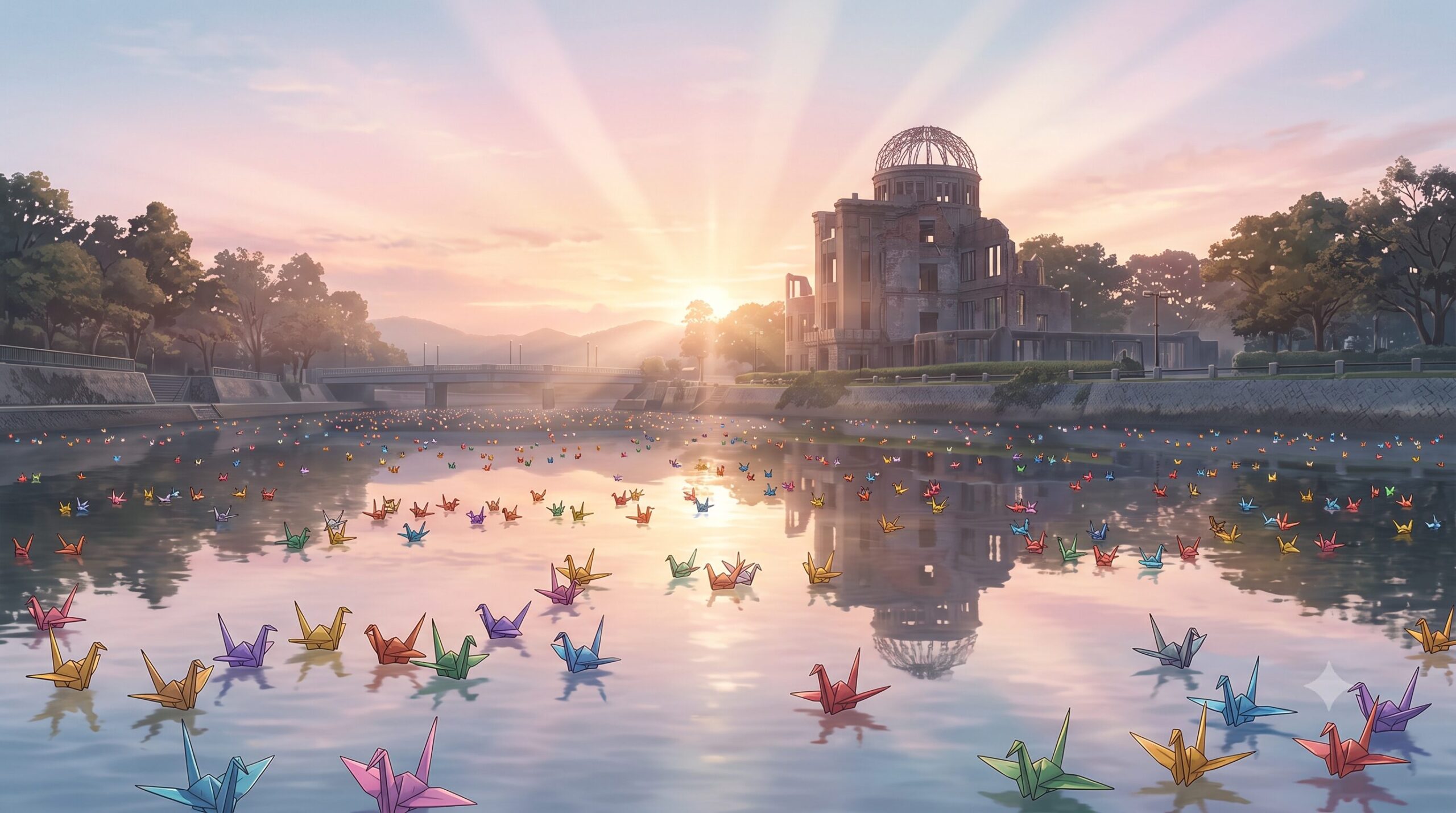
August 6th is a day of profound significance in Japan. Known as “Hiroshima Peace Memorial Day,” it is recognized globally as a special day when prayers for world peace are offered. To truly understand Japan, it is essential to comprehend the historical weight of this day, the spiritual resilience of the Japanese people who rose from its ashes, and the deep-rooted desire for peace embedded in modern Japanese culture.
- The Memory of History: August 6, 1945, 8:15 AM
- The Shape of Prayer: The Soul Folded into Orizuru (Paper Cranes)
- Requiem and Rebirth: Toro Nagashi (Lantern Floating) and Awe of Nature
- Rising from the Ashes: Japanese Resilience and the Spirit of “Wa”
- What Does “Peace” Mean to You?
- 歴史の記憶:1945年8月6日、午前8時15分
- 祈りのかたち:折り鶴(Orizuru)に込められた魂
- 鎮魂と再生:とうろう流し(Toro Nagashi)と自然への畏敬
- 焦土からの復興:日本人のレジリエンスと「和」の精神
- あなたにとって、「平和」とは何ですか?
The Memory of History: August 6, 1945, 8:15 AM
On August 6, 1945, at exactly 8:15 AM, the first atomic bomb in human history was dropped over Hiroshima City. In an instant, the city was reduced to scorched earth, and countless precious lives were lost. However, the people of Hiroshima chose to rise from this profound despair and rebuild their home as a “City of Peace.”
Today, the Hiroshima Peace Memorial Park stands near the hypocenter. Quietly resting in a corner of this park is the Genbaku Dome (Atomic Bomb Dome). It serves as a silent, historical witness, preserving the tragic state of the bombing for modern generations. In 1996, it was registered as a UNESCO World Heritage site. Every year on August 6th at 8:15 AM, the Peace Bell echoes throughout Hiroshima, and citizens—along with people all across Japan—observe a moment of silence. This silent prayer is not merely an act of mourning the past, but a powerful vow toward the future: a determination to never repeat the same tragedy.
The Shape of Prayer: The Soul Folded into Orizuru (Paper Cranes)
When speaking of Hiroshima Peace Memorial Day, the presence of traditional Japanese “Origami”—specifically the “Orizuru” (paper crane)—is indispensable. Originally folded as a lucky charm to pray for longevity and health, the paper crane is now universally recognized as a global symbol of peace.
This deep meaning took root because of the story of a young girl named Sadako Sasaki. Exposed to the radiation of the atomic bomb at the age of two, she developed leukemia ten years later. Believing in an old Japanese legend that “folding a thousand paper cranes will cure any illness,” she continued to fold cranes on her hospital bed using medicine wrappers. Despite her immense effort, she tragically passed away at the age of 12. Moved by her death, her classmates initiated a campaign that led to the construction of the “Children’s Peace Monument” in the Peace Memorial Park. Even today, tens of millions of paper cranes are offered to this monument from around the world all year round, proving that the Japanese culture of compassion and prayer transcends borders.
Requiem and Rebirth: Toro Nagashi (Lantern Floating) and Awe of Nature
On the evening of August 6th, the “Toro Nagashi” (lantern floating) ceremony takes place on the Motoyasu River, which flows through the center of Hiroshima. People write messages of peace and thoughts for the deceased on colorful paper lanterns and gently float them down the river. This event is a visually magical yet deeply sorrowful tribute.
This custom is intricately connected to traditional Japanese spiritual beliefs and the culture of “Obon.” Since ancient times in Japan, water has been considered a purifying element that guides souls to the afterlife. The sight of the soft glow of the lanterns swaying on the water’s surface symbolizes the Japanese reverence for nature and deep respect for ancestral spirits. A quiet prayer for “rebirth”—washing away past sorrows and moving toward a new future—is embedded in this tranquil ritual.
Rising from the Ashes: Japanese Resilience and the Spirit of “Wa”
Immediately after the bombing, it was rumored that “nothing will grow in Hiroshima for 75 years.” However, today’s Hiroshima has miraculously revived into a beautiful city surrounded by lush greenery and vibrant rivers. The driving force behind this phenomenal reconstruction is the “resilience” of the Japanese people and the spirit of “Wa” (harmony)—working cooperatively with others in the face of extreme adversity.
The “Hibakujumoku” (survivor trees) that withstood the intense heat and blast of the bomb continue to take root throughout Hiroshima City today. The sight of green leaves sprouting from charred trunks gave immeasurable hope to the people of that time. Hiroshima’s history of living in harmony with nature and rebuilding a city together under the most difficult circumstances continues to broadcast the strength and kindness of Japanese culture to the world.
What Does “Peace” Mean to You?
August 6th is not simply a day to look back on a past event in Japan. It is a day for all of us living on this planet to think about the peace of our future. Knowing the pain of history, offering prayers through culture, and having the strength to rise from the ashes—this is the universal message Hiroshima conveys to the world.
After reading this article, how did you feel about this day? What do you think you can do in your daily life to help maintain peace in your own country or community? I encourage you to use today as an opportunity to discuss the true meaning of peace with someone close to you.
References and Related Links
- External Link: Hiroshima Peace Memorial Museum
- Internal Link: What’s Today’s Special Day Series
8月6日「広島平和記念日」ー 祈りと再生、そして日本文化が紡ぐ平和への願い
8月6日は、日本において非常に重要な意味を持つ日です。この日は「広島平和記念日(広島原爆忌)」と呼ばれ、日本国内だけでなく、世界中から平和への祈りが捧げられる特別な日として認識されています。日本を深く知るためには、この日が持つ歴史的な重みと、そこから立ち上がった日本人の精神性、そして現代の日本文化に根付く平和への願いを理解することが不可欠です。
歴史の記憶:1945年8月6日、午前8時15分
1945年(昭和20年)8月6日、午前8時15分。広島市の上空で人類史上初となる原子爆弾が投下されました。一瞬にして街は焦土と化し、数え切れないほどの尊い命が失われました。しかし、広島の人々はこの絶望的な状況から立ち上がり、「平和記念都市」として街を再建する道を選びました。
現在、爆心地の近くには「広島平和記念公園」が整備されています。その一角に静かに佇む「原爆ドーム(Genbaku Dome)」は、被爆当時の悲惨な状況をそのままの姿で現代に伝える歴史的建造物であり、1996年にはユネスコの世界文化遺産に登録されました。毎年8月6日の午前8時15分には、広島市内全域に平和の鐘が鳴り響き、市民はもちろん、日本中の人々が黙祷を捧げます。この黙祷は、単なる過去への哀悼ではなく、二度と同じ過ちを繰り返さないという未来に向けた強い決意の表れです。
祈りのかたち:折り鶴(Orizuru)に込められた魂
広島平和記念日を語る上で欠かせないのが、日本の伝統文化である「折り紙」、特に「折り鶴(Orizuru)」の存在です。折り鶴は本来、長寿や健康を願う縁起物として折られていましたが、現在では世界中で「平和の象徴」として広く知られています。
この意味合いが定着したのは、佐々木禎子(ささき さだこ)さんという一人の少女の物語が背景にあります。彼女は2歳の時に被爆し、10年後に白血病を発症しました。「鶴を千羽折れば病気が治る」という日本の古い言い伝えを信じ、病床で薬の包み紙などを使って懸命に鶴を折り続けましたが、その願いも虚しく12歳で短い生涯を閉じました。彼女の死を悼んだ同級生たちの呼びかけにより、平和記念公園には「原爆の子の像」が建立されました。現在でも、世界中から年間を通じて数千万羽もの折り鶴がこの像に捧げられており、日本の「思いやり」や「祈り」の文化が国境を越えて共有されています。
鎮魂と再生:とうろう流し(Toro Nagashi)と自然への畏敬
8月6日の夜、広島市の中心部を流れる元安川では「とうろう流し(Toro Nagashi)」が行われます。色とりどりの灯籠(とうろう)に平和へのメッセージや亡き人への思いを書き込み、川へと流すこの行事は、幻想的でありながら深い哀悼の意に満ちています。
この風習は、日本の伝統的な信仰や「お盆」の文化と深く結びついています。日本では古来より、水は魂を浄化し、あの世へと導くものと考えられてきました。灯籠の柔らかな光が川面を揺らしながら流れていく光景は、自然に対する畏敬の念と、祖先の霊を大切にする日本人の精神性を象徴しています。過去の悲しみを水に流し、新しい未来へと向かう「再生」の祈りが、この静かな儀式には込められているのです。
焦土からの復興:日本人のレジリエンスと「和」の精神
被爆直後、「広島は今後75年間は草木も生えない」と言われていました。しかし、広島の街は現在、豊かな緑と川に囲まれた美しい都市として見事に蘇っています。この奇跡的な復興の背景にあるのは、逆境に立ち向かう日本人の「レジリエンス(回復力)」と、他者と協力し合う「和(Wa)」の精神です。
被爆の熱線と爆風に耐え抜き、再び芽を吹いた「被爆樹木(Hibakujumoku)」は、今も広島市内のあちこちに根を張っています。黒焦げの幹から緑の葉を茂らせた木々の姿は、当時の人々にどれほどの希望を与えたことでしょうか。自然と共生し、困難な状況下でも調和を重んじ、共に街を再建してきた広島の歴史は、日本文化が持つ強さと優しさを世界に発信し続けています。
あなたにとって、「平和」とは何ですか?
8月6日は、日本における過去の出来事を振り返るだけの日ではありません。地球上に生きる私たち全員が、未来の平和について考えるための日です。歴史の痛みを知り、文化を通じて祈りを捧げ、焦土から立ち上がる強さを持つ。それこそが、広島が世界に伝える普遍的なメッセージです。
この記事を読んだあなたは、この日についてどう感じましたか?あなた自身の国や地域において、平和を保つために日常でできることは何だと思いますか?ぜひ、あなたの身近な誰かと、今日という日をきっかけに平和について語り合ってみてください。
コメント