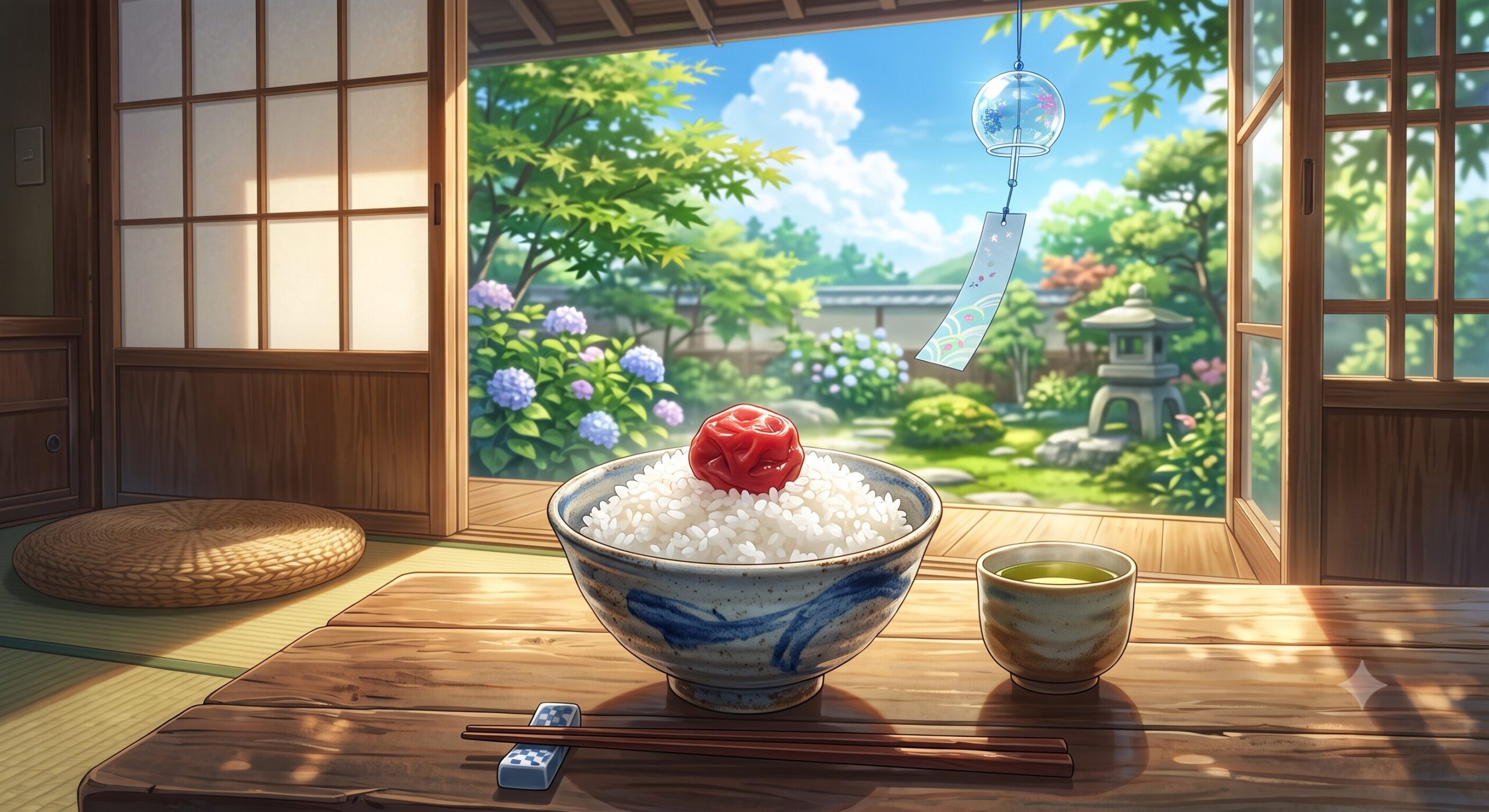
There is an old Japanese proverb that says, “An umeboshi a day keeps the doctor away.” Every year on July 30th, Japan celebrates “Umeboshi Day,” a day dedicated to the traditional preserved food and world-renowned superfood, the pickled plum. This day is not merely a food anniversary; it is an important day that encapsulates Japanese history, wisdom for health, and the Japanese spirit of living in harmony with nature. In this article, we will unravel the grand history and culture hidden within this small red plum.
Why is July 30th “Umeboshi Day”?
The reason July 30th was designated as Umeboshi Day stems from a unique Japanese wordplay. The numbers 7 (nan), 3 (sa), and 0 (ru) can be read as “Nan ga saru,” which translates to “Hardships go away.” Since ancient times, umeboshi has been believed to have the power to ward off evil spirits and illness. Furthermore, this period marks the beginning of Japan’s harsh summer. Eating umeboshi prevents “Natsubate” (summer fatigue) and serves the highly practical purpose of helping people survive the grueling season with vigor.
The Historical Background: From Aristocratic Medicine to Samurai Rations
The origins of umeboshi are ancient, with records existing in documents from the Heian period (794–1185). Legend has it that Emperor Murakami cured himself of a plague by drinking tea mixed with umeboshi and kelp. During this era, umeboshi was extremely precious and was primarily valued as “medicine” among aristocrats and high-ranking officials.
As time progressed to the Sengoku (Warring States) period (1467–1615), umeboshi evolved into an indispensable military ration for samurai. Between fierce battles, samurai would look at umeboshi to stimulate saliva production and quench their thirst. Additionally, the strong antibacterial properties of umeboshi served as a powerful defense against food poisoning. Plum vinegar was even used to disinfect wounds, making umeboshi a universal medicine that sustained the lives of warriors. It was finally during the Edo period (1603–1868) that plum cultivation became widespread, and umeboshi began to appear on the dining tables of commoners.
Understanding Japanese Spirituality and Culture through Umeboshi
Umeboshi transcends the boundaries of a simple ingredient; it deeply symbolizes Japanese aesthetics and spirituality. The most famous example is the “Hinomaru Bento.” This bento box, featuring a single bright red umeboshi placed precisely in the center of pure white rice, mimics the Japanese national flag (Hinomaru). It embodies “minimalism” stripped of all excess and represents the spirit of “Mottainai,” showing gratitude for limited ingredients.
Furthermore, the process of making umeboshi is intimately tied to the changing of the seasons in Japan. The rain that falls in early summer is written as “Tsuyu” (plum rain) because it falls exactly when the plums ripen. The salted plums are then dried under the intense summer sun in a process called “Doyo-boshi” before they are complete. Crafted with sunlight, wind, and time, umeboshi is the crystallization of Japan’s “fermentation and preservation culture,” which maximizes the power of nature.
References and Useful Links
If you wish to learn more about umeboshi and Japanese food culture, please refer to the links below.
- Ministry of Agriculture, Forestry and Fisheries: Our Regional Cuisines (Umeboshi of Wakayama) – An official explanation of the tradition and production methods of umeboshi by the Japanese government.
- What’s Today’s Special Day Series – Explore other Japanese anniversaries and cultural insights in this category.
To Our Readers
For those trying it for the first time, the intense sourness and saltiness of umeboshi might be a surprising taste experience. However, packed into that single small plum is over a thousand years of Japanese history and the wisdom of ancestors striving to survive harsh natural conditions. After reading this article, do you feel like trying umeboshi? Also, does your country have its own unique preserved foods or superfoods with a rich historical background? Please share your thoughts and your own culture with us!
7月30日は「梅干の日」!日本のスーパーフードが持つ歴史と文化を解き明かす
日本には古くから「1日1粒の梅干しで医者いらず」ということわざが存在します。毎年7月30日は、日本を代表する伝統的な保存食であり、世界に誇るスーパーフード「梅干し」を記念する「梅干の日」です。この日は、単なる食の記念日ではなく、日本の歴史、健康に対する知恵、そして自然と共生する日本人の精神性が凝縮された重要な日です。本記事では、梅干しという小さな赤い粒に隠された、壮大な日本の歴史と文化を紐解きます。
なぜ7月30日が「梅干の日」なのか?
7月30日が梅干の日に制定された理由は、日本語特有の語呂合わせに由来します。「7(なん)が3(さ)0(る)」、つまり「難が去る」と読むことができるからです。古来より、梅干しは邪気を払い、病魔を退ける力があると信じられてきました。また、この時期は日本の厳しい夏の始まりであり、梅干しを食べて夏バテ(暑さによる疲労)を防ぎ、元気に厳しい季節を乗り切るという実用的な目的も込められています。
梅干しの歴史的背景:貴族の薬から武士の携帯食へ
梅干しの起源は古く、平安時代(794年〜1185年)の文献にはすでに記録が残されています。当時の天皇であった村上天皇が、疫病にかかった際に梅干しと昆布を入れたお茶を飲んで病を治したという伝説が語り継がれています。この時代、梅干しは非常に貴重であり、主に貴族や位の高い人々の間で「薬」として重宝されていました。
時代が下り、戦国時代(1467年〜1615年)になると、梅干しは武士たちの間で必要不可欠な陣中食(ミリタリーレーション)へと進化します。激しい戦いの合間に、武士たちは梅干しを見ることで唾液を分泌させ、喉の渇きを癒しました。また、梅干しの強い殺菌作用は、食中毒を防ぐための強力な防具でもありました。傷口の消毒にも梅酢が用いられるなど、梅干しは武士の命を繋ぐ万能薬として機能していました。江戸時代(1603年〜1868年)に入り、ようやく梅の栽培が一般化し、庶民の食卓にも梅干しが並ぶようになりました。
梅干しから読み解く日本の精神性と文化
梅干しは、単なる食材の枠を超え、日本人の美意識や精神性を深く象徴しています。最も有名な例が「日の丸弁当」です。真っ白なご飯の真ん中に、真っ赤な梅干しを一つだけ乗せたこの弁当は、日本の国旗(日の丸)を模しています。これは、極限まで無駄を削ぎ落とした「ミニマリズム」の体現であり、限られた食材に感謝する「もったいない」の精神を表しています。
また、梅干し作りは日本の季節の移ろいと密接に結びついています。初夏に降る雨を「梅雨(つゆ)」と書くのは、ちょうど梅の実が熟す時期に降る雨だからです。塩漬けにした梅を夏の強い日差しで干す「土用干し」という工程を経て、梅干しは完成します。太陽の光と風、そして時間をかけて作られる梅干しは、自然の力を最大限に引き出す日本の「発酵・保存文化」の結晶です。
参考文献・リンク集
梅干しや日本の食文化についてさらに深く知りたい方は、以下のリンクを参照してください。
- 農林水産省:うちの郷土料理(和歌山県の梅干し) – 日本政府による梅干しの伝統と製法に関する公式な解説です。
- What’s Today’s Special Day Series – その他の日本の記念日や文化については、こちらのカテゴリーからご覧いただけます。
読者の皆様へ
強烈な酸味と塩味を持つ梅干しは、初めて食べる人にとっては驚きの味覚かもしれません。しかし、その小さな一粒には、千年以上続く日本の歴史と、過酷な自然を生き抜くための先人たちの知恵が詰まっています。この記事を読んで、あなたは梅干しを食べてみたいと思いましたか?また、あなたの国には、歴史的な背景を持つ独自の保存食やスーパーフードはありますか?ぜひ、あなたの考えや文化について教えてください。


コメント