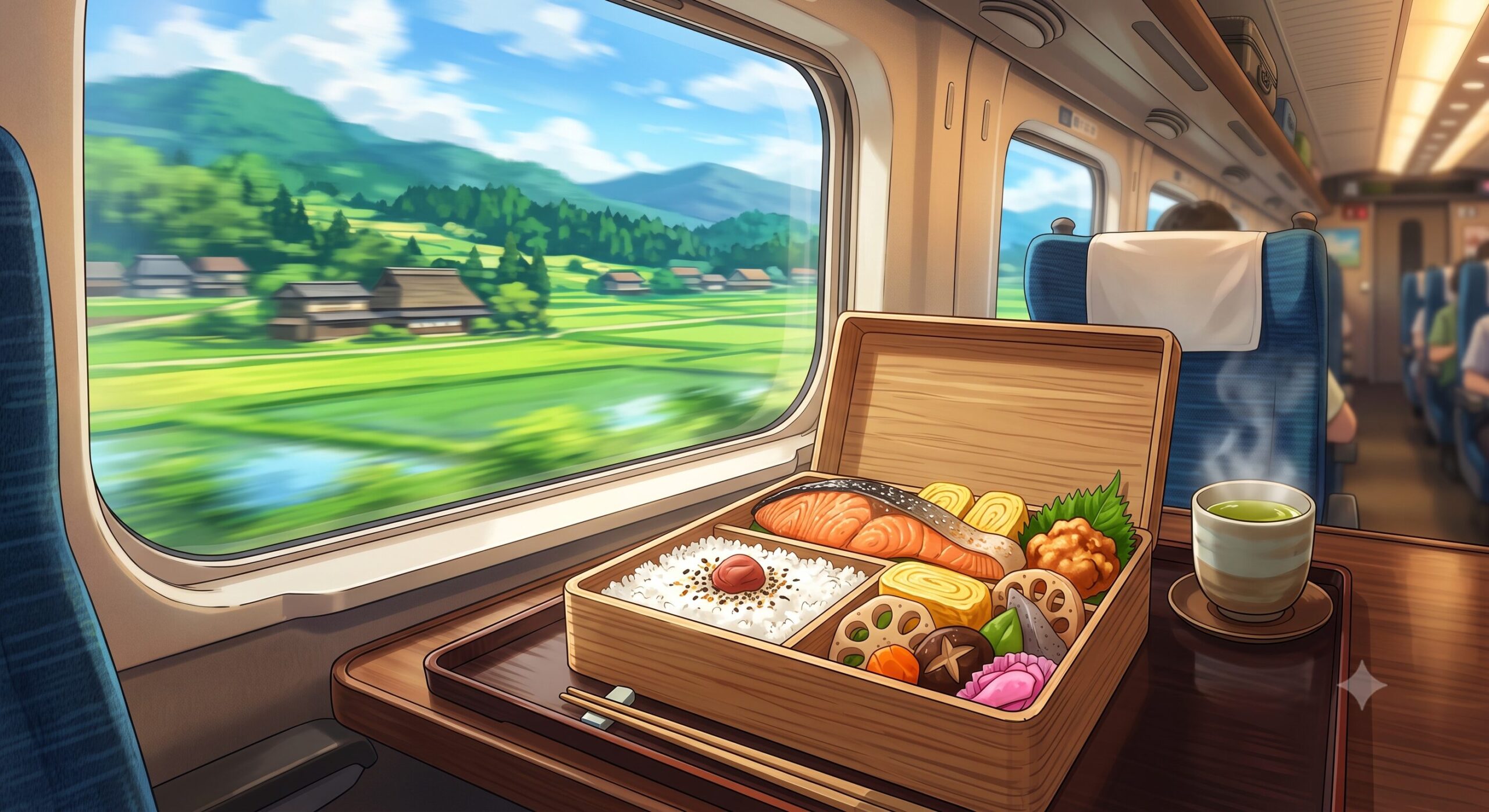
When traveling by train in Japan, there is one element that is absolutely essential: the “Ekiben.” A combination of the words “Eki” (station) and “Ben” (from bento/lunchbox), it is far more than just a takeout meal. It is a profound culinary culture that encapsulates Japanese history, regional identity, and aesthetics. July 16 marks “Ekiben Memorial Day,” celebrating the origin of this wonderful tradition.
The Origin of Ekiben: A Humble Beginning at Utsunomiya Station in 1885
The history of the ekiben dates back over a century to July 16, 1885 (Meiji 18). Following the opening of the Nippon Railway Tohoku Main Line, the very first ekiben was sold at Utsunomiya Station in Tochigi Prefecture. At that time, it was not the colorful array of side dishes we see today. It was an incredibly simple meal: two rice balls (onigiri) filled with pickled plum (umeboshi), sprinkled with black sesame seeds and salt, wrapped in bamboo leaves, accompanied by a few slices of pickled radish (takuan). Priced at 2 sen (roughly equivalent to 600 yen today), it served as a vital source of energy for travelers.
Starting from these humble rice balls, the ekiben spread nationwide as the railway network expanded, undergoing an astonishing evolution by incorporating the unique characteristics of each local region.
Japanese Aesthetics and Regionality Embodied in Ekiben
Unraveling the modern ekiben reveals distinct characteristics of Japanese culture. Its greatest appeal lies in its “overwhelming regionality.” Whether it’s a bento packed with fresh Hokkaido crab and salmon roe, a premium Kobe beef steak bento, or traditional trout sushi from Toyama, simply looking at an ekiben allows you to understand the local specialties and climate of that specific area.
Furthermore, the strong dedication to “visual beauty” as well as taste is uniquely Japanese. Inside a small box, various ingredients are arranged with vibrant colors, utilizing culinary engineering designed to make the food taste delicious even when cold. Some premium ekiben even feature a special self-heating mechanism—simply pulling a string triggers a chemical reaction that heats the entire container, allowing you to enjoy a piping hot meal on the go. This is the ultimate physical manifestation of Japanese “omotenashi” (hospitality).
More Than a Meal: Entertainment During Transit
In Japan, eating an ekiben aboard a Shinkansen (bullet train) or limited express train is established as an entertainment experience that makes the journey itself enjoyable. Tasting local ingredients while gazing at the beautiful, shifting Japanese landscapes outside the window is the “ultimate travel experience” before even reaching the destination. Many international tourists light up with excitement when standing before hundreds of bento varieties at massive ekiben shops in places like Tokyo Station because it is not just food—it is a cultural experience.
To Our Readers
Originating from simple rice balls in 1885, the ekiben has evolved uniquely in Japan. If you were to board a Japanese train, which would you choose: a bento packed with fresh seafood, or a luxurious Wagyu beef bento? Also, does your country have a “classic food” or dining culture specifically associated with long-distance travel?
Related Links
- Internal Link: What’s Today’s Special Day Series
7月16日は「駅弁記念日」:日本の鉄道旅行を彩る究極の食文化
日本の鉄道旅行において、絶対に欠かすことのできない要素があります。それは「駅弁(Ekiben)」です。駅(Station)と弁当(Bento)を組み合わせたこの言葉は、単なる持ち帰り用の食事ではなく、日本の歴史、地域性、そして美意識が凝縮された食文化そのものを指します。7月16日は、この素晴らしい文化の原点である「駅弁記念日」です。
駅弁の始まり:1885年宇都宮駅での素朴な誕生
駅弁の歴史は、今から1世紀以上前の1885年(明治18年)7月16日に遡ります。日本鉄道東北本線が開通し、栃木県の宇都宮駅で日本で初めて駅弁が販売されました。当時の駅弁は、現在のような色鮮やかなおかずが詰まったものではありませんでした。竹の皮に包まれた、黒ごまと塩をまぶした2つの梅干し入りおにぎりと、たくあんのみという非常に素朴なものでした。価格は2銭(現在の価値で約600円程度)で、当時の人々の列車の旅を支える貴重なエネルギー源となりました。
この素朴なおにぎりから始まった駅弁は、鉄道網の発達とともに日本全国へと広がり、各地域ならではの特色を取り入れながら驚異的な進化を遂げていくことになります。
「駅弁」が体現する日本の美意識と地域性
現在の駅弁を紐解くと、日本の文化的な特徴がはっきりと見えてきます。最大の魅力は「圧倒的な地域性(ローカルカラー)」です。北海道の新鮮な海鮮をふんだんに使ったカニやイクラの弁当、神戸の最高級和牛を使ったステーキ弁当、富山の鱒寿司など、駅弁を見るだけでその土地の特産品や気候風土を理解することができます。
また、味だけでなく「視覚的な美しさ」への強いこだわりも日本ならではです。狭い箱の中に、色彩豊かにおかずが配置され、冷めても美味しく食べられるような調理工学が詰まっています。一部の駅弁では、紐を引っ張るだけで化学反応によって容器全体が加熱され、熱々の状態で食べられる特別な仕組みを持つものまで存在します。これは、食べる人への「おもてなし」の精神が形になったものです。
単なる食事ではない、移動時間のエンターテインメント
日本では、新幹線や特急列車の車内で駅弁を食べることは、移動そのものを楽しむエンターテインメントとして定着しています。移りゆく美しい日本の風景を車窓から眺めながら、その土地の食材を味わう体験は、目的地に着く前段階での「最高の旅行体験」です。海外から訪れる多くの旅行者が、東京駅などの巨大な駅弁専門店で何百種類もの弁当を前に目を輝かせるのは、これが単なる食事ではなく、文化体験だからです。
読者の皆様へ
1885年の素朴なおにぎりから始まり、日本独自の進化を遂げた駅弁。あなたがもし日本の列車に乗るとしたら、海の幸が詰まった海鮮弁当と、豪華な和牛弁当、どちらを選びますか?また、あなたの国には、長距離移動の際に必ず食べる「定番の食べ物」や食文化はありますか?


コメント